Princeton Alumni Weekley Logo

Current Issue

Nov. 5, 2008

Vol. 109, No. 4
rss buttonhelp
sports

Rewind, play, improve

For coaches, video is an indispensable tool

By Brett Tomlinson
Published in the November 5, 2008, issue

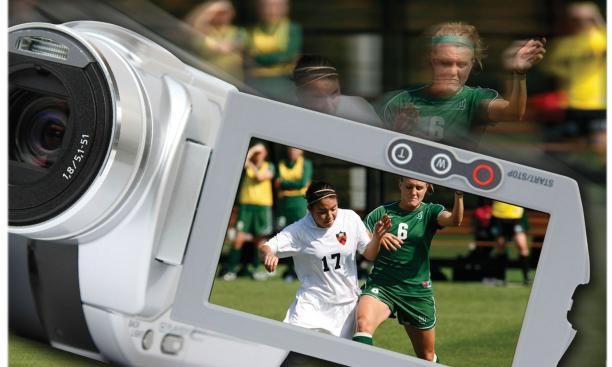
istockphoto.com/KhuongHoang; Beverly Schaefer; photo illustration: Steven Veach

Women’s soccer coach Julie Shackford uses video sparingly when scouting opponents or checking out recruits. But when she flips open her laptop to look at recent games, she sees a trove of instructional material for her players.

The emphasis changes from year to year. Last season, defensive lapses often were on Shackford’s mind (a problem seemingly solved by the 2008 Tigers, who allowed just three goals in their first 10 matches). This fall, she has been watching for ways to help her forwards control possession.

While digital technology has made it easy for Shackford and assistant coach Scott Champ to piece together the most useful game clips, delivering critiques to players still requires a little finesse. “At first, they’re very defensive — these are kids who’ve been wildly successful in everything they’ve done,” Shackford said. “But once they realize it’s part of being a good teammate, they get over it.”

Princeton coaches have a long history of using video as an instructional tool, starting with football coach John Rush, Class of 1898, who first filmed a spring scrimmage in 1915. Back then, the “click of a moving-picture camera” on the field was enough to warrant a New York Times story. Today, digital video is ubiquitous at Princeton games, and for some teams, at practice as well.

The football team remains an avid consumer of video, using practice tapes to “get down to the nitty-gritty [details] that you’d never catch with the naked eye,” according to Alan Dandar, the director of football operations. But the days of 80 players and coaches in one projection room are gone. Most video sessions are split up by position, so individual coaches can highlight specific plays or techniques that may be useful for, say, a linebacker or a defensive back.  

Video instruction also plays a significant role in individual sports. Amy Bond, the head coach of women’s golf, tapes sessions on the practice range and asks each of her players to bring video of lessons with their pros or instructors at home. “The more I can keep the same language [as their instructors], the easier it is for the players to fix their swings,” Bond said.

With academic commitments and on-field practices taking up significant amounts of time for Princeton athletes, coaches try to be efficient with their video sessions. Shackford, for instance, tries to restrict her team’s TV time to between 30 and 60 minutes, depending on the week. That time management also reflects a broader philosophy about her sport. “I like to think of myself as a purist,” Shackford said. “Soccer is a fluid game, and I don’t want to overanalyze.”

Post Comments
Tell us what you think about
Rewind, play, improve
Enter the word as it appears in the picture below
Send
By submitting a comment, you agree to PAW's comment posting policy.
CURRENT ISSUE: Nov. 5, 2008