


It’s a bitterly cold January night in Harlem, but inside the Hue-Man Bookstore & Café on Frederick Douglass Boulevard, Jeff Perry ’68 is just getting warmed up. He’s been talking to a rapt audience for almost an hour about one of his greatest passions — the radical writer, educator, and orator Hubert Harrison.
Perry recently published the first volume of a two-volume biography of this forgotten giant, one he hopes will restore Harrison to the lofty place he deserves in early 20th-century African-American history, which tends to get framed as a struggle between Booker T. Washington and W.E.B. DuBois. “This will force people to include Harrison,” says Perry. “It will change the way people look at African-American history.”
Odds are, you haven’t heard of Harrison, who stood unflinchingly to the left of DuBois, putting his greatest hopes not in the “Talented Tenth” of black Americans but in members of the working classes and rejecting DuBois’ call for African-Americans to forget their “special grievances” for the good of the country during World War I. Even in Harlem, where Harrison’s public lectures on a mind-boggling range of subjects — from Shakespeare and evolution to Dickens, imperialism, socialism, and race — routinely drew hundreds, even thousands, almost no one remembers him. Today, 82 years after his death, the man whom historian Joel Rogers called the “foremost Afro-American intellect of his time” lies in a shared, unmarked grave in Woodlawn Cemetery in the Bronx. Harrison’s granddaughter Ilva, who has come to hear Perry speak, tells the Hue-Man audience that until Perry came along, her family knew very little about its illustrious ancestor. But, she says, turning to Perry, “Every time I hear you talk, I learn something new about my grandfather.”
Those are sweet words to Perry, who, after stumbling on Harrison 27 years ago while working on a Ph.D. in American history at Columbia, has devoted just about every spare moment to promoting him and his work — an enormous labor of love. He has unearthed many of the 700 or so pieces that Harrison published, and edited A Hubert Harrison Reader (a great starting point for anyone interested in Harrison’s work). Since the November publication of his new biography, Hubert Harrison: The Voice of Harlem Radicalism, 1883–1918, by Columbia University Press, Perry has been speaking at libraries, bookstores, and universities, on the radio, and even on C-SPAN, spreading the word to audiences big and small. People are listening: The Harlem Tenants Council has been working with Charles Barron, a member of the New York City Council, to honor Harrison properly, with a grave marker and a city council resolution.
What makes Perry’s labors especially impressive is that he, like his subject, did all of his scholarly work in his spare time. Perry recently retired after 33 years of working for the post office, a career he chose out of a conviction that any positive change in our society would start with working people. When he left the Postal Service last fall, he was treasurer of Local 300 of the National Postal Mail Handlers Union.
As a result, the meticulous digging that went into the book — the first volume has 116 pages of footnotes — was done on a hellish schedule. Perry would catch a predawn train into Manhattan from his home in northern New Jersey. He’d come home about 4 p.m., heat up whatever dish his wife, Becky Hom, had prepared for him and their daughter, Perri Hom, and shuttle Perri to soccer games and other after-school activities. In the early evening, his domestic duties done, Perry would sit down at his desk and work late into the night. He used his own money to pay for research trips: to Harrison’s native island of St. Croix; to Denmark, which once owned St. Croix; and to England, among other places.
Perry proudly identifies himself as an “independent scholar,” a rather nebulous term that can signify different things, even to the people who describe themselves as such. Usually, though, it refers to someone who holds an advanced degree and pursues scholarly work — but does it outside the academy. Books by these writers rarely are bestsellers (few scholarly books are), but some have drawn rave reviews in journals and general-interest magazines.
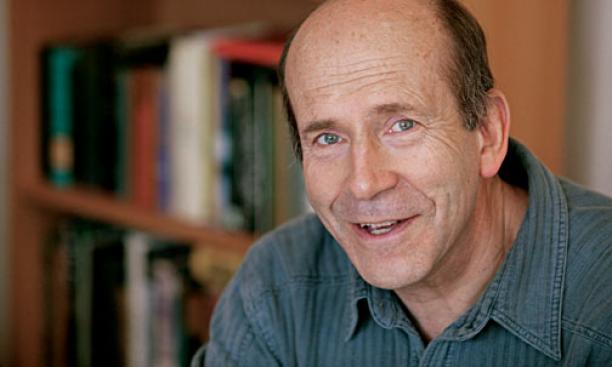
John Dippel ’68, who has published three history books, calls himself an “independent scholar” because it seems both accurate and more dignified than some of the other options. “I once had an interviewer call me an ‘amateur historian.’ I think in our society ‘amateur’ has a negative ring to it, whereas ‘independent scholar’ has a higher ring,” muses Dippel, whose three books raise intriguing psychological questions about major historical events, as the subtitle of Bound Upon a Wheel of Fire (Basic Books) suggests: Why So Many German Jews Made the Tragic Decision to Remain in Nazi Germany. “The ‘independent’ part is very important, while the label ‘scholar’ speaks to what we try to do, which is to emulate the methods and approaches that people in academia take,” Dippel says. “But I don’t think there’s any real distinction. It’s not like it’s going to be second-rate because it doesn’t come out of a university department somewhere.”
Independent scholars can be forgiven if they sound a little defensive. In some ways, they are like kids with their noses pressed to the window of the candy store. It’s not just the absence of a regular paycheck or the additional hurdles in finding an agent and publisher that can make theirs a tough existence. It’s also the lack of an identity that means something to the outside world. “It’s very hard to put yourself out there,” says Shelley Frisch *81, who is a freelance translator of German into English. “Who exactly are you? How do you fit in, as far as the logistics of grant applications?”
It’s hard to operate outside the university system, since that’s where scholars are expected to ply their trade. Dippel worked 20 years for an academic marketing firm, a job that took him to many college campuses. What he saw did not make him miss academia. When he’s asked what he does, he tends to point to the deeper pleasures that come from remaining an enthusiastic student. “What I try to convey is that there are broad questions out there that really fascinate me, that I’m willing to devote four or five years of my life to really understand,” he says. “There’s both a luxury in having that but also a lot of downside in that there’s no money that comes with it. There’s no real status or institutional connection that might make you a more recognizable commodity to people.” (However, Dippel has received professional recognition, with positive mentions in publications such as The American Historical Review, Library Journal, and the Times Literary Supplement.) The author says he is “comfortable” missing out on the benefits of a university appointment: “I think you have to be fairly content with yourself as you are, without any labels or recognition.”
James Ward ’77, who earned a doctorate in Italian from Berkeley in 1992, notes that independent scholars lack the most basic perks of a university appointment: no tenure, no salary, no title, no fellowships. Ward is about to publish an article about subversive political messages he believes Michelangelo hid in his work in the Medici funeral chapel, and in several months will submit a book to academic presses about that and other subversive messages hidden in art. He soon will begin translating Benedetto Varchi’s Storia Fiorentina, a classic of Renaissance historical writing, which never has been translated into English. “You have to find your own rewards,” he says. “But there’s something to be said for doing it out of love of the work itself. That’s something that often gets lost in the scramble for tenure and grants.”
One practical challenge is getting access to libraries. Dippel and Perry both use Columbia’s library, but a library card can be prohibitively expensive. Gloria Erlich *77, who has published books on Hawthorne and Edith Wharton, likes to put it this way to uncooperative librarians: “Our books are in your library!”
That doesn’t always do the trick. So Erlich has worked to give independent scholars a more solid identity. She was instrumental in founding the Princeton Research Forum, a group of some 75 independent scholars who meet once a month to exchange ideas and critique members’ works in progress. There are similar groups in academic centers like Boston, New Haven, and Berkeley, as well as a national organization, the National Coalition of Independent Scholars, which has about 200 members and publishes a quarterly newsletter, The Independent Scholar. Members of the Princeton Research Forum receive a membership card, which confers on them something approximating the official status likely to satisfy bureaucrats.
Erlich used to make regular presentations on independent scholarship at academic conferences, and she usually would start with a little joke: “Before I make this sound too good,” she’d say, “let me tell you that I write on a matrimonial fellowship.” Not that she’s ashamed of it: Who in her right mind would expect to support herself through scholarship? Erlich knew she’d gotten her message across the day a woman stood up at one of her talks and announced proudly, “I used to think I was an unemployed Ph.D. Now I know I’m an independent scholar!”

There always have been independent scholars; for people of a certain aristocratic class and intellectual bent, it was not at all unusual to pursue their scholarly interests far from any college quad. Darwin, surely, was an independent scholar, laboring away in his greenhouses at Down House. So were Thomas Jefferson and Samuel Johnson, and so, too, was Princeton’s own Edmund Wilson ’16.
Wilson, in fact, occupies a special place in the annals of independent scholarship. He seems to have been, if not the first, certainly one of the first, to use the term, which he applied to the classical scholar Paul Elmer More in an essay on the occasion of More’s death in 1937. More, a former editor of The Nation, today is a somewhat forgotten figure, but in the 1920s and ’30s, he was a friend and colleague to many top classical and religious scholars. When More died, T.S. Eliot wrote an appreciation of him in PAW that is notable for being at least as dry as it was appreciative.
More lived in Princeton and maintained a symbiotic relationship with the University, lecturing occasionally on Greek philosophy and the history of Christianity, advising students, and moving in the same social circles as many faculty members. Indeed, it was in the company of Dean Christian Gauss that Wilson paid the visit to More on which he based that 1937 essay, “Mr. More and the Mithraic Bull” (included in Wilson’s book The Triple Thinkers). “He was himself not really typical of the American academic world,” wrote Wilson. “He was an independent scholar, who had denounced in the most vigorous language the lack of sincerity and the incompetence of the colleges.” The identity of an independent scholar seems to have been formalized in the late 1970s and early ’80s, as a practical response to the fact that universities were producing far more Ph.D.s than the job market could absorb. “I think it came about because the university system was turning out people who had certain expectations, certain training, that the times frustrated,” says Erlich. “I don’t think Paul Elmer More was frustrated. I think he had the best of both worlds.”
Some independent scholars note that academia is not kind to generalists. Freed from the demands of a university, the scholar is free to pursue whatever is of interest at the moment, and to move on when interest wanes. Variety is one of the great pleasures Frisch takes from her work as a freelance translator. Among the books she has translated are a history of Zionism; a cultural history of eunuchs and castrati; and biographies of Nietzsche, Einstein, and Kafka, the last of which won her the Modern Language Association’s Scaglione Prize. Each of these books required considerable background research, which means that Frisch has had the pleasure of exploring new fields. This year she has three books coming out: German entertainer Hape Kerkeling’s diary of his walk along Spain’s Camino de Santiago, which has sold 3 million copies in Germany; The Girls of Room 28, about a group of girls who lived together in the Theresienstadt concentration camp; and a biography of Julius Fromm, a Jewish manufacturer of condoms in Berlin, whose business was seized and “Aryanized” by Hermann Göring, who gave the company to his godmother as a gift. Most academics don’t range that far in a lifetime.
Before turning to translation full time, Frisch spent 20 years teaching at colleges, including Columbia and Haverford. While she doesn’t miss the politics of the academic world, she does miss the camaraderie — or she did, until she joined the Princeton Research Forum and the PEN American Center. “I welcomed any umbrella organization that would have me — sort of the opposite of Groucho Marx,” she laughs. She recently was chosen to sit on the PEN Center’s jury for its annual translation prize and had the thrill of announcing the winners at the Walter Reade Theater in Lincoln Center. “Just being able literally to stand up for my profession in such a public setting was really wonderful,” she says.
Still, despite the success she has enjoyed as an independent scholar — in addition to the freedom, she says, she still earns substantial lecture fees and is asked to submit articles for journals — Frisch finds her thoughts turning to teaching. “Sort of crablike, I move sideways toward the academy,” she allows.
Harrison, the subject of Jeff Perry’s life’s work, surely would have appreciated the labors of these independent scholars and recognized the obstacles they face. A lifelong autodidact, he worked almost entirely outside the academy, acknowledging its existence only in order to chastise those academics he regarded as pompous frauds. Indeed, one of the most moving passages in Perry’s biography of Harrison is his description of the lengths to which working people were willing to go in order to learn about fairly abstruse subjects. In Harrison’s day, New York City bustled with night schools, lyceums, and parlor discussion groups. It was nothing for Harrison to give 10 or even 20 lectures in a single week, and he never seemed to lack for an audience of independent scholars.
So why isn’t Harrison better known today? Partly it’s due to his rejection of Christianity, which meant turning his back on the most powerful institution in the black community. He also was an independent thinker who did not hesitate to criticize the people who might have championed him and his work after his sudden death, from a ruptured appendix, in 1927 at the age of 44. (Referring to Booker T. Washington’s willingness to tolerate abuse, Harrison said that some black leaders “have a wishbone where their backbone ought to be.”)
For Perry, Harrison’s lack of notoriety today could be an opportunity: It means there is a wealth of rich but little-known material to use in the second volume of his biography. Perry plans to spend the rest of his life finishing that and working on a biography of his own mentor, the late independent scholar Theodore Allen, whose work argues that race — whiteness and blackness — was “invented” as a means of social control. “Ted Allen’s work utterly threatens 95 percent of the historians in this country because he challenges their work,” says Perry.
Prepared for the day that the second volume of the Harrison biography is done, Perry’s basement contains a large archive of various collected papers touching upon matters of race and class. He has some 400 file boxes stacked to the ceiling — literally — that include papers dealing with his own life of activism, the singer Alberta Hunter, and communism. Perhaps most intriguingly, he has 10 boxes of papers from the Weathermen, from the time the 1970s radical group went underground. He got them from an old friend and onetime Harvard student who was national secretary of Students for a Democratic Society.
It’s all enough to keep Perry busy for years. And, like any self-respecting independent scholar, he really can’t imagine life any other way.
Merrell Noden ’78 is a frequent PAW contributor.