

Last year, on a Princeton-sponsored trip to Jordan, Zvi Smith ’09 initially felt the need to conceal his Jewish identity from other participants. “We think of peace as avoiding conflict, and I didn’t want to bring up tension or make them distrust me,” said Smith, the only Jewish student in the group. But after he revealed that he was Jewish and had lived in Israel, he felt closer to the other students and began to think about conflict resolution — a technique in which discussions focus on differences, rather than avoid them.
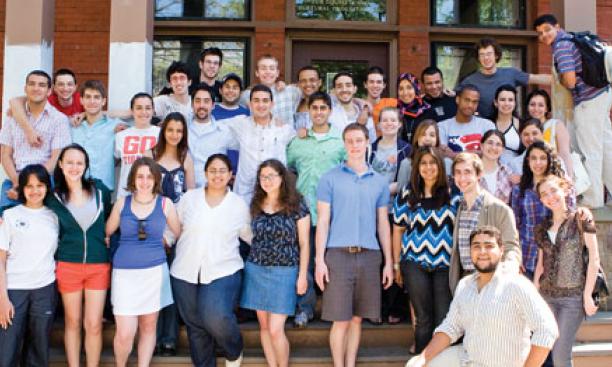
That experience led Smith to develop a four-day conference in April that brought to campus 15 students from Jordan, Morocco, Egypt, and Lebanon to join 16 Princeton students for discussions about issues including gender, the media, and political conflict. “The premise of the conference was that we wanted to talk to each other,” Smith said.
At the meeting — called “Visions and Revisions: Charting a Common Future for the U.S. and Arab World” — the students attended lectures by experts such as Princeton professor Daniel Kurtzer, the former U.S. ambassador to Egypt and Israel; and visiting researcher Roger Hardy, a former BBC analyst. Social activities included late-night tea and music with entertainment by an Arab comedian, and the students joined campus religious groups to do community service in Trenton.
For many, a highlight was the chance to talk in small groups. Many of the Arab students attended a dinner with Jewish students, where they had heated debates about the recent war in Gaza. “We have nothing against Jews in Israel, and — practically speaking — Muslims have more ties to Judaism than people would understand, because we all come from Abraham-inspired religions,” said Abdel Hamid Sheref, from Lebanon.
“You expect that since these issues have been discussed for so long, they would get old, but so many times the conversation would digress in a positive way to a new field or area,” said Abdallah Mukalled, from Egypt.
The program offered opportunities to break through misconceptions. Sheref was surprised when President Tilghman told the group that Princeton did not have female undergraduates until 1969 — later than he thought. At the same time, he said, “People have this misconception about the Arab world and its treatment of women.”