

Princeton’s science labs are buzzing about a $25 million gift from Google CEO Eric Schmidt ’76 and his wife, Wendy, to fund cutting-edge research. Forty-five proposals are under review and promise, President Tilghman says, “the kinds of technological breakthroughs that most funding sources are too risk-averse to support.”
She pinpoints a serious problem: Grant-making agencies have grown cautious lately, terrified of failure. And yet history shows that breakthroughs often spring not from carefully laid plans, but from mischance or even sheer, ridiculous accidents. A stovetop spill heralded vulcanized rubber; the potency of uranium was revealed when a rock was left in a drawer among photographic plates. And great research seldom follows an unswerving path. At RCA in Princeton in the 1950s, David Sarnoff exhorted his team to invent a flat television that could hang on a wall. “There were an enormous number of failures,” says Princeton historian of science Michael Gordin — and instead of TVs, the world got the Seiko digital watch in 1973.
“Mistakes occur all the time and at every turn,” says chemistry professor Jay Groves. “It’s part of the challenge and the fascination.” Bumbles and false starts are absolutely fundamental to the scientific process — so say more than 25 Princeton faculty interviewed recently by PAW. They told candid stories of personal struggles and how, in the worst setbacks, they paradoxically pulled off big discoveries.
If failure is frequent in laboratories, the real world is even harsher, many of the scientists note. “Ninety percent of the time, at least one instrument will have a problem,” says civil and environmental engineering professor Mark Zondlo, who routinely works outdoors. “There’s almost an expectation that things will fail.” When Charlie Gentile at the Princeton Plasma Physics Laboratory (PPPL) invented a handheld device to spot a terrorist carrying a dirty bomb, it excelled in the lab — but when tried out in a crowd, it was overwhelmed by false alarms: Many ordinary citizens hum with biomedical radioactivity. With hard work, Gentile improved the detector. “The probability of getting it right the first time is very low,” he acknowledges. “That’s not going to happen.”
Every scientist fails, even the very greatest. According to a recently discovered diary kept by a female friend of Albert Einstein, late in life the physicist felt deep disappointment at his personal mistakes. His theories pointed to an expanding universe, but Einstein himself refused to believe it; to keep the universe static in his model, he concocted the cosmological constant, a force that counteracts gravity. Later, when expansion was definitely proven by Edwin Hubble, Einstein renounced this constant as “my biggest blunder.” And yet, notes physicist Igor Klebanov *86, since 2000 the cosmological constant has bounced back — as dark energy. “It’s an incredible reversal of fortune, Einstein’s big failure, and it now accounts for 70 percent of the energy density in the universe.”
Failure is the cosmologist’s constant, it seems. In the 1870s, Princeton astronomer Charles A. Young stalked the chimera of Vulcan, a small planet supposedly orbiting between Mercury and the sun, before writing that he was “practically certain” Vulcan did not exist. (Einstein’s theories finally made Vulcan go “poof.”) Later, the Big Bang theory seemed to solve the mysteries of the universe — but recently, Princeton physicist Paul Steinhardt has proposed a radical alternative, based on string theory, in which Big Bangs happen repeatedly. “All these ideas, we expect to be replaced,” says Steinhardt philosophically. “We don’t have complete theories. Science proceeds bit by bit.” When he first floated his new idea at a conference, “it wasn’t a very pleasant thing,” as “defenders of the faith” pounced on its weaknesses. Subsequently he revamped his model. “When you encounter failure,” he says, “you either abandon the idea or invent your way out of it.”
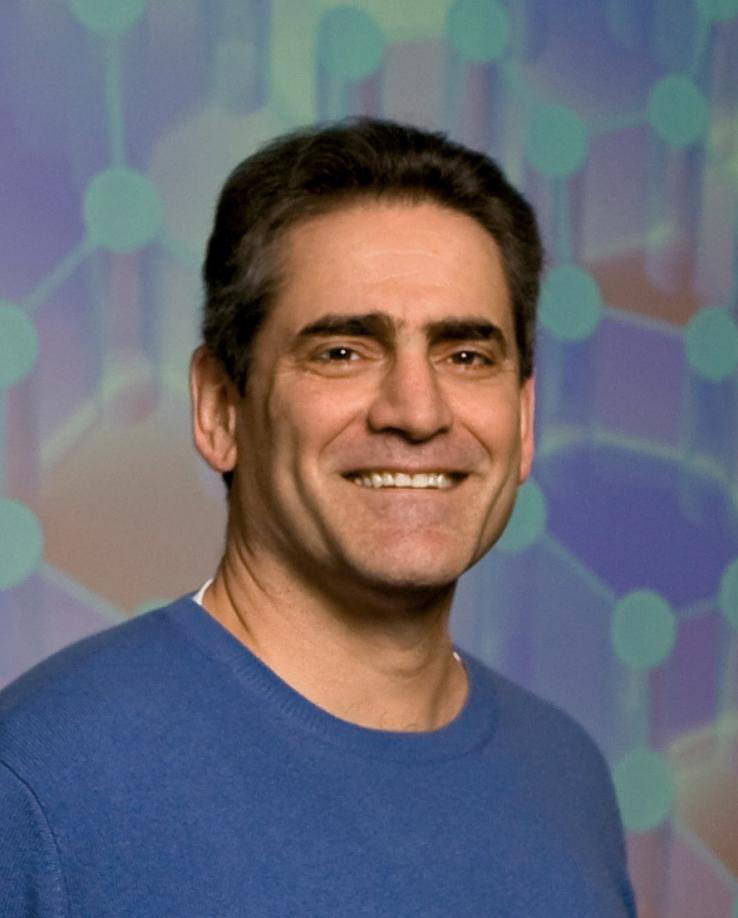
In his study of random close packing — trying to understand how marbles sort themselves as they fill a bag — chemistry professor Sal Torquato has invented his way out of numerous difficulties. “Many people before me tried and failed. And I failed in the mid-1990s. The more I thought about it, the more I realized the entire idea was flawed: We really don’t have a good idea of what we mean by ‘random.’ So failure subsequently led to something even deeper.” His insights have led to a horse race among theoreticians to see who can stuff the most four-sided tetrahedrons into a box. Currently Torquato holds the world’s record at 85.55 percent of the void filled up, a fun game with major implications for materials science and communications theory.
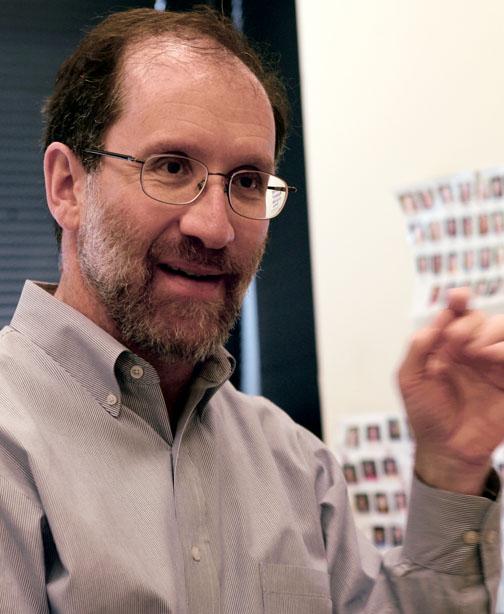
In alchemizing failure into success, perhaps the critical skill is to be alert. “You stumble on things in science,” says chemistry professor Michael Hecht. The key is “having an open mind, and when it jumps right out at you, to not ignore it.” Hecht lately has pioneered what he calls “evolution reloaded”: the concocting of viable genes out of ordinary, off-the-shelf chemicals. A million synthetic genes now populate his workplace freezer (humans have only 20,000); he has used some to make cells multiply across a petri dish, creating living organisms that owe their lives to genes and proteins that hadn’t existed before — evolutionary spawn of neither Genesis nor Darwin. It seems that evolution doesn’t require millennia; as Hecht says, you could do it in your garage. This extraordinary discovery emerged after many setbacks, including funding-agency rejections so demoralizing that he considered changing careers.
Alertness paid off handsomely for James Sturm ’79 at the Princeton Institute for the Science and Technology of Materials (PRISM). His area is microfluidics — making tiny plumbing the size of cells. After six months of hard work, he hit a snag: The fluid was supposed to move in a certain direction, “but one time by accident it got out of alignment with the array, and some weird things happened that we didn’t understand. It led to a totally new way to sort cells and small particles, by a factor of 100 times better than anybody had invented before. We saw something we didn’t expect. And it’s now used in blood-testing.”
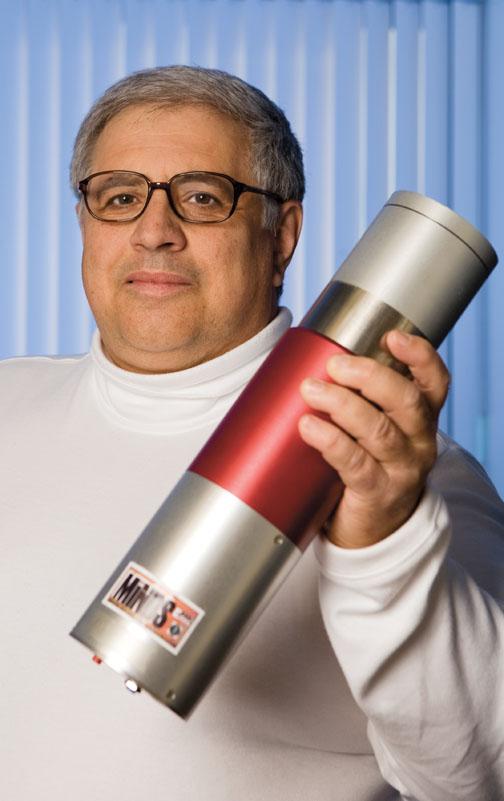
Over at PPPL, Gentile was helping decommission the old Tokamak Fusion Test Reactor after it went offline in 1997. He needed to remove radioactive tritium that had built up on graphite tiles inside. He blasted little sections of the tiles with an ultraviolet laser to see if that would work, placing them inside a vacuum chamber first. Everything seemed to go wrong as rubber gaskets in the chamber repeatedly crumbled. Gentile went in to investigate, and “right away, I could smell ozone” — that’s what was attacking the rubber. Looking closer, he found to his astonishment that the entire tile had been scrubbed of tritium — not by the laser, clearly, but by the ozone the laser accidentally produced. Thanks to Gentile’s alertness to smell, a trouble-plagued experiment led straight to the Patent Office for an ozone-based decontamination system.
Father Time often plays a role: Today’s dead end may appear very different after two years, or 20, or 200. Continental drift seemed ludicrous when first proposed in the 1910s but, a half-century later in Guyot Hall, was gloriously reborn as plate tectonics. The abstruse research of Walter Kauzmann *40 in Frick Lab into the absorptive properties of water only recently has come to underpin the entire study of proteins. Similarly, Princeton astronomer Bohdan Paczynski’s recommendation 30 years ago that we monitor a million stars to look for far-flung worlds seemed crazy at the time but has yielded a dazzling crop of 400 planets outside our solar system.
Around 1973, the brilliant findings of Princeton physicists David Gross and Frank Wilczek *75 regarding the interaction of quarks soon led to a frustrating impasse. Two decades later, physicist Klebanov applied a new theoretical idea (D-branes) and the stubborn logjam shattered.
“It had been viewed as a big failure,” Klebanov says of his predecessors’ work. “The whole field was a seemingly unsolvable problem, and everyone gave up on it. But then a circuitous route serendipitously appeared. So an initial failure can still point to a good problem to solve. A failure means it’s a hard problem, but those are the ones worth solving.” Gross and Wilczek belatedly were awarded the 2004 Nobel Prize.
Father Time again: In 1993, chemistry professor Andrew Bocarsly showed how CO2 could be converted into methanol. “No one cared about it. No government agency wanted to fund me on it. I left the project” — a seeming dud. But jump ahead nearly two decades, and “everybody’s desperate to get rid of the CO2 in the atmosphere. What everybody ignored is now the hottest thing around. We’ve been funded by every government agency interested in the environment, and there’s a startup company.”
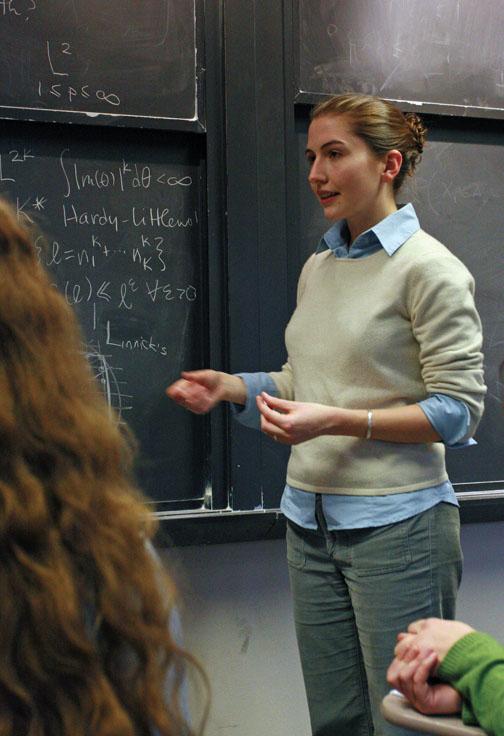
For theoreticians as well as experimentalists, it can take a long time to surmount roadblocks. For her Princeton Ph.D. dissertation, mathematician Lillian Pierce ’02 *09 did battle with a single intractable chapter for more than two years, rewriting it five times and consuming a four-inch pile of paper in scribbling equations.
As he studies how computers think, electrical engineer Sanjeev Kulkarni turns over ideas in his head as he strolls the campus. “You’re walking around terrain in incredibly dense fog,” he analogizes. “You can’t see. You feel the terrain and try to take steps you think are leading to where you want to go. I start down a path, back up again, and only later realize it was the right path.”
Top scientists often take wrong turns. In striving to understand the early universe, astrophysicist David Spergel ’82 was preoccupied for four years by phase transitions, such as what happens when water turns to ice. Eventually, satellite data crushed his pretty model. “But by working on that, I had learned a lot about the microwave background,” he says. “As you work on a project, you develop new tools that you can apply later.” Out of the ashes came his revolutionary work with NASA’s Wilkinson Microwave Anisotropy Probe (WMAP) satellite — named for a late Princeton physicist, David T. Wilkinson — which measures the oldest light in the universe. “But sometimes you waste four years,” Spergel says. “If we knew what we were doing, it wouldn’t be research.”
For graduate students, failure hovers like a dark angel over the laboratory bench — these young investigators need to make a professional splash, and quickly. But even in the best of circumstances, Bocarsly warns them, “everybody hits a streak where things don’t work,” where the molecule just won’t come together. “I’ve seen a grad student work on a problem for four years — the experiments weren’t working, and the equipment wasn’t working,” says Craig Arnold, associate professor of mechanical and aerospace engineering. “And then finally, it clicked.” Arnold’s own introduction to grad school was “months and months of banging my head against the wall” until he realized he was missing something fundamental in his measurements.
But fear of failure can paralyze grad students, even lead them to panic and fudge results. “Your experiment is failing because you aren’t thinking of it right,” Groves advises them. “That’s hard for students. But I tell them, that’s why we call it re-search. We’re out in the jungle with a machete, not paving the eight-lane highway. There are a lot of snakes in the grass.” Bonner exhorts fainthearted youth, “Whatever you do, do the experiment. Stop thinking how it might come out. Loosen up and let the organism speak to you.” And Gentile warns his summer interns that experiments are always messy: Equipment breaks, fire alarms inconveniently go off, results just won’t come. “Life is not a turnkey experience. Keep going, let’s see where this goes. Find a way around it, over it.”
Stakes are much lower for undergraduates. Fearlessness and boundless enthusiasm are their hallmark, says Groves — plus naïveté. Exciting breakthroughs often result. Years ago, Bonner told Chuck Neely ’50 to study how slime mold slugs orient toward light. Neely put some of them in a wooden box with a hole at one end, with no interesting results. But then he “did one of those things undergraduates do,” Bonner says — “I don’t think I would’ve thought of it: He turned the box around.” It turns out that slugs gravitate toward darkness, too. “He came tearing into my office: ‘It’s not light, it must be heat!’” — a discovery new to science.
An undergraduate’s failure in Bocarsly’s lab led to another advance. He assigned Jana Steiger ’90 the straightforward task of making platinum nanoparticles. For weeks she struggled, and Bocarsly grew impatient. “The electrode turns red,” she kept saying. He refused to believe it; finally she stomped out, then returned with proof. “What is this red stuff?” asked Bocarsly in astonishment. “It turned out she had discovered a brand-new molecule. It launched us on a 10-year research program. We still study it today. And it could be a chemotherapy agent.”
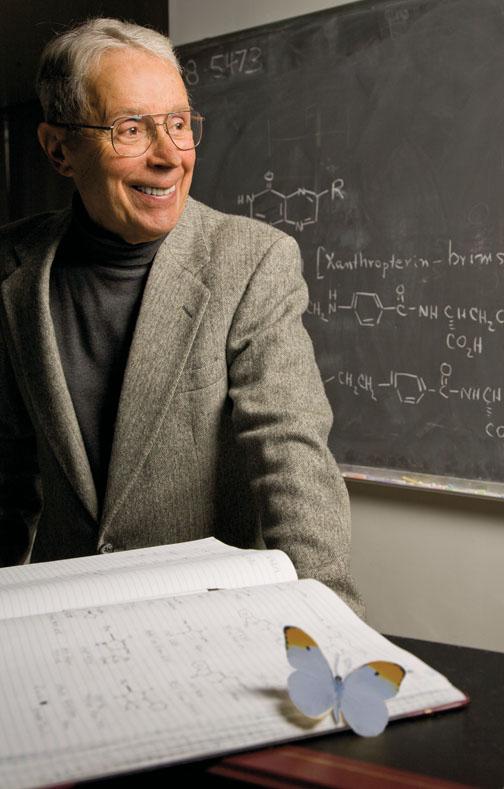
Failure may undergird science, but today’s funding agencies try desperately to avoid it. The funding landscape has become very results-oriented, complains chemistry professor emeritus Edward Taylor, speaking for many. “This leads to hyperbole, misrepresentation, overstating successes, and understating failures.” He is thankful to have experienced “the halcyon days, when you could get funding for just plain interesting studies without promises that anything world-shattering would come out of it.” His own astonishing career might have gone nowhere without such tolerant backing: “I was interested in the pigment agent in the wings of butterflies. Can you imagine a funding agency nowadays approving that — oh, and in 60 years the world’s most successful cancer drug will emerge!”
He refers to Alimta, the Eli Lilly chemotherapy agent that has made a bundle for Taylor, its discoverer; through a contract with the pharmaceutical giant, proceeds from the drug are helping to pay for the new chemistry building on campus. Everything is a failure until it works, he observes. “It takes a hell of a lot of persistence to emerge victorious in the end. You’ve gone years and years and gotten nowhere. My project began in 1946, and we got FDA approval in 2004. In four years of intensive work with Lilly, we made over 800 compounds. It’s a story of over 800 failures.”
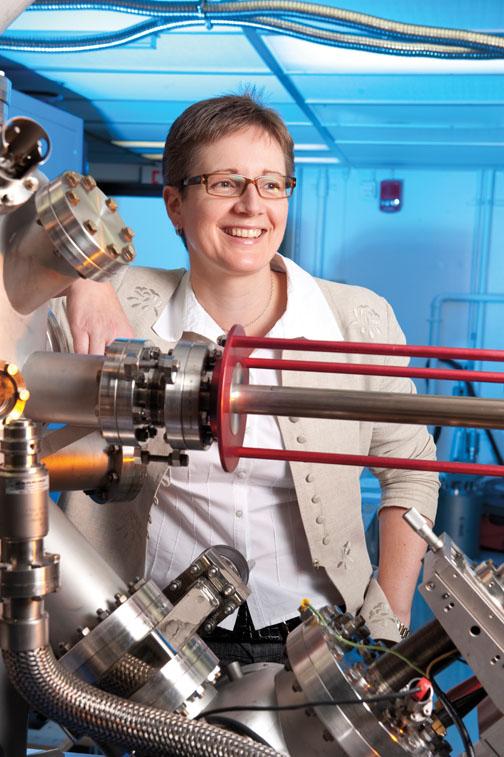
In for the long haul, scientists must be stoic. “For about three years you’re depressed, and then you feel fantastic when you have a great idea. And then there’s another three years” — that’s how a titan in the field described the life of a mathematician to Princeton undergraduate Pierce. Today she is a professor herself — soon to move from the Institute for Advanced Study to Oxford — and experiences such difficulties firsthand: “Most of the time I feel like I’m failing. When you have no idea what to try next — those moments are very frustrating.” Laser expert Claire Gmachl, professor of electrical engineering, can relate: “What we publish, what we patent, is a very small part or fraction of the work that is being done. Ninety-five percent of the time, things don’t work, or the answers are not definitive. Basically, our life as engineers is a life of failure, punctuated by these moments of absolute victory. Those are the wonderful moments.”
“You have to believe in what you are doing,” says Zondlo, the environmental engineer, who came to Princeton in 2008. “Otherwise you don’t go through the tremendous effort and heartache.” He has staked his fledgling career on a single instrument he designed himself, one that studies global warming by measuring water vapor with a laser beam. It straps onto a National Science Foundation Gulfstream jet that is flown from pole to pole in an island-hopping roller-coaster ride — zooming over ice floes, then shooting straight up to 45,000 feet, where the sky turns blue-black. Zondlo monitors the data from half a world away. The device must make fantastically precise measurements, whether at 94 degrees Fahrenheit above a jungle landing strip or at minus 94 in the high atmosphere a half-hour later, when it is rocketing along at eight-tenths the speed of sound.
Given the millions of dollars involved and the punishingly tight schedule of landings, there is no room for error. And yet anything can go wrong, to Zondlo’s perpetual anxiety. On test flights, the instrument experienced hiccups, all of which he painstakingly fixed: Turning it upside down, for example, when high-altitude sunlight blinded it. But even his best-laid plans were rocked by a calamity that happened in the Solomon Islands last November, where the plane spent 30 hours on a primitive runway. The precious instrument was covered to protect it from rain and bugs. But when technicians removed the cover before flight, they found its optics slimy with fast-growing fungus. Without a ladder, and with engines revving, they couldn’t clean them. “I can’t tell you how frustrated I was — when you look and you see a flat line, data is zero. You’re pulling your hair out, you can’t sleep at night.”
That’s failure hitting home for a young scientist. “I’m not going to lie to you, there’s tremendous pressure. You’re trying to establish yourself.” What keeps him going, despite the constant peril? “The passion is that you are doing a measurement that’s never been done before, and that’s what ultimately drives me. Yes, this will be very hard, but we’re going to get new data no one has seen.” Each failure teaches him something new, and in spite of everything, Zondlo’s instrument has revealed the existence of plumes of water vapor thousands of feet high, which no one suspected. More flights are scheduled, and Zondlo is pressing ahead: “There’s a lot of stress, but it’s very exciting.”
W. Barksdale Maynard ’88 is following up Woodrow Wilson: Princeton to the Presidency with a book about the architecture of the University campus.