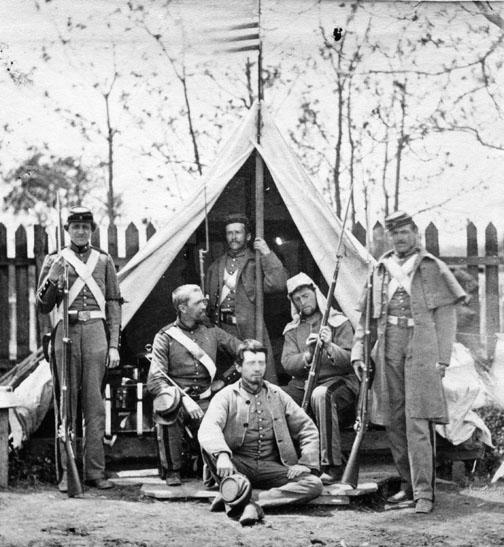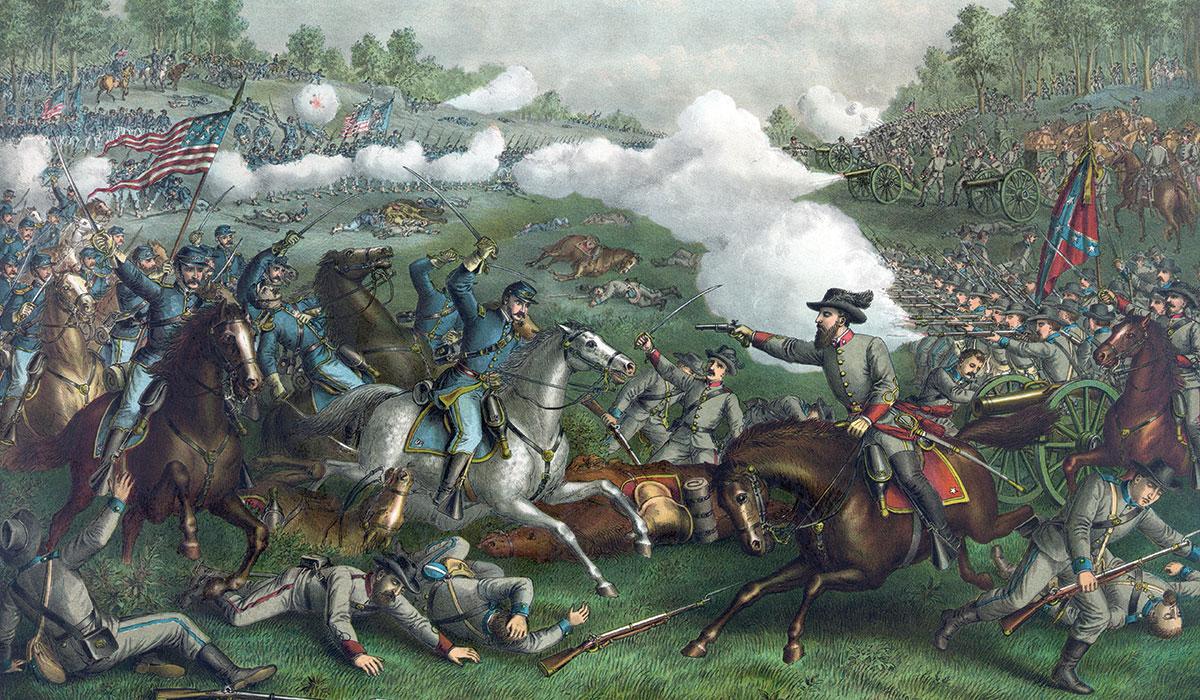

The “northernmost outpost of Southern culture” — that’s how a letter to the editor of the Prince described the University in 1935. The letter was a joke — signed by “Jefferson Davis ’36” and four Confederate colleagues — but its sentiment rang true: For generations the school had a certain Dixie flavor, in spite of lying farther north than Springfield, Ill.
With the sesquicentennial of the start of the Civil War next month, it seems timely to tell the story of Princeton’s role in the Confederacy. In the Colonial era, Harvard and Yale served New England; Penn and Columbia belonged to Philadelphia and New York. By contrast, Princeton sent its tendrils southward, down the route of the great Scots-Irish migration. Three of the school’s first dozen graduates went to Virginia as Presbyterian ministers, recruiting future students there. Princeton soon became the most Southern of all the Northern colleges. By the 1790s the pattern was set: Forty percent of undergraduates came from below the Mason-Dixon Line.
From James Madison 1771 onward, Princeton grads were honored in their Southern communities for erudition and polish. They often became local leaders — planters, doctors, lawyers, judges. In the decades prior to 1860, a total of 15 Southern governors had been Tigers. Vice President of the Confederacy Alexander Stephens praised the “sound, practical wisdom” of Princeton alumni, “the wise moderation and conservatism of their views.” He considered these graduates “superior to those of any other school or college in the country.”
According to period accounts, the planters’ sons who enrolled at Princeton College fit a stereotype: courtly to the point of chivalric, warm-hearted toward friends but hot in a quarrel, fond of gunplay. They set a colorful tone, even as they outraged Northern peers with their illiberal views. Henry Clay Marks 1863 of Louisiana was typical: “a genuine Southern character, proud and opinionated in all that related to the social and political principles of his section, but in his intercourse with his associates, a gentleman of the fairest mould.” So wrote sorrowful classmates after the 18-year-old met his death in the Confederate army.
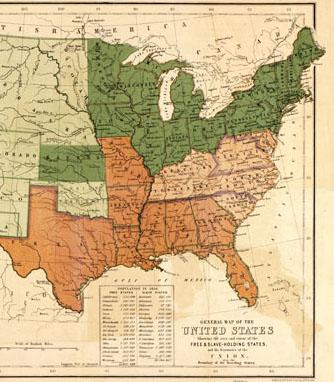
The school prided itself on amicable relationships among students and faculty, but in time it was torn by quarrels, along with the country. In December 1859, pro-Southern students marched to condemn “John Brown, The Horse Thief, Murderer, and Martyr,” and burned effigies of Northern political leaders on front campus. The town was split, given its longstanding ties to the South — the Potter family of Savannah slaveholders, for example, summered at Prospect House, next to campus. John H. Potter 1863 grew up in Princeton, died fighting for the Confederacy (“gentle as a woman, he was brave as a lion”), then was brought home to be buried in Princeton Cemetery.
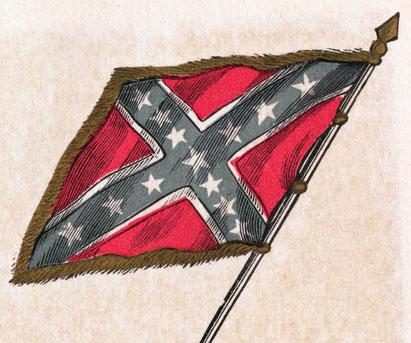
Views were hardening. In his youth, Georgia Supreme Court justice Joseph Lumpkin 1819 joined the back-to-Africa American Colonization Society, in which Princetonians played leading roles, but later he condemned emancipation and equated black people with the biblical “Tribe of Ham,” marked for servitude. Abolitionists were “fiends,” and “humanism, which has so pervaded and poisoned the northern mind,” inevitably would yield “a sea of fratricidal blood.”
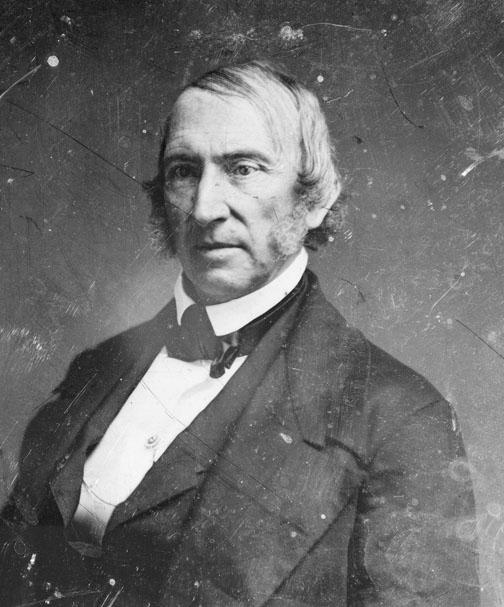
Several vociferous champions of slavery attended Princeton. James McDowell 1816, soon to be governor of Virginia, gave an alumni oration in 1838 that called abolitionism “destructive and mad philanthropy” that threatened to bring “a strife and a woe that may bury us all.” Its followers, he said, fomented bloody slave revolts. So popular was his florid lecture that a local printer made copies to sell to students, and it was quoted approvingly in Southern newspapers.
Fellow Virginia student Abel Upshur was expelled for participating in the Riot of 1807, a rebellion against a strict college administration. Later he became U.S. secretary of state, calling slavery “a great positive good, to be carefully protected and preserved,” and spearheading the annexation of Texas as a huge new slave state — until he was blown up by an exploding cannon on the U.S.S. Princeton in 1844.
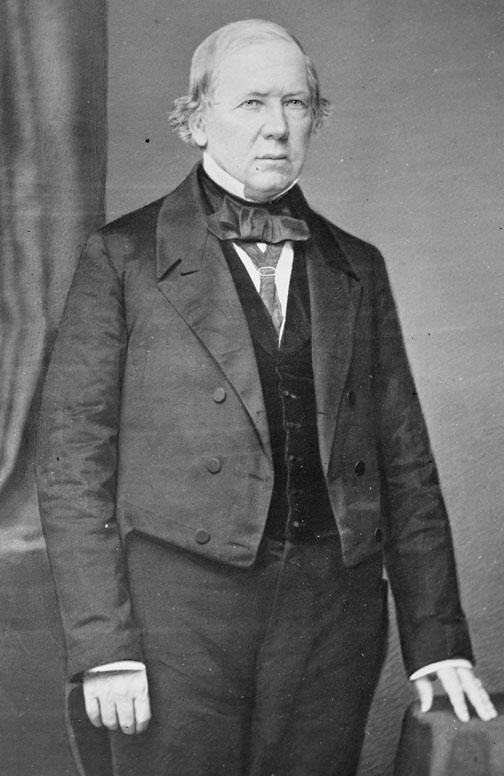
In the following decade, U.S. Supreme Court justice James Wayne 1808 concurred in the Dred Scott decision that claimed black Americans had “no rights which the white man was bound to respect” — an inflammatory ruling that pushed the nation toward conflict. Alfred Iverson 1820 of Georgia, one of a remarkable 22 antebellum Southern U.S. senators educated at Princeton, gave ferocious speeches threatening secession.
On campus, the graduating Class of 1861 smoked a “pipe of peace” at the big cannon in May, then milled about at the east end of Nassau Hall saying fond farewells — friends who would meet again on battlefields (of 119 in the class, at least 10 would not survive the war). Relatively few Southerners remained after a mass exodus the previous winter, when the secession of seven Deep South states sent many hurrying home. The College was facing the greatest crisis in its history. “Her resources were crippled, her interests divided,” faculty historian William M. Sloane later would write, and faced “utter shipwreck in that dark hour.”
Fearful of alienating Southern sympathizers who remained — including a vocal New York City contingent — College authorities discouraged patriotic demonstrations. When students hoisted an American flag atop Nassau Hall right after Fort Sumter, it quickly was hauled down (though later raised again). When three undergraduates ducked a pro-Southern classmate from Brooklyn under the campus pump to “wash the suds of secession” off, they instantly were expelled. Newspapers blasted Princeton for being unpatriotic.
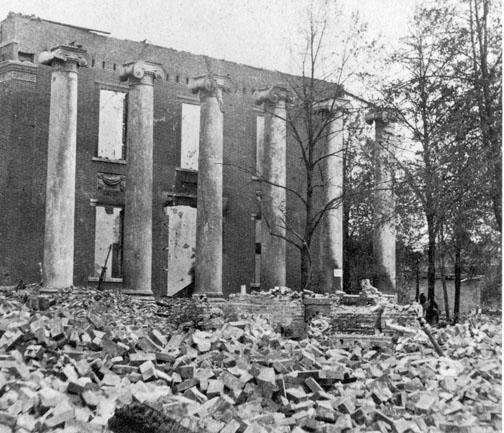
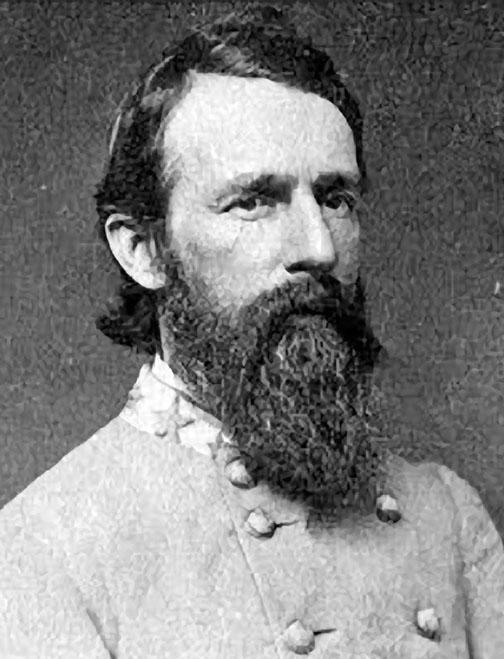
There was reason to be suspicious of Old Nassau, whose alumni were deeply complicit in the Rebel cause. If 155 Tigers enlisted to fight for the North, as period accounts say, there were many more than that on the Southern side. Research by PAW turned up at least 200 Rebel soldiers, and intensive mobilization in the Confederacy meant there probably were many more. No full list of Princeton’s Johnny Rebs ever was compiled.
As the Union splintered, James Chesnut 1835 of South Carolina resigned from the Senate in Washington, then helped draft the Confederate Constitution. Present at the moment war began, he delivered the final note warning Fort Sumter to surrender. History remembers him best for his wife, Mary Boykin Chesnut, author of a famous wartime diary.
Among several alumni in the Confederate Congress, Mississippian Henry Chambers 1844 took his seat after dispatching his rival candidate in a duel. Later he gave a much-noted speech warning against the use of black men as soldiers in the Southern army, a contentious issue. Alexander Boteler 1835 (whose wife was Helen Stockton of Princeton) helped design the Confederate flag and the Great Seal of the Confederacy, using artistic talent apparently inherited from granddad Charles Willson Peale, who painted “Washington at the Battle of Princeton.” At one decisive juncture, Boteler convinced his impetuous friend “Stonewall” Jackson not to resign from the Southern army. The last survivor of the ill-fated Confederate States of America (CSA) Congress was a Princetonian, Jehu Orr 1849, who died in Mississippi in 1921.
From its founding, Princeton was renowned as a training ground for clergymen. Scores of alumni filled pulpits throughout the South, and from their ranks came some of the top religious leaders in the Confederacy. Feeling a need for divine support as Union armies marched on Richmond in 1862, President Jefferson Davis was officially confirmed as a Christian by Episcopal bishop John Johns 1815. The noted divine had done the same for Robert E. Lee a decade before — like Davis, Lee never officially had joined a church.
As a little boy, Lee recited his catechism to Johns’ predecessor as bishop of Virginia, William Meade 1808. In the midst of war, Lee famously rushed to the deathbed of the elderly Meade, who blessed him. “Of all the men I have ever known,” Lee said of Meade, “I consider him the purest.”
That Union assault on Richmond so feared by Davis — the Peninsula Campaign — proved especially bloody for Princeton alumni. At least five died, fighting for South or North in armies led by Lee (son of alumnus “Light Horse Harry” Lee 1773) and George B. McClellan (future trustee of the University). Enlisted with Gen. William Barksdale’s Mississippi Brigade, Beach Reading 1863 went into battle for the first time on the Peninsula and immediately was shot dead, age 19.
The following year, the battle of Gettysburg proved similarly fatal for Tigers (four died, all but one on the Southern side). William McCaslan 1854 led a gallant attack by Florida troops — after Pickett’s charge. Having survived this exercise in futility, he rode back to Confederate lines with a fellow officer. As he went, McCaslan spoke of battles yet to come — “and it seems impossible to pass in safety through them all,” he said glumly. At that moment a cannonball hit his head.
University of Virginia classics professor Basil Gildersleeve 1849 taught all winter, then jumped into the saddle for summers with the cavalry. In September 1864 he was shot through the thigh in the Valley of Virginia, giving him a lifelong limp: “I lost my pocket Homer, I lost my pistol, I lost one of my horses, and finally, I came near losing my life.” This was not Gildersleeve’s first wound; as a student he had shot himself in the face while frog-hunting in Scudder’s Swamp in Princeton.
Young Gildersleeve lived at 30 East College dormitory overlooking the cornfields of the Prospect estate. His freshman roommate, James Lee 1849, went on to write a military manual, The Volunteer’s Handbook (Richmond, 1860), that sold 20,000 copies. Lee was mortally wounded at First Bull Run.
Also killed in that battle was fellow Virginian Peyton Randolph Harrison 1851 — Gildersleeve’s senior-year roommate. His brother, the Rev. Dabney Harrison 1848, felt obliged to honor Peyton’s memory by enlisting. At Fort Donelson, Tenn., Dabney Harrison dragged himself from his sickbed, led soldiers in prayer, then died in a cavalry charge.
Many Princetonians fought in Mississippi. When the Pennsylvania cavalry came through the town of Canton, officer Rowland Cox 1863 took up residence in a plantation home. By strange chance it turned out to be that of his classmate, Benjamin Ricks, away fighting for the Confederacy.
A few miles away in Rolling Fork, at the time of the siege of Vicksburg, medical doctor William Chaney 1852 got word that a Yankee gunboat was creeping up a nearby river. The owner of a fast racing rowboat, he secretly had two slaves paddle 80 miles downstream to warn the Confederate army, including Gen. Allen Thomas 1850. Meanwhile, 600 U.S. marines bivouacked on Chaney’s lawn. Overnight, he positioned sharpshooters in nearby trees, and they opened fire at dawn. The federals fled to their gunboats, and Chaney’s efforts helped delay Vicksburg’s fall.
For a time, Chaney served the Confederate army as a surgeon. So did Joseph Jones 1853, who wrote a famous wartime report about illnesses raging in Georgia’s infamous Andersonville Prison. He was the first person ever to describe the terrifying flesh-eating disease now known as necrotizing fasciitis.
Throughout the war, at least seven Confederate brigadier generals were Princeton men. At Antietam, Gen. James Jay “Sally” Archer 1835 led a notable charge “with a yell of defiance.” The slight, frail officer was ill at the time and had just dragged himself out of an ambulance wagon. Sick again at Gettysburg, Archer was captured, the first of Lee’s generals ever to be seized. The diary of Mary Chesnut explains his nickname: “In Princeton College they called him ‘Sally’ Archer he was so pretty — when he entered.”
One of Princeton’s highest-ranking Confederates, Maj. Gen. William Wirt Allen 1854 was shot while waving a saber to rally cavalry troops at Murfreesboro, Tenn. Holding high the mangled remains of his hand, he shouted to his men, “Avenge this!” Allen survived the war, and his bullet-torn uniform and battle-flag were placed reverently in the cornerstone of the Confederate Memorial Monument in Montgomery, Ala.
One of the most prominent Marylanders to support the Confederacy, Gen. Bradley Johnson 1849 led troops northward across the Mason-Dixon Line in July 1864 for the last Confederate raid into Union territory. He oversaw an infamous act, the burning of the town of Chambersburg, Pa., where an eyewitness called him “most vindictive and merciless.” On a previous incursion through Maryland, he had ordered his own house torched, since he never expected to live in the North again.
Wartime experiences were seared into Johnson’s mind. Once he stopped at a roadside cabin before going into battle and asked for a drink of water, which was delivered in a cracked cup. Decades later, Johnson said, he still “could have drawn a map of that mug.”
As the beleaguered Confederacy faced invasion on all fronts, McHenry Howard 1858 was captured at Spotsylvania, Va. Standing miserably in the rain, he heard a Northern officer behind him exclaim, “Why, I was at Princeton College with that fellow!” — but he was too angry to turn and see who it was.
Later, Howard led fellow graycoats in prayer at Old Capitol Prison in Washington, making sure to bless “thy servant, the President of the Confederate States,” notwithstanding the fact that it was a week after Appomattox. Looking out at all the American flags flying in the city, the prisoner could reflect upon the irony that he was the grandson of Francis Scott Key.
After the war, many veterans came back home to ashes. In punishment for his serving in the Confederate Congress, Boteler’s West Virginia plantation was burned by Union soldiers, even as his tearful daughter ran back inside to play her piano one last time. In New Bern, N.C., the home of Frederick Roberts 1855 was destroyed. His undergraduate photograph album reappeared in his mailbox more than 30 years later, returned to him by the daughter of the New Hampshire soldier who stole it.
Throughout the postwar South, ex-Confederates worked diligently to undermine Reconstruction and mythologize the Lost Cause. Joseph Williams 1852, who formerly owned slaves on five Florida plantations, organized vigilantes to “protect the purity of the ballot box.” In establishing a branch of the Ku Klux Klan in Georgia, John Reed 1854 helped ensure that “permanent victory perched upon the banners of the white race,” and the all-white electorate soon chose as governor wealthy plantation owner and unrepentant Confederate Alfred Colquitt 1844.
Back in Princeton, the College tried to patch up its reputation as patriotic. Having awarded Lincoln an honorary degree late in the war (see p. 14), the trustees mandated a June 1866 memorial service for its Civil War dead at First Presbyterian Church, which made no mention of Rebels. Honored visitors to campus during Reconstruction included Gen. William Tecumseh Sherman and President Ulysses S. Grant.
These actions alienated CSA veterans like Gildersleeve from their alma mater: “The authorities thought it necessary to emphasize their loyalty to the Union in a way that exasperated all ardent Southerners like myself. The bitter feeling lasted.”
Southerners never regained their huge antebellum prominence among the student body, settling in at 10 percent for decades. Students like Woodrow Wilson 1879, born in Virginia, sometimes felt like a beleaguered minority. Over time, however, Northern attitudes softened, and the Lost Cause enjoyed a romantic vogue. Undergraduates founded a convivial Southern Club in 1888.
Twenty years later, the University advertised for information on lost alumni in Southern newspapers and Confederate Veteran magazine, in order to “complete our record and give honor where it is due.” Officials found it difficult to locate Princeton men on distant Black Belt plantations or find accurate CSA army records, however. When Tigers were rediscovered, they often kept mum about their wartime experiences. The class secretary who sent around a 40th-reunion survey asking about “events, travels, etc.” got a wry response from John Gammon 1863 in Georgia: “I have been shot quite numerously.”
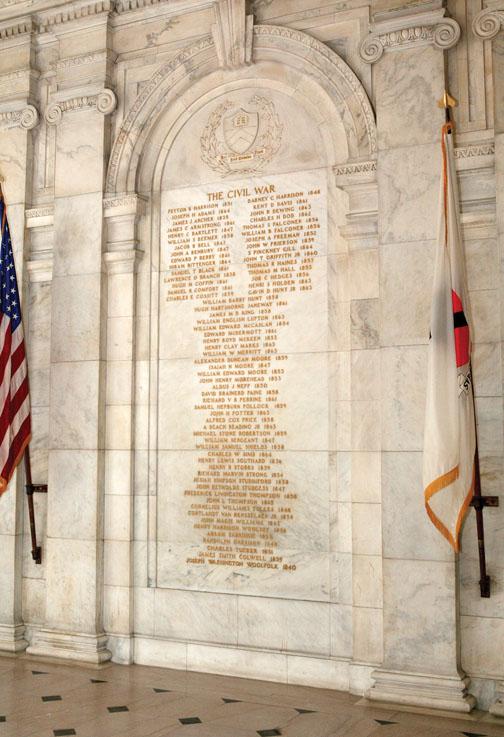
After World War I, Memorial Atrium was created in Nassau Hall. Fallen soldiers’ names were carved in gilded letters on walls of white Alabama marble. The plan was to group the Civil War dead by affiliation, Union or Confederate, but University president John Grier Hibben 1882 vetoed this: “No, the names shall be placed alphabetically, and no one shall know on which side these young men fought.”
The war was personal for Hibben: He had been born a week after Fort Sumter, and his father, a Union Army chaplain, died of fever at Fort Donelson.
Perhaps never before, Confederate Veteran reported, had Northern and Southern names been mingled in a memorial, with no indication of allegiance. Including Rebel names at all was rather daring: Yale had done so in its Civil War memorial, but Harvard had refused.
Sixty-two names of Princeton dead were engraved in Memorial Atrium in 1921–22. “Strangely enough,” Confederate Veteran noted, “there are 31 from each side.” But several Southerners had been left off, understating the Rebel affiliation of so many of the University’s sons. More names were added through 1939, bringing the total to 70, though records in Mudd Library show Southern names that still were not included. The memorial’s count continued to remain virtually equal: 34 Northern and 36 Southern. This supposed even split is one of our enduring campus legends, and Orange Key tour guides (claiming a 35–35 tally) point it out to visitors several times daily.
W. Barksdale Maynard ’88 came to Princeton from Alabama. He is the author of Woodrow Wilson: Princeton to the Presidency and a book on the history of Princeton’s architecture, coming in 2012.
Tigers also wore blue

For all its Southern ties, Princeton made many contributions to the Northern cause — the majority of Tigers being staunch Unionists. New Jersey troops were mobilized by longtime college trustee Gov. Charles Olden at Drumthwacket and by his successor, Joel Parker 1839. Four major generals were graduates, including Samuel P. Carter 1840, the first person to earn that rank plus the rank of admiral in the Navy.
President Lincoln put his faith in Tigers. Gen. Jeremiah Boyle 1839 was his military governor in Kentucky, cracking down on dissent. Minister to France William Dayton 1825 worked to prevent that nation from coming into the war on the Southern side, right up to his scandalous death in the arms of a Paris courtesan. Assisting Dayton was Lincoln’s emissary Edwin Emerson 1849.
Lincoln’s financial adviser, John A. Stewart, later served Princeton as trustee and acting president after Woodrow Wilson resigned. In 1926, the 103-year-old Stewart contributed funds to build the University Chapel — the pews of which are white oak cut in 1863 and originally intended for Union gun carriages.
Numerous alumni entered the surgical corps. Alfred Woodhull 1856 cataloged grisly specimens for the Army Medical Museum, where curator George Otis 1849 edited the landmark Medical and Surgical History of the War of the Rebellion.
A doctor on the sailing frigate U.S.S. Congress at Hampton Roads, Edward Shippen 1845 was eyewitness to a new era in warfare: “There was a huge black roof, with a smoke-stack emerging from it, creeping down towards Sewell’s Point” — the former U.S.S. Merrimack, now converted into Confederate ironclad Virginia. It devastated the Congress with a murderous broadside, which Shippen barely survived: “Blood and brains actually dripped from the beams.”
Alumni compiled distinguished battlefield records. A grizzled veteran of the Fremont Expedition to the Rockies, topographical engineer James Abert 1838 (of the bird “Abert’s Towhee”) fought in the Valley of Virginia. Charles Phelps 1852 received the Medal of Honor for bravery under cannon fire at Spotsylvania.
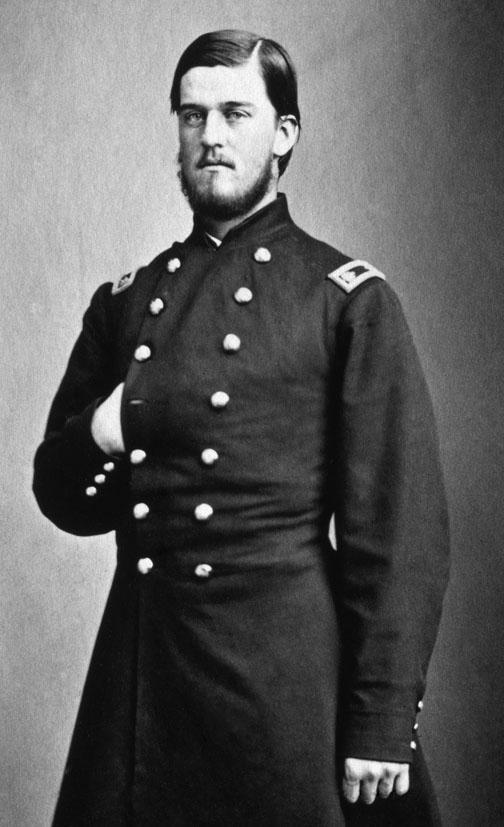
The name of Col. Henry McKeen 1853, felled by a sharpshooter, was applied to the postwar Western fort occupied by Gen. George Custer before Little Big Horn. Hugh Janeway 1861 fought with “reckless bravery and undaunted determination” throughout the war. Wounded 12 times (as he wrote his class secretary), he was fatally shot through the temple on April 5, 1865, four days before Appomattox.
When Richmond fell, the first African-American troops to enter the stunned city were commanded by Col. Lucius Warren 1860. Lee’s surrender was witnessed by staff officer William Potter 1863, who carried captured Confederate battle flags back to Washington. On campus, students celebrated with bonfires at the big cannon, but soon buildings were draped in black for the martyred Lincoln, and “WE MOURN OUR LOSS” was etched on a Nassau Hall windowpane. The president’s family doctor, Robert King Stone 1842, had stood at his deathbed.
Postwar, Princeton’s fortunes were rebuilt using the $3 million in wartime railroad profits of donor John Cleve Green. The sons of Union generals George B. McClellan and James A. Garfield joined the faculty. Language professor Joseph Karge kept battlefield memories alive with stories of his cavalry exploits. Styling himself “General,” he would strut around the classroom shouting, “Ah! You! Your head is filled with sawdust!”