

For These Alumni Who Remember Sept. 11, One Day Shaped a Lifetime
Princetonians who were students or recent graduates during the attacks say that day shaped their careers
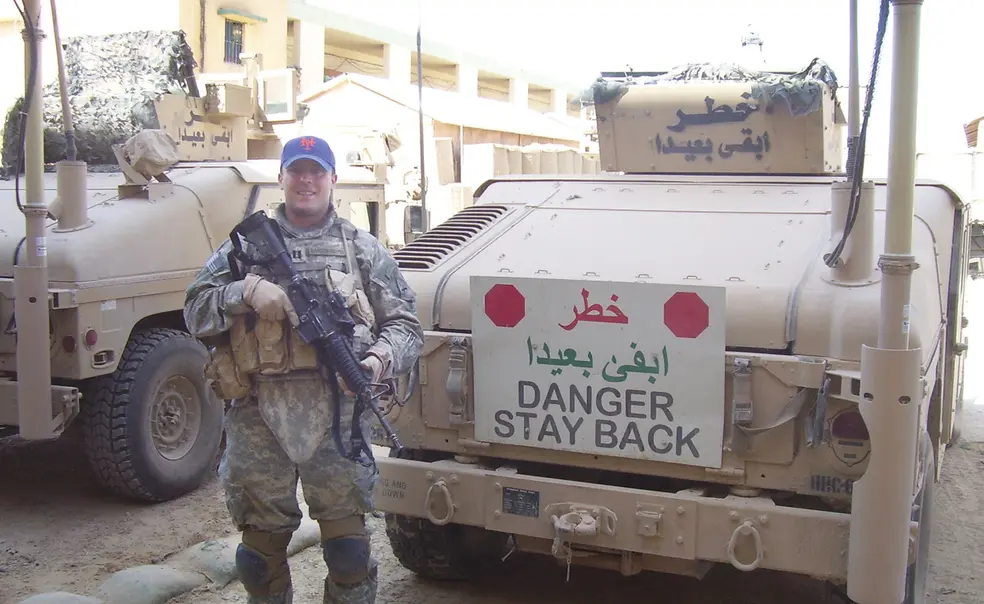

Like many Americans who lived through the terrorist attacks on Sept. 11, 2001, Bridget Nolan ’02 remembers the day vividly. It was a beautiful sunny Tuesday on Princeton’s campus with classes set to begin two days later.
Then a senior, Nolan was asleep in her room in 1901 Hall when two hijacked planes hit the World Trade Center, but it wasn’t long before a classmate frantically knocked on her door to tell her about the terrorist attack that was unfolding. She joined several others in a friend’s room in Foulke Hall, where they watched on TV along with Americans across the country and around the world, as news of another two hijacked planes emerged.
“I was panicked, obviously devastated, worried,” Nolan recalls. “I had no idea what was happening.” It reminded her of another experience three years earlier.
As a senior in high school, she represented the United States as an Irish dancer at the 1998 World Scholar-Athlete Games in Belfast, Ireland.
While there, a car bomb planted by the Real Irish Republican Army killed 29 people and injured more than 200 others. “In very important ways, my most formative experiences were bookended by terrorist attacks,” Nolan says. Living through them led her to join the CIA as a counterterrorism analyst and later to become a professor of security studies.
Sept. 11 changed everyone’s life to some degree, including in seemingly trivial ways such as making heightened airport security and long checkpoint lines the norm. Like Nolan, some Princetonians who were students or recent graduates at the time found their careers profoundly shaped by the attacks. Now, 25 years later, they can see how that day altered their futures.
Defense Secretary Pete Hegseth ’03 has cited 9/11 as a pivotal moment for him. It confirmed his choice, made four months earlier, to join Army ROTC while at Princeton. “From that day forward, I felt an unshakeable call to action, a duty to defend our sacred homeland with everything I had,” he said during a 9/11 remembrance ceremony at the Pentagon in 2025.
After the attacks, war seemed inevitable and the military became an obvious choice for many. Will Bardenwerper ’98 majored in English at Princeton and was working in finance in New York City the day the Twin Towers fell. About a week later he quit his job to join the military.
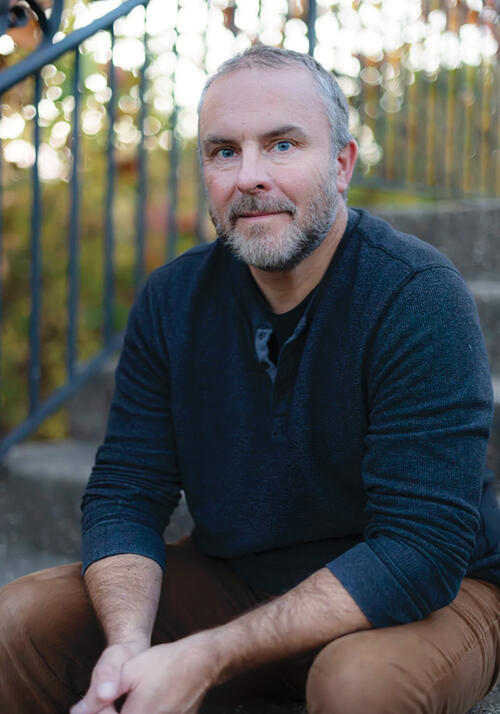
“It really was me observing the selfless service of the NYPD and the FDNY and even volunteer fire departments from all across America,” he says. “I remember for days and weeks afterward, you’d see fire trucks coming from all over the place to go down to ground zero and help with the recovery efforts.”
He spent about five years in the military serving as an Airborne Ranger-qualified infantry officer in Iraq. Bardenwerper saw his time in the military as a duty, not a career. Once he was out, he returned to school to study international relations at Johns Hopkins, worked for almost five years in the office of the secretary of defense, and is now a writer.
Jon di Cristina ’08, who entered Princeton in 1998, recalls trying to donate blood the day of the attacks at a hospital near campus. He just wanted to feel “like I was taking some kind of action.”
He had just returned from a gap year, but by December 2001 di Cristina left Princeton again and returned home to Modesto, California, to join the Air Force. He started basic training a few weeks later at Lackland Air Force Base in San Antonio, Texas.
Fighting in the War on Terror was supposed to be a huge moment of importance and purpose, di Cristina says, but things didn’t pan out. He served as a cryptologic linguist, translating intercepted communications from Latin America, stationed in San Antonio. The experience was humbling, and it forced him to grow up and realize what he ultimately wanted out of life. When he left the military in 2006, he returned to Princeton to finish his degree and is now a lawyer specializing in municipal law.
“I gave the military four and a half years of my life,” he says. “I’m proud of what I did, but no, I did not see combat. I did not put my life on the line.”
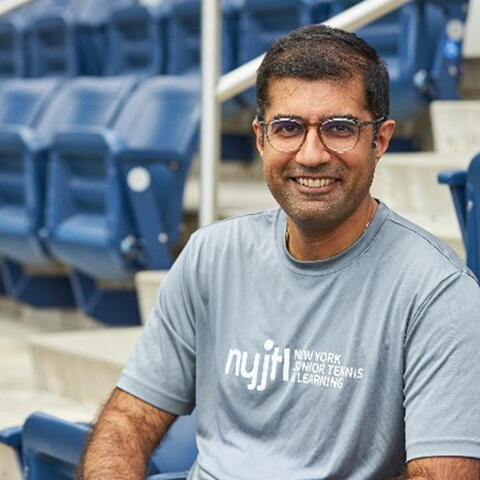
When Udai Tambar *02 started at Princeton’s School of Public and International Affairs, he had planned a career in education and youth development. But after the attacks, he became determined to help New York City rebuild. He didn’t know who to call or where to turn. “The infrastructure to respond was slowly getting built,” he says.
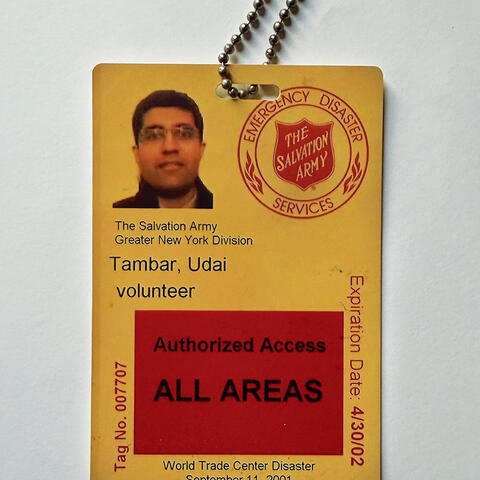
He eventually connected with Jack Krauskopf *65, who was working with the 9/11 United Services Group, which was newly formed to coordinate services and relief efforts. Tambar started as an intern and joined full time when he graduated.
“The work still needed to get done,” he says.
The team was small, so his responsibilities varied from connecting the families of victims with social services to advocating for an expansion of eligibility requirements for federal assistance programs. They also visited ground zero, to see the impact firsthand.
“I was part of something special,” he says. Tambar worked there for about two years before returning to policy and education work. He’s now president and CEO of New York Junior Tennis & Learning.
For some Princetonians, their careers were already set in motion, but 9/11 had an impact. Tunisia Owens *03 was recruited to join the State Department as a diplomat, and in exchange her education would be funded by the government. It was a fearful time, she recalls, but she never considered changing course. “I was so young at the time that it was just like this path was laid out for me,” she says. As a master of public affairs student, she took classes that covered torture warrants and terrorism tactics.
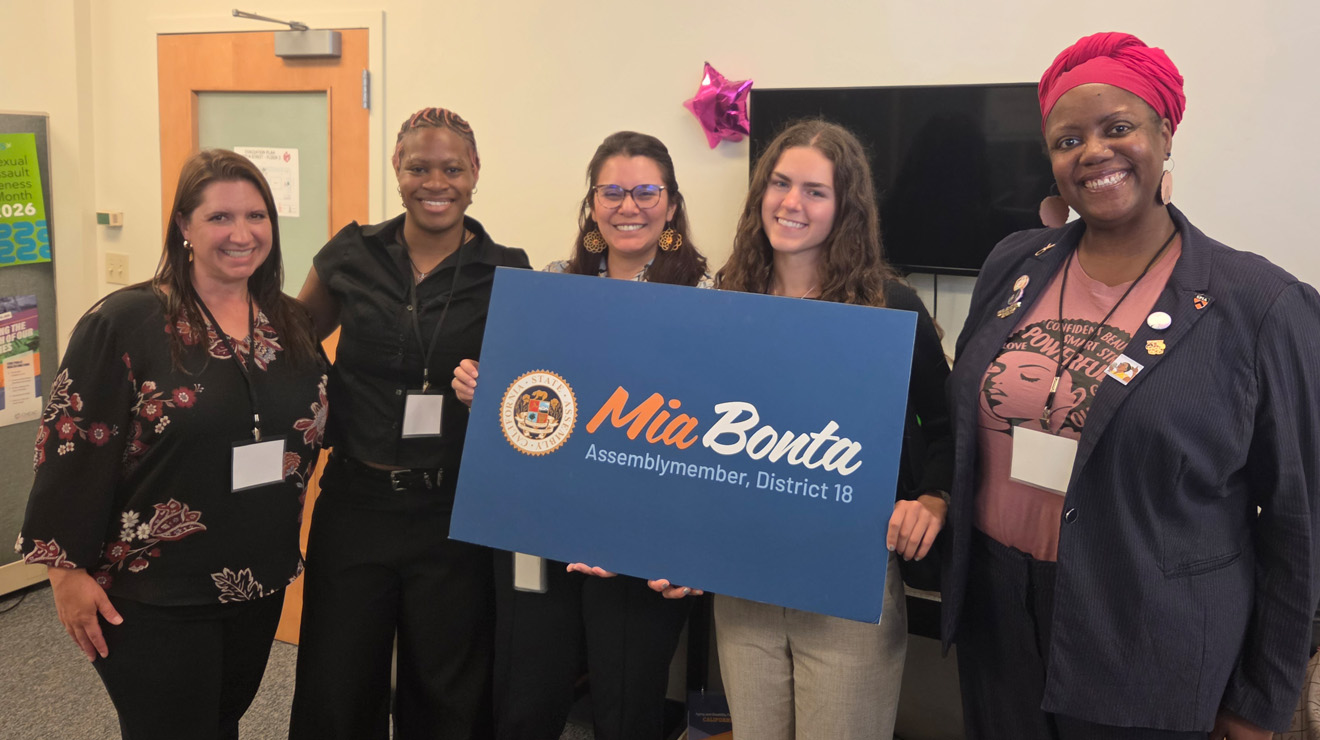
During her five years at the State Department, Owens worked with American Citizen Services and in Kuwait as a cultural attaché, among her various assignments. She says all her experiences were filtered through the lens of 9/11, as many policies and procedures were created in response. Once she completed her service commitment, she left the State Department. She is now a social justice lawyer at the Alameda County Community Food Bank.
Christian “C.J.” Diegel ’01’s situation was similar in that he needed money for school, and he turned to an Air Force ROTC scholarship. He was preparing for an exam at Goodfellow Air Force Base in Texas on the morning of 9/11. He recalls fellow soldiers trying to get out of the military when they realized the attack meant war, but it invigorated Diegel.
“I knew that I wanted to be involved in the fight,” he says. “I knew that I wanted to contribute. I wanted to be part of the action, and I was.” Diegel worked in special operations and was deployed five times. His active duty ended in 2005, and he stayed in the reserves for eight more years. After, he worked as a defense contractor and is now a financial adviser for Wilde Wealth.
When thinking back to that day 25 years ago, Diegel says Princeton prepared him to serve. “We were in the right place at the right time with the right attitudes,” he says. But all these years later, he and the others who spoke for this story worry about where the country is headed and whether their sacrifices have truly made a difference. “Sept. 11 had a huge impact on us as a country, and unfortunately, I feel like we didn’t fully learn the lesson,” Owens says.
Diegel adds: “I do think it’s only a matter of time before something else like that happens again.”
The Latest
See all


Related News
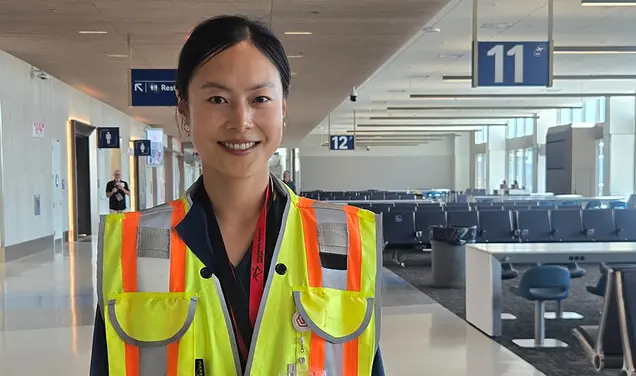
Janice Lee ’09 Worked to Renovate One of Hollywood’s Best-Kept Secrets
An engineer by training, Lee has been deputy project manager on the renovation of Hollywood Burbank Airport

1 Response
Rocky Semmes ’79
1 Month AgoWar Is Never ‘Inevitable’
Pete Hegseth ’03 is quoted, referring to the United States of America as “our sacred homeland,” disclosing the justly jettisoned juvenile vocabulary of an outdated era. That vocabulary of the last century crusaded the tried, tested, and ultimately trashed old trope of “Blood and Soil.” Triumphantly, the hard-fought allied victory of World War II soundly rejected the misleading mendacity of that reprehensibly misguided myth.
We are a nation, a republic, and not a “homeland,” and what is sacred is our freedom and our liberty. These are the Constitutional rights pledged to ourselves that now receive increasingly aggressive threats from our own current government, of which Pete Hegseth is a component.
The referenced PAW article offers the opinion that “After the attacks (of 9/11), war seemed inevitable,” but war is never inevitable and instead only a choice of action. As historians Ariel and Will Durant succinctly summarized in their seminal The Story of Civilization, “One of the lessons of history is that nothing is often a good thing to do and always a clever thing to say.”
It is duly recorded that our (evidently lackluster) U.S. intelligence had full recognition and understanding about the Tora Bora caves (the post 9/11 hideout of Osama bin Laden). Yet it took nearly 10 years of extensively exhausted (and apparently largely ineffectual) U.S. blood and treasure before that mastermind of 9/11 was finally brought to justice.
Are we safer as a nation now, than then? Current circumstance safely suggests that the jury, on this count, still remains out.