

Affinity Celebrations Persist at Princeton Amid Nationwide Scrutiny
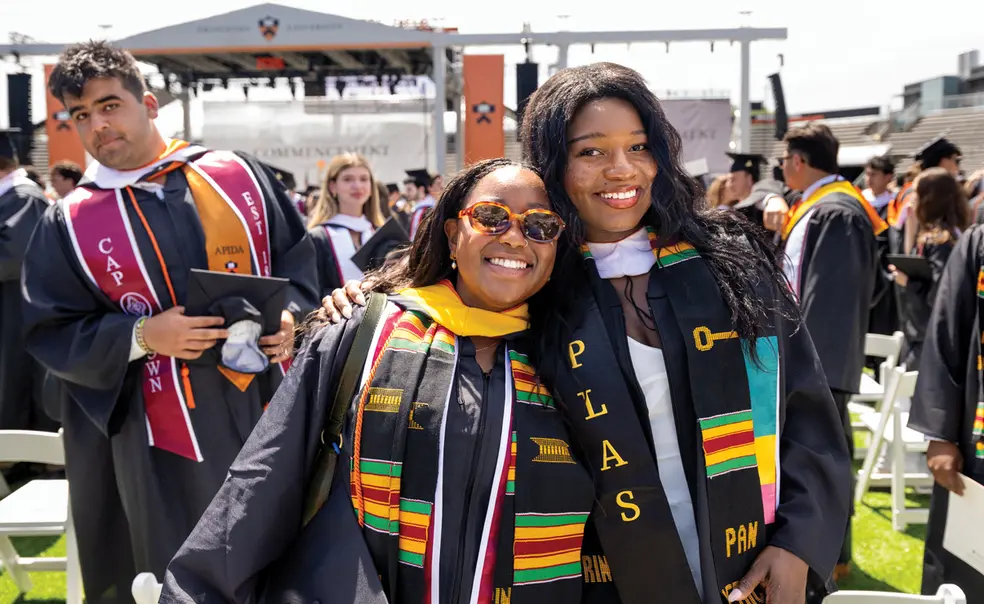

In a crowd of more than 2,000 graduates who marched onto the field of Princeton Stadium for Commencement this year, economics student Gabe Ennin ’26 stood out. Over his robes he donned a glittery red, green, and yellow stole with a black star — evoking the Ghanian flag — that sparkled brightly in the sunlight.
Ennin told PAW he bought the stole because “my family is from Ghana, so [I’m] just repping my heritage.”
In the days and weeks leading up to Commencement, the University holds many events that recognize smaller groups of graduates, and at some, cords and stoles imbued with meaning are distributed. Cords and stoles are the primary way Princeton graduates represent their identities on the big day.
In mid-May, more than two dozen graduating students had their names read aloud at the Gender and Sexuality Resource Center’s (GSRC) Rose Celebration, where they walked in front of a podium and across Prospect House’s Garden Room to receive their choice of a red cord or stole. The celebration has been held in some form since 2017 to honor Princeton women and fem graduates (those who have a feminine gender identity or expression).
“These celebrations have been and continue to be an important recognition of women and fem,” particularly since Princeton was founded as a space for men, said April Callis, assistant dean of diversity and inclusion and director of the GSRC, during the event. “This ceremony is a chance not just to celebrate your achievements, but to celebrate the legacy of those who came before you and reflect on the spaces that you’re carving out for the generations that follow.”
“I think it’s very important that they celebrate our accomplishments, and I think just inclusivity is important, especially with our society of today. So I think that’s something that Princeton really does a great job of,” said Bethany Villa ’26, a molecular biology major.
In addition to the Rose Celebration, the GSRC has held a Lavender Celebration, which celebrates queer and trans graduates, since 2002. The Fields Center has held Commencement activities for Pan-African graduates since 2005, for Latinx/e students since 1990, and, since 2018, separate events for Middle Eastern, North African, and Arab; Asian Pacific Islander Desi American; and Native American and Indigenous graduating students. The Emma Bloomberg Center honors first-generation lower-income graduates (held in varying formats since 2015) and transfer and veteran graduates (since 2023).
In early 2025, the U.S. Department of Education published a Dear Colleague letter threatening to rescind funding to institutions with policies or programming that treat people differently based on race, and specifically mentioned graduation ceremonies. This year, the Department of Education dropped an appeal to a federal judge’s ruling that blocked the enforcement of that letter. However, in 2025, schools such as NYU canceled affinity graduation ceremonies, and this year, schools such as Harvard and Notre Dame no longer supported the events, though alumni associations and other sponsors have taken up the charge.
“We are proud that Princeton continues to celebrate the diversity and excellence of our graduating students through several events,” said University spokesperson Jennifer Morrill, noting that these “are open to all graduating students and their families regardless of identity and complement the University’s Commencement exercises.”
Student groups and eating clubs also give members special regalia for graduation. Alongside her Commencement robes, Anna Ferris ’26, who graduated with a degree in English, wore a stole from Tower Club and a climbing rope given to Outdoor Action leaders. A Princeton education, she said, “gives you the ability to stand from every perspective and learn something interesting about yourself and the world.”
The Latest
See all


Related News
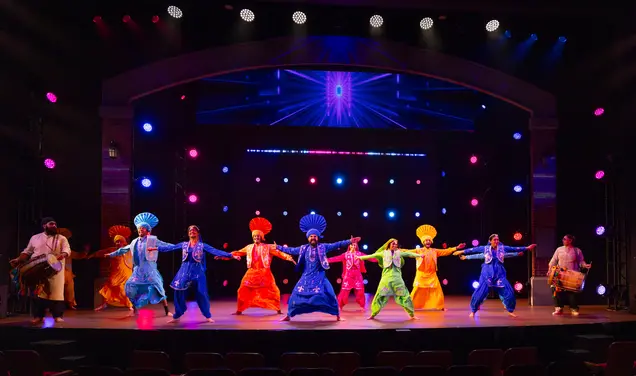
McCarter Theatre’s First South Asian Musical Took Me Back to Forbes Basement
A Beat of Our Own is about a college dance team not unlike Princeton South Asian Theatrics



1 Response
Robert Buntrock *67
3 Months AgoFederal Attempts to Interfere With Identity
Another example of atrocities being committed by the current tyrannical polices of the current administration, not only interfering with history but identity. I heard the Declaration of independence read by several local people and journalists over the weekend, and I got to thinking the first half at least directly applies to Trump and his corrupt family and administration. These baseless measures against DEI are offenses against personal freedoms, sought for in the declaration, but not always achieved. Students and graduates, hats off and continue to defy the tyranny from the not-so-White House.