
After 133 Years, Princeton Is Going Back to Proctoring Exams
The faculty committee’s report cited concerns about widespread cheating with generative AI
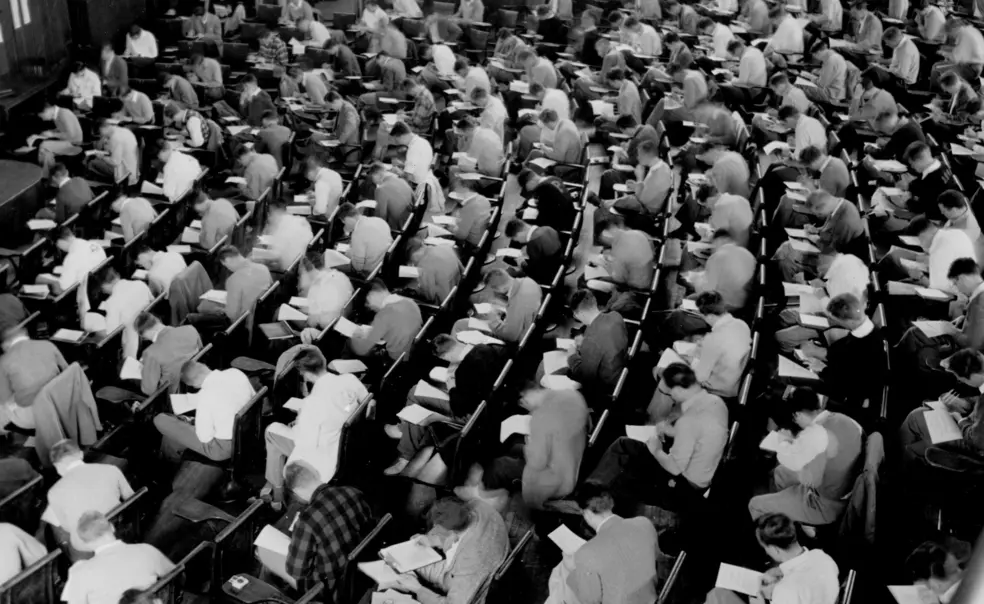

Following a nearly unanimous faculty vote on May 11, all in-class examinations will be proctored for the first time since Princeton introduced the Honor Code in 1893.
According to the policy proposal, which was prepared by Michael Gordin, dean of the college, on behalf of the Faculty Committee on Examinations and Standing, the dean’s office has received requests over the past few years “and with increasing frequency over the last six months” for the change from undergraduates and faculty “given their perception that cheating on in-class exams has become widespread.” Particularly, the use of generative AI tools has made cheating easier, yet, given the small size of most devices, it is also more difficult for other students to observe and report, as required by the Honor Code.
The policy goes into effect on July 1. The University aims to develop and distribute a guide for faculty by the start of fall term.
After receiving unanimous votes of support from the Committee on Examinations and Standing and the Faculty Advisory Committee on Policy, the full faculty voted in May, with one opposing vote. The proposal said the change has also been endorsed by current and former student chairs of the Honor Committee, staff at the McGraw Center for Teaching and Learning, and the Faculty-Student Committee on Discipline.
Isaac Bernstein ’28, the Undergraduate Student Government Academics Committee chair, told PAW that a survey he conducted earlier in the spring semester of 806 Princeton students showed that 50.1% were in favor of proctored examinations, while 44.9% were opposed. Bernstein said in speaking with students and faculty, he “did gain the impression that there was a majority consensus that did support proctoring.”
Some who don’t support the policy are concerned with how it will be implemented and enforced across departments, according to Bernstein, who also noted that further clarification is needed such as the required number of proctors based on class size. However, he appreciates the communication thus far and said he looked “forward to working with Dean Gordin and administration to develop the best ideas on such a matter in any way that I can.”
The Latest
See all


Related News

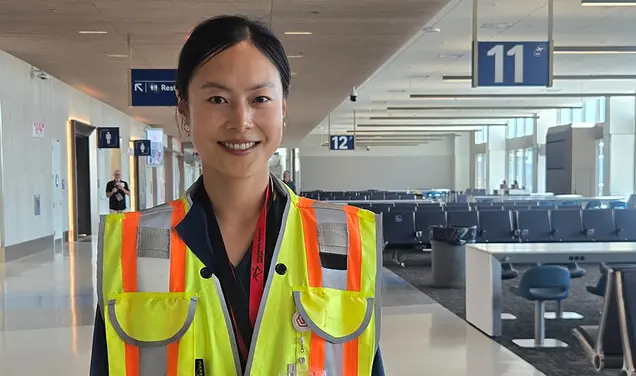
Janice Lee ’09 Worked to Renovate One of Hollywood’s Best-Kept Secrets
An engineer by training, Lee has been deputy project manager on the renovation of Hollywood Burbank Airport

21 Responses
Steven J. Spear ’86
3 Weeks AgoHonor Code and Supervised Exams
Rather than screening for and nurturing integrity in the young men and women for whom they are responsible, faculty and staff are opting out and choosing to enforce it by surveillance instead. Moreover, since exams likely will be administered, in part at least, by graduate students, this will be peer on peer surveillance.
That does sound regressive.
John Boatwright ’58
3 Weeks AgoHonor Code and the Commitment to Personal Integrity
When I first read about Princeton’s decision to reinstitute proctors to monitor students’ honesty while taking exams, I was disappointed that it was necessary, but only after reading the letters to the editor in the September 2026 issue was I moved to write my first letter since graduation.
As background, I was one of the fortunate beneficiaries of the “legacy” period, being the son of a 1927 graduate. Even with that advantage, I may not have been admitted on a full Naval Scholarship had it not been that the NROTC Commander remembered a date with my mother many years in the past when she was a young girl.
It was also my good fortune to have graduated from a private boys’ prep school in Virginia, which introduced me to the most successful honor program I have ever heard of, run solely by the students. When you started, you were told that there were three unforgivable sins that would result in your expulsion: cheating, lying, and stealing. Also, it was drilled into us that the only way this system worked was if each student reported any violation observed.
Some years ago, my granddaughter served on her high school’s honor council, which judged violations of that school’s honor code and meted out appropriate sentences. I asked her, “Would you report another student if you saw them cheating on an exam?” She replied, “Oh no, I would never snitch!” I knew from that answer that their honor system was missing the key factor it needed.
When I began at Princeton and went to freshman orientation and introduction, the professor welcoming our class said, “Look at the guy on your right and the one on your left. Only two of you will still be here in four years.” I thought he meant because of the honor system, but on reflection I am sure he was including the challenging educational rigor that many students could not meet. So, I spent my years benefitting from the honor system in place, including the ability to take an exam any place on campus. The pledge we signed was all that was asked for.
My understanding of an honor system is supported by the majority of the letters in the September issue. A working honor system should teach all to do what’s right even when no one else is looking. To be known first for one’s unfailing integrity before any other accomplishment is the most important lesson one can learn in life.
At the 25th reunion of my high school class, one classmate got up and spoke. He said that he was observed cheating on a final exam in his senior year, was brought before the Prefect Board, admitted his offense, and was asked to leave campus immediately, never getting his diploma. He also said it was the most important lesson in his life and made him a loyal alumnus.
I am thankful that Princeton alumni far younger than I show by their letters their commitment to personal integrity.
Mike Devine ’62
1 Month AgoRestore Open Exams, With All Tools Available
I love the breast beating and tooth gnashing over the demise of the honor system. I say restore open exams, allow them to be taken wherever and with all the tools (AI, internet, whatever) and grade the product. That’s the way life is outside the ivy walls. The students who thought and listened probably will do best.
Barr Weiner ’91
3 Months AgoStrengthen the Honor Code
Pining for a past golden age may be misguided, reflecting a failure to recall the problems of that (and every) time. Failing to remember the lessons of the past is another matter, reflecting a failure to appreciate danger.
The Honor Code might be viewed as a bit of quaint anachronism carried over to the present, but its failure to function should be viewed as a warning.
Education should serve to do more than help us get jobs. It should help prepare us to meet the challenges of life, to craft a compass to navigate a world in which we must make difficult choices.
Today, as in the past, we confront efforts around the globe to tear down institutions and ridicule norms developed in the knowledge that we are far from perfect, to help protect us from ourselves.
The Honor Code represents an expectation of integrity and ethical behavior. If it has not been functional in the face of AI, seeking a way to enable it to be would be appropriate.
We need more people in our society who don’t cheat not because they can’t but because they shouldn’t, and who have the strength to take action when the ethics of others fail.
At a time when many question the value of the Ivy League and look in dismay at actions of its graduates, Princeton should be doing all it can to strengthen rather than dismantle such an institution and the essential norms it has fostered.
Barr Weiner ’91
History major
Stuart Smith
3 Months AgoEducation as a Pathway to More Than Just Jobs
This — “Education should serve to do more than help us get jobs. It should help prepare us to meet the challenges of life, to craft a compass to navigate a world in which we must make difficult choices” — I think is in danger of being lost in the current era. There is so much pressure on students to get a highly paid job to pay back loans and meet the needs of an increasingly expensive life. Whereas the world needs well rounded, thoughtful citizens who are productive beyond fiscal value. Higher education is a great pathway to achieve this. AI isn’t the cause of cheating, and understanding why students cheat is the crucial point to understand.
Paul Sheldon *66
3 Months AgoProctored Exams and the Injustice of Grade Inflation
This change seems sad but necessary. As recent reports from Yale and Harvard point out, grades have now become meaningless. This has been an injustice to those students who chose to come to Princeton to work hard and to make full use of the wonderful opportunities available here, only to become essentially indistinguishable from the mass of others.
R.A. LeBel ’86
4 Months AgoLiving With Integrity
What makes Princeton University special? When asked, one of my first responses has always been the Honor Code. So I was saddened and disappointed to learn that students will have proctored exams beginning July 1.
In my years at Princeton I never saw anyone cheat or heard of anyone cheating. I took great pride in being part of a learning community with such integrity. My Princeton classmates were not only smart and hard-working, they were people of good character.
I taught social studies in Niskayuna’s two middle schools for 30 years. Before the first test each year, I told my students about my experience with the Honor Code while at Princeton. They were surprised to hear that professors would leave the room during examinations, even final exams.
There are so many positive life lessons associated with the Princeton Honor Code. Take responsibility for your own learning. Do your best. Work hard and prepare. Be honest. If you don’t do well on an assignment, learn from it and try to do better the next time.
I consider it an honor to have attended Princeton University. It will always be one of my greatest accomplishments. My hope is that our school will continue to be a special place, unlike any other. If our newest Princetonians commit to the Honor Code, I’m confident the University will continue to thrive. Living with integrity is incredibly rewarding.
Richard A. Etlin ’69 *72 *78
4 Months AgoFatal Blow to the Honor System
First they abolished in 1969 the longstanding seven-point grading system with its brilliant bottleneck against grade inflation, secured by the widespread use of 2+ for a low A- and the rare bestowal of 1- for a high A-, along with the even less frequent markers of 1 (A) and 1+ (A+). Then they lowered the standards in the humanities, whereby, for example, in my former department, juniors no longer have to write in French first a 5-page paper (about 3,100 words) and then also in French a 10-page paper, culminating in a 20-page paper in English. Today, one 7,000-word paper in English with a 3-page French summary suffices. Now, in response to widespread cheating, exams will have proctors, recognizing a fatal blow to the ideals of the honor system that is no longer universally honored. Princeton undoubtedly will always have brilliant scholars, teachers, and students. And yet, to paraphrase Joachim Du Bellay’s lament as he gazed upon the ruins of ancient Rome in the mid-16th century, for new arrivals who seek Princeton in Princeton, nothing of Princeton in Princeton will they find.
John V.H. Dippel ’68
4 Months AgoLitany of Bad News in June
Accustomed as I am to reading upbeat, inspiring stories in the PAW, I was taken aback by the litany of bad news in the June issue. It might as well as have had a solid black cover with the inscription, “The University has several memorials in this issue.”
Let me count the ways: 1.) President Eisgruber’s paean to the student-athlete ideal belied the reality that several top men’s basketball players have recently left for greener (more competitive) courts, resulting in the Tigers having one of the worst seasons in recent memory; 2.) the “pausing” of Trenton Arts at Princeton reveals how Trump administration hostility toward major private universities (especially to their DEI programs) is forcing a reduction in community outreach; 3.) continuing wars in the Middle East are making it more difficult for students from that troubled region to attend Princeton; 4.) “increased skepticism” about higher education is forcing the Graduate School to rethink how it structures its programs; 5.) extremely busy undergrads are increasing relying on dating apps to find someone “who is algorithmically the best person” for them; and 6.) and worst of all, the University has abandoned its sacrosanct, centuries-old Honor Code, introducing proctoring in light of the widespread view that “cheating on in-class exams has become widespread.”
I applaud this honesty — it may be the worst of times — but it does make one nostalgic.
Lewis Robinson ’60
4 Months AgoHonor System Drew Me to Princeton
I grew up rooting for Rutgers football teams, taken by my father (Rutgers class of 1928) and watching Dick Kazmaier ’52 destroy them. Being the children of immigrants, my father’s generation all went to Rutgers. For some reason, mother made me apply to Princeton, and I got in. I knew so little about the place that I went up and took an Orange Key tour with Walt Strine ’58 in June. We passed a room with 50 or so guys taking finals, with no guards and no one looking at what the others were doing. Having spent my high school career with people looking over my shoulder, it was case closed. I immediately decided to go to Princeton even though the rest of my family regarded me as a traitor. The honor system is a great loss. Perhaps Princeton should select a better class of people, and by class I do not mean social class.
John D. Vandenberg ’79
4 Months AgoThe Lost Privilege of Trust
I recall sitting against a tree at the E-Quad taking my final exam in Fluid Dynamics. I sat there with paper, pen, and privilege. The privilege of being trusted by the University. I didn’t earn that trust but I would not have considered violating it. It was part of the privilege of being admitted to Princeton. It was part of my education, along with our daily Princeton-out-of-South-Africa marches and our April 1978 Nassau Hall sit-in, tutoring in Trenton, and other outside-the-classroom education. It has had a lasting impact.
The University officially no longer trusts students. Without that trust, there is no Honor Code. Princeton is less.
(This is my first letter to PAW in 47 years since graduation.)
Henry W. Doyle III ’68
4 Months AgoSenior Thesis Concerns
How can Princeton guard against widespread use of AI in conceiving of and writing the thesis?
Dave Fulcomer ’58
4 Months AgoSay It Ain’t So
In the most recent PAW, I read with great sorrow, some frustration, and a touch of anger, that exams will be proctored beginning this fall. The article said that “cheating on in-class exams has become widespread,” which necessitated this action.
Since graduating in 1958, significant changes have occurred, virtually all of which have been necessary and positive. For someone who thought that the Honor Code was something that set Princeton apart, it is a disappointing step backward.
I watched the Zoom broadcast about Bob Dylan and could not help but think about perhaps his most famous song “The Times They Are A-Changin.’” One of the lines that has long stayed with me goes “And don’t criticize what you can’t understand.”
I would have to admit that I fall reluctantly into this category. Very reluctantly.
What a shame.
Angelos Tsirimokos ’74
4 Months AgoA Sad Necessity
Necessary, perhaps — surely the faculty that decides knows best — but sad.
Jason Salganick ’91
4 Months AgoReboot the Honor Code
If cheating is the problem, then the student body needs to take a hard look at itself. Meanwhile, how about checking in all electronic devices at the door, just as a precaution, and keep the honor system and our code alive?
The classes of 2027+ need to fight back to get their honor system rebooted and pledge to themselves and to their peers (that includes us alumni) that the cheating will not be tolerated.
Randy Evans ’69
4 Months AgoConsider Alternatives to Proctored Exams
I’m writing to express opposition and concern. Because cheating is easier should be no rationale for proctoring exams. The implication is “we expect Princeton students to cheat and perjure themselves when they sign the pledge.” Back in olden times (1960s) some departments had open book exams as memorizing the formula or the table was not expected but knowing which tool to employ was the test. By analogy, Princeton should consider some exams where access to the internet is expected. While others would be blue books and number 2 pencils — and cell phones checked at the door. Anyone caught cheating would be expelled. That’s what happened in the old ages.
Gerald S. Golden ’57
4 Months AgoNo Place for Honor in Modern Society?
I grieve that the honor system is now defunct.
I grieve that the University found ample evidence to support this change.
I grieve that students destined to become leaders in our society cannot be trusted to act honorably.
Pledge and honor are apparently old fashioned attributes that have no place in modern society.
Alas.
Murphy Sewall ’64
4 Months AgoAim Higher in Assessing Learning
I was raised in a southern U.S. culture in which honor mattered. It should still matter at Princeton regardless of how learning is evaluated. It strikes me that deciding to proctor exams confronts the wrong problem. If F. Scott Fitzgerald eventually learned that some of his classmates cheated, then cheating is not really about AI or small electronic devices.
Assuming every Princeton undergraduate is academically capable, why cheat? I submit the issue is stress. Nearly all of us were near the top of secondary school classes but very quickly discovered that all of our college classmates are as smart or smarter than we are. I had to apply myself as hard as I could just to keep up with peers who were doing likewise. I don’t think I was unique. Peer pressure was relentless, and each of us dealt with it in our own way. I was relieved to achieve at least the median.
I learned during 40 years teaching at public universities that the demand to excel created by classmates is a factor that sets Princeton and institutions like it apart. If the objective is to achieve the highest standards of learning and reducing motivation to take shortcuts, then the solution lies in the design of assessments, not proctoring.
I also noticed that students have become increasingly concerned with grades themselves rather than the learning they allege to represent. Perhaps, the faculty could invest some attention helping undergraduates understand the difference between education and training? It might also help to get rid of grades of A to F and return to the inscrutable 1 to 7 grade system that existed decades ago. Undergraduates are sure they know what an “A” is, but what on Earth is a “1”?
James F. Wright ’58
4 Months AgoDiminishing Trust and Pride
My reaction to the decision to begin proctoring exams is one of resignation and sadness. The Honor Code bound us together in shared trust for more than a century. During my undergraduate days, I felt a tiny surge of pride each time I “signed the pledge” on an exam or assignment. Abandoning the central role of the pledge will diminish that trust and that pride. Technological advance almost always comes with a price. I imagine that the Honor Code will not be the last valued institution that AI will be responsible for demolishing.
Peter J. Turchi ’67 *70
4 Months AgoLoss of Honor
Count me as one of many horrified old alumni when I read the article in The Wall Street Journal about Princeton abandoning its century-old honor code. While it is actually the case that unproctored exams were effectively proctored by the students themselves, this was true as long as the students reported violations. Now it appears that a culture of fear of social ostracism has developed, akin to self-censoring in classroom discussions. AI has certainly contributed new methods of cheating, but one would have expected that our astute faculty could provide clever countermeasures on a course-by-course basis, rather than broadly dispensing with a well-regarded tradition. When I was a professor of aerospace engineering, for large classes I used to give exams as open book/open note. Students with a better memory for complicated formulas no longer had an advantage, and surreptitious access no longer mattered. I would imagine that history courses, for example, do not depend on rote recall of dates. Demonstration of mastery of material in problem solving or learned essays in exams may be replaced by AI. Has this reduced students to stenographers? Is repeating what a professor said different from transcribing from a chatbot? The challenge is faced now by faculty to teach beyond AI, and should not require a loss of honor by students.
David Siebert ’81
5 Months AgoReady for Proctors
About time! Wait until you see how overall grades drop!