

In Final Book, Rande Brown ’71 Writes About Reaching Enlightenment


The book: In her final book before her death last year, Brown wrote about her experiences and the lessons she learned over several lifetimes about reincarnation, karma, and finding peace with death. The personal journey she recounted in Live, Die, Repeat (Sentient Publications) challenges rigid assumptions about life and death and shows readers the path she followed to finding true enlightenment. The book weaves ideas about Eastern reincarnation and Western psychology to help readers unlock healing and connect with their true selves.
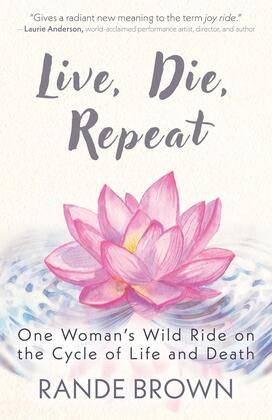
The author: Rande Brown ’71 was a psychoanalyst, author, and Buddhist practitioner. She was the coauthor of Geisha, A Life and a translator of Japanese spiritual life. She was the executive director of the magazine Tricycle: The Buddhist Review and had a private therapy practice in New York City’s Greenwich Village. Brown died in October 2025 from complications from esophageal cancer.
Excerpt:
Chapter 1 - Finders Seekers
I traveled to the Himalayas to deliver a letter. And because I was still searching for my teacher, feeling conflicted and confused.
I’d been in Kyoto for two years studying with a venerated Buddhist master in a renowned Zen temple. Me. A Jewish girl from New Jersey who spoke fluent Japanese. I’d discovered Zen as an adolescent and believed it offered a way to override the emotional turmoil and unbidden paranormal experiences that had disturbed me throughout my childhood. My young mind naively believed that Zen was a direct path to enlightenment, one that would allow me to avoid the psychic pitfalls that often-derailed spiritual seekers. I’d organized my entire life around the goal of becoming a perfect Zen Buddhist. I found a university where I could major in East Asian studies, learned Japanese, and moved to Japan when I graduated from Princeton.
There I was in Kyoto, studying in one of the most magnificent Zen temples in the world and doing my prescribed practice in a 15th-century meditation hall. The discipline was strict, the stone floor cold, and the Zen master intimidating, yet I felt solidly on my way to transcending the vagaries of the mundane world.
I was born knowing that it is difficult, perhaps impossible, for an ordinary being to achieve an enlightened state of consciousness through one’s own power. To understand the true nature of reality required the guidance of a genuine wisdom master, or guru. I knew I had to find my teacher.
Much of my time on Earth had been dedicated to attaining this goal, but I was already straining at the bit. When I met Kobori Roshi, I was sure he was It. Now I wasn’t so sure. I was finding the deeper contours of the Zen world constraining, oppressive, and not particularly kind. My American ego was balking at the submissiveness and the militarism of the Zen culture, my exuberant spirit spilling over the edges and muddying the lines.
And then I met this crazy wisdom master who seemed to be resonating with my spirit and beckoning me towards a different kind of freedom. He was a mesmeric Shinto priest and healer who projected an aura of unmistakable power but whose lineage was unclear. Both a scientist and a yogi, he wasn’t the 15th generation of anything and didn’t fit into any category I’d heard of. My precisely configured and highly disciplined Zen master never had a fold of his pristine robe out of place; the Shinto priest was rumpled and unapologetically freewheeling. He sparkled. I’d seen him perform miracles.
I was torn. Which of these two teachers was I to follow? Physical and spiritual gymnastics made it impossible for me to study with both simultaneously. I had to make a choice, either remain in the safe confines of Zen or wander into the psychic wilderness. Zen carried the imprimatur of a tradition that stretched back 100 generations. Yet my soul hungered to experience the mystical consciousness of the second teacher, like a moth to a flame, even though the shamanic realms terrified me. If I became Dr. Motoyama’s disciple, I was convinced I might die, though I had no rational reason to think so.
Today, I can see that my ancient history was hard at work, pushing and pulling me in directions I could not yet understand.
I couldn’t stop obsessing about my teacher predicament. One day, with some exasperation, my friend Virginia suggested, “Maybe just go someplace and get away from both of them for a while.”
Later that afternoon, when I got home, an official document from the German Government was in my mailbox. The envelope was addressed to Ursula Bernis, the woman who had occupied the Kyoto apartment before me. I’d never met her, but she was legendary among the expatriate community for her devotion to the spiritual path. That’s how we sized someone up in those days — by the seriousness of their practice. I knew that Ursula had come to Kyoto to study Zen but had moved to a Tibetan Buddhist monastery outside Kathmandu to study with a teacher there. When she left, I inherited her apartment, down the hall from her friend, a charming Scottish rascal named Bill. I asked Bill what he thought I should do with the letter, and he said nonchalantly, “Why not deliver it to her?”
Suddenly, going to Nepal seemed the perfect solution. In the spur of that moment, I decided that a respite in the Himalayas, oceans away from these two intense Japanese teachers and the traditions they represented, was just what I needed to clear my head. I had no truly legitimate reason to make this trip, but the letter seemed a sign. Having learned to trust such “intuitive hits” throughout my life, I set out on my next adventure.
I sublet my apartment to a German musician, wrote formal letters to Kobori Roshi and Dr. Motoyama informing them that I was traveling to India and would return to Japan sometime the following year, when I would be back in contact.
I was barely getting by teaching English in Kyoto, so I didn’t have much money. I bought a dirt-cheap ticket to Thailand, where I managed to score a fake student ID and an even cheaper black-market ticket to Nepal from a suspicious character in a Bangkok alley. I also picked up a case of wrenching dysentery from eating shrimp pad thai at an outdoor stall. I couldn’t wait to get out of there.
I flew into the glorious Kingdom of Nepal and landed in the high-mountain air of Kathmandu. What a hippy wonderland! It was1974. The city was a circus of narrow lanes, packed with goats and bicycles, which wound past hand-carved wooden temples housing living goddesses. Bazaars were selling myriad shawls and saris; there were teahouses where one could lounge for hours smoking hashish and swapping tall tales with fellow travelers and restaurants where one could satisfy the subsequent munchies. Yak burgers, French fries, and apple pie à la mode were proffered by establishments with names like Aunt Sid’s and the Yak and Yeti. This Shangri-La was nestled int he foothills of the Himalayas, which gleamed brilliantly in the near distance during the day and glowed majestically under the light of the moon at night.
Even though Nepal was a third-world country, it felt wholesome and cheerfully rustic compared to Bangkok’s dysfunctional chaos. After a few days of this deliciousness, I started to ask around for directions to the monastery where Ursula was living. After some confusion, I found the correct terminal and boarded a bus to the village of Boudhanath on the eastern outskirts of Kathmandu.
Boudhanath is famous as home to one of the largest stupas in the world. Stupas are dome-shaped Buddhist shrines originally erected as reliquaries. This one, considered the holiest Tibetan Buddhist stupa outside Tibet, dates to the 14th century. The enormous, white-washed stone structure is topped with a square, golden tower that features four sets of large Buddha eyes, which cast their unblinking gaze into the far reaches of the valley. I had never seen anything like it.
There was a steady line of people in Tibetan dress walking clockwise around the stupa, fingering prayer beads, and mumbling syllables under their breath. I later learned that circumambulating a stupa while reciting mantras to receive blessings from the resident deity is a common practice. It seemed like most of the Tibetans I met, from monks to grannies to young children, were praying all the time.
I was drawn into the flow of humanity and made one full round of the stupa before setting off on the dirt path that led toward the monastery. The path twisted past clusters of ocher-colored houses with Tibetan prayer flags flying from their rooftops. Brown wizened old men squatted at low tables in the small courtyards, playing dice games. Older children carried younger ones on their hips.
For the first time, I was surrounded by Tibetan people and was struck by how open and connected everyone seemed. Greeted with smile after smile from the self-possessed faces of the people I passed, I had a Wizard-of-Oz moment when everything shifted from black and white to technicolor.
Excerpted from Live, Die, Repeat: One Woman’s Wild Ride on the Cycle of Life and Death by Rande Brown. Copyright © 2026 by Rande Brown. Published by Sentient Publications.
Reviews:
“Gives a radiant new meaning to the term joy ride.” — Laurie Anderson artist, director, and author of The Art of the Straight Line.
“What is belief? Rande Brown brings into relief the constructivist nature of identity. Whether you believe in reincarnation or not, she does, being true to herself. She presents in this book her coherence of the life she has led, her search for meaning. Does not each of us do the same?” — Robert Langan, Buddhist meditator, psychoanalyst, and author of Minding What Matters.
The Latest
See all


Related News

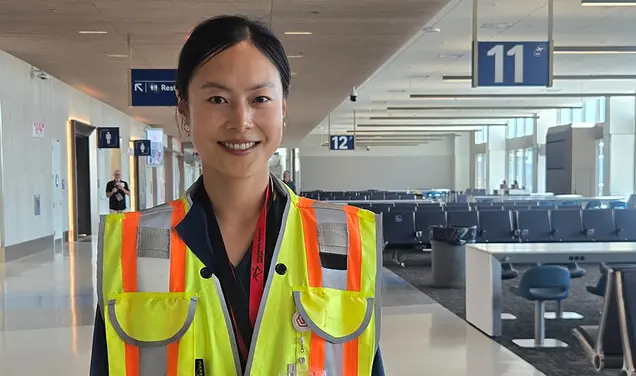
Janice Lee ’09 Worked to Renovate One of Hollywood’s Best-Kept Secrets
An engineer by training, Lee has been deputy project manager on the renovation of Hollywood Burbank Airport

No responses yet