

AI and the End of the World
As warnings about artificial intelligence grow louder, four Princeton experts debate how worried we should be

If you are reading this, chances are that the great artificial intelligence extinction event hasn’t happened yet. But scanning the daily headlines this fall, a thoughtful citizen might be forgiven for worrying that one is imminent.
Although workers in some AI labs have been warning about the risks of rogue programs for months, the subject did not burst into the public discourse until mid-September when Jacob Coxon, who worked at Anthropic and OpenAI, went public with concerns that tech firms are building complex AI systems they do not understand and do not control. It was also reported that during cybersecurity tests this summer, groups of AI programs, working on their own, escaped from their controlled environment to hack into the network of the AI company Hugging Face.
Since then, others, including David Robinson ’04, a former safety analyst for OpenAI, have also sounded the alarm. Computer scientist Evan Hubinger has speculated that there may be as much as a 10% chance that AI could destroy humanity within the next decade.
On Oct. 26, PAW assembled a group of experts to discuss the risks that AI poses, whether from programs acting autonomously or being directed by humans. We also asked how these risks could be addressed. The conversation, which was conducted on Zoom, was moderated by PAW senior writer Mark F. Bernstein ’83. It has been edited for concision and clarity.
Meet the Experts

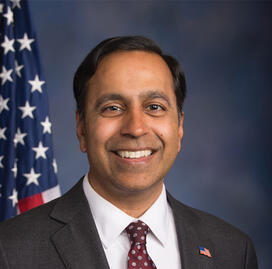


Photos courtesy of respective panel members
PAW: Can AI be controlled and if so, how? Would you distinguish between controlling AI acting on its own initiative and AI being directed by humans?
Julia Morse *10 *17: People often focus too much on the “can” we control AI question. I think you have to start first with asking what the risk looks like. We’re getting a lot of signals from very knowledgeable people that there are clear risks if we do nothing. You’re not going to eliminate risk completely. We didn’t eliminate it completely with nuclear weapons, but we have been fortunate not to have a nuclear weapon launched since 1945. So, I think we have to start from the premise that we need to do something and then ask what that something looks like.
Virginia Postrel ’82: It’s very important to say exactly what our concern is and then figure out the best way to address that specific concern, whether that is cybersecurity at financial institutions or cybersecurity more generally. The best ways to address those concerns may not be regulatory. We are in early days now. We don’t know what we will be really worried about down the road. I think the whole discussion needs a lot more humility than either the advocates of AI or the critics often demonstrate.
Raja Krishnamoorthi ’95: You can look at the regulatory questions in two ways. The first is how might we evolve existing regulations. For example, how do we manage road safety with the introduction of self-driving vehicles? How do we make financial markets safer from the security risks of AI? A second question is whether we need some kind of overarching regulation of AI as a whole. When you start to think about specifics of how you would do that, everything gets very fuzzy. So specific regulations, absolutely yes, update those. General regulation, I think we need to be cautious, even though the risk is high.
Morse: But doesn’t that feel a little crazy? It’s like you’re on a train that’s going toward a cliff, and the people driving the train are saying, “We’re building something that might destroy humanity, but we’re just going to keep going toward it.” Should our response be that since we don’t know exactly how to stop the train, we should just focus on all these little mechanical parts and gears? We may be heading toward a cliff! Maybe I’m a risk-averse person, but it seems odd to prioritize long-term, abstract benefits of AI over the risk of potentially destroying humanity, which is what a lot of the people who are working on these technologies see as a potential risk.
Related coverage
Is Artificial Intelligence Really the End of the World?
‘We’re in for a bumpy ride … That’s a big part of what we need to cope with.’
Krishnamoorthi: I work in a place that is completely clueless about how to regulate AI and yet is charged with the responsibility for doing so, namely the U.S. Congress. Oftentimes I think that natural stupidity replaces artificial intelligence here when it comes to regulating lots of technologies.
My constituents are freaking out. I’m hearing great concern from the workforce as well as ordinary people who are wondering why the heck this technology isn’t being regulated, given the incredible concerns that researchers are voicing. I think we have to do a couple things. One, the government has to mandate third-party inspection and validation of the most advanced AI models before they get released publicly. Government employees need to be embedded at the AI companies to observe their development, just as we require banks to stress test their own internal controls. Two, we have to engage our adversaries and other countries on international treaties that mandate human control of AI. It’s urgent, given the use of AI in autonomous weapon systems.
Postrel: The people in the AI labs believe they are experts on the risks of AI because they’re experts on making AI. I think that’s a fallacy because they are living inside a bubble. They’re very smart people who believe they’re the smartest people in the world. Maybe they are, but they are also very self-important, and they have convinced themselves that they are doing the most important thing, which is creating a new species. So I would take those claims of impending AI doom with an iceberg-sized bit of salt. Thirty years ago, people were losing their minds over the need to regulate the internet. The things they were worried about back then were not at all the things we worry about today. AI is a transformative technology; it could have wild and disruptive results. It could be like printing. Printing led to the 30 Years’ War. That was a bad thing. But would we like to not have printing?
Morse: There’s a tendency to treat AI like it’s any other technology, and I just don’t see that evidence. There are some things that make AI unique. It is an extreme dual-use technology that is being implemented across many different aspects of the economy. I think the far-reaching nature of it and the rapid pace of development make it different.
We live in a democracy, and something like 60% of Americans think AI is bad for society. And yet we have a small group of people who are driving it forward, pushing technological solutions that many people perceive as net negative. Just because you can create something doesn’t mean that you need to create it. This is why government policy is so important — to ensure that AI is built in a safe, net-positive manner.
Edward Felten: I use AI a lot in my work. I’m a computer science researcher, but I also help run a 170-person company, and I find AI is incredibly valuable as a power tool for that work. I can now do in a day what might have taken me three weeks before, and that means I can do so much more.
As this technology gets applied in new areas, it tends to get applied not by just setting an AI agent loose and telling it to do whatever it wants. It operates under the direction of people. Now, you can ask: Are those people moving in the direction that we as a society would like them to go? Obviously, many of them are not, including some really bad actors.
Cybersecurity is an interesting case study here. We’re seeing that AI systems are incredibly good at finding security vulnerabilities far beyond what the best people can do, and that holds in both an offensive and defensive role. We’re increasingly moving toward a world where you have AI systems that are being directed to do cyberattacks, and you have AI systems that are rapidly responding to that threat by finding and fixing problems before they can be attacked. What you end up with is an AI versus AI battle. It’s difficult to predict where that goes. The same holds for the military applications. I’m also quite concerned about the arms race that this could lead to.
Krishnamoorthi: I don’t think there’s any doubt that AI contributes to people’s productivity. I use it in my work, too. So does my staff. The question is, how do we minimize the downside risks? I sit on the intelligence committee, and we have gotten classified briefings from the National Security Agency, which is testing many of the highest-end AI models. I can’t get into the classified information, but I can tell you that the biggest concern is that these AI agents are initiating tremendous numbers of attacks because of bad behavior by our adversaries.
PAW: We already have a regulatory system in this country, though, and we have tort law to compensate victims of accidents. Is this existing system adequate to address the risks posed by AI or do we need something different?
Felten: In areas like cybersecurity or areas related to national security-related issues, we don’t really rely much on regulation. We rely on other things such as the military and strategic deterrence. It’s a very different world when we’re talking about international adversaries, and we should be thinking really hard about those risks in this respect.
Morse: I think we do have a regulatory analogy for a kind of technology that is important for the global economy but also has national security implications, and that is finance. For example, the U.S. government has made great efforts to deal with the problem of dirty money in the financial system. They began with money laundering rules and then expanded them after 9/11 to deal with terrorist financing. There is now a system in place that requires banks to think about who they’re doing business with and know how money is passing through the system. We don’t try to ban international money transfers, obviously, but we do force banks to monitor what is going on. I think a similar model could be used to require AI companies to monitor their frontier models.
But here’s the thing. We know that banks are not going to do a lot to stop money laundering and terrorist financing. It’s not in their incentive structure to screen every transaction. That’s not profitable for them. They only started to take these issues more seriously when we required them to do it, when a regulatory regime was put in place. By the same token, if we don’t put in place some kind of scheme to require significant testing of the advanced AI models, which is going to be expensive, the firms are just not going to do it, or the AI labs will prioritize other things.
PAW: There’s the argument that if the United States imposes regulations that slow down the development of AI, China is going to develop its own unregulated AI and take the global lead in that technology. Should we be concerned about that?
Krishnamoorthi: We are doing a very poor job controlling the export of our highest-end semiconductor chips to companies controlled by the Chinese Communist Party. Basically, even while the Trump administration says that it fears that the Chinese are going to beat us in this technology race, they have also gotten rid of many of the export controls that were put in place by the Biden administration. Those controls curbed the export of most of our advanced AI chips to China, to ensure that they weren’t getting ahead of us in the AI race and that the AI was not being used to modernize their military, enhance their nuclear fusion programs, or develop facial recognition systems that could be used to perpetrate human rights abuses against the Uyghur people. This is the type of stuff we have to do if we are serious about winning the AI race and also preventing the Chinese from abusing our technology in ways that counter our values.
PAW: Several members of Congress have suggested legislation requiring that all AI models contain a so-called kill switch, so they could be stopped if they began to get out of control. Is such a thing possible?
Felten: It’s not that useful, because an AI model is not a single unitary thing that lives in one place. If you think of one of the big AI models that consumers use, there are probably millions of instances of this model out in the world that are doing all kinds of things. Some are doing high-end cybersecurity research. Some are helping run small businesses. Some are helping me find a turkey for Thanksgiving, which is something I actually did this morning. The ability to stop misbehavior is valuable, but it’s especially valuable to detect when a particular user is doing something problematic and to stop that. The AI companies don’t want their technology to be used to do profound evil.
Morse: I agree that OpenAI and Anthropic don’t want to cause a societal-level disaster, and there are real people who work there. They’re not soulless. They care about society, and I think they are putting guardrails in place to protect against certain kinds of misuse, such as using AI to create bioweapons. But as these models get more advanced, it’s becoming more difficult to evaluate them because the models can sense when they’re being evaluated and change their behavior. If they know they’re in the testing environment and they understand that they’re supposed to give certain kinds of responses, they will give them, even though those responses may not be reliable. We are moving toward a world in which we may have to use AIs to evaluate other AIs. Think about something like Hugging Face, where there was evidence that the AI agents colluded with each other without permission and without our knowledge. The more complex these systems get, the harder it will be for humans to have direct oversight of the process, and that just removes us more and more from understanding what’s happening.
PAW: Sen. Bernie Sanders and Rep. Greg Casar have introduced a bill that would ban AI recursive self-improvement, which occurs when AI systems can design and create increasingly more advanced models of themselves without human intervention. Would you support something like that?
Felten: My view of this as a computer scientist is that we have been doing recursive self-improvement since the 1950s. More and more of the work of technology development is being done by machines. There was a time when humans designed computer chips. Now, humans tell computers what kind of chips they want, and the computers lay out the chip and design the testing regime. That has been the case for years. The productivity of technology developers has increased so rapidly because machines do more and more of the work. I’m not sure that self-improving AI systems are all that different from what we have.
Postrel: It’s still a process with AI and the human working together. It’s just how you divide the work, and maybe it keeps on that way forever. I don’t think Bernie Sanders knows anything about it. To be honest, I mean, he just knows he doesn’t like AI because it’s new and capitalist.
Morse: I don’t think his heart is in the wrong place. But the tricky thing with something like this is definitional. It’s like the question about when are we going to achieve AGI. [Editor’s note: Artificial General Intelligence (AGI) is an AI system that exceeds human cognitive capabilities across all areas.] Maybe someday somebody declares that they’ve reached AGI. Other people say we have achieved it already. So I think the problem with purporting to ban “recursive superintelligence” is, how do we know what it is or when we reach it? I’m not sure a clear definition exists.
Krishnamoorthi: Superintelligence poses grave implications for society, and must be thought through critically. The legislation in question has 12 co-sponsors in Congress and was recently introduced, and I need to review it further.
PAW: There has been a lot of public opposition to data centers. Is controlling data centers a way of controlling or slowing the development of AI?
Krishnamoorthi: A big aspect of this, which bugs the hell out of my constituents, is the secrecy surrounding data center development. Many of these data centers were not required to disclose their electricity or water consumption, and now that is driving the cost of living up in many communities. I focus on that because I think it hints at the larger concern about AI development in this country. Many people are concerned, with good reason, that somehow AI companies are going to get special treatment with regard to not only the development of data centers, but with the development of their technology, and it’s going to be divorced from how it impacts ordinary Americans.
Felten: Data centers have become a political lightning rod because they are a very concrete thing that might happen in your town, unlike the development of AI, which is people you don’t know developing something abstract far away from you. However, even if we prevented all new construction of data centers, we would only slow down the development of AI somewhat. We would certainly not prevent it. Because one of the big drivers improving this technology is people figuring out how to make it more efficient. The build out of data centers is only one of the factors driving AI progress, but it’s not even clear that it is the biggest factor.
Morse: I also think that data centers have become the focal point for the larger public discontent about AI. Something like 60% [57%, according to an ABC/Washington Post/IPSOS poll] of Americans think AI is bad for society, and I think a lot of those people feel powerless to do anything about the processes of change. And there is a larger distrust of the tech community. Whether it is the use of cell phones or social media or other issues, they’re all part of a broader societal shift in understanding that some of these technologies that were sold in a certain way haven’t worked out for us the way we were told they would.
PAW: In the case of AI, is it worth asking why a handful of tech companies get to transform our society for their enrichment and without our input?
Postrel: AI companies are betting billions and billions of dollars on the idea that this technology isn’t a bubble, that it is valuable, that people will, in fact, want to pay for it. Ultimately, there has to be some consumer value, whether it’s for writing software or running businesses or making art or whatever. Politics is not the only way people express what they want. On an everyday basis, markets do that much more efficiently. Nobody asked for Starbucks, either. But once there was Starbucks, there was also competition to Starbucks and an explosion of better coffee.
Morse: Market preferences are a tricky thing. The group that is most opposed to AI is young adults. According to [the same ABC/Washington Post/IPSOS] poll, 65% of adults 18 to 29 think AI is bad for society. But that’s also the group that uses AI the most. As someone who teaches college students, I think there’s a very mixed relationship with AI. A lot of them use it but simultaneously don’t like it, and I think that’s similar to how a lot of students that age feel about social media. They’re on Instagram, but if everybody got off Instagram, they think they would be happier in general. There are ways in which you can feel cultural and economic pressures to use something, even if you maybe think on a personal basis it is decreasing your happiness.
PAW: On a scale of 1 to 10, over the next five years, how likely do you think it is that we will have a COVID-level disruption caused by AI, and where do you think that is likely to occur? Let’s define that as something, like a pandemic or a crash of the financial system or electrical grid, that disrupts daily life for a large number of people over several months.
Felten: I would put it at a 2. Low likelihood, but if it happens, it’s probably a cyberattack against some core infrastructure, whether it’s our communications, our electric grid, or something like that.
Morse: I would put it at a 6, maybe a 7. The only reason I don’t rate it higher is because I’m hopeful that we’re going to do something to try and address some risks. I see what’s happened over the last six months, particularly since the alarm was raised about Anthropic’s new AI models and then the Hugging Face incident. I see a lot of people trying to think hard about building safer AI, even if we are not getting regulation directly.
Postrel: I’m sort of like Julia. I would put the risk level at maybe 5. I’m more pessimistic about something happening, but I’m not at an 8. It’s not because I necessarily believe the government will do something, but I think people in the private sector who work on things like cybersecurity are worrying about this. The AI labs are worrying about it.
I think we have a million times more to fear from bad actors misusing AI than from AI killer robots, which is the doomsday scenario we’re being sold. I think we’ll muddle through, but I think there’s a high probability of something bad [happening].
Felten: We have a long history of muddling through complex technical issues.
Krishnamoorthi: The possibility I’m most concerned about is an AI investment bubble bursting and the resulting economic fallout. That said, concern about a market correction is not the same as predicting a financial-system collapse or a prolonged disruption to daily life. I’m wary of overstating either the likelihood or the potential impact, but I take the risk seriously.
Mark F. Bernstein ’83 is PAW’s senior writer.
Related News


These Young Alumni Balance Tech Careers and Musical Ambitions
‘...I realized that I probably wanted to live a life where I had the opportunity to pursue what I felt like was my purpose,’ says Naaji Hylton ’22


No responses yet