

From China to the US, a Life Only ‘Shakespeare’ Could Imagine
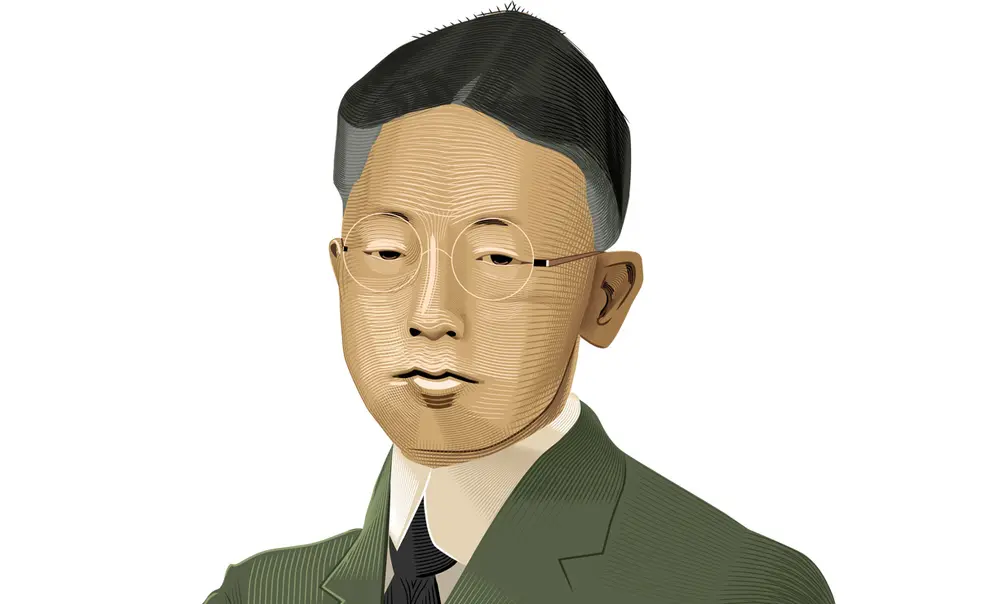

The story of Ken Wang (王赓) 1915, nicknamed “Shakespeare” by Princeton classmates for his love of the playwright, was as dramatic as one of the Bard’s own characters, marked by scholarly and military promise, romantic betrayal, public scandal, and even an ill-timed reported death.
Wang was born in China in 1895, the year the already crumbling Manchu dynasty suffered a humiliating defeat at the hands of Japan. At age 16, he competed for the highly selective Boxer scholarship to study in the United States. Out of thousands of candidates, Wang was among the 63 who made the cut. After a few months of intense preparation at Tsinghua College, he sailed for the U.S. in August 1911, attending the University of Michigan and then Columbia. Two years later, he transferred to Princeton along with three other Chinese students, bringing total Chinese enrollment to seven.
Wang fit in well. He won high praises from then-president John Hibben 1882 and developed close friendships on campus. Upon graduating, he abandoned his dream of getting a Ph.D. in literature in favor of attending West Point. After the U.S. entered World War I, his class graduated a year early in 1918. Wang returned to China while classmates headed to France.
Soon afterward, he was appointed to the Chinese delegation at Versailles, where President Woodrow Wilson 1879 headed peace negotiations. Returning from Versailles, he married Lu Xiaoman, a socialite admired within elite circles. The marriage, however, ended when Lu fell in love with the poet Xu Zhimo. The ensuing divorce shocked high society, for at the time it was still rare for a woman to leave her husband, and even rarer for the husband to give his blessing.
In 1932, Wang made international headlines when Japanese forces detained him en route to the American embassy in Shanghai. Although he was released after three days under international pressure, local newspapers published sensational accounts portraying him as a traitor who had handed over critical military maps to the enemy. The reports gained traction in a climate where China’s weak resistance had fueled a public appetite for recrimination and scapegoating.
Seeking to clear his name, Wang offered to submit to an investigation. Before he could stand trial, however, a newswire report reached the U.S. claiming he had been found guilty of treason and executed. Soon after, his supposed death appeared in the Class Notes section of PAW.
“Fate has rung down the curtain on the brief and colorful career of General Ken Wang, who was reported to have been executed in Shanghai as a spy,” class secretary Eberhard L. Faber 1915 wrote.
Two weeks later, Faber corrected the record, writing, “The lack of dependability upon newspapers particularly in time of war is illustrated in the case of the false rumor about our classmate General Ken Wang. … Just how the situation stands now is, of course, still not entirely clear. The main point is that Ken is exonerated, and living.”
Wang was indeed living but was not exonerated. He was court-martialed and sentenced to two years in prison despite clear evidence that he did not carry any maps while traveling on official duty.
Wang was reinstated by the military after the outbreak of the Second Sino-Japanese War in 1937, when he was put in charge of supplies and logistics. In 1942, Wang was invited to a high-level meeting in the U.S., soon after the Lend-Lease Act enabled American military assistance to China. By then, his health had been weakened. Tragically, he never returned to the U.S. During a layover in Cairo, he died of kidney failure at age 47, leaving behind a young widow, two infants, and a nation ravaged by war.
Many years later, I, his granddaughter, sifted through Princeton’s archives for traces of him. His two years at the University generated a thick folder. There are notes and inquiries about his whereabouts across vast oceans; private letters preserved for his family as mementos against the depreciation of time; and most of all, multiple drafts of a 50th reunion essay composed with fond memories for “our dear classmate Lt. General Shakespeare.”
The Latest
See all


Related News

McCarter Theatre’s First South Asian Musical Took Me Back to Forbes Basement
A Beat of Our Own is about a college dance team not unlike Princeton South Asian Theatrics


No responses yet