

Scott Gibbs ’90 Examines the Psychology of Extremism
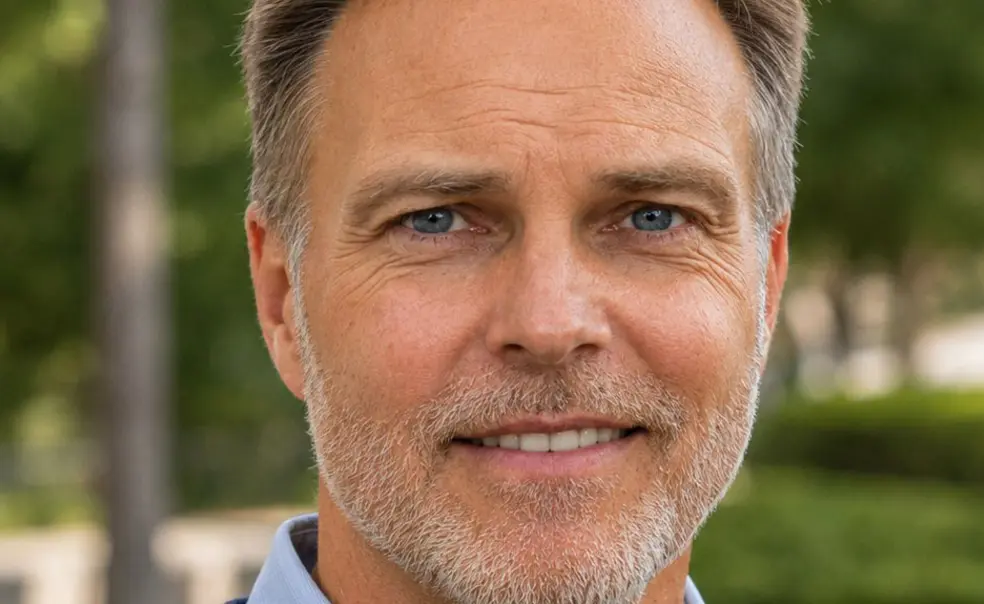

The book: Heading into the 25th anniversary of 9/11 this September, Gibbs drew on his experience as a psychotherapist to examine the identity systems that lead to extremism. In Toward the Turning (ibidem Press), he challenges defaulting to simple narratives such as tribalism and global divisions of good-versus-evil, to dig deeper into the systems that have led to catastrophic events. Gibbs calls for a rethinking of these identities to encourage society to move beyond reactive patterns and instead truly learn from these moments in history.
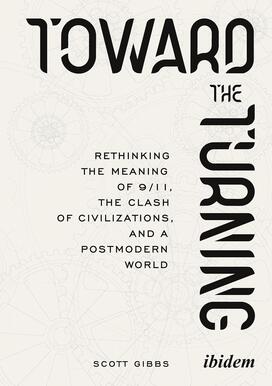
The author: Scott Gibbs ’90 is a California-licensed psychotherapist, a board member of the Existential-Humanistic Institute, and an independent scholar. His research has appeared in the Journal of Humanistic Psychology. He holds degrees from Princeton and Northwestern universities.
Excerpt:
The source of the better part of barbarism in human history is an apparition, spectacularly unrecognized and ignored. Tribalism and fanaticism are the conventional scapegoats, often in combination, used to explain group violence and cruelty — war and civil war, colonialism and empire, apartheid and genocide, tyranny, and enslavement. Unfortunately, this conclusion is shallow and, when used in dialogue, is often counterproductive, fueling the battle through blame and distracting from a deeper understanding. Nevertheless, tribalism and fanaticism expose what lies hidden within them and, thus, the source of the challenge. Group inhumanity repeatedly arises and is fed by the murmuration of group identification — the reciprocal relation of people and systems of interpretation — stylized semistructured ways of being or what it means to be. These styles are faiths, spiritual or secular (e.g., Muslim, American, Israeli). Paradoxically, unwitting identification, which participates in our quest to survive and thrive, also drives destruction and death. Worse, in the ultimate sad irony, our interpretation systems are contingent, having no logical necessity, making them constructed realities and identity an apparition — a conception dependent on the mind. Contingency makes the dark sides of our faiths heartbreakingly absurd. However, accepting reality offers some hope, as it de-escalates the once momentous and grave, and opens new perspectives and possibilities. Like any mirage, this one evaporates upon examination; like any specter, it disappears with acceptance despite fear in the light of disclosure.
Self-righteous contempt and hostility pervade group relations today. Examples inundate our lives: protest marches, riots, terrorist acts, insurrections, insurgencies, vigilantism, hate speech, profiling, targeted killings, walls, revolutions, civil wars, holy wars, imperialism, and so on. The best efforts at resolution are often relatively futile, and vexingly, natural responses tend to make matters worse. The nature of our group relations consistently devolves into no relation at all in a meaningful sense. It is instead competition. Rhetoric leveraged by participants — such as “fight for” or “struggle against” — articulates the means of action, and language like “victory,” “prevail,” or “overcome” expresses the ends. Justification washes insensitivity and aggression clean. Spoken or unspoken, power is the commodity at issue. A battle for respect simultaneously bloodies the field in a relatively simple-minded disconnect between means and ends. Dichotomous thought frames the entire setting.
Modernity (and its extreme outcome, postmodernity) manifests this conflict in various ways, creating flux, fostering critique, and elevating identity and identification. As a reflection of our relationship to ourselves, fundamentalism — liberal or conservative, secular or spiritual — emerges and thrives. Conflict compulsively follows. The drama is utterly toxic, with flagrant and insidious consequences. In response, calls for peace and unity abound, but constructive efforts to remedy the situation are too often absent or fall on deaf ears. Curiously, incredulous surprise typically meets the failure of the calls for peace and unity —as if disconnect and division could be coerced away or overcome with a desperate plea. Moreover, there is no end in sight. The most beguiling outcome is the preliminary nature of solutions that participate in the drama and pick a side. The ongoing flare-up of drama exposes these solutions as ultimately hollow.
Deconstruction of the conflict discloses a self-reinforcing, repetitive pattern of reciprocal blame. The problem driving such tensions (e.g., unfairness or discordant values) and, critically, the problem driving much relational drama itself — disconnection — persists. Maybe more troublingly, pervasively and persistently trapped and disconnected in the drama, evidence points to a startling insight: we misunderstand our predicament to the point of being virtually oblivious. Not understanding, we are condemned to endless repetition. All human history speaks to this revelation. What is called for is a redefinition of the nature and relocation of the source of the struggles at hand. What is required is a new construct that is broadly applicable to our tangled state at home and abroad.
***
A new understanding of “who we are” in line with existential ontology carries significant implications. When the self is understood not as a self-contained substance but as an emergent process, identification and egocentrism come into view and loosen their hold, enabling greater fluidity. At the same time, fragility and vulnerability become systemic features to be accepted and engaged with, rather than denied and dominated. Likewise, in moving from separation to participation in a unified field, from standing apart to being immersed within and inextricably related to, the recognition arises that we are always and already part and parcel of given and evolving systems that we shape and that shape us. Recognizing the systemic nature of our existence opens a path toward potential beyond polarized, inflexible extremes toward connection and reciprocity, fostering practical functioning and harmony. This allows alienation to soften and intimacy to deepen. Complexity becomes a systemic feature that must be acknowledged and engaged with, rather than rationalized away through simplicity, while practical function toward actualization takes center stage.
This shift in apprehension manifests in the living expression of our being, unfolding across the horizon of time, with profound implications once more. We recognize we are situated (e.g., socially, biologically, and familially), attuned, and affected beings, and that this affectedness disposes our understanding and our ways of being. In recognizing that we are essentially attunement, we see that the world shows itself through what we are attuned to and how it “feels.” Consequently, turning toward, rather than denying, “how we are,” especially concerning existential anxiety (e.g., death, nothingness), and, more deeply, attunement as such, offers the possibility of less instinctual reactivity and more practically constructive ways of being generally. Likewise, universal “thrownness” opens up the possibility of a new perspective on and deeper understanding of “us” and greater openness to and understanding of “them.” Ultimately, the shift empowers us to take greater ownership of our circumstances.
At the same time, we recognize that we are interpreting, forward-reaching beings, always invested and open to possibilities beyond the given. Through our capacity to perceive, grasp, and analyze what has been and is, for the sake of what can be, we disclose a world and our place within it, shaping our lives and relations as these unfold through choices grounded in attunement and expressed in innumerable involvements. In this continual movement, understanding unfolds contextually and iteratively, each return to the familiar reshaping the horizon of what can be seen and lived. In recognizing that we are possibilities, we recognize that our worlds are too: unfolding through choices, grounded in attunement, and expressed through involvement. Acknowledging our finitude shifts us from passive waiting to active shaping, transforming a drift through time into a stubborn focus on what matters most.
We finally recognize that we are relational and involved beings, obliviously absorbed in the familiar. We are always living out of a past and toward a future, in a world shared with others and things, enmeshed in shared meanings and involvements, whether chosen or compelled. Brought up and continually living within a given world with others, we find that our preoccupation with the familiar can blind us to the inherited and contingent nature of our worlds, as well as the socialized nature of ourselves. In recognizing that we are lost in the familiar and shaped by it, we awaken to our captivity and our capacity for change, our participation and our possibilities. Rather than denying our preoccupation with and conformity within the world leads to the possibility of a more authentic presence; accepting indeterminacy (e.g., doubt, ambiguity) opens the possibility of accepting groundlessness, including its precariousness and its nature as the fount of possibility. Lastly, recognition and adaptation lay the groundwork for the emergence of new, structured forms of understanding — a “redeeming” faith that delivers us from self-forgetfulness.
A new understanding of “world” in line with existential ontology carries equally significant implications. When the world is understood not as a container of “things,” but as a lived context of meaning that we always already inhabit and help sustain, detachment, neutrality, and innocence are revealed as illusions. We come to see that we do not stand over against a world simply given, but are always already implicated in it, shaped by it even as it is carried forward, reinforced, and revised through our participation. This shift brings into view a more primary reality. Our relation to the world is not observational but participatory, not external but mutually constitutive. On this view, even the idea of a “meaningless world” appears as a misapprehension. If our being is “an issue” for us, then care is constitutive, and our participation in the world is always already meaningful. Further, complexity and instability no longer appear as defects to be denied or dominated, but as structural features of the worlds we live in that must be acknowledged and engaged. This engagement, in turn, loosens easy certainty, calling for more reflective and responsible forms of discernment. As fantasies of mastery and passivity recede, what emerges more clearly is the dynamic, relational character of world and the recognition that our ways of being, individually and together, bear directly on whether those worlds open or close, flourish or atrophy. So understood, the question of the world is no longer merely what stands over against us, but how the worlds we inhabit are structured and lived.
Excerpted from Toward the Turning: Rethinking the Meaning of 9/11, the Clash of Civilizations, and a Postmodern World by Scott Gibbs. Copyright © 2026 by Scott Gibbs. Published by ibidem Press.
Review:
“Gibbs has written a masterful manifesto on the contemporary history of extremism. He capsulizes the arc of his book in one eloquent line: ‘We struggle still in the blast wave of 9/11 — itself the crescendo of decades of repetitive drama.’ Toward the Turning is a passionate yet brilliant and methodical meditation on the dizziness of modernity, the clash of cultures, and the repeated and too often unwitting reductions of those cultures to dangerous stereotypes and simplistic victim-perpetrator cycles.” — Kirk J. Schneider, adjunct faculty at Teachers College of Columbia University.
The Latest
See all


Related News
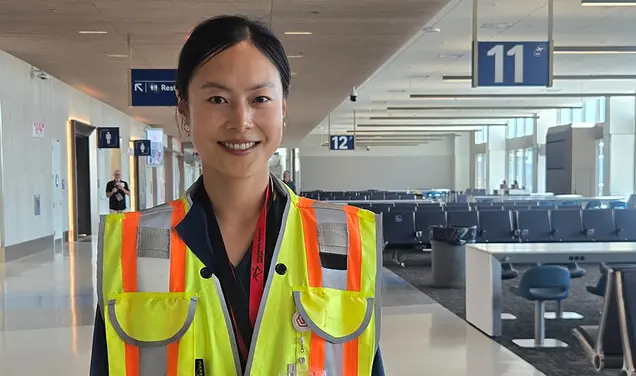
Janice Lee ’09 Worked to Renovate One of Hollywood’s Best-Kept Secrets
An engineer by training, Lee has been deputy project manager on the renovation of Hollywood Burbank Airport

1 Response
Bert Morrison
1 Month AgoDrawing Inspiration from the Bible
I have read and studied the Bible and find its truth more than persuasive. We are to love the Lord (who created you and I, millions of life forms did not create themselves) with all of our hearts and minds and love our neighbors (that’s everyone else regardless of political or differences) as ourselves. This is the will of God — and it doesn’t get any more plain than this.
Thanks for allowing me to participate on this forum.