

A Summer Internship in Alaska Helped Confirm My Interest in Ecological Research
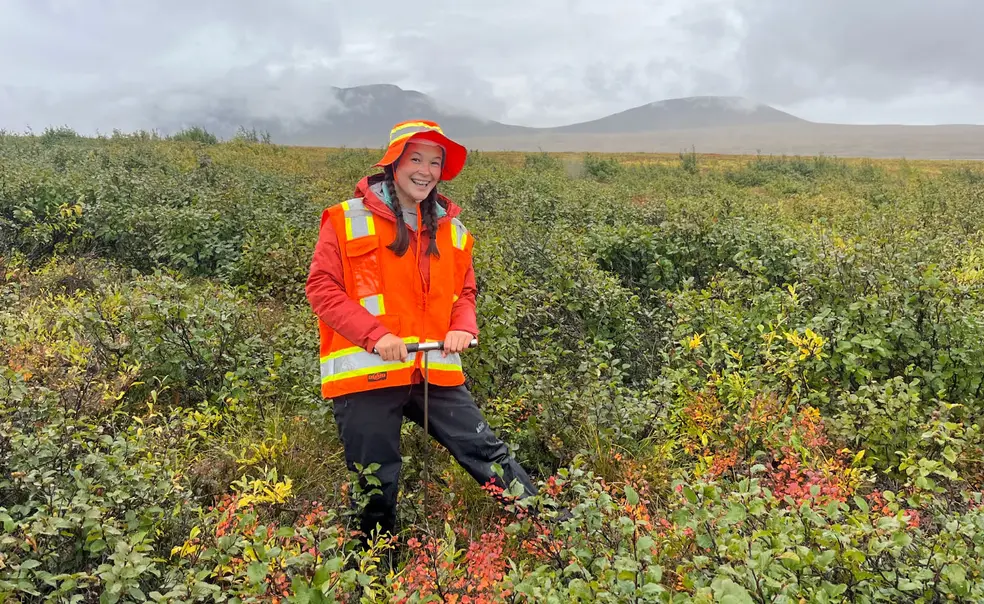

Hannah Floyd ’27 is a senior in the Ecology and Evolutionary Biology department. She is also an intern for PAW.
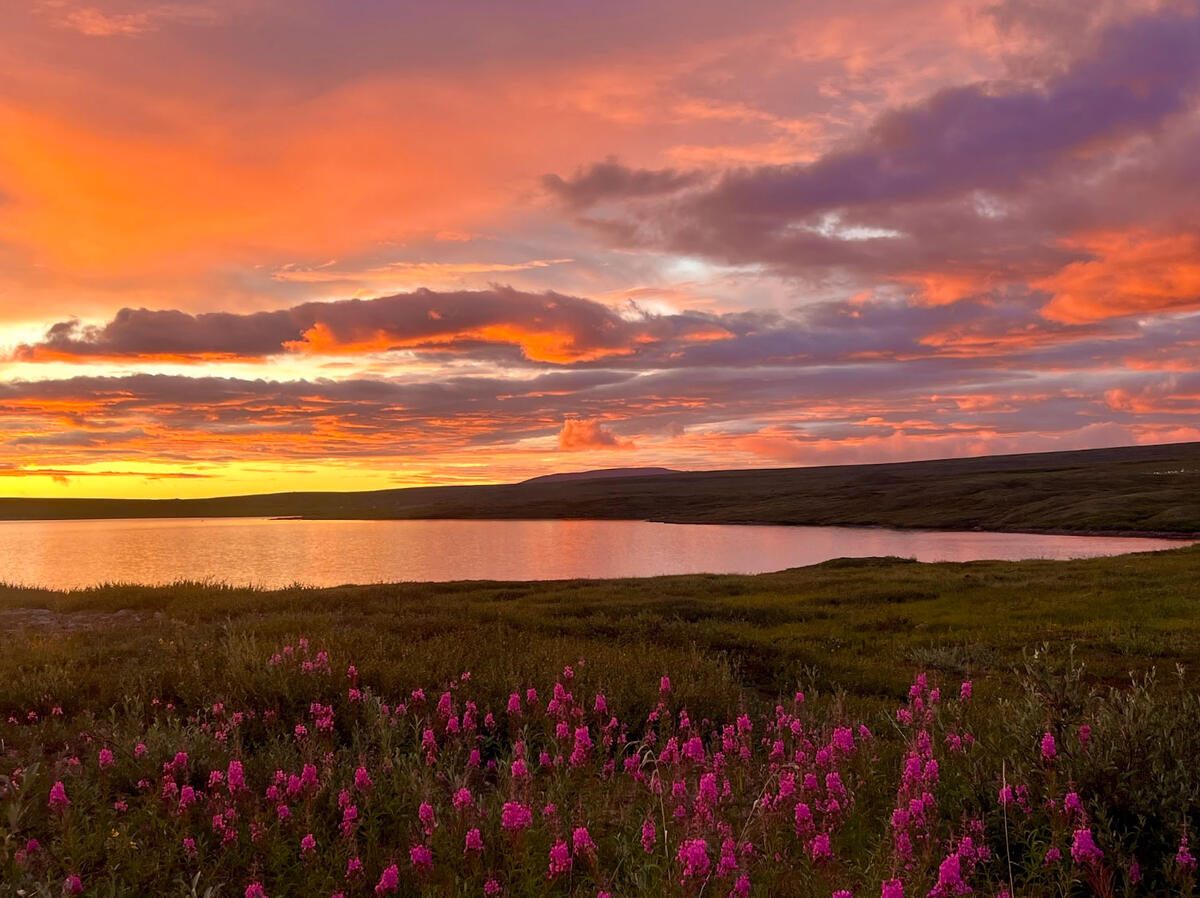
I did not see the sun set for nearly two months while in Alaska.
I spent 10 weeks last summer at Toolik Field Station, a remote research site dedicated to arctic study across ecology, hydrology, geology, and more in northern Alaska. I was there as an intern through Princeton’s High Meadows Environmental Institute, working under the guidance of Ruby An, a Ph.D. candidate in professor Jonathan Levine’s lab in the ecology and evolutionary biology department. For two and a half months, I was totally immersed in research on Arctic shrubification — the increasing spread of low-stature, woody vegetation (“shrubs”) across northern latitudes as the climate warms.
I studied this phenomenon across 120 experimental plots on the tundra along with An and my fellow intern Erik Luijendijk ’27. When we hear the term “climate change” we often think mostly or entirely of fluctuations in temperature. In reality, climate change entails a cascade of far-reaching effects beyond hotter summers, such as changes in nutrient availability, photosynthetic rates, and the length of critical growing seasons. We replicated these variables within our plots in a variety of combinations by adding ammonium nitrate, introducing warming chambers, and prematurely shoveling snow. Within every plot, we individually tagged about a dozen shrubs, and over the course of the long summer, we tracked each of them across a variety of metrics.
My days were filled with time spent at our two field sites. What I didn’t fully appreciate before coming to the Arctic is that it experiences all four seasons. When I arrived in mid-June, there was still snow on the ground. At that time, much of the data we were collecting was on the rapid progression of the plants from their winter dormancy to full verdure. By July, summer was in full swing. The tundra was alive with cottongrass, a ubiquitous Arctic plant species that produces a flower with a fluffy white top almost like a dandelion. In the breeze, they sway hypnotically, and as you scan across the sloping hills, the ground appears as if it is covered in undulating snow.
Summer lasts only for several weeks, though, and the period from July through early August was packed with measuring shrub height, leaf cover, plant biomass, and more. By mid-August, it was already fall, and the shrubs were starting to senesce. Our research focus shifted to extracting plants for chemical analysis in the lab and continuing to monitor phenology as the plants prepare for the long, cold winter.
The field station is located on the edge of Toolik Lake, named for the yellow-billed loon. In the Iñupiaq language, “tutlik” is the word for this iconic rare bird that breeds exclusively on the lakes of the Arctic tundra. The station sits on the ancestral homelands of the Iñupiat people. I was delighted to discover that Toolik Lake itself was home to a pair of yellow-billed loons.
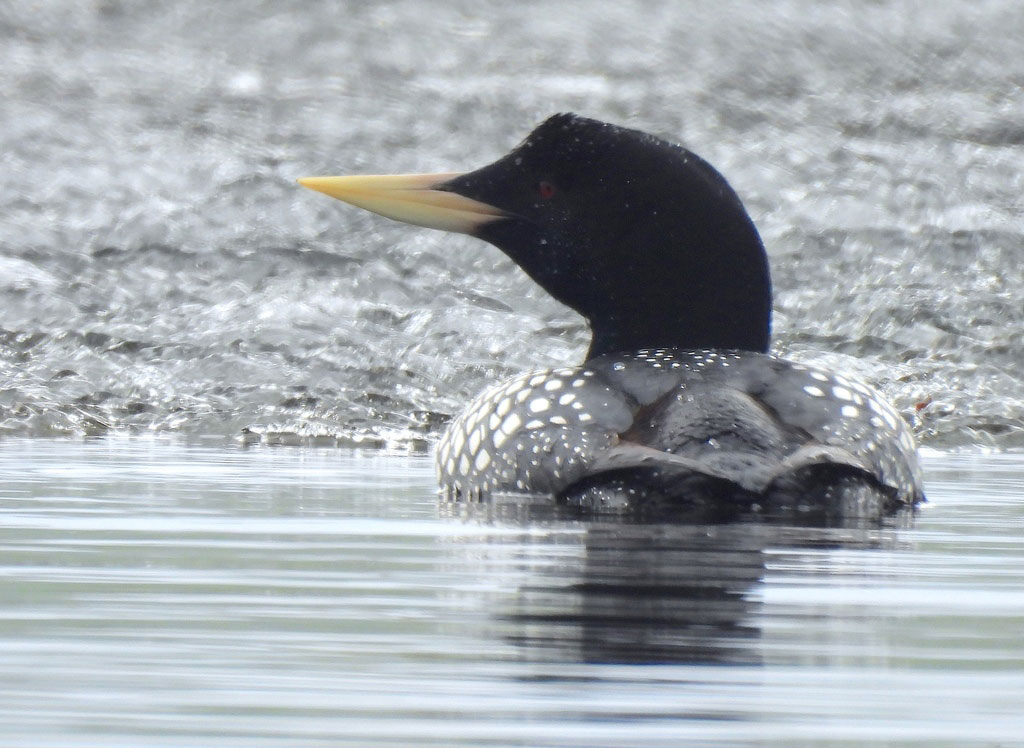
The haunting wail of the loons became a daily fixture for me. To the south lies the Brooks Range mountains. Since we are above treeline, this part of the Brooks Range contains no trees. While I was there, we got several summer snowstorms, which left a fine dusting of white across the peaks. Toolik is remote! It’s a three-hour drive north along the Dalton Highway to the Arctic Ocean and the Prudhoe Bay oil fields, but the nearest city is Fairbanks, nine hours to the south.
I came into this internship with an emerging interest in Arctic ecological research but was uncertain what a future in this field could look like. Now, I am in the process of applying to graduate school to study polar marine biology, with a particular interest in understanding how marine organisms respond to the challenges of such cold environments.
The Arctic landscape was bewitching and inspiring: I watched grizzlies playing, I foraged for wild blueberries, I dove into the Arctic Ocean, and I was spellbound by huge herds of caribou trotting across the landscape.
Protecting this ecosystem is more important than ever. In late October 2025, the Trump administration decided to allow oil and gas drilling again in the coastal plains of the Arctic National Wildlife Refuge, an incredible place I camped in throughout my time in Alaska. They also reissued permits for the construction of the Ambler Road Project. The latter will cut through the Izembek National Wildlife Refuge, which has been protected since 1960. Taken together, these shortsighted actions threaten to fragment one of the largest connected ecosystems in the U.S., disturb permafrost and peatlands which store massive amounts of carbon, and disrupt the livelihoods of Indigenous peoples who depend on this landscape.
The Arctic is a place of paradoxes, with constant sunlight in the summer and near-endless darkness in the winter. By the last few days of my time at Toolik, the night descended into an inky blue midnight darkness. Winter was on its way. On my return flight, the sky erupted into the mesmerizing emerald green dance of the Northern Lights. Just as shrubs now stretch northward, so too does human impact creep ever closer. To study the Arctic is to witness both its resilience and its peril. If we act now, the Arctic’s light — its wildness and awe-inspiring wonder — can still endure even on the darkest of nights.
The Latest
See all


Related News


McCarter Theatre’s First South Asian Musical Took Me Back to Forbes Basement
A Beat of Our Own is about a college dance team not unlike Princeton South Asian Theatrics


No responses yet