
He Fled Nazi Germany and Shaped the Course of Art History
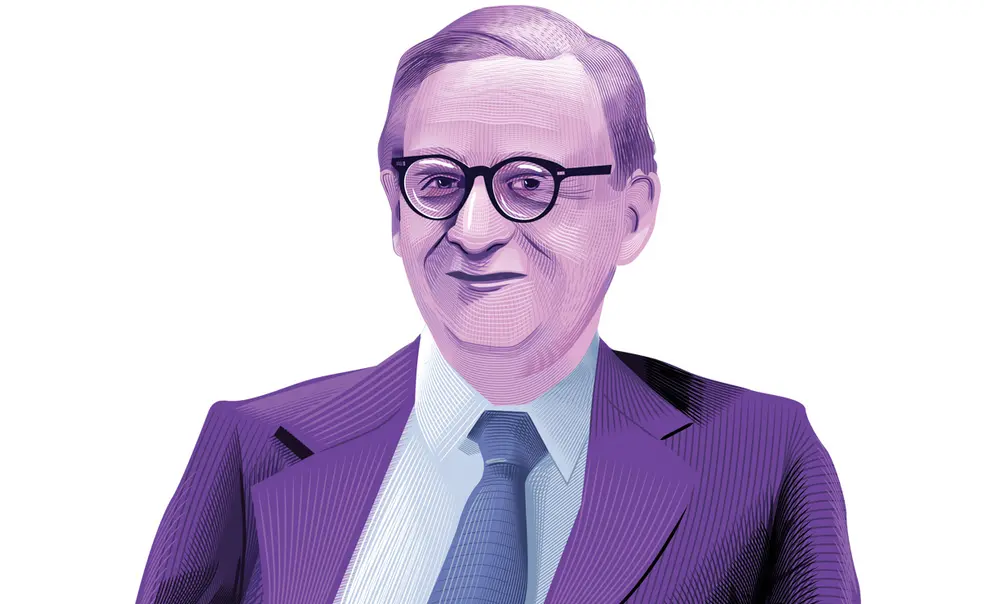

When Kurt Weitzmann arrived in Princeton in 1935, the German art historian took meals at the Graduate College, where he was flummoxed by having to wear academic gowns for the first time in his career. “Sitting at the long tables, the American students, curious to learn about Nazi Germany, beleaguered me with questions,” Weitzmann recalled in his posthumously published 1994 memoir, Sailing with Byzantium. Though he was not Jewish, his mentor was, and in solidarity he had refused to join the Nazi Party, then a requirement to teach at German universities, leading to his flight from his homeland.
A longtime professor in art and archaeology and fellow at the Institute for Advanced Study, Weitzmann remained in Princeton for the rest of his life and ended up shaping the field of art history in America, training many of the discipline’s most important figures.
Born in 1904 in a village near Kassel, a city in central Germany, Weitzmann became interested in antiquities at a young age after visiting a local museum, and studied art history against his parents’ wishes. He pursued his Ph.D. in Berlin under the tutelage of venerated scholar Adolph Goldschmidt, whose role in German academia was increasingly complicated by his Jewish heritage. Weitzmann’s association with Goldschmidt also put him under intense scrutiny. Surprisingly, it was his research that got him — and his wife Josepha Fiedler, another mentee of Goldschmidt — out of Germany.
In 1932, Yale archaeologists uncovered the synagogue of Dura-Europos in Syria. Built in the third century, it was one of the oldest synagogues ever discovered and featured striking frescos of Old Testament scenes. Weitzmann theorized that the Octateuch manuscripts, an early iteration of the Christian Old Testament held in the Vatican’s collections, might be related to the imagery depicted in the synagogue. The only problem? After Weitzmann wrote to the Vatican requesting to view these manuscripts, it turned out that Princeton professor Charles Rufus Morey had already requested photographs for a similar project.
As it happened, Morey was happy to let Weitzmann work on the manuscripts, on the condition that Weitzmann came to Princeton in an official capacity. In 1935, Weitzmann joined the Institute for Advanced Study as a fellow, and his wife followed him to Princeton three years later.
Weitzmann’s biggest contribution to Princeton was inspiring a generation of students. After Morey’s 1945 retirement, Weitzmann was hired to run the elite manuscript seminar in the Department of Art and Archaeology, where he taught a number of leading medieval art historians, including future directors of museums in Palo Alto, Cleveland, and Baltimore.
Perhaps his impact was due to his hands-on approach. When Weitzmann taught his precepts, he typically brought an object from the Princeton University Art Museum to pass around and allow students to examine up close. “I remember once I had a little Romanesque ivory Madonna,” Weitzmann said in a 1984 interview with the Rutgers Art Review, adding that the student “who looked at the piece with the greatest interest was Tom Hoving.” In 1967, Thomas Hoving ’53 *60 became the director of the Metropolitan Museum of Art, having been the driving force for the museum’s 1968 acquisition of the ancient Egyptian Temple of Dendur. According to the Rutgers Art Review interview, once Weitzmann retired in 1972, Hoving decided to “make use of the retired professor,” and together they collaborated on a 1977 Met exhibition tracing the history of late Roman art.
In January 1993, Princeton informed Weitzmann he would receive an honorary doctorate at Commencement. “All spring he looked forward to this public recognition by the institution to which he had devoted his life,” wrote Weitzmann’s former student, Herbert Kessler *65. But Weitzmann fell ill, and the honor could not wait for the graduation ceremony. Just before Weitzmann’s death, President Harold Shapiro *64 conferred the degree at the scholar’s bedside, in the company of his wife and former students.
The Latest
See all


Related News

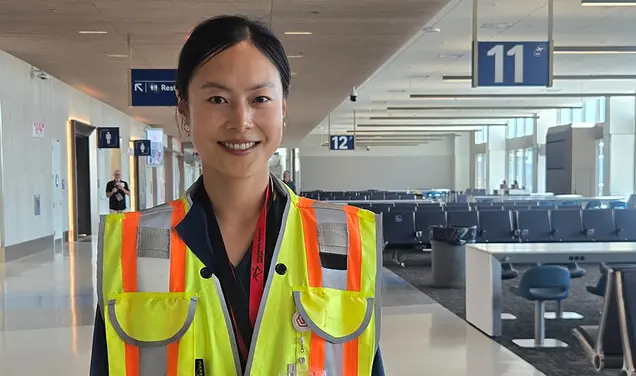
Janice Lee ’09 Worked to Renovate One of Hollywood’s Best-Kept Secrets
An engineer by training, Lee has been deputy project manager on the renovation of Hollywood Burbank Airport

2 Responses
Jaroslav Folda ’62
4 Months AgoWeitzmann’s Hands-On Influence
In his Portrait of Kurt Weitzmann (March issue), Harrison Blackman writes: “Perhaps his impact was due to his hands-on approach.” I certainly agree. When I took Weitzmann’s Art 206 course in the spring of my junior year, 1961, it literally changed my life. Besides his brilliant lectures on medieval art, Weitzmann’s personal involvement in this course was inspirational. Not only did he teach all the precepts himself, usually introduced with a work of art he brought from the museum, but he also took us on two field trips — to see Byzantine manuscripts at Firestone Library and to see medieval treasures in the Morgan Library in New York City on a Saturday morning. And when handing back our term papers, he discussed his copious written comments with each student in a 30-minute individual consultation! Then later, in March of my senior year, I finally came to the realization that I wanted to study medieval art in graduate school, so I went to Dr. Weitzmann for advice. My dilemma was that I did not know where to go, and it was in any event too late for written applications. After discussing the situation with me, Weitzmann’s solution was to pick up the phone and call Dr. Adolf Katzenellenbogen at Johns Hopkins. He personally arranged an interview for me with Dr. K., and the rest is history.
Editor’s note: The writer received his Ph.D. from Johns Hopkins in 1968 and is the N. Ferebee Taylor Professor Emeritus of the History of Art at the University of North Carolina at Chapel Hill.
Fred M. Donner ’68 *75
6 Months AgoMemorable Studies in Medieval Art
Thanks to Harrison Blackman ’17 for his informative profile of Kurt Weitzmann (1904-1993) in the March issue. I knew very little about the man, and hardly exchanged a word with him, but he and his department played a pivotal role in my own scholarly development.
I came to Princeton in the fall of 1963 intending to major in chemistry, but in my sophomore year I registered for Medieval Art, thinking that maybe I would learn something about the stained-glass windows of Chartres. I did in time learn about those windows; but the entire first half of the spring semester was devoted to Byzantine art, about which I had never even heard, and the course was taught by Professor Weitzmann, probably the greatest Byzantine art historian of the 20th century. What a stroke of good fortune for me! He was thoroughly Teutonic, with a rather thick accent and a formal manner, but his lectures were clear and lusciously illustrated with color slides — of the Rabbula Gospels, icons, cloisonne enamels, carved ivories, and above all, glorious Byzantine mosaics. I fell in love with it and it helped nudge me toward study of the Near East, which became the focus on my own academic career. His course was one of the best I ever took, at Princeton or anywhere else, and I have remained ever since grateful to have experienced it.