
Justine E. Hausheer ’10 Recommends Books on Australian Wildlife
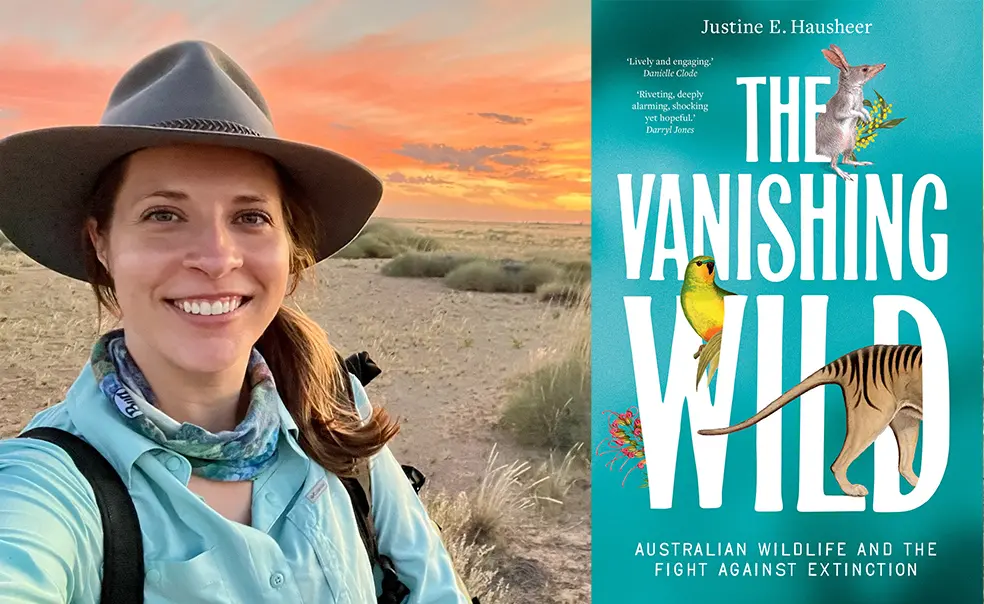

Justine E. Hausheer ’10 is an award-winning science writer based on Australia’s Sunshine Coast. She’s spent the past decade working as a writer and editor for The Nature Conservancy, a global conservation organization. Her first book, The Vanishing Wild: Australian Wildlife and the Fight Against Extinction, explores threatened species conservation in Australia.
Hausheer explains that though Australia is celebrated for its wildlife, its native creatures are in crisis. Nearly 100 endemic species have become extinct since European colonization, meaning that Australia has lost more biodiversity than any other developed nation in the past 200 years.
Battling against this crisis are hundreds of scientists, landowners, and Indigenous Australians. Hausheer, a Floridian who moved to Australia a decade ago, spent three years traversing the continent to learn about the species they care for and the challenges they face. She encountered pygmy possums who live in high in the Snowy Mountains, heard the booming calls of bitterns from their adopted home in the Riverina’s rice fields, crouched after dark in the spinifex grasslands of far western Queensland listening for the elusive night parrot, and met the adorable fat-tailed dunnarts who might hold the key to reviving the Tasmanian tiger.
PAW asked Hausheer to recommend three books for readers interested in learning more about Australian wildlife, and she suggested these.
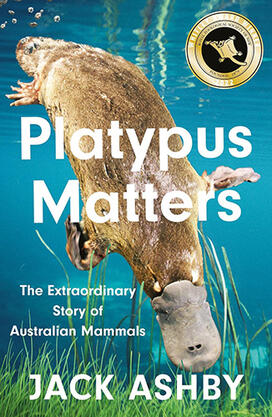
By Jack Ashby (William Collins)
Platypus Matters is a celebration of one of Australia’s most intriguing and well-recognized mammals. Author Jack Ashby is the assistant director of the University Museum of Zoology at Cambridge and a self-confessed platypus fanatic. His book immerses readers in all things platypus — their natural history, ecology, and conservation — before folding in chapters about other iconic Australian mammals, like the echidna and kangaroo. At the heart of Ashby’s book is a reckoning with Europeans’ derisive view of Australian wildlife as primitive evolutionary oddities, and how that perception still shapes our understanding of Australian wildlife more than 200 years later, to many species’ detriment. It’s an entertaining and informative read for anyone wanting to learn more about Australia’s iconic mammals.
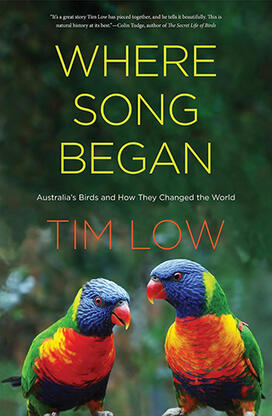
By Tim Low (Yale University Press)
While Australia’s spectacular mammal diversity hogs all the limelight, its birds have quietly transformed the world. More than 60% of the world’s birds can trace their evolutionary origins back to Australia, where both parrots and passerines (songbirds) first evolved. Biologist Tim Low brings Australia’s birds to life, from the lyrebirds that can mimic everything from a car alarm to a crying child, to the complex territorial politics of suburban noisy miners. He explains how the modern species owe much to Australia’s unique environment, where geographic isolation, infertile soils, scant food resources, and a fire-adapted landscape have contributed to an avian assemblage that is remarkably long-lived, intelligent, aggressive, and vocal, compared with their counterparts elsewhere in the world. Anyone interested in birds will appreciate this book, which is both an enjoyable read and a wealth of information about some of the world’s most spectacular bird species.
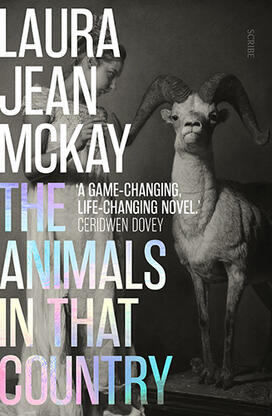
By Laura Jean McKay (Scribe US)
A dystopian pandemic novel might be an unusual addition to a list about Australian wildlife, but The Animals in That Country is one of those books I can’t stop thinking about. The story follows Jean, a hard-drinking grandmother who works at an outback wildlife park and prefers the company of animals over people. She watches as news begins to trickle in about a flu pandemic whose main symptom is the ability to understand animals. Infected individuals begin hearing voices — first mammals, then birds, and then insects — and many lose their minds amid the cacophony of sound. Jean’s deadbeat son falls ill, and then disappears with her beloved granddaughter, Kimberley. Jean, determined to save her family, sets out into the animal apocalypse with a dingo named Sue who rides shotgun in her truck. As quirky as it sounds, this incredible novel asks some deep questions: Just how connected are we to the natural world, and to each other? And what would change if we actually understood the animals around us?




No responses yet