

Nassau Hall Was the Nation’s Capital, and Other Facts for the Semiquincentennial

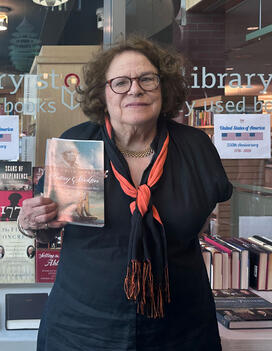
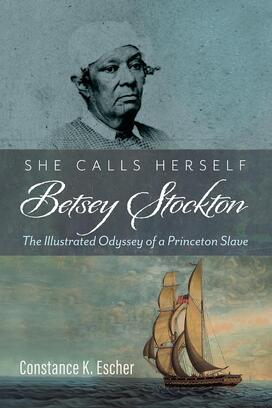
Constance Escher has been fascinated by Princeton history for decades. A former research associate for Princeton’s Shelby Cullum Davis Center, public school teacher, and director of the Children’s Museum at the Princeton Historical Society, Escher dedicated her career to understanding the people who contributed to the Princeton we know today. One of those figures, Betsey Stockton, was the subject of her 2022 book, She Calls Herself Betsey Stockton.
As the country approaches its 250th anniversary, Escher says the University played a central role in America’s founding. To celebrate the occasion, she encourages all Americans to reflect on this important moment. “I think everybody should take time, put their cell phones down, and read the Declaration of Independence and the Constitution,” she says. “Then ask yourself, are the three branches of government in balance today?”
PAW asked Escher to dig into her knowledge bank for interesting facts about Princeton’s role in the nation’s founding.
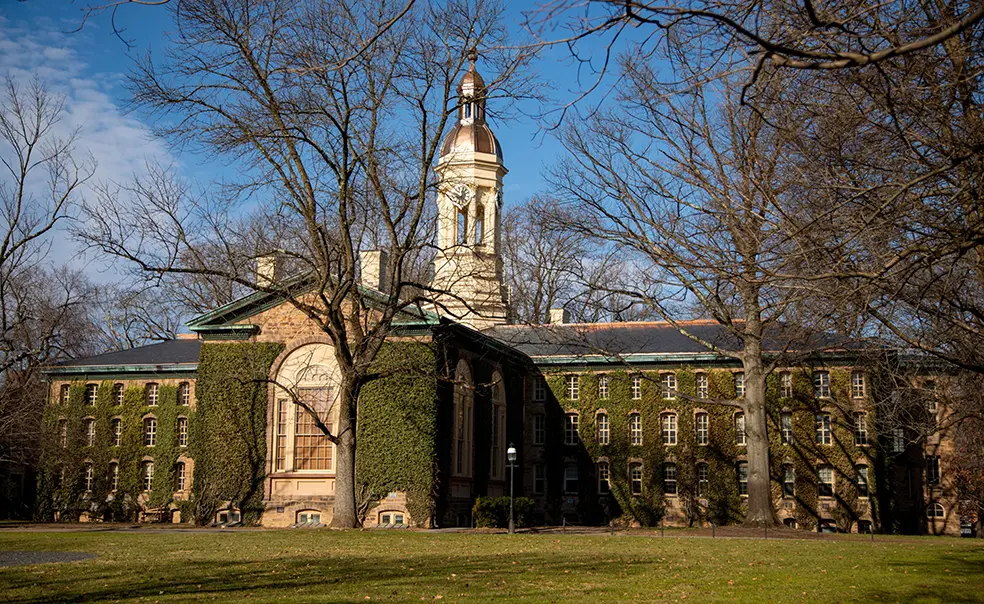
Nassau Hall was briefly the nation’s capital
Nassau Hall was the location of several key moments throughout the era. In the summer of 1776, the Declaration of Independence was read on the steps of Nassau Hall. Then-University president John Witherspoon and Richard Stockson 1748, who was a member of Princeton’s first graduating class, were among the signers.
In the summer of 1783, the Continental Congress was forced to flee Philadelphia and relocated to Nassau Hall, where it ultimately spent four months. While there, members received news that the Treaty of Paris was officially signed, which ended the American Revolutionary War and recognized the United States as an independent nation.
“The fact that [the treaty] was received at Nassau Hall makes Nassau Hall the first official capital of the United States of America,” Escher says.
The Battle of Princeton nearly destroyed the University and the town
The Battle of Princeton was seen as a turning point in the Revolutionary War, as Washington and his soldiers defeated British troops after several previous losses. While this was a victory, it left “the town in tough shape,” says Escher. The British had occupied the town and the campus. “The interior of Nassau Hall was trashed,” she adds. It ultimately took years to recover.
Ashbel Green 1783 reflected on the impact of the war during his Commencement speech
Ashbel Green 1783, who was the valedictorian of his class and later became University president in 1812, served in the Continental militia during the war. During Commencement that year, which was attended by Washington and the Continental Congress, Green’s speech addressed the difficulties he and his fellow classmates endured: “To drop the tear of regret when we view these sacred walls rising from the ruins of tyrant cruelty, when we see our alma mater recovering from the wounds which the savage hand of war had inflicted on her, when we see the august council of this rising empire honoring the place of our education, to drop the tear of regret at such a time may, perhaps, to an indifferent spectator appear preposterous. But alas these are the circumstances that point the arrows of sorrow that would our hearts. We are to be torn from these flattering prospects when they are but beginning to dawn. Farewell, ye pleasing scenes, thou delightful place of our youthful studies, seat of the muses, how shall we express it? A long, perhaps a final adieu?”
A shoutout for some women who deserve more recognition
Escher says there were many women with ties to Princeton whose remarkable stories don’t get told often enough. For example, Annis Boudinot Stockton was one of the first women to publish poetry. She married Richard Stockton and lived in what’s now the Morven Museum and Garden. Among her efforts to support the war, she hosted Washington and congressmen when they were stationed in Princeton in 1783. For Escher, what really highlights Stockton’s strength is the fact that she raised Marcus Marsh, who was enslaved by the Stocktons, and nursed him in addition to her own child after Marsh’s mother died. It’s remarkable that she chose to nurse a second baby so that child wouldn’t die, Escher says. “That’s a real woman.”
Another example is Betsy Stockton, who was enslaved by Ashbel Green. Green encouraged her education, and when Stockton was freed, she went to Hawaii as a missionary. When she returned to Princeton, she became a prominent educator for the Black community. There are of course others, Escher says. She encourages those interested in exploring Revolutionary and Princeton history to also engage with stories of women and people of color.
There are many historic buildings, monuments, and exhibits around Princeton
Those walking around Princeton today can still get a taste of 18th century history, as many buildings on campus and homes in Princeton are historical landmarks. Escher points to several: the Maclean House was home to 10 Princeton presidents beginning in 1756, Thomas Clark House became a hub to treat those wounded in the battle, and Bainbridge House on Nassau Street still remains standing with most of its original 1766 structure.
Additionally, Escher encourages visitors to campus to explore Princeton exhibits, programs, and archives focused on the 250th. Two exhibits of note are “Nursery of Rebellion: Princeton & the American Revolution,” curated by associate history professor Michael Blaakman and special collections librarian Gabriel Swift, which will be available in the Milberg Gallery at Firestone Library through July 12, and “Real and Remembered: Princetonians Caught Between Study and Revolution,” at the Mudd Library through April. “Go to these incredible exhibits,” Escher says.
The Latest
See all


Related News

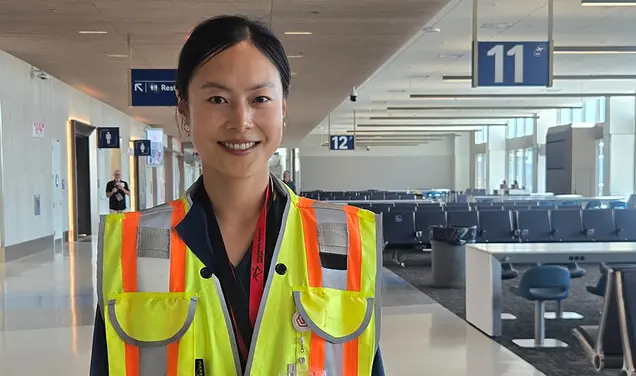
Janice Lee ’09 Worked to Renovate One of Hollywood’s Best-Kept Secrets
An engineer by training, Lee has been deputy project manager on the renovation of Hollywood Burbank Airport


2 Responses
Fleeta Burgess
3 Months AgoLearning More About Our Shared Past
What a fascinating reminder of New Jersey’s pivotal role in our nation’s founding. As a lifelong New Jersey resident, I had no idea that Nassau Hall briefly served as the nation’s capital or that the news of the Treaty of Paris was received there. It’s amazing how many significant moments in American history happened right here in our own state, yet so few people know about them.
I also appreciated the article’s recognition of women like Annis Boudinot Stockton and Betsey Stockton, whose contributions deserve far more attention. As we mark America’s 250th anniversary, this is exactly the kind of history that should inspire us to learn more about our shared past and reflect on the principles that continue to shape our country. Thank you for such an enlightening piece.
Constance K. Escher
3 Months AgoThank You
Thank you, Carlett, for doing a bang-up job with this article. So great. So well-organized. CKE