

Before Orientation Change, Administrators Say They Should Have Talked to More Students
Administrators said they should have gathered more input from upperclassmen
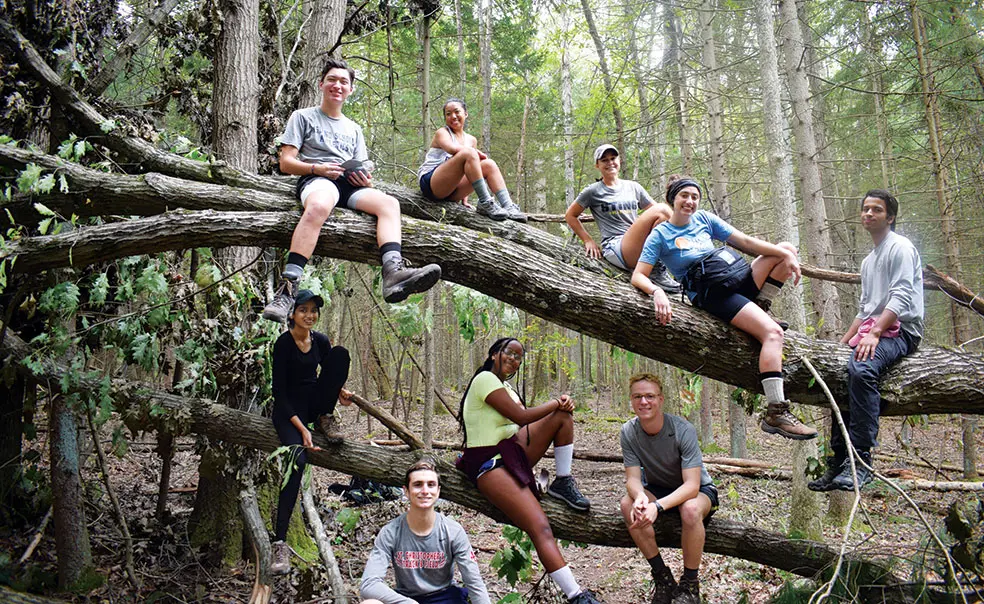

After intense backlash from students and alumni, the University paused changes to freshman orientation announced less than two weeks earlier, but cautioned that orientation will still look different, with a final decision expected before the start of the spring semester. At a Nov. 9 meeting of the Council of the Princeton University Community (CPUC), administrators admitted that they should have gathered more student input.
“We regret not consulting [upperclassmen] students about the orientation changes,” said Dean of Undergraduate Students Regan Crotty ’00 at the meeting.
The original announcement, emailed to all students on Oct. 27, said Outdoor Action, Community Action, and Dialogue and Difference in Action would no longer be required for first-year and transfer students and would be moved to fall break, among other changes. Orientation would also be shortened from 12 days to eight.
Vice President for Campus Life W. Rochelle Calhoun cited “an expanded approach … that recognizes that meaningful connections and belonging develop over time” in her first note to students, encouraging them to participate in a survey that will help guide future programming. Student leaders were invited to participate in one of 10 feedback sessions. It is unclear what role student leaders may play going forward, though a New Student Orientation FAQ page called them “an essential part of these programs.”
Calhoun’s email said the changes were “prompted by budgetary considerations” as well as feedback from students, staff, and faculty. “While the small-group experiences have been positively received and valued, comments on the length of orientation and concerns about providing adequate time for students to settle into college life were also considered,” Calhoun wrote.
Alumni and students responded with petitions vowing to save the small-group experiences. An alumni-created site, SavePrincetonOrientation.org, had nearly 4,800 signatures as of Nov. 9, from alumni dating back to the Class of 1958 through current freshmen. At the Homecoming football game against Cornell Nov. 1, alumni and students showed up with signs, shirts, and flyers, and a plane flying overhead advertised SavePrincetonOrientation.org.
Simon Porter ’01, a former OA leader trainer, said a group of alumni anticipated earlier this year that program director Rick Curtis ’79 was planning to retire soon and filed paperwork to create an OA endowment. Since the announcement, they have met with administrators who seemed “open and committed to continuing the conversation.” As of Nov. 9, alumni had pledged $635,000 to OA, contingent on the University restoring it as a pre-orientation program.
“If Rick Curtis announced [the move of OA to fall break] … I would be more trusting of it,” said Alyssa Nelson ’95. “The timing of this is really a slap in the face or just tone deaf to the fact that Rick Curtis is approaching retirement, and this is his life’s work.”
Curtis declined comment to PAW.
The survey Calhoun cited asked first-year students which topics and themes were most helpful during orientation, such as adjusting to life as a Princeton student, understanding values, supporting health and well-being, and getting to know people and making friends. Older students were asked how they felt around fall break during their first year at Princeton. Students were also asked how many nights they’d prefer for small-group experiences, how important being off campus was, and which elements of the programs were most vital.
Calhoun’s follow-up email, sent to Undergraduate Student Government Executive Committee members on Nov. 9 and posted online, announced a pause to the decision and promised further discussion at an upcoming Undergraduate Student Life Committee (USLC) meeting. Calhoun confirmed orientation would be shortened regardless and asked students to help brainstorm alternatives that “do not maintain the status quo” but do “maintain the integrity of small group experiences.”
“If you ask ... the vast majority of students would say that the small group experiences of OA, CA, and DDA were the best parts of orientation, and the long parts that most people are complaining about are not the small-group experiences. It’s the endless classroom sessions,” said Megan Cameron ’26, former co-chair of the OA Leader Trainer Committee.
At the CPUC meeting, President Christopher Eisgruber ’83 said he was “very glad to hear” the conversation would continue, but that to achieve budget reductions, “the administration is going to have the responsibility … to do unpopular things.”
Eisgruber said the University seeks student input on major decisions through surveys, direct communication with student leaders, and committees that may include students. He suggested that guidelines for student input be clarified by the USLC, but also said the University relies on faculty and staff expertise, and that some decisions must remain confidential in advance.
U-Council chair Isaac Barsoum ’28 said he was “thrilled” about the pause and that USG had tried to convince administrators in meetings that “this is one of the most important parts” of a first-year Princeton experience, “and that if you have to cut orientation’s length, you can do it in other ways.”
The Orientation Advisory Board is composed of 14 administrators across the University and is charged with providing “direction for the future of the Orientation program,” according to the New Student Orientation website.
The Pace Center for Civic Engagement runs Community Action, founded in 1987, in which students “learn what it means to be part of a community, how to grapple with complex societal questions, and begin to develop an awareness of their personal values,” according to the Pace Center website. The Pace Center reported on Instagram that 765 students participated this year.
The Office of Diversity and Inclusion runs Dialogue and Difference in Action, a social justice program in which students “engage in critical dialogues focused on identity, power, privilege, and difference” both in the University community and beyond, according to its website. It launched in 2017.
The Office of the Dean of Undergraduate Students runs Outdoor Action. This year, OA had 665 participants, according to Curtis, the program’s director since 1981.
When OA celebrated its 50th anniversary in 2024, more than 130 former trip leaders came to campus to reflect on the program, which has had more than 25,000 participants. Holly Zindulis ’05, a former OA leader, told PAW at that time that the freshman trip “is so much more than a backpacking trip or a camping trip.”
Reaction: Alumni and Students Push Back on Orientation Changes
In interviews with PAW and comments online, current students and alumni praised the small-group experiences for incoming freshmen and stressed the importance of holding them before classes begin. Read excerpts from their comments below and visit
bit.ly/oa-comments to see more reactions.
Diego Segura ’27, who has been both a Community Action and Outdoor Action leader, said he “learned how to lead dialogue and respectful service” through CA and “learned how to push my boundaries, have fun, and take myself less seriously” in OA.
Denali Barron ’09, a former OA trip leader, wrote, “Twenty years after leading my first trip, I feel pretty distant from anything I learned in a classroom or lecture hall at Princeton. But my formative experiences as an OA leader and leader trainer remain relevant.”
Joshua Blum ’02, a psychiatrist at Bucknell and Susquehanna universities and a former OA leader, said the trips “level things very quickly. It doesn’t matter if you have money, it doesn’t matter if you’re first-gen, it doesn’t matter if you were the star valedictorian of your high school or you barely got into Princeton. It didn’t matter,” because groups dealt with challenges together.
Katie Zaeh ’10 wrote that an optional, fall-break OA trip “will not have the same power to set a campus culture,” and “without OA in orientation week, freshmen seeking belonging will turn to more exclusive communities that are immersed in drinking culture.”
Edward Reynolds ’06 argued against the budgetary savings of the proposed changes, writing that “the OA experience has an incredibly high return on investment for the University in terms of student well-being and overall experience.”
Maggie Pecsok ’18, who pursued an M.D./Ph.D. program after Princeton, credited OA’s “challenge by choice” principle for teaching her to trust herself. “I am not sure I would have had the confidence to take on everything I have since graduation without repeatedly discovering through OA that I can do difficult things.”





No responses yet