

Deal or No Deal?
Danielle Allen ’93 says universities should reject political coercion, but not the possibility of change

Give Danielle Allen ’93 credit: She is not afraid to insert herself into the middle of a controversy. In the world of higher education, the biggest controversy right now is the Trump administration’s attempt to dictate the inner workings of America’s colleges and universities. Allen has some thoughts.
A little background first. On Oct. 2, 2025, the administration sent a proposal to nine institutions called the “Compact for Academic Excellence in Higher Education.” The recipients ranged from Brown, Dartmouth, and the University of Pennsylvania in the Ivy League to much larger state schools such as the universities of Arizona and Texas. In exchange for compliance with the administration’s policy preferences, including freezing tuition rates, affirming a binary understanding of gender, and requiring the SAT, institutions that signed the compact would receive “multiple positive benefits” such as priority access to federal funds.
This was far from the first attempt by the administration to mold schools to its liking. It had already sought to dismantle the Department of Education, limit visas for foreign students, and suspend billions of dollars in research funds to Princeton and other institutions. With that no doubt in mind, response to the compact was hostile. The Association of American Universities and the American Association of Colleges and Universities both denounced the administration for attempting to tie federal aid to political compliance. Princeton President Christopher Eisgruber ’83 called the compact “a dangerous step in the wrong direction.”
Allen, a political scientist and director of Harvard’s Edmond & Lily Safra Center for Ethics, is sympathetic to these criticisms, but she also sees a missed opportunity. In an essay for The Chronicle of Higher Education shortly after the Trump compact was offered, Allen wrote that while the administration may have been acting unconstitutionally, they weren’t entirely off-base. There are significant problems with American higher education, and the administration had identified several of them.
“No, I don’t think the compact as proposed should be signed,” Allen wrote. “But it’s still an excellent idea to have a coalition of strong universities work together to negotiate a package of reforms for higher education.”
Allen had already laid out her critiques of Trump and higher ed in an April 2025 essay for The Atlantic titled, “America and Its Universities Need a New Social Contract.” She began by denouncing the administration’s “reckless political attacks on higher education and academic freedom ...; the abuse of the visa process to intimidate faculty and students; and a self-inflicted economic shock that ... will take a big bite out of endowments.” But she acknowledged, “If universities have been a target, it is also true that the target was vulnerable.”
The initial Trump compact failed; to date only tiny New College of Florida, enrollment 710, has signed it. So in August, the administration tried a different approach. Education Secretary Linda McMahon sent a letter to every postsecondary institution in the country urging them to “describe to the American public your commitments to rigorous thinking, pathbreaking research, and national service.” She asked them to submit their responses by the end of this year.
Response to this letter has been mixed. The State University System of Florida welcomed it. The American Federation of Teachers blasted it. Eisgruber said Princeton would cooperate but on its own terms.
Allen believes that all schools have an obligation to answer McMahon, an opinion that has put her in hot water with some of her colleagues. “America’s colleges and universities should take up the secretary’s letter as their own,” she wrote in an
Aug. 11 Substack post, “leading the American public from the front through this necessary conversation, instead of being pushed from behind into doing what is right.”
The American public certainly seems to think that higher education needs fixing. In July, Gallup found that the percentage of U.S. adults saying they have “a great deal” or “quite a lot” of confidence in higher ed had fallen from 57% in 2015 to 36% today, while the percentage saying that they had little or no confidence had more than tripled, from 10% to 32%. High among the complaints was that colleges and universities have become too expensive, too politicized, too dogmatic, and too undemanding.
Though Allen does not vouch for the Trump administration’s sincerity, she does recognize its authority. Like them or not, they are the people’s elected representatives, and in her opinion McMahon has asked fair questions. Above that, Allen says higher education owes a response to the American public.
Wading into this debate at this time is a controversial undertaking for a political theorist whom the Chronicle has dubbed “the last liberal” and higher education’s “most interesting reformer.” PAW spoke with Allen about where she hopes to take the conversation, and with several Princetonians who have served as college and university presidents about the resistance she may encounter.
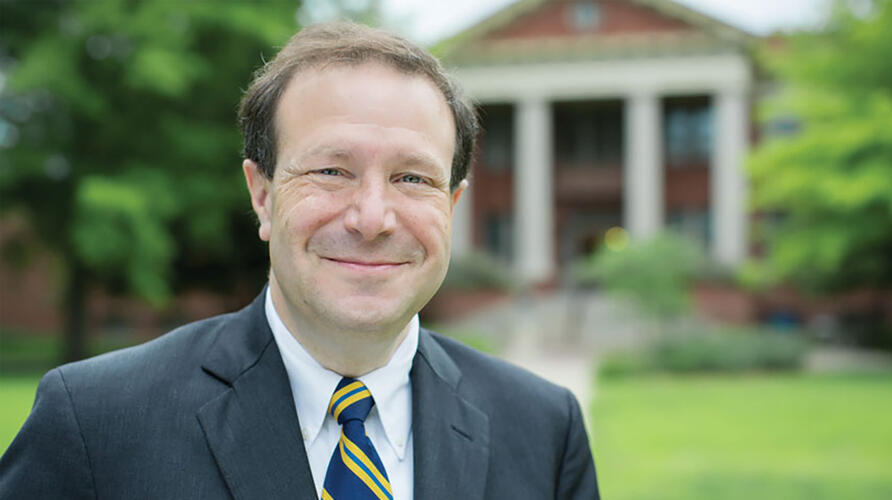
Steven Poskanzer ’80, former president of Carleton College, says decades of federal research funding, coupled with university autonomy, have helped produce Nobel Prize-winning research.
As Allen writes, the modern compact between the federal government and higher education can be traced back to the atomic bomb.
Detailing this history in The Atlantic, Allen wrote that the Manhattan Project was the first substantial investment by Washington in academic research. At the end of World War II, Vannevar Bush, an MIT engineer who had helped initiate the Manhattan Project, convinced President Harry Truman to continue the federal investment in academic research, especially in the sciences, which had helped win the war. His plan, outlined in the report, Science: The Endless Frontier, set the tone for the next eight decades.
In a nutshell, Congress channeled billions of dollars to colleges and universities but let them run themselves. Until the Trump administration, so long as schools obeyed antidiscrimination laws, the federal government showed little interest in dictating who they admitted, how much they charged, who they hired and promoted, how they graded, and how they administered discipline. In most respects, this arrangement has worked spectacularly well. American schools filled 13 of the top 20 spots on the 2026 Times Higher Education World University Rankings. U.S. medical and scientific innovations have anchored the global economy for three-quarters of a century.
“There’s a reason why so many Nobel prizes and critical discoveries and scientific breakthroughs come from the nation’s great research universities,” observes Steven Poskanzer ’80, a former president of Carleton College and the State University of New York at New Paltz. “It’s because of that compact.”
However, Allen contends, the postwar compact also had its shortcomings. It focused too much on STEM fields while neglecting to teach students not only how the government works but how they as citizens should engage one another in a constitutional democracy. College became increasingly unaffordable for the middle class and often hostile to opposing viewpoints.
Former Indiana governor Mitch Daniels ’71, who served as president of Purdue University from 2005 to 2013 and is currently its interim president, calls higher ed “one of the great assets of the country,” while acknowledging its weaknesses. “There’s been a lot of denialism in the sector, and the arrogance that comes from a long period of unquestioned success.”
“Higher education ran this experiment,” adds Jeffrey Herbst ’83, a former president of Colgate University and American Jewish University. “Could you be dependent on public funding while having disdain for roughly half the electorate? Well, the results are in.”
As Allen put it in The Atlantic, “The trade-off 80 years ago — of autonomy and investment for results that would make life better for all Americans — has failed in crucially important ways. The contract had been deteriorating well before the Trump administration began to rip it up formally.”
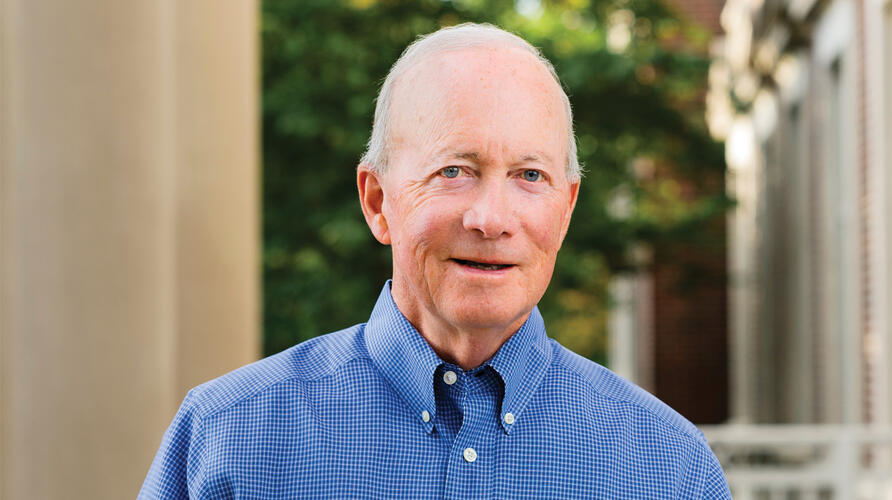
Mitch Daniels ’71, former president of Purdue and now its interim president, has promoted efforts to make higher education more affordable, including a tuition freeze that has lasted 14 years.
Allen is hard to pigeonhole, in part because her views are so heterodox, in part because her career has been so broad. She graduated summa cum laude from Princeton and has Ph.D.s from Harvard and Cambridge. Politically, she has moved from being what she calls a “committed conservative” at Princeton (her father served on the U.S. Commission on Civil Rights under Ronald Reagan) to seeking — but not winning — the Democratic nomination for governor of Massachusetts in 2022.
A 2001 winner of the MacArthur “Genius Grant,” Allen has authored 10 books. Her latest, Radical Duke: How One Aristocrat — and the American Revolution — Transformed Britain, mines new primary sources to argue that an obscure figure, Charles Lennox, third Duke of Richmond, was the unrecognized mastermind behind many of the ideas that underpinned the Revolution. A Wall Street Journal reviewer called the book “one of the most important, original studies of the American founding and its background to appear in many years.”
In academia, Allen has served as dean of humanities at the University of Chicago, was a candidate for the presidency of the University of Virginia in 2010, and was reportedly among the finalists for Harvard’s presidency in 2018. She heads the Allen Lab for Democracy Renovation at Harvard’s Kennedy School and was a founding director of the Democratic Knowledge Project, which promotes civics education in American schools.
Allen believes in dialogue. Her 2004 book about civic engagement is titled Talking to Strangers. “For many scholars,” the Chronicle wrote in a profile of her work, “the university is a garden, capable of nurturing rare and precious things because of its removal from the world. For Allen, the university is an agora, an arena of debate, charged with preparing the citizenry for democratic participation, and accountable to the society whose tax dollars pay for federally funded research.”
McMahon’s August letter asked colleges and universities to address seven issues: making admissions standards more transparent, protecting open debate, encouraging viewpoint diversity, containing costs, “incentivizing rigor” in the age of AI, guarding against undue foreign influence, and advancing American security interests. Gone from the administration’s approach, among other things, were explicit funding threats and attacks on transgender students.
Allen says the administration had no choice but to take a more conciliatory tone. “The [original compact] backfired,” she says. “They overextended themselves and I think they realized it.”
The university presidents with whom PAW spoke also expressed relief at the lighter touch. “Even though I don’t agree with everything in [the McMahon letter],” says Michael Schill ’80, a former president of Northwestern and the University of Oregon, “it was a thousand times better than the first compact and a zillion times better than the administration freezing money and not telling you why.”
The seven issues McMahon identified dovetail with those Allen would like to see higher ed address. She envisions a series of national summits, each centered around one of those themes. The summits would not be organized or run by the Department of Education or the White House but by the schools themselves and would be co-hosted by a mix of institutions — large and small, public and private, elite and less familiar — that have made innovative contributions in each area.
Related coverage
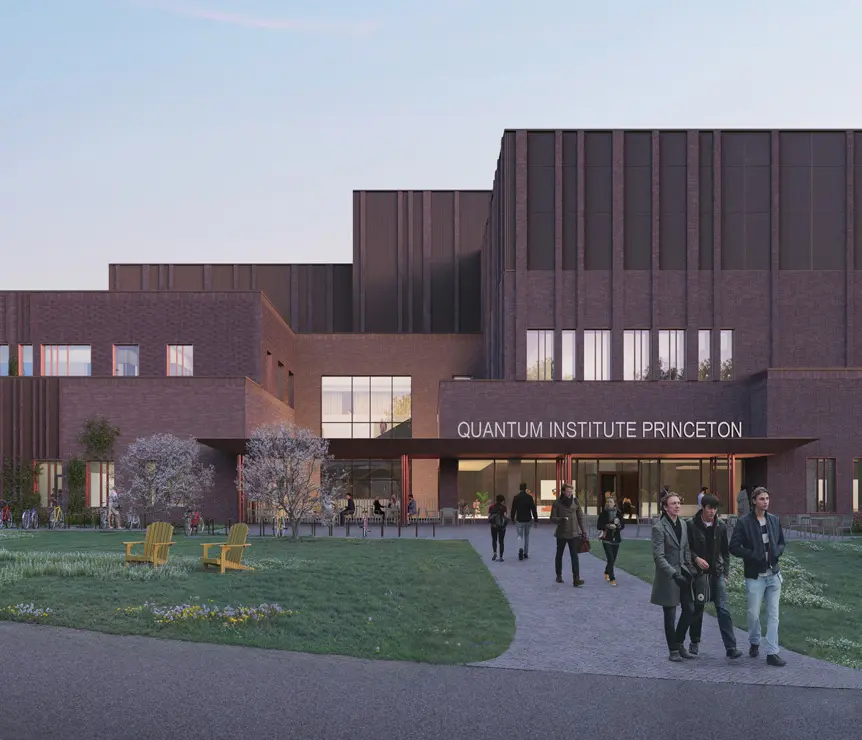
Campus Building Boom Enters a New Phase
After completion of the art museum and health center, next projects include two science buildings and Hobson College
As an example, she imagines Princeton co-hosting a summit on affordability, value, and student outcomes. The University’s no-loan plan, Allen writes, “sets the endowment-funded standard the elite privates are racing to match.” Other co-hosts would include Purdue, which has frozen tuition for 14 consecutive years; Arizona State University, which has developed partnerships with businesses that want to help their workers earn degrees; the University of Massachusetts, which uses state money to enable students from low-income families to attend for free; and Western Governors University, which enrolls 193,000 students, mostly online, charging $4,150 for a six-month term.
“Make sure you’re getting the people who have actually innovated,” Allen explains to PAW, “because there is innovation in the ecosystem, but we just don’t elevate it particularly.”
None of this would necessarily lead to a single solution across higher ed. For Allen, it would be sufficient for colleges and universities to exchange best practices, debate what has worked, and show that they take these issues seriously.
Some of Allen’s own ideas go beyond those that even the Trump administration has endorsed. She says that Princeton and other ultra-competitive institutions could make their admissions processes fairer by accepting qualified students through a lottery. They could help make education more affordable for middle-income families by enabling students to earn their degrees in three years rather than four. They might even call a truce in the campus building war: Must every new campus building be designed by a world-renowned architect? Do schools really need to offer resort-level food in their dining halls?
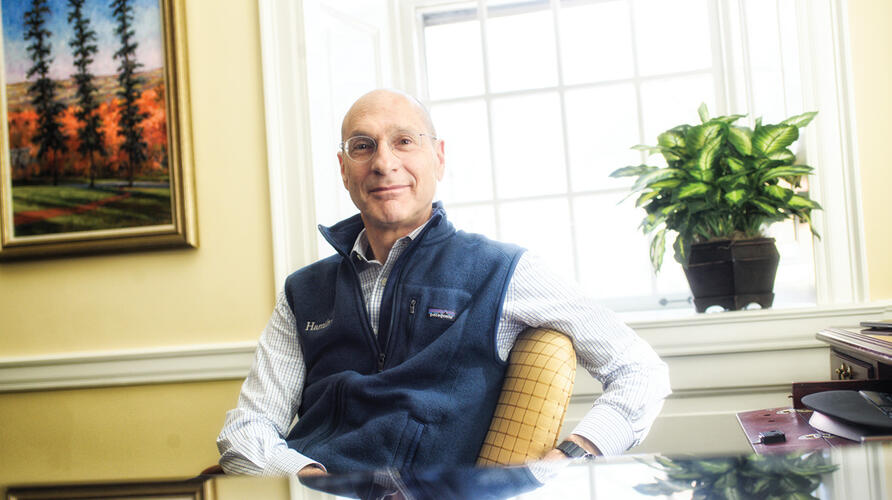
David Wippman ’77, former president of Hamilton College, says it’s hard for universitites to believe the Trump administration wants anything short of “simple compliance.”
Allen admits that there hasn’t yet been much engagement with her proposals. “Responses have split into two camps,” she says. “There are people who say thanks for focusing on the substance of what higher ed needs to do to regain credibility with the American people. And there are those who say you should give no quarter to the Trump administration whatsoever and that even acknowledging agreement about some of the substantive points is dangerous.”
David Wippman ’77, a former president of Hamilton College, summarizes the second perspective. “I think it’s hard for most colleges and universities to believe that the administration is willing to negotiate in good faith,” he says, “that they’re willing to consider an approach to their goals that falls short of simple compliance.” As evidence, he notes that Trump has not slowed his attacks on higher ed. Just days after McMahon’s letter, the administration proposed that tax-exempt status be revoked from any school offering any aid to minority students that the IRS determined to be discriminatory.
Asking whether the McMahon letter is, to use Allen’s phrase, an “olive branch or a Trojan horse” is to ask the wrong question. In this case, she says, the administration has identified reasonable themes and posed them in a reasonable manner. They deserve a reasoned response.
“When representatives of the American people who are duly elected or appointed, and therefore legitimate, make lawful requests of the institutions of civil society,” she wrote on Substack, “those institutions have a civic responsibility to respond to those requests in good faith.”
To some, those are fighting words. Rebutting Allen directly in an op-ed for the Chronicle titled, “Danielle Allen Is Wrong About Trump,” Princeton politics professor Melissa Schwartzberg denounced the administration’s original compact as “extortion.” She says universities are right to refuse to engage McMahon’s latest proposals.
“There can be no compact when one party is not acting in good faith, nor under conditions of duress,” Schwartzberg writes. “There is no civic duty to comply when a representative, even one with an electoral mandate, acts beyond the scope of legal authority.” If the universities choose to act on these issues, they should do so on their own initiative and choose their own representatives.
“Even if one were to accept the need for reform, this would not give us a reason to enable the Trump administration to set the agenda,” Schwartzberg concludes.
“There can be no compact when one party is not acting in good faith, nor under conditions of duress. There is no civic duty to comply when a representative, even one with an electoral mandate, acts beyond the scope of legal authority.” Melissa Schwartzberg, Princeton politics professor
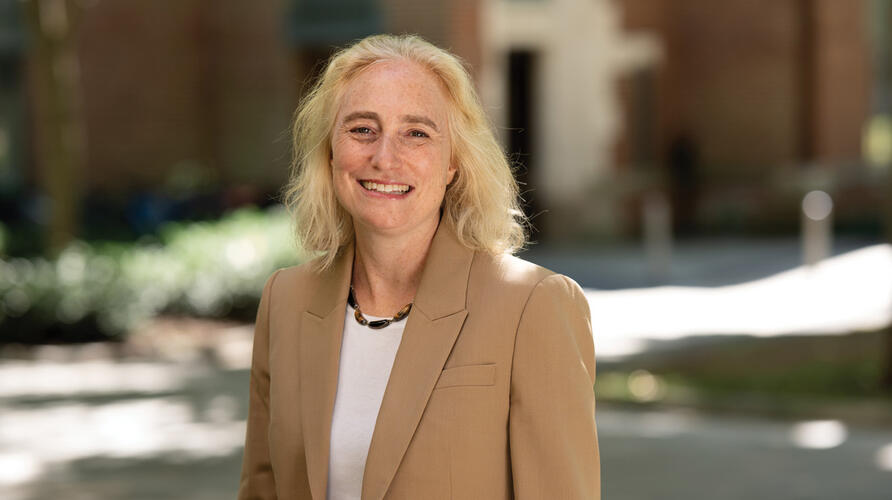
Allen rejects this. Hard as it may be to do, she says, colleges and universities must distinguish the message — addressing legitimate public concerns about higher ed — from the messenger, the Trump administration.
Furthermore, there are other constituencies besides the White House and the Department of Education. Congress is one of them. The Higher Education Act has been amended six times since its enactment in 1965 as a keystone of the Great Society, but not at all since 2008. Rather than setting education policy by executive fiat, policy should be changed the way it is supposed to be under our constitutional system: by legislation.
“Part of my argument is about the substance of higher ed,” Allen explains to PAW. “But the other part is how the American people should make decisions about the investment of tax dollars. It’s not the job of the executive to lead on that. Congress has to get back to the business of doing its job.”
An even more important constituency is the American people, whose tax dollars colleges and universities depend upon. By addressing concerns or at least explaining their own actions, colleges and universities might use these summits to help reclaim some of their lost esteem. That support may be critical as higher ed faces challenges such as AI and declining enrollments that will continue long after the Trump administration is gone.
A few schools have begun to act on their own initiative. Dartmouth, Cornell, and Yale have undertaken self-assessments, some even before the Trump administration stepped in. Vanderbilt and Washington universities jointly commissioned a report that criticized the politicization of academic research.
This is not a story about Princeton, and yet it is, inescapably, very much about Princeton. As one of the country’s wealthiest and most prestigious universities, Princeton occupies a place most other institutions can only envy. It is also fiercely protective of its independence.
At a meeting of the Council of the Princeton University Community on Nov. 9, Eisgruber took issue with “presuppositions” and “accusations” embedded in the McMahon letter but said he anticipated that the University would reply soon. “We think that it is important that when we act on the kinds of questions that are addressed in this letter, we act pursuant to our processes and according to our principles and values rather than in response to demands from external parties,” Eisgruber said.
Though it has been knocked back on its heels recently, higher education has often proved its resilience. More than 30 years ago, Clark Kerr, the longtime head of the University of California, noted that of 75 institutions worldwide that were founded before 1520 and were still doing the same work under the same name at the end of the 20th century, 60 of them were universities. Universities, he wrote, “have been able to change and adapt, over the centuries, more effectively than most other institutions, and there are no indications that they have lost this capacity.”
Herbst, for one, acknowledges this wisdom, but sees Kerr’s story as a warning against hubris. Once upon a time, he notes, Pan Am was the world’s leading airline and Ford the world’s leading car maker. Neither holds the same position today. Pan Am doesn’t even exist.
“There have been all kinds of examples of companies that were as dominant as the Ivy League schools are today,” Herbst says. “So yes, there is a big buffer [for places like Princeton] and it may not seem like an emergency. But the lesson of other disruptions is that, sooner or later, everyone in the sector is challenged.”
Mark F. Bernstein ’83 is PAW’s senior writer.
Related News

These Young Alumni Balance Tech Careers and Musical Ambitions
‘...I realized that I probably wanted to live a life where I had the opportunity to pursue what I felt like was my purpose,’ says Naaji Hylton ’22

AI and the End of the World
As warnings about artificial intelligence grow louder, four Princeton experts debate how worried we should be

No responses yet