

Hundreds of Friends and Colleagues Rally for Detained Doctoral Student Eva Xie
Editor's note: This article has been updated with details from the habeas corpus petition filed on Eva Yi Xie's behalf.
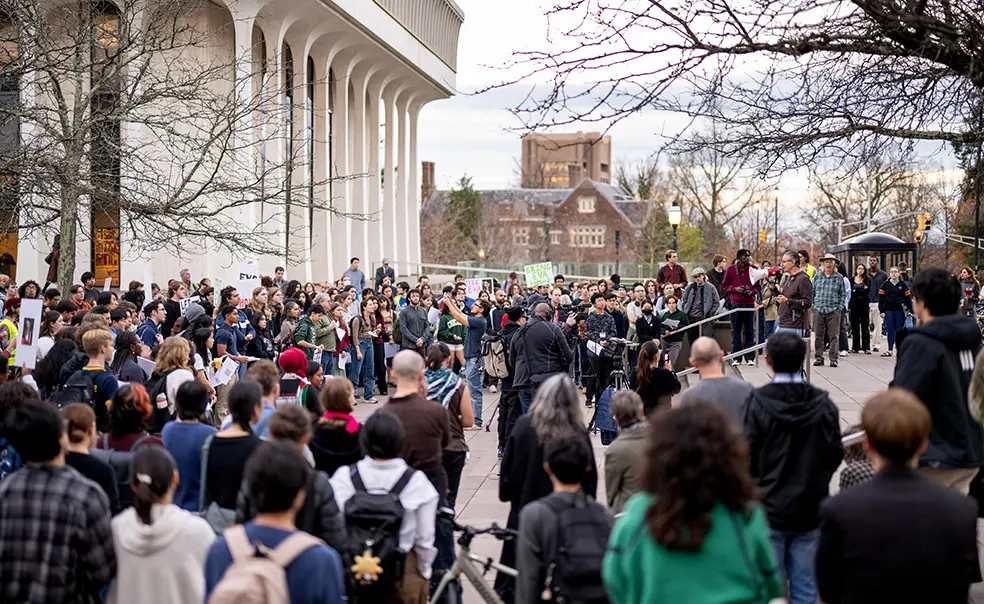
Late Monday afternoon, a crowd of about 200 students, faculty, and community members gathered near the Fountain of Freedom outside Robertson Hall to rally support for Eva Yi Xie, a third-year Princeton doctoral student who was detained by Immigration and Customs Enforcement (ICE) last Thursday at Ronald Reagan National Airport after presenting her research at a neuroscience conference.
Carlos Brody, a professor of neuroscience and one of Xie’s advisers, spoke about the “heartbreaking” Slack message he received from Xie asking for help as she was being detained. He also described how Xie tried to stay positive during a recent call, “showing off her blue jumpsuit” while in a detention facility in Virgina.
Friends and lab mates shared personal anecdotes about Xie, describing her as “always ready for some spontaneous fun” and “super organized, always [ready] with plan B, C, and even D, E, F, G.”
The rally also drew attention to the plight of international students more broadly. Reading a statement on behalf of Princeton’s international student community, Narges Anzali ’28 spoke about growing fear in the wake of Xie’s arrest. Under the Trump administration’s expansion of the visa restrictions on 39 countries, including many Muslim-majority and African countries, international students face challenges in renewing their visas and cannot easily travel while pursuing their studies.
“We ask the members of Congress to protect international students on our campuses,” Anzali said. “A threat to one of us is a threat to all, and the future of higher education in this country.”
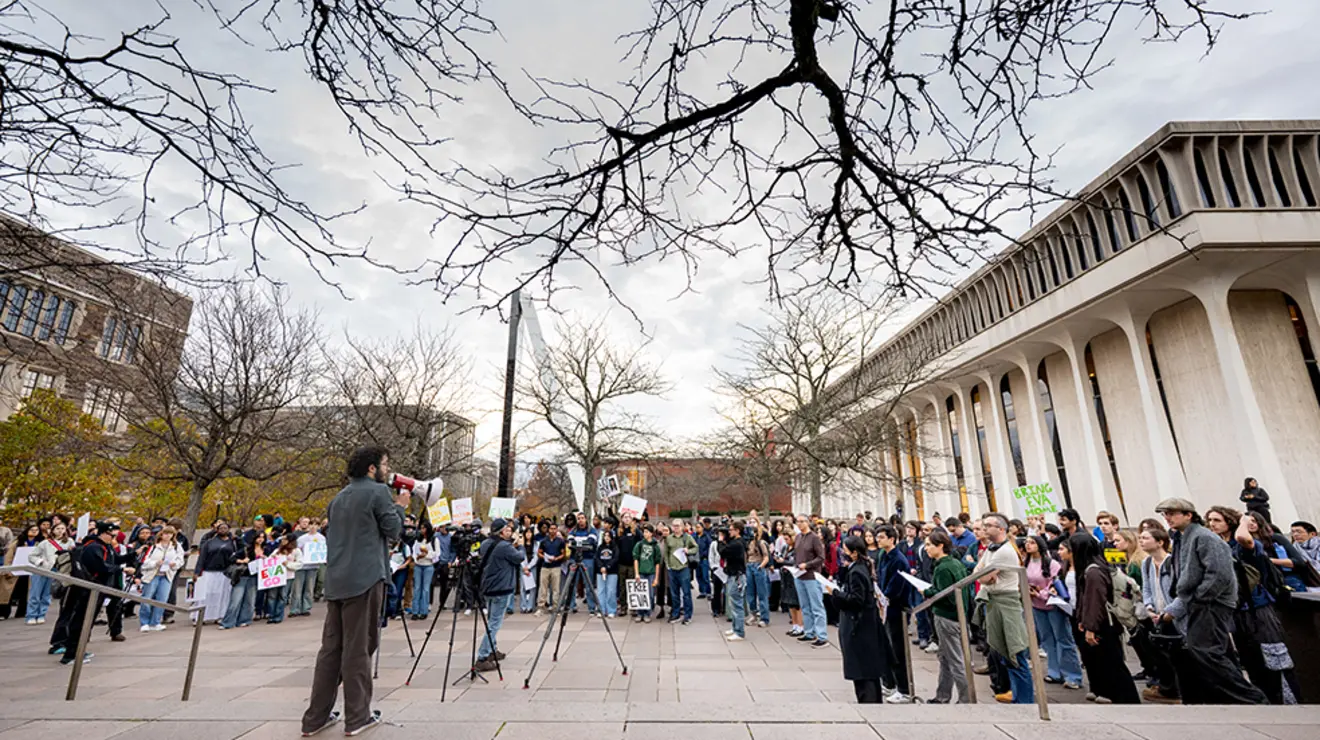
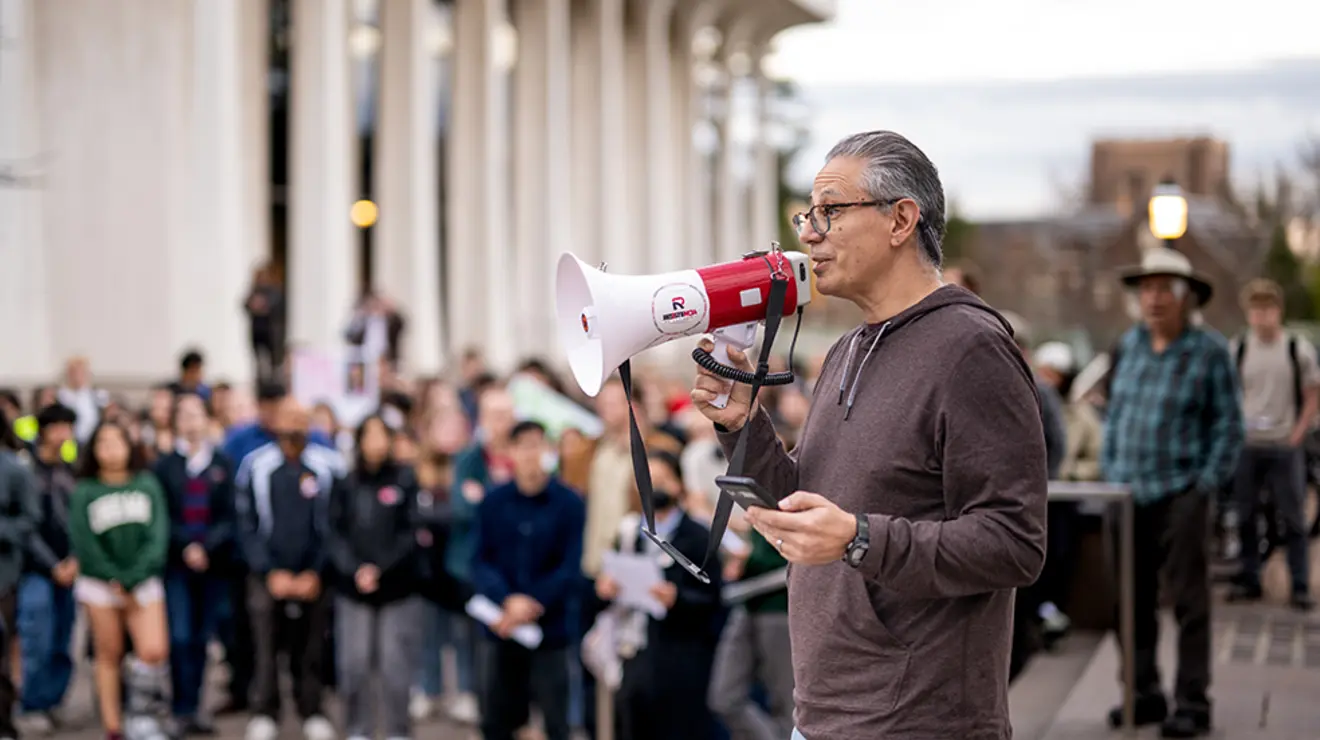
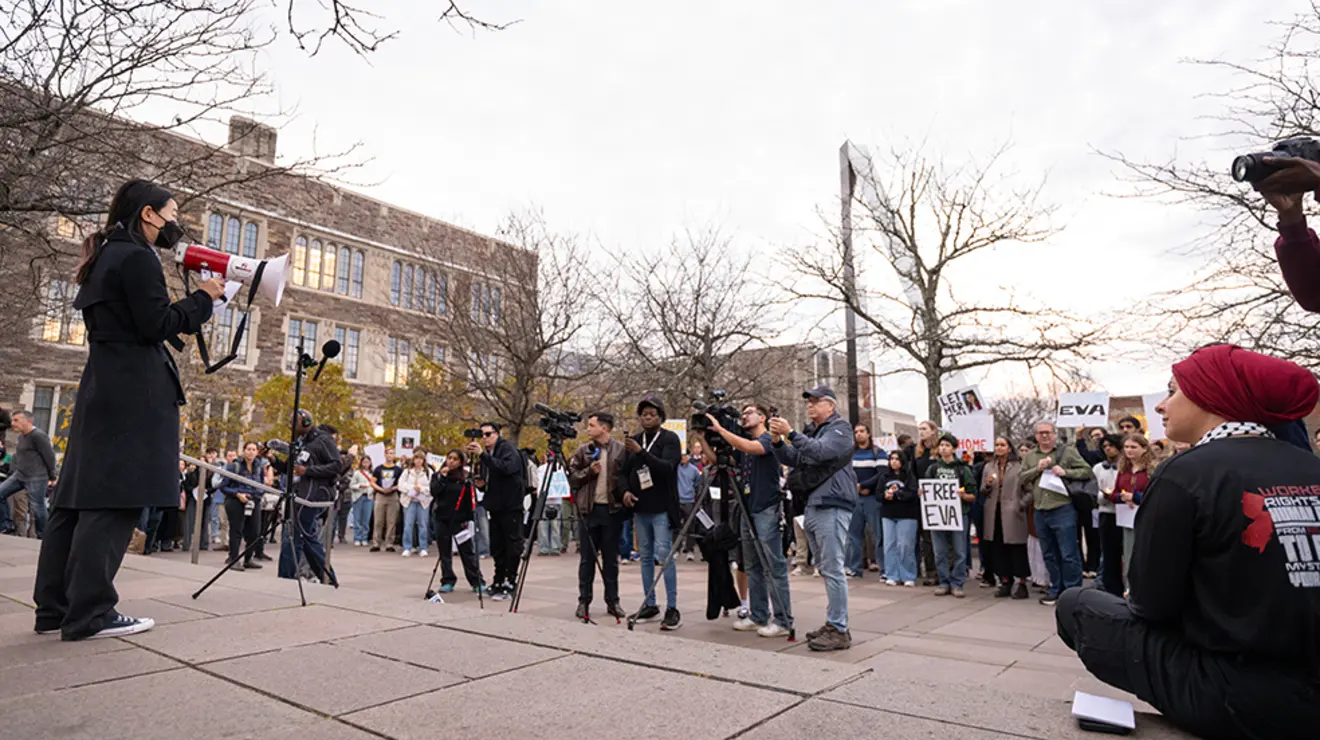
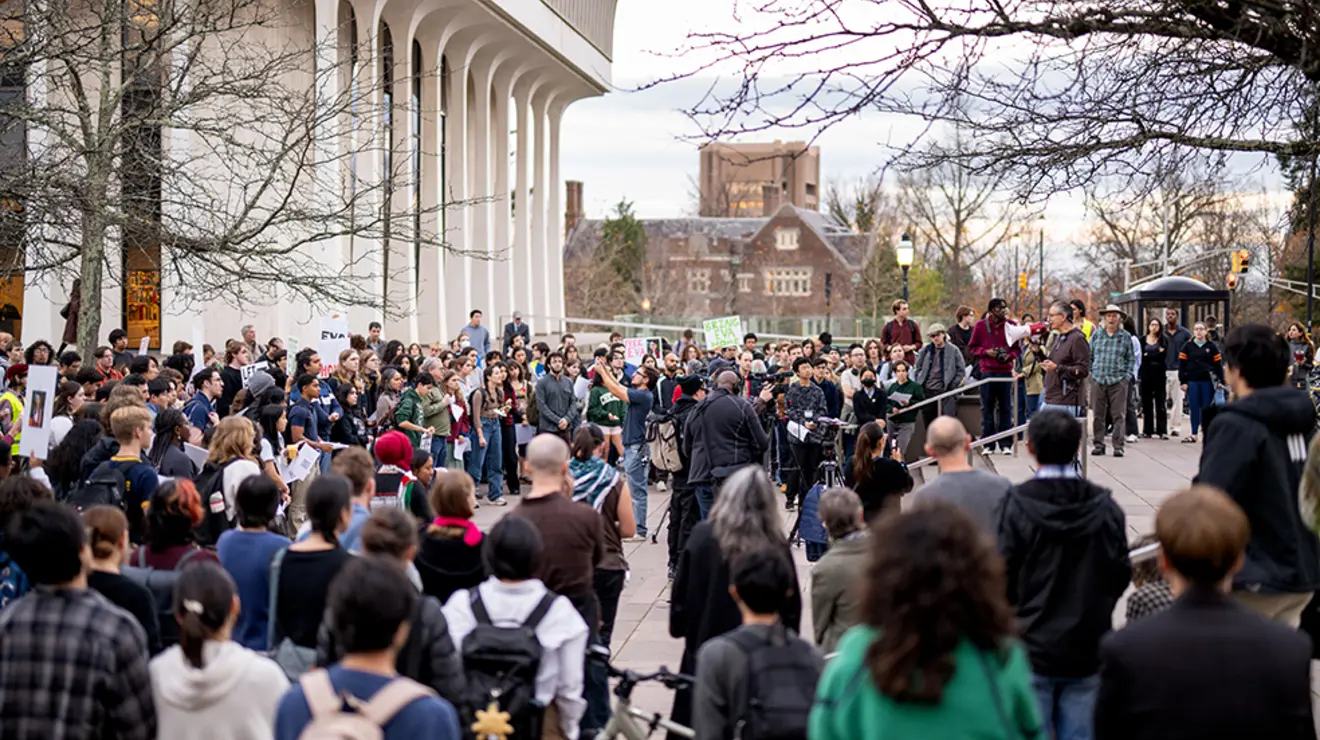
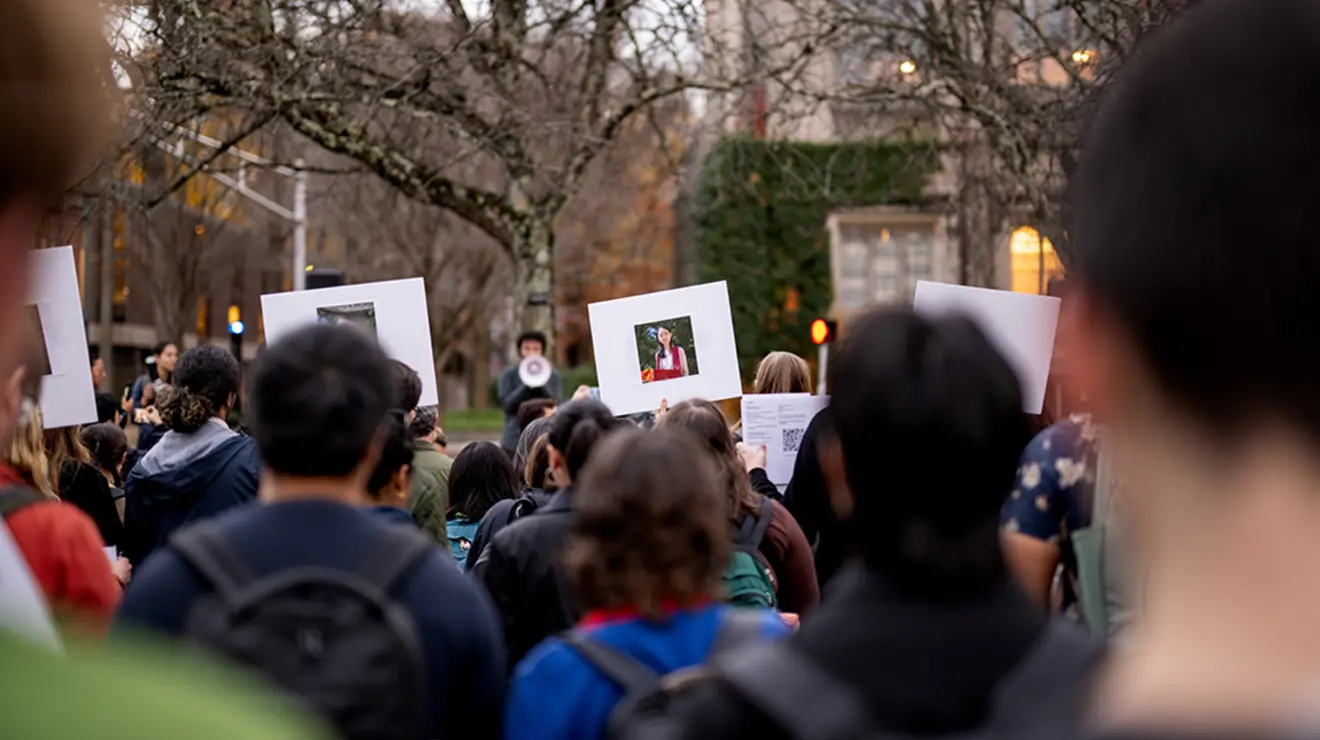
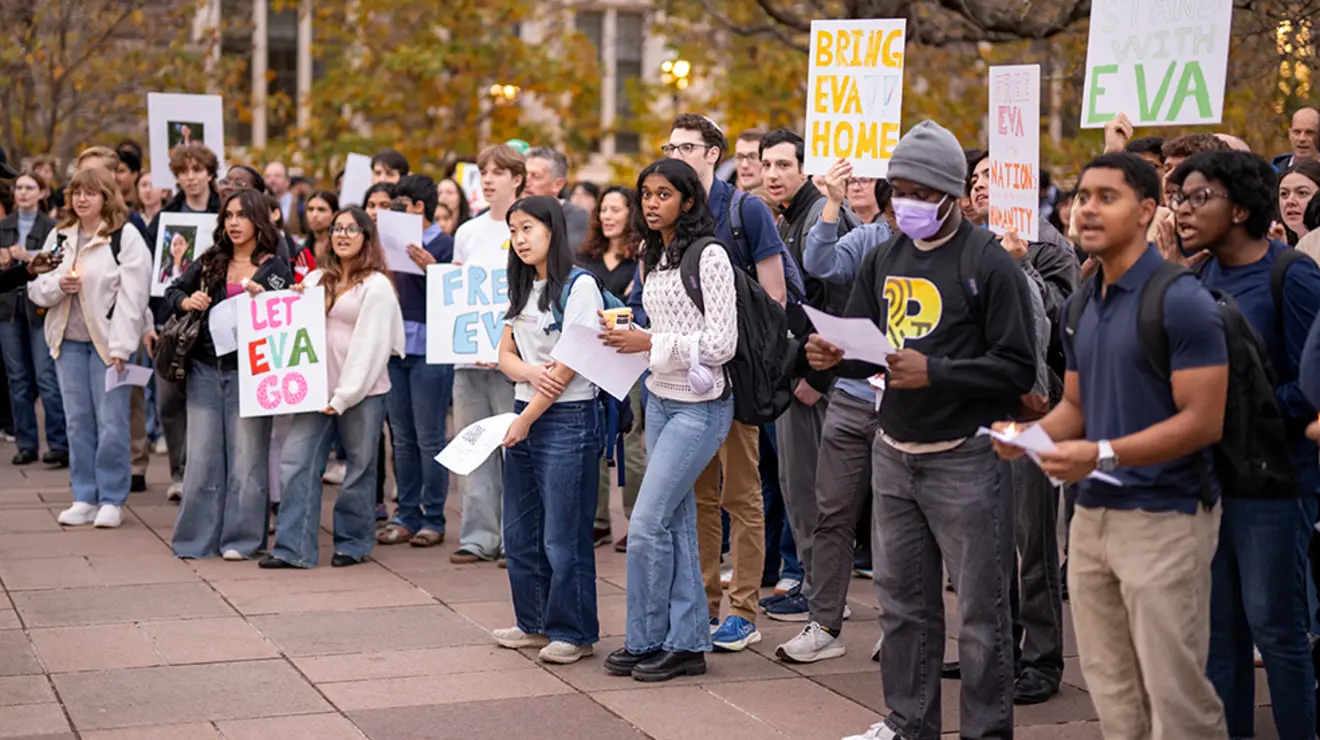
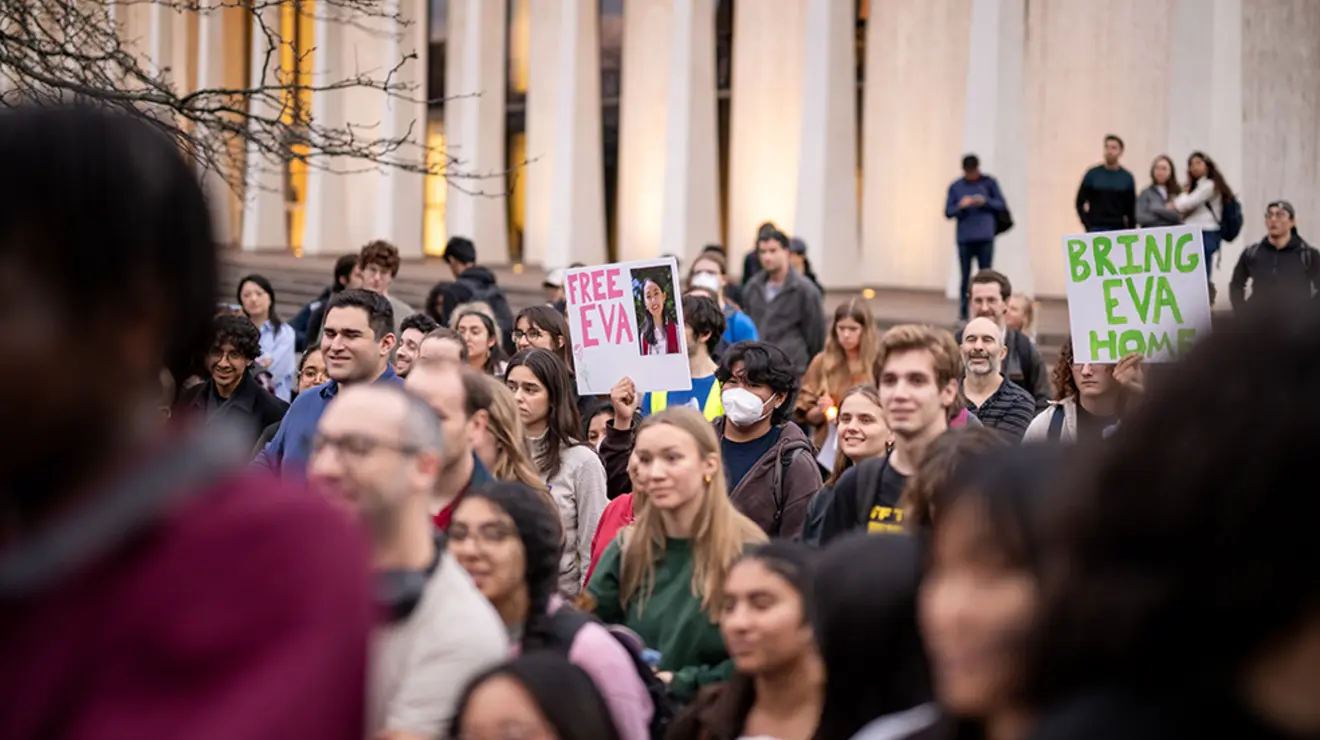
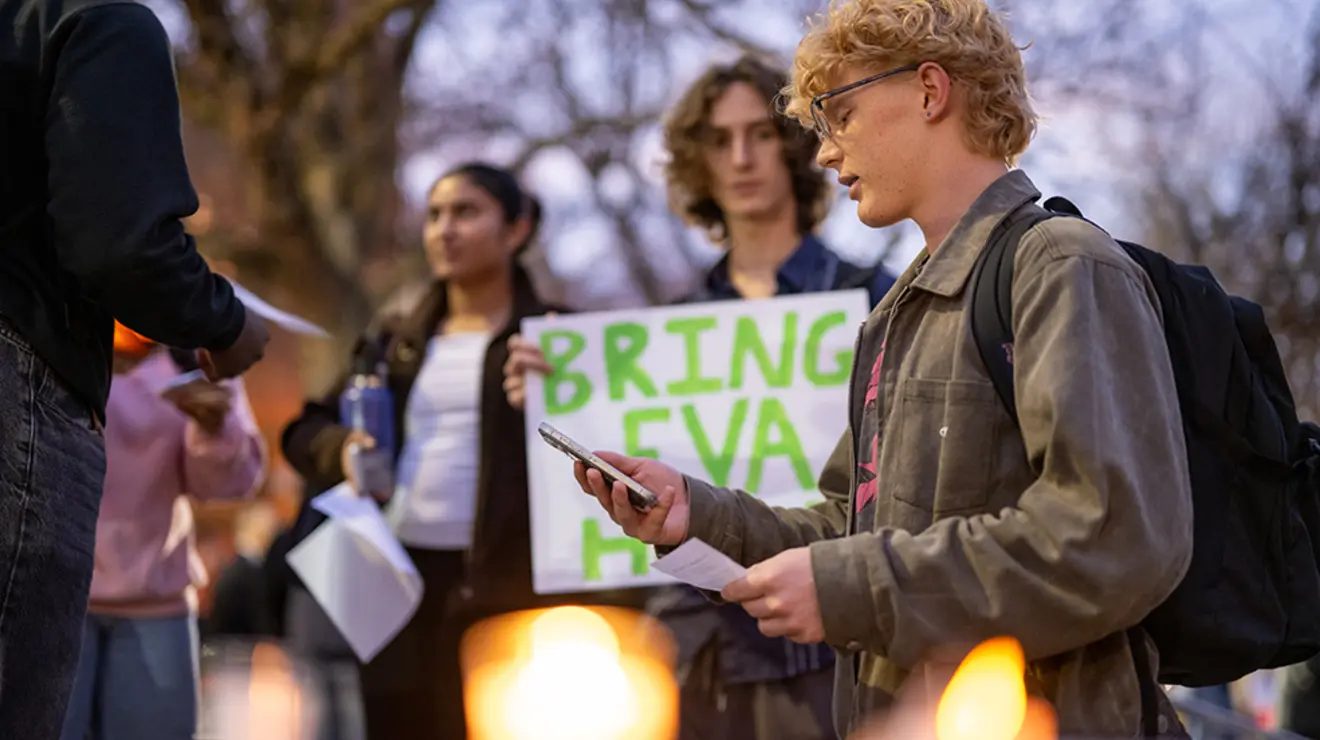
As the sun went down, attendees were urged to call their senators and ask for Xie’s release. Isaac Barsoum ’28, one of the rally’s organizers as part of the Princeton Progressive Coalition, said he was happy with the event’s high turnout given the upcoming Thanksgiving break. “I think often the story that’s spun about Princeton students is that we are apathetic,” Barsoum said. “I think that we have proven time and time again during the second Trump era that we are not.”
Xie is an asylum seeker, according to Kerry Doyle, the immigration attorney provided by the University who filed Xie’s habeas corpus petition Friday in the U.S. District Court for the Eastern District of Virginia. According to the petition, which PAW obtained, Xie’s mother filed for asylum on behalf of her family in July 2016. Xie is scheduled to appear before an immigration judge in January 2028.
The petition notes that Xie never been convicted of a crime and has no criminal charges pending. “She has not failed to attend any immigration court hearings,” it continues. “There have been no changes in circumstances that would support a change in her custody status leading to her arrest at National Airport other than ICE’s desire to meet their noncitizen arrest quotas.”
Since Thursday afternoon, when he first learned that Xie had been detained by ICE, Benjamin Eysenbach, an assistant professor of computer science and one of Xie’s academic advisers, has been part of a group of about three dozen friends and colleagues coordinating efforts to secure her release.
In between contacting congressional officials and making sure Xie has enough money on her detention center account to make phone calls, Eysenbach said they’ve been receiving messages of support from a range of people in Xie’s life, including undergraduate classmates from MIT, Princeton students who knew her as their TA, University staff who’ve supported her lab work, and a teacher from her high school.
“I think this just speaks to how Eva has such strong ties to so many people, and how she has touched and influenced so many lives,” Eysenbach said. “So it’s been really stressful, really dark the past couple of days, but there have been moments of light like this when you hear the sort of stories and anecdotes about the connections that Eva has with so many people.”
As a first-year graduate student in the Princeton Neuroscience Institute, Xie rotated through faculty labs. When it came time to choose one, she made an unusual request: She wanted to work with three advisers — Brody, Nathaniel Daw, and Eysenbach — on a project at the intersection of their interests, focused on the neural basis of decision-making, Eysenbach said.
Her advisers realized what a heavy lift this would be, to learn the research methods of all three labs and also familiarize herself with the literature of three fields. But so far, “it’s worked out fantastically well,” Eysenbach said. Xie’s encyclopedic knowledge of neuroscience papers has made her a valued resource for her peers.
“Whereas most people do a Ph.D. in one area, she’s doing a Ph.D. in effectively two or three, depending on how you count it,” Eysenbach said. “That’s exactly the right area to be doing research. I think often scientific advances come at these sort of interstitial spaces between fields.”
Xie, who was born in China, came to the U.S. with her parents in 2016 when she was 14 years old. She studied at the Bronx High School of Science and was recognized as a promising researcher by the Regeneron Science Talent Search in 2020. At the time, she wrote that her parents “were compelled to flee to America to seek refuge after being politically persecuted.” She studied computer science and mathematics at MIT, graduating in 2024, and entered Princeton as a graduate student later that year.
The Department of Homeland Security (DHS) said in a statement that Xie “was admitted to the United States on a temporary basis on March 16, 2016, but chose to violate our nation’s laws by refusing to depart by the required date of September 15, 2016.” DHS also said Xie has never held valid authorization to study in the United States.
Doyle called the authorization-to-study claim “a bit of a misdirection and an incorrect statement of the law,” noting in its 1982 ruling in Plyler v. Doe, the Supreme Court ruled that immigration status cannot be used to keep students from attending K-12 public schools. Colleges are allowed to admit students with any immigration status, and Xie has a valid work authorization, Doyle said.
DHS said Xie’s arrest was “a targeted immigration enforcement operation.” She was preparing to board a flight to return to Princeton, and no arrest warrant was presented, according to the petition.
Doyle said detentions at U.S. airports are on the rise because ICE is now reviewing flight manifests to identify anyone with visa overstays, even if they have pending asylum applications or are otherwise in the country with permission. In the past, Doyle said, there were occasional arrests made when someone with a deportation order tried to board a flight, “but this is a totally new policy that they’ve engaged in — this information sharing between TSA and ICE and then flagging people … who are legally here.”
Eysenbach said some of the Princeton graduate students he’s spoken with are worried about traveling. “They are all legally allowed to be in the U.S., but there is still a concern,” he said. “Eva’s detention raises red flags for them, like, why did this happen [and] could this happen to them? This has been incredibly difficult for the whole Princeton community, and I think it’s especially been challenging for international students and scholars.”
Christopher Connell ‘71 contributed to this story.
The Latest
See all


Related News
Seven Alums Sing A Cappella With the Tonics, Go Viral on Social Media
‘There’s a sense of belonging when you watch the Tonics sing,’ says Steve Townend ’71

These Young Alumni Balance Tech Careers and Musical Ambitions
‘...I realized that I probably wanted to live a life where I had the opportunity to pursue what I felt like was my purpose,’ says Naaji Hylton ’22

1 Response
Blair Edwards ’61
21 Hours AgoAuthorization to Study
“DHS also said Xie has never held valid authorization to study in the United States.”
Prove them wrong.