


Black Religion in the Madhouse

Published Oct. 21, 2025
In her latest book, Weisenfeld calls attention to the correlation between Black people being admitted to mental hospitals and the establishment of psychiatry as a profession. Several decades after the end of slavery, white psychiatrists began to negatively label spiritual practices in the Black community as cults and superstition, resulting in “religious excitement" being listed most frequently as the cause of insanity for admitted patients. Black Religion in the Madhouse (NYU Press) explores the intertwined history of race and religion and the consequences this had when it came to diagnosis and care. Weisenfeld argues that these characterizations of Black religion and mental health ultimately supported broader racist beliefs that Black people were unfit to be free.

Paw in print
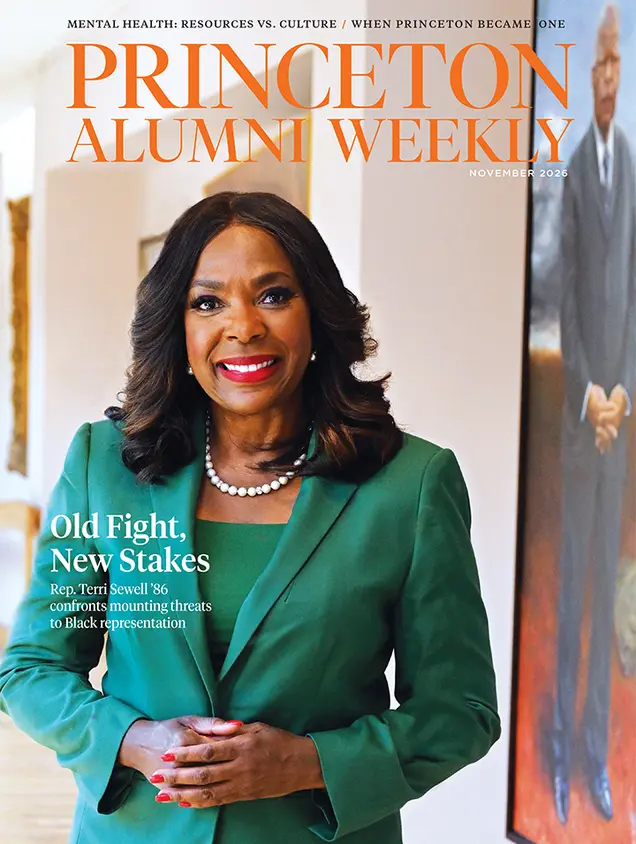
November 2026
History is in Terri Sewell ’86’s hands; campus mental health culture; the two Princetons.