

Aida Rodriguez ’76
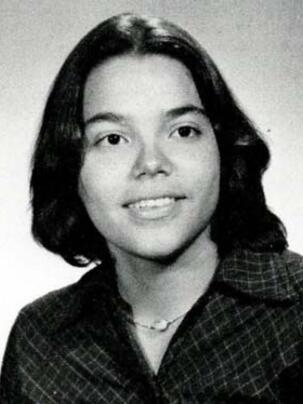
It is with sadness that the class officers report the death of Aida Rodriguez on April 4, 2024 in Boiling Springs, South Carolina, of cancer. Aida was a professor at New School University in New York and a former Deputy Director of the Equal Opportunity Division at The Rockefeller Foundation.
Born and raised in New York, Aida graduated from Long Island City High School. At Princeton, she majored in sociology, rowed crew freshman year, joined Terrace Club, and roomed with Michele Naples and Pat Wang. She spent a junior year semester in the Urban Studies program in Jersey City. Her senior thesis was titled, “A Sociological Study of the Economic Situation of Puerto Rican Women in New York City.”
After graduating summa cum laude in 1976, Aida earned a PhD at the University of Massachusetts-Amherst in 1990. She married Joseph Pereira in 1978 and together they raised their son Joseph Ellis Pereira until his untimely death at age 29 in 2020.
Aida accepted a position at the Equal Opportunity Division at The Rockefeller Foundation, working her way up from Assistant Director to Deputy Director. She traveled around the world for the Foundation making grants. She was co-recipient of the Council on Foundations Robert W. Scriver Award for Creative Grant Making in 2003. She became a professor of professional practice and the chair of management programs at The New School–Milano School of Policy, management, and Environment, where she taught several graduate courses. Aida served on the boards of many nonprofits, including the New York Regional Association of Grantmakers; One Economy, Inc.; Alliance for Nonprofit Management; Learning Leaders, Inc.; Hispanics in Philanthropy; and on the Association for Public Policy Analysis and Management Policy Council. She was senior management advisor to the Northeast Regional Office of Hispanics in Philanthropy, and served on the Office of Children and Family Services’ Child Welfare Research Advisory Panel. She frequently lectured on philanthropy, Latinos in the United States, leadership in communities of color, community development, and not-for-profit management.
Aida served as a Princeton Alumni Schools Committee interviewer and was a member of the Association of Latino Princeton Alumni.
Roommate Michele Naples remembered, “Aida was my closest friend at Princeton. We met at an ice cream social at Pyne a month in. When my roommate needed privacy, Aida, who I only knew from one conversation, agreed to my request to crash in her room. We just hit it off, she felt like family.
Aida was smart, funny, warm and clear-headed. She was centered when other people were wrapped in drama. She got me involved with PUWO (the Princeton University Women’s Organization) our first year, and we helped draft Affirmative Action by-laws for the University. She and I also attended an abortion-rights demonstration in Trenton. We both helped revive the Women’s Center, and helped mount a protest of a campus dance that proposed to let ’Imports’ [women from other schools] in for free, which we saw as a form of paying women for companionship. We participated in consciousness-raising groups.
Aida was incredibly disciplined, joining crew her first year. She did work-study while excelling at academics. We, with her sister Isabel Rodriguez ’78 and Yolaida Durán, co-initiated a couple of student seminars: American Women’s History, and Women in Third World Socialist Revolutions. She did a junior-semester urban experience in Jersey City with Pat Wang; after their openness to the Women’s Center meeting there, Aida and I both joined Terrace Club, she as an independent adding meals. She introduced me to friends from the Third World Center, like Justice Sonia Sotomayor. She helped me learn Latin dancing, although most of the credit goes to Julio Rivera. And we had long deep conversations with friends about feminism, equity, social transformation, etc. Our group of friends–including Yolaida, Pat and Alison Ho - was ready to change the world.
Aida and I were roommates for a few years at UMass after college as well: with her future husband, Joe Pereira, while she worked at the Comprehensive Employment and Training Act program in Springfield, Massachusetts as an educator and I started my economics PhD, then when she started her PhD in sociology the next year. A city girl, I taught her how to drive. Aida loved music, and heard my repetitious hammering out of Beethoven sonatas while studying for comprehensive exams as beautiful–what a generous friend. She taught me how to make plátanos, sofrito and arroz pegado. I taught her Italian sauce and meatballs.
I am so sorry we fell out of touch, with kids and professions taking over. Yesterday, I was intent on contacting her at previous job emails to see if we couldn’t catch up, not knowing. I have to think she was sending me ESP to help prepare me for the news of her passing. She’s always in my heart.”
Lifelong friend Julio Enrique Rivera reminisced, “Aida was an energetic, positive friend who always greeted me with her beaming smile. She had a natural intelligence and curiosity that directed us toward deep conversations. She also knew that a good amount of socializing was key to remaining sane during the undergraduate years and we enjoyed many social events throughout the campus.”
Roommate Pat Wang reflected, “Aida Rodriguez was one of the most special and wonderful people I’ve met in my life. Full of brilliance, energy, integrity, and a truly loving heart, she was my dearest friend at Princeton. I can’t say either of us felt that we fit at Princeton. We met and bonded as strangers in a strange land in the interesting environment of the university in the early 1970’s. She didn’t grow up being exposed to sports like crew, but had the spirit and spunk to join the women’s crew team first thing during freshman year. She would describe her workouts on the Erg and we’d admire the appearance of her well-earned and well-defined abs. During a semester of Urban Studies, we were roommates in Jersey City where we got a feel for what it meant to work in social services and education. We then made sure that we found rooms in the same wing of our dormitory so that we’d only be a door’s knock away. We also embarked on cooking dinners for ourselves on a regular basis in the kitchen at Witherspoon Hall with Alison Ho and Yolaida Duran, with extra settings for Michele Naples, sister Isabel, and her future husband Joe Pereira, when they stopped by. We kept our food and our dishes in a refrigerator with a gigantic chain and lock on it (it guarded other students’ stuff as well), and offered our family specialties from Chinese, Cuban, and Puerto Rican cuisine to each other until we developed our own style of fusion meals. I learned how to cook and smash platanos in a brown paper bag from Aida. We also spent a lot of time at the newly opened Third Word Center. She introduced me to her culture and was an incredible dancer. We lost touch at some point when I started living abroad, but I followed her incredible career at the New School with admiration. Aida was an original, completely self-made woman, a feminist and scholar, a bold spirit with a strong and clear voice that called out injustice and never backed down. I loved Aida dearly and will remember her always.”
The class sends deepest sympathy to her husband Joseph Pereira and sister Isabel Rodriguez de Deus ’78.
Aida will be remembered at two services on the Princeton campus: the Princeton University Service of Remembrance at the University Chapel on February 21, 2026, and at the Class of 1976 50th Reunion Memorial Service on May 22, 2026.
The Princeton Class of 1976 will always hold, in honor and affection, the name of Aida Rodriguez.
Paw in print

No responses yet