

F. Peter Boer ’61
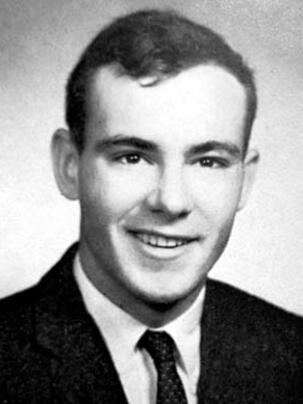
Peter died Oct. 3, 2022, in Alexandria, Va.
Born in Budapest and raised in Lackawanna, N.Y., he graduated from Nichols School. At Princeton, he majored in physics (Phi Beta Kappa), played IAA sports, and ate at Terrace.
Following a Ph.D. in physics at Harvard, he embarked on a remarkable career and life. He worked for Dow Chemical, American Can, and W.R. Grace, retiring as executive vice president and chief technical officer. He served on eight corporate boards; was John J. Lee professor at Yale, president of the Industrial Research Institute, chairman of National Medals of Technology, and served on eight government and six academic boards, including Los Alamos and the EPA. He was cited on William Lipscomb’s Nobel Prize and elected to the National Academy of Engineering.
Peter enjoyed serving as class treasurer and vice president and would have been delighted that Ellen is succeeding him as treasurer. Having been to more than 180 countries, he authored 10 books on his travels and industrial management.
Peter is survived by his wife of 60 years, Ellen; daughter Alexa ’90; son Andrew ’93; four grandchildren including Kate ’26; and their children-in-law, both also Princetonians.
Paw in print

1 Response
Comments
Jean A. Boer Cleverly
4 Months AgoRemembering Our Mother
I am F. Peter Boer’s only sibling, his sister. Our mother Flora was extraordinary, achieving a master’s degree in chemistry, rare for a woman in the 1930s. She nurtured Peter’s scientific brilliance from infancy forward until dying too young to see him through high school and university with the highest scientific academic achievements. His father, a physician, and his mother, a teacher, committed their lives to their two children having the best academic educations possible, so each could grow into their own financial independence. When his mother could not find work in chemistry because of sexual discrimination in the 1940s, she educated herself into a niche teaching specialty, teaching a classroom of handicapped, vision poor, disabled, and limited life span (aka orthopedic disabled) children in an elementary classroom of the times in the 1950s. My brother and I attended the elementary school where our mother taught for at least five years, while fighting cancer. At her untimely death, the entire school of teachers with at least 23 cars followed the funeral cortège to the grave.