

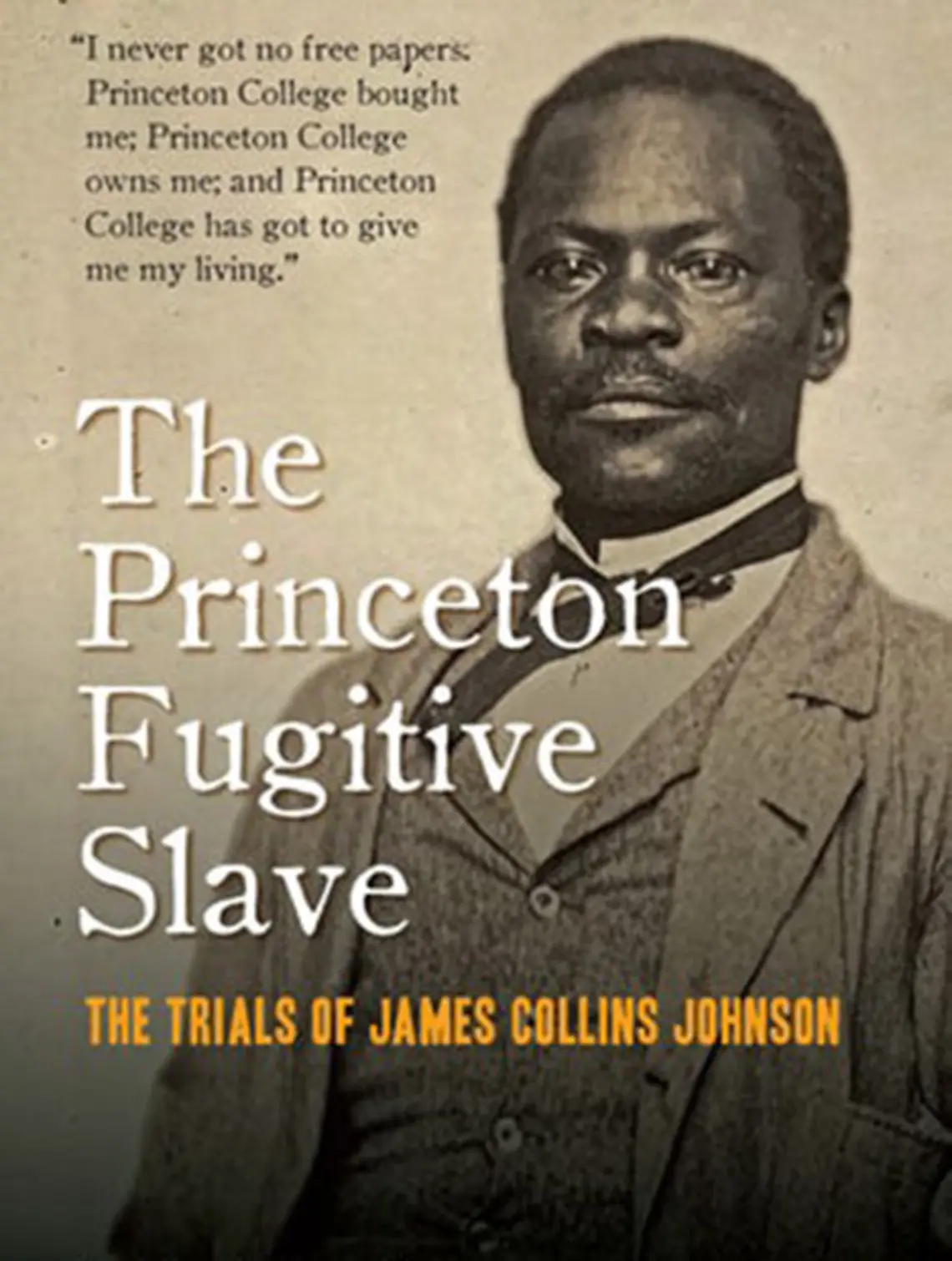
The Princeton Fugitive Slave: The Trials of James Collins Johnson

Published Nov. 22, 2019
In 1839, James Collins Johnson fled slavery in Maryland and found work in Princeton as a janitor for the college. Four years later, he was recognized and put on trial under the Fugitive Slave Act, before a white woman bought his freedom. In The Princeton Fugitive Slave (Fordham University Press), Lolita Buckner Inniss ’83 seeks to reevaluate Johnson’s life from beyond the narrow scope of generally positive reflections students had of him during his later years as a worker at the college, using documents to reconstruct a fuller picture of Johnson’s life and the struggles he endured as an escaped slave and black man in Princeton’s very white community.
Read more: Inniss’ 2016 PAW feature about James Collins Johnson

Paw in print

November 2026
History is in Terri Sewell ’86’s hands; campus mental health culture; the two Princetons.