

Dating at Princeton? Part 2: It’s Even More Complicated
‘Being here for four years changes you a lot. And so ideally you would maybe want someone who understands that part of you’

Published May 28, 2026
Listen on Apple Podcasts • Spotify • Soundcloud
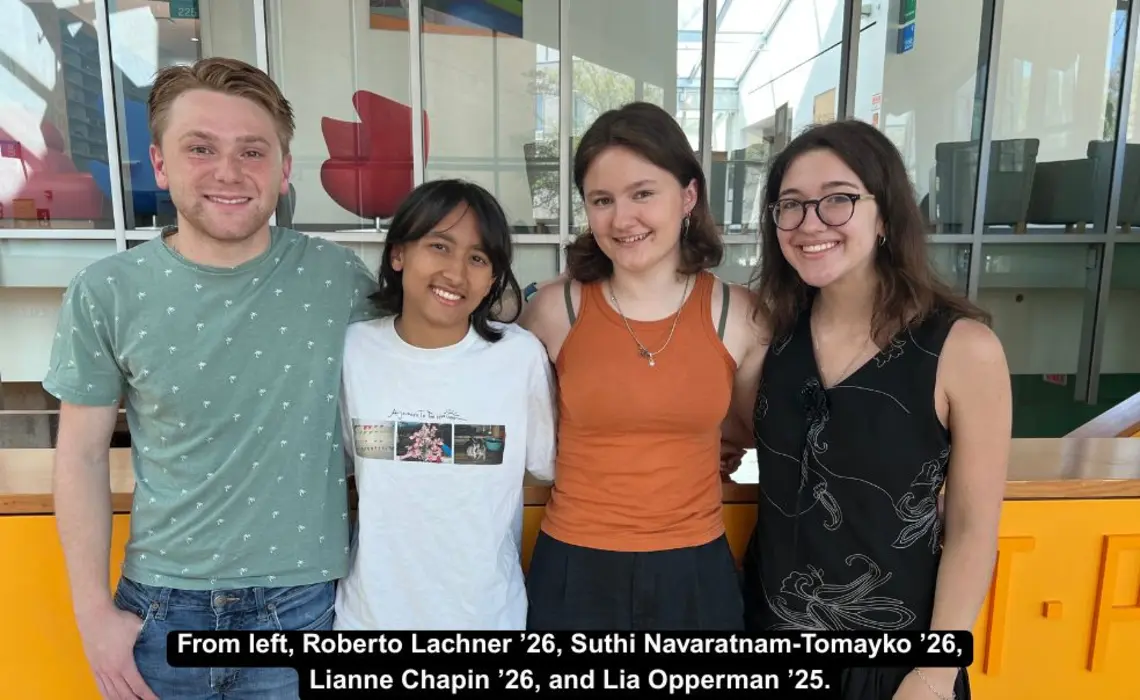
Welcome back to the Princeton Alumni Weekly’s podcast. I’m Lia Opperman from the Class of 2025. This is Part Two of our conversation on campus dating culture, where we continue our discussion with Princeton seniors about how relationships, breakups, and digital disruptions are shaping student life today. If you haven’t listened to Part One yet, be sure to go back and check it out first. We covered everything from campus-wide dating apps to the broader evolution of romance on campus. In this episode, we pick up where we left off and dive even deeper into the realities, challenges, and uniqueness of dating at Princeton today. Let’s get into it.
Related coverage

Dating at Princeton? Part 1: It’s Complicated
‘I have a feeling that, always at Princeton, it will be the friendship-to-dating pipeline that will be the most successful’
Lia Opperman ’25: Lianne, you had just mentioned that Princeton students are notoriously busy. I also remember you mentioning that Princetonians Google Calendar everything in their lives, including dates, hookups, anything along those lines. The Wall Street Journal also published an article about this phenomenon. Can you speak a little bit more about it?
Lianne Chapin ’26: Yes. So I am a big Google Calendar user and so is everybody I know. I think the stronghold that it has on people, at least in my circles, or even just Princeton students, is incredibly powerful. And I’ve seen people use it in all kinds of different ways. I use it because if I did not have it, I use it, I also have a paper planner. I’m very, very into scheduling. So much so that the first time I thought about GCal-ing a date, it did give me pause, but then I realized that like that is a thing that people do here. And that is a fact of life and that I should just accept it.
And now I think it can be a very romantic thing because then you, then you make — I’m just sort of laughing at myself right now — then you can make a separate color for your dates. I’m also saying this as someone who’s dating another GCal power user. Maybe we should do like a sponsorship or something. But maybe you can have a separate color for the time that you spend with your partner. You can put nice little heart emojis in the calendar invitations. You can keep a record also of your time together, which also I think is a very nice thing. And once you get past the like, “Wow, I’m a digital native, and I’m so overscheduled” aspects of it, I think it can be a very beautiful thing.
Roberto Lachner ’26: GCal is such a ubiquitous part of Princeton that I almost wonder how alumni in the Stone Age before Google worked and functioned. Everything’s on there. And if you meet someone that is not using Google Calendar, you’re shocked and in awe of great admiration towards this person that can keep track of everything, I guess, in their head, on paper.
The first day I ever asked someone on here, I was like, “Oh, do you want to go on a date?” And she said, “Yes.” And then when? I pulled out my Google Calendar and looked for an open spot, and then right there sent her the invite. And that night I got a little email in my inbox that she had accepted the invite to lunch at Say Cheez Cafe. It was just such a great moment, such a romantic moment.
Suthi Navaratnam-Tomayko ’26: I mean, I think there is something romantic about that. I live and die by my Google Calendar. I mean, pretty much everyone I know does. And I think there’s something that’s kind of sweet and romantic about saying, “And I have blocked off this two-hour window just for you. There’s so much going on in my life, but I’m telling you from 5 to 7 p.m. on Saturday, I am all yours.” That’s kind of cute. I don’t know.
LO: Very, very romantic. I’m also generally curious about how Princeton’s high-achieving, ambition-driven culture affects dating, when everybody’s working towards their own goals and has so many dreams and aspirations.
LC: I mean, I think it can work when you do it together. I know I still think about, like at least once every couple of days, I think about something that my roommate said. My roommate is an econ major. And she said, I think this was like last semester over a Terrace lunch, which is when many of my most intellectual and philosophical conversations happen, like for real. No precept has ever come close. That it is not possible to be a successful woman in economics unless you are married to a man who is also a social scientist or who’s also in academia.
And I was a little bit taken aback by that because I was like, “Whoa, it’s possible to date outside of your academic and career interests.” But she said, she pointed to a lot of women in the econ department, specifically here for whom that is the case. And she said, “It’s because if you have ambitions like that, you have to be with someone who also has those ambitions.” And she also said specifically if it is a heterosexual relationship, that a man will not be as interested in what you do unless it is the thing that he also does, which felt very Susan Patton, which I’m sure we will get to later.
LO: We will.
SN: I really hope that isn’t true.
LC: Me too. And I think it is not true.
SN: I don’t think that’s true.
LC: Yeah. As someone who is in a cross-department relationship, my girlfriend is a comp lit major and I’m a SPIA major. I do not compare literature. I compare policies. But I think the success of our relationship is based on our ability to be super curious about what the other person does and to learn about it. Because I think one of the best things about being at Princeton just in general is being exposed to so many people who are so into the thing that they’re doing and being able to learn about it from them. I learn about so much just from asking people about their thesis or from asking people about their classes. Suthi has taught me so much about transportation.
SN: It’s true.
LC: And I’ve learned about like these waves that come out of black holes that cause us all to expand and contract every once in a while. I have learned a lot about economics from my roommate because before we go to bed, she just like tells me stuff, and I’m like, mm-hmm. All sorts of things. And I think, and similarly, I have learned a lot about translation this semester that I did not know before.
And I think there’s so much connection that can happen when you get curious about someone’s academic interests, or their interests in general, and it can be a source of fulfillment and learning. And I super disagree with the idea that like you could never be ambitious and you could never be like immersed in your academics with someone who is not in your discipline. And I say this also as a Writing Center fellow, and we’re always very serious about how we like conference people who are like not in our discipline because we are curious. But even if that was not the case, I think being able to ask a person about exactly the thing they’re interested in, be curious about it, is the thing, and that does not necessarily require prior knowledge of the topic.
SN: I would agree with Lianne. As someone who was in a heterosexual relationship where I did feel absolutely nothing but supported in this regard. I don’t know. My boyfriend at the time was not in my discipline. I study a lot of transportation stuff. That’s what makes me really excited. He was not doing that. But he would ask me about it, and he read my JPs, and we would talk about it all the time because that’s what I like to talk about, and it was awesome. And it was like, it was great. I don’t know. I mean, in that regard it was great. And you know, he was very supportive of all my ambitions and stuff. And it was, I don’t know, at least on that level, I felt as if your roommate’s statement is perhaps not exactly true. I felt like I was getting that sort of level of support and questioning that I needed.
RL: I think to the extent that the atmosphere of ambition here makes dating more difficult, it’s for the reason that for these four years, and perhaps more time, your main focus is on yourself. I am learning so I can become more educated so I can get a good job, or go to a good grad school, and it’s all for me. And then what is dating and friendship? It’s just self-gift. It’s willing the good of the other person.
And eventually marriage is going to be a total self-gift forever, and that’s a different sort of endeavor than the academic one we’re pursuing here. So, I think to the extent that relationships are successful here, it’s because people can, at least for a moment, take themselves out of that whole just self-enriching mindset for the other person. And this will manifest itself in ideally, like you all were saying, relationships with different people, people who are different than yourself, right?
You’re not going to date yourself. There’s a great Seinfeld episode where Jerry dates a woman who is exactly like himself. And at the end of his episode, he breaks up with her because he says, “I can’t date myself. I hate myself. I can’t do that.” I recently wrote a piece for the Princetonian about dating across political lines. I think at the core of that article was not so much the fact that you shouldn’t date someone who has different politics than you because they are different politics. It’s more the idea that you should be okay or you should at least be open to getting to know people who are different than you in meaningful ways and not just surface level ways. Because I think that’s ultimately a very important kind of growth that you won’t get if you’re just on the academic endeavor here.
LO: Yeah. And do you see people dating across ideological lines on campus? Or we’re talking about how people are dating within their own eating clubs, within their own sports teams, within their own residential colleges where there’s these shared values or shared things about people. Do you see people dating across differences as well outside of academic disciplines?
SN: I think probably on a more superficial level than the one that you’re describing. I think for a lot of people, at least amongst my friends, my friends are all very like politically active people. A lot of them are very involved in sort of organizing stuff, if that gives you any kind of idea of like who I’m friends with and who I’m speaking about here.
But I would say like a lot of them, like their political views are very, very important to them. And I also think there’s like a big difference in relationships and in friendships. A lot of them are very willing to be friends, and have quite good friendships I think with people across political lines. But I think for them, and honestly for me too, a romantic relationship is like that’s the big one. That’s the number one thing that you have to be compatible on.
And I guess just that like people don’t really want to date someone with different political views because it is I think it’s just more important to them to have a romantic partner with the same political views as them or similar on certain core issues than it is for them to have like friends with the same political views. I think it’s very good to get to know people with different opinions and different worldviews and ways of viewing the world. But you know, I too, like in my romantic relationships, there are certain things that I would want to have the same world view on.
LO: I’m curious, Lianne, you had also brought up this idea in a chat we had before this podcast about some people being pictures and frames, and this kind of evolving and changing over time. Can you speak a little bit more about what this looks like and what specifically this might look like at Princeton and beyond?
LC: I think this has to do a little bit with the ambition conversation. If one person in a relationship is incredibly ambitious, there are some things that individuals do that require the full support of everybody around them, and the full sacrifice of everybody around them. And it’s just, not that it’s not possible, but it’s much harder to do those things if you are in an equal partnership.
And I think the same person who was talking about the economists, I did also hear this picture frame metaphor about when we were discussing people that we knew who were in a relationship. And she was like, “Yeah,” and this came up also in conversation, “in every relationship, one person is the picture and one person is the frame.” And maybe like they alternate, but typically it’s like one person is working sort of in service of the ambitions of the other person as well, and is being like the support person for them. And they are very high achieving and they’re doing everything that they want to do with the other person’s support. And without the other person’s support, it would not be possible. And if the other person was equally as ambitious, it would also not be possible, which I think is a little bit reductive.
I think it’s, as I said earlier, it’s entirely possible to be equally ambitious, I think, especially in college. But I do think that afterwards, the amount that you have to dedicate to your ambitions in life ends up being kind of a factor. And more so than it is here because there are just more things to do and more things you have to take care of. And the picture frame phenomenon is more pronounced as people like, quote, unquote, “settle down,” or don’t have as much support. Because here, like we all live in the same place. So much of our like mental labor is taken care of because we go to our eating clubs and there’s food there and we eat it. And there are so many people who work every day to make our lives easier so we can focus on school. And I think that does have a very, very big influence. But then when you are post-grad living on your own or living with the person that you’re with, that dynamic changes I think a lot.
SN: Probably also especially once you have kids.
LC: Yes.
SN: I can imagine if you’re like 22 and eating Trader Joe’s microwave meals all the time, it’’ not-
LC: It’s a similar situation.
SN: It’s not too different. Yeah.
LO: And how does this work at Princeton specifically where most people are probably pictures, and maybe rightfully so. We’re all 21, 22 years old, figuring out what we want to do. And sometimes it’s hard to be a frame when you’re also trying to pursue your own ambitions. How have you seen this on campus?
LC: I think there are just lots of people who are pictures looking for a frame and not a lot of people who are frames looking for a picture, which I think is also just as problematic. I think there are just not as many people as maybe there should be who understand that you have to be both at the same time, and that there’ll be moments when you are the frame for the other person and there are other moments when the other person is the frame for you. And that is sort of, in my mind, the way to live and not constantly demanding a frame for your picture or expecting that at all from another person just period.
LO: To pivot the conversation a little bit, we had spoken about breakups. We have spoken about the great relationship shuffle that seems to happen senior year. Have you guys been seeing any proposals on campus? And is this a thing happening at Princeton as you guys are graduating?
SN: My roommate just got engaged to his girlfriend. Well, I guess his fiancé now. It’s so exciting. So yes, but actually only that one. I remember there’s actually been a few more. There’s a guy in my major who got engaged to his girlfriend.
LC: And there was someone last year who got engaged to someone from our year that... I think it’s definitely something that happens, but it feels like a very small percentage of the population. And I think it also elicits a strong reaction from a lot of people on campus because it’s definitely something that some people are thinking about. But it’s like maybe if I would say, just anecdotally, like 5% of the campus population is like I’m going to get married while I’m here or right after I leave. But then everybody else, and it’s very skewed because then everybody else is like, oh my God, I could never. I think there’s no middle ground reaction of like, oh, that’s good for them. I’m so glad. It’s either like-
SN: Wait, I feel like there is. At least with my roommate, everyone’s like, “Yay, congratulations.”
LC: But at the same time, it was like, oh my God, that could never be me.
SN: I don’t know, having talked to them, it seems like it was a great decision, and I’m excited for them.
LC: No, exactly. They are the 5%. But then it seems like everybody is very, very happy for them and understands that this is the thing that is good for them, but also everywhere I have seen people congratulating an engagement on campus, there’s also an aspect of like, wow, that’s so good for them, but that could never be me.
RL: I think it’s a small percentage too that’s overrepresented in the more Orthodox religious groups. Definitely for me in Aquinas, it’s common to expect one or two weddings between now former alumni to happen right after the end of senior year. And then from my friends, specifically in the CJL or in the PCF, the Princeton Christian Fellowship, I know it’s a very similar experience for them where there is more of a drive towards marriage.
LO: On a similar note, in 2013, Susan Patton wrote an op-ed encouraging women to find a husband at Princeton. According to the Daily Princetonian senior survey from 2025, 40% of people supposedly left Princeton in a relationship with someone from Princeton as well. There are statistics ranging from 20% to 80% of people who marry another Princetonian. One, do people still think about Susan Patton’s op-ed? And two, is there this pressure to find a life partner while you’re here?
SN: People definitely still think about Susan Patton’s op-ed. As I think I mentioned in our pre-recording call, my mom sent it, not sent it to me, but we talked about it before I came to Princeton. Let me be very clear, my mother is a very progressive person. She has a career, a really cool career. She’s not telling me to lock it down and be a trad wife. But she was also like, “This is probably one of the best dating pools you’ll ever have in your entire life. So maybe think about that.” And I was like, “Okay.” I didn’t really know how to respond to that.
And I guess now coming out of Princeton, my sort of thoughts on it are, one, that’s definitely true. I mean, the people here are, on the whole, I really like everyone. I mean, the people here are, on the whole, I think fantastic. But also I think, and again, I guess this goes back to a little bit to what we were saying earlier, I don’t know if I want to be necessarily looking to commit myself to someone for life right now. I have my own ambitions. I wanted to go to grad school. That requires me moving somewhere. I didn’t know where I was going to be moving as of like two months ago, and it could have been like literally anywhere in the country. Which feels like maybe a lot to like ask someone to hitch themselves to that. I don’t know.
It feels like maybe this is not the right point of my life for me to get married. There are some things that I want to do, like right now move to California, that I want to do, that I’m going to do. And I think that are not super compatible with finding a life partner at this point in my life. But at the same time, now I’m like, I don’t know. What’s going to happen now? IDK.
LC: Well, famously, Susan Patton also said there’s always grad school.
SN: That’s true. Yay.
RL: From what I gathered, the initial response to this op-ed was quite negative. I think when I have heard it brought up today, it’s more of like a she low key was right. Like this is the best-
SN: On some things.
RL: Right. On maybe not all the specifics, but that ideally you would want to find your person here because it is people who have similar ambitions, and they’ve gone through this similar experience as you. Being here for four years changes you a lot. And so ideally you would maybe want someone who understands that part of you.
I think, of course, as Suthi is saying though, it’s hard to actually put that desire into motion. A lot of ink has been spilled on the difference between a capstone marriage and a cornerstone marriage with the latter being you get together with this person and build your life together, the former being after you have your life together and you’ve done what you want, then as a final step, you get married.
I think generally you would want to aim for the cornerstone. I think that’s a model that’s worked better throughout time. But it’s much harder, especially these days. Like you’re mentioning, you graduate here, and you’re probably going to move to some big city, and then you might move again for grad school. And then there’s just so much change these days in the way people typically live their lives around our stage of life that it is really hard to kind of lock it down from the very beginning. But there’s always grad school and there’s always Reunions too.
SN: There’s always Reunions.
LC: I do think Reunions is a reason why, I understand the push to be with someone who also went to Princeton. Because I would imagine that it’s, even though it’s just one weekend, it’s very hard to pitch that to a person from the outside. Like just to explain like what goes down and to be there as someone who is not part of the orange hive mind. I think it could be very jarring.
SN: Yeah. Wait, but going back to what we were saying about pictures and frames, sorry, not to derail this thought, this is a good thought. But I think you’re right, like a cornerstone marriage is, you have to be asking a lot of someone. I assume we’re kind of all pictures, and I think we have to really be asking a lot from someone to have a cornerstone marriage right now. That’s like you’re really looking for a frame. And I don’t really feel like that’s fair to ask of other people. Like, yes, can you please support my like I want to go to grad school and I want to make $40,000 a year for the next five years, and I also want to do Fulbright. Can you please be there to support that? I feel like that’s like kind of rude to ask someone to be like, “Yep, I’ll lock it down for you for the next...” Yeah, sure. I’ll, I guess, go along with that. I don’t know. I just feel like that’s rude.
LC: I think so too. I think especially for the next five or 10 years of our lives, it sort of feels like the, I know this is probably not true because there are lots of people who change careers, and there are lots of people who have non-linear paths in life, and I don’t want to discount that, but I do think when one is in one’s 20s, there’s just so much room for ambition and for constant work that sort of goes away like if you ever want to have kids. And even as much money as you can have, as much like childcare you can pay for, it just feels like that is like a time when you will then have to become a frame no matter what. No matter how like supportive of a partner you also have, no matter how dedicated. It just feels like, and even if this isn’t the case, it feels like an expiration date for the maximum peak levels of ambition that a person can have.
And that all of the late nights, all of the poor work-life balance, all of the relentless dedication to one thing has to happen before then. And whether that’s like grad school, dedication to studies, to research, or work, dedication to a cause, to an environment, to a workplace, to an activity, like fully and completely has to happen before then. And I think similarly, I would not want to subject another person to that if that is not what they wanted. And I think if I were to enter into something like that, which maybe I am about to, doing it by myself means that I can sort of not risk demanding too much of a frame from someone who also wants to be a picture for a bit.
SN: Also I think the key is I assume you’re not about to get married to someone. I feel like that sort of implies that like... But no, I’m saying like, okay, if it becomes too much for that other person, they can leave. And that’s okay. And I think that’s fine. But I feel like if you get married, then it’s like, it’s a lot harder to leave if this isn’t a dynamic that’s working for you. I think having that flexibility right now is important.
LO: Yeah. To zoom out, I’m curious generally, based on this entire conversation, what are the successes with Princeton’s dating culture and where are the frustrations? What do you believe has worked and what do you believe hasn’t worked within the past four years of you guys witnessing this, experiencing it yourselves?
LC: I think the proximity works. The gift that it is to live together with all of my friends within five minutes of walking distance from one another and to be able to see them every day and to be able to do fun things together in the same place every day. And to live also in a walkable place and in a place where the environment is designed for social flourishing and for connection. I think especially like in my eating club. So that I think is definitely a success. But also like the fast pace of the semester, 12 weeks, and the amount of work that everybody is doing means that there are fewer opportunities to take a breath and to meet a person and to really see a person. And also like there are not that many hours in the day, the GCal is full. So I think that’s also a barrier.
I think that’s one of the reasons why a lot of people prefer more casual relationships or situationships or hookups because they know that they can’t fully dedicate themselves to like a very story book, what we might call like a very wholesome and fulfilling relationship, because they have so much to do. But then also on the flip side, I’ve seen ways that it has worked. I think it’s working for me right now. So I think it really depends. But I do think the academic pressure and the intellectual immersion that Princeton sometimes requires of us and expects of us is incompatible with truly meeting and seeing another person, unless you are also connecting, and really connecting not superficially over also their academic interests, which can be, I think, something that really elevates the relationship, but when it is not present, it just won’t happen.
RL: I’ll agree with Lianne on what works, which is that dating people you know and who are in a shared community is good. And then to expand on the part that doesn’t work, I was recently listening to an interview that Ben Sasse, the former senator from Nebraska, was giving. He just recently received a terminal diagnosis for his stage four pancreatic cancer. And so he’s really dying. He’s going to die soon. And when asked what he would have told himself 10 years earlier if he could, one of the things he says is, "I overoptimized for many things that were not so worth optimizing for."
And I think that rings true for a lot of us in that we oftentimes make our decisions, and especially our big life decisions, with certain goals in mind, be it career advancement, or learning or income, when, at the end of the day, when you look back, it’s like, what were you doing all those things for? There’s a certain sense in which you do intrinsically want to learn, you do intrinsically want this job that might help people. But generally these things that we’re pursuing are instrumental goods for some other fulfilling part of our lives. Very often the family, that’s what people look back on.
And so if we could maybe rethink the picture and frame analogy, I think it misses the point because oftentimes the project that you build with the other person, that couple, that family, when you’re done, when you’re out of this, you’re about to leave, this only planet we’ll ever inhabit, you’ll look back and you’ll say, that was the picture the whole time. What I built with this person was the picture. And I think people here, more than in other places, have a healthy attitude towards that. Like I said, I think Princeton students are inclined towards service and self-gift. But I think there’s always a risk when you’re in a place as ambitious as this one to overoptimize for things that at the end of the day won’t have mattered as much.
PAWcast is a monthly interview podcast produced by the Princeton Alumni Weekly. If you enjoyed this episode, please subscribe. You can find us on Apple Podcasts, Spotify, and SoundCloud. You can read transcripts of every episode on our website, paw.princeton.edu. Music for this podcast is licensed from Universal Production Music.
Paw in print
October 2026
Holding on to Jewish life; Katy Anderson Keating ’08’s career in wine; Hollywood loves Princeton.
No responses yet