
250 Years Later and Counting
From a rare Dunlap Broadside to an original Constitution, Revolutionary history comes alive at the Princeton University Library

Two hundred and fifty years ago, the United States was birthed when the Founding Fathers put pen to parchment and crafted the Declaration of Independence. In honor of the semiquincentennial anniversary of that extraordinary event, Princeton University Library will display for the first time in 50 years its original copies of both that document and the Constitution, as well as letters written by George Washington and Thomas Jefferson, an 18th-century cannonball, color maps with details of troop movements, and other period artifacts that illustrate what life was like during the Revolutionary War.
Nearly as impressive as the exhibit itself are the items in Princeton’s collections that didn’t make the cut, such as an early printing of the Stamp Act of 1765. Curators Michael Blaakman, an associate professor of history, and Gabriel Swift, librarian for early American collections in Special Collections, were determined to choose the 100 or so items that are undeniable highlights, “that sing,” and that “push people to think differently about the Revolution and to see it through different perspectives,” especially that of Princeton locals, according to Blaakman.
Princeton, which served as the nation’s capital for a brief period during the Revolutionary War and saw battles within its borders, is “such a wonderful location to explore this kind of rich history,” Swift says.
The two curators met in 2019 when Blaakman taught a lecture course called Revolutionary America and often brought his students to Special Collections to view related materials. This semester, the pair are co-teaching Revolution in the Archives, an undergraduate seminar that immerses students in Princeton’s immense collections.
The exhibit was inspired by that first course and the desire to make Special Collections materials accessible to the public, according to Blaakman, as well as to recenter history in this time of highly politicized debates, particularly about how best to remember and interpret the founding era. “Early American history and especially the Revolution have of course long been battlegrounds for the culture wars, but perhaps never to the extent that they are nowadays,” says Blaakman.
The curators and research assistant Zoe Zimmermann, a third-year graduate student in the history department, began the undertaking in 2023 by hunting for months for hidden treasures in the University’s collections, sifting through hundreds of boxes of archival material, including thousands of letters.
“We challenged ourselves to survey as much of Princeton’s Revolutionary-era holdings as we could,” says Blaakman. “It was an immensely rewarding experience. I learned a tremendous amount about the University’s collection in ways that will shape my teaching for years and years to come.”
Nursery of Rebellion: Princeton and the American Revolution is scheduled to run from April 15 through July 12 in the Milberg Gallery at Firestone Library. The gallery will be open from 10 a.m. to 6 p.m. on weekdays and from 11 a.m. to 6 p.m. on weekends. A digital exhibit is also planned. Free guided tours — registration is required — will be offered several times each month, including during Reunions, but for those who can’t get up close and personal with the pieces, PAW selected a few favorites to share.
The Declaration of Independence
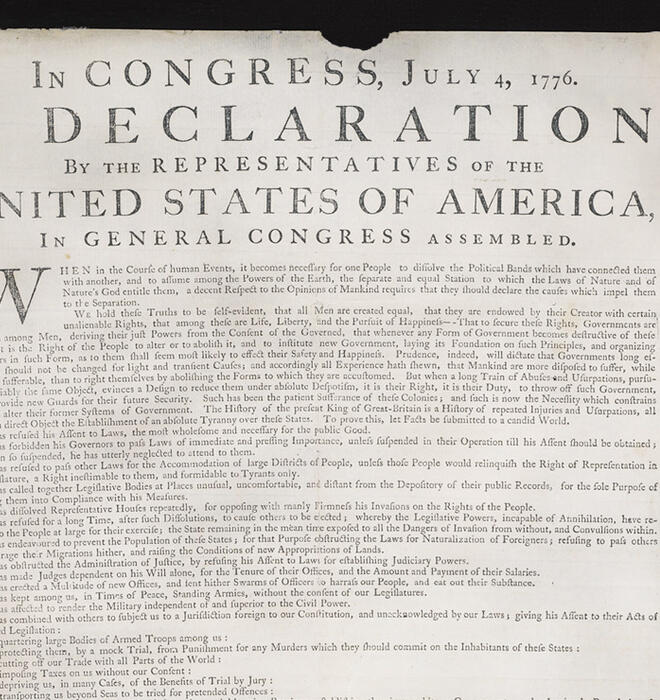
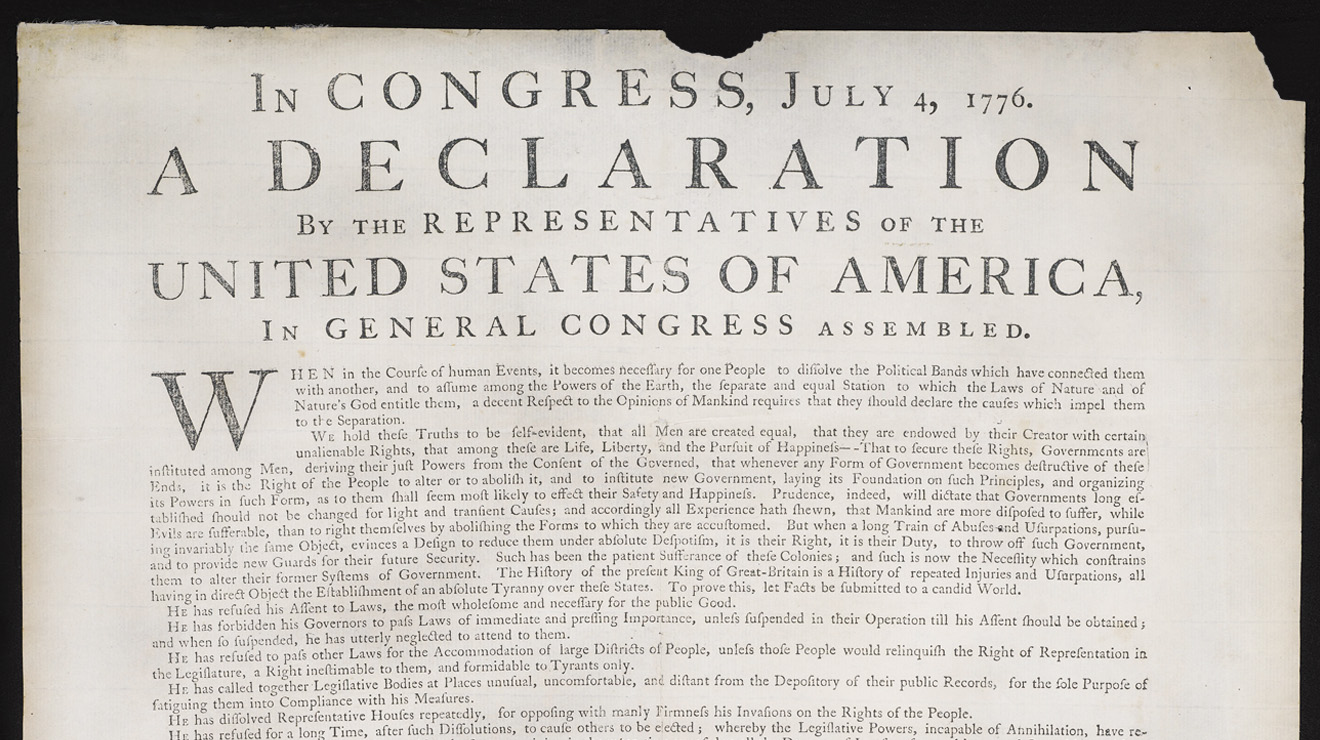
the exhibit will open with one of only 26 surviving copies of the Dunlap Broadside — the version of the Declaration of Independence that “literally was used to declare independence,” according to Blaakman. Historians estimate Philadelphia printer John Dunlap originally produced about 200 copies.
The Dunlap Broadside was “meant for public dissemination of the knowledge” that the nation had declared its independence, according to Swift. It was printed on the night of July 4, 1776, and immediately sent to other colonies and overseas. There are only three names — those of Dunlap; John Hancock, president of the Continental Congress at the time; and Charles Thomson, then the secretary of the Continental Congress. (It took months to obtain all the Founding Fathers’ signatures for the final document.)
Look close and you’ll notice odd spacing between some words, which Swift says corresponds to author Thomas Jefferson’s notations to take a breath. “This was to be read out loud,” says Swift, but Dunlap “didn’t quite recognize” the purpose of the marks, hence the errors.
Cannonball
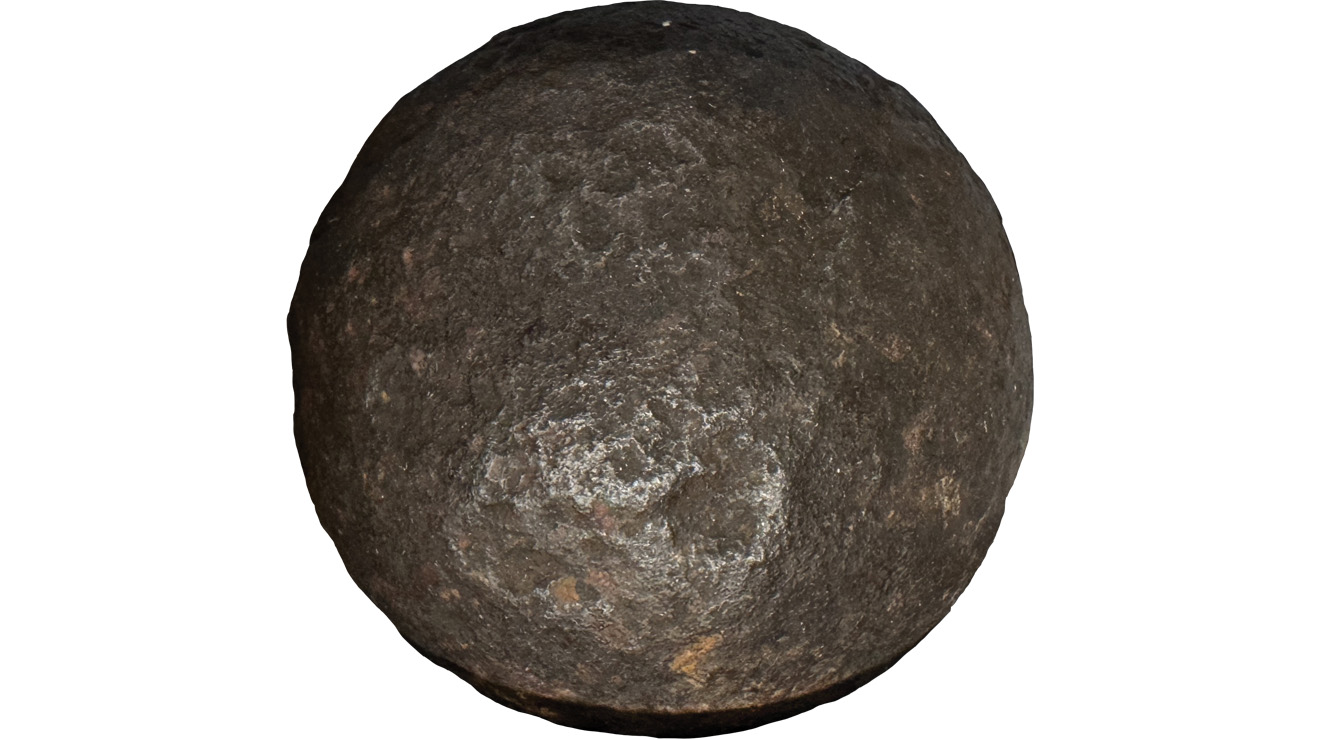
The most infamous cannonball at Princeton is the one that blasted through Nassau Hall into a portrait of King George III during the Revolutionary War. Through their research, the curators confirmed that seemingly unbelievable tall tale, but this is not that cannonball. This one was dug up near the Princeton Battlefield in 1896 and is thought to be from roughly 1777.
“One of the things that we want to impart” to visitors of the exhibit as well as students of the Revolution in the Archives course “is that this is a war and there are human costs,” says Swift. “And something that the students always respond to is this item. … It does kind of bring the war aspect to life.”
Grapeshot — tiny projectiles packed together and used as ammunition — and a powder horn, which was used to store gunpowder, will also be on display.
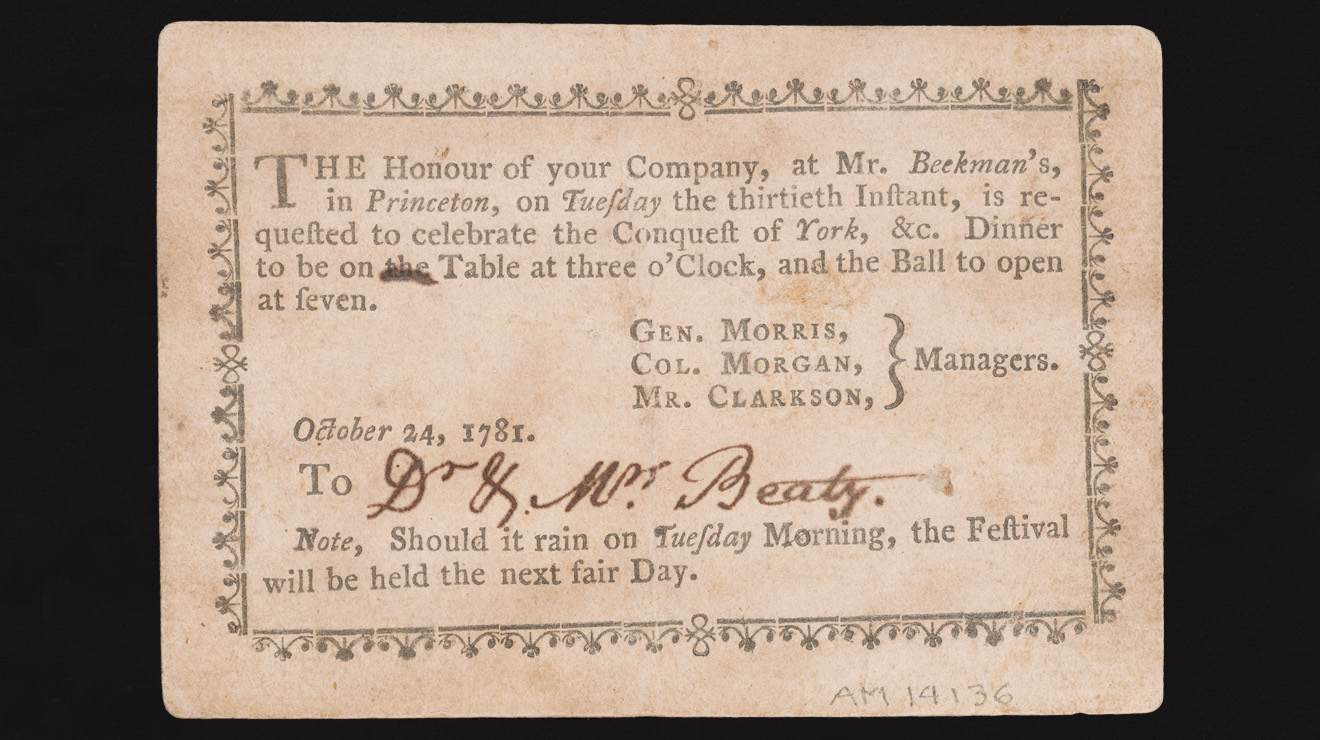
Invitation to a Ball Celebrating Yorktown Victory
This unique invitation to a 1781 ball celebrating the colonists’ victory at Yorktown, the last major land battle of the Revolutionary War, is one of the pieces the curators discovered during their months-long archive review.
It had previously been “cataloged as ‘invitation to a ball.’ And then that was … in something called the general miscellaneous manuscripts collection — scores of boxes of anything,” explains Swift.
“One of the really delightful things about this item is that you can imagine a bunch of these, maybe 52 of them, going out to different guests at once, because this is printed on the back of a playing card,” Blaakman says as he flips over the small invitation to reveal 10 clubs. “I don’t think we know exactly what the significance of that was, but Gabriel and I like to imagine people showing up and maybe there’s a table that’s for the spades and a table that’s for the hearts.”
One of the three senders named on the invitation is “Col. Morgan.” Col. George Morgan was the owner of the land where Prospect House now sits, though it was not part of the University at the time.
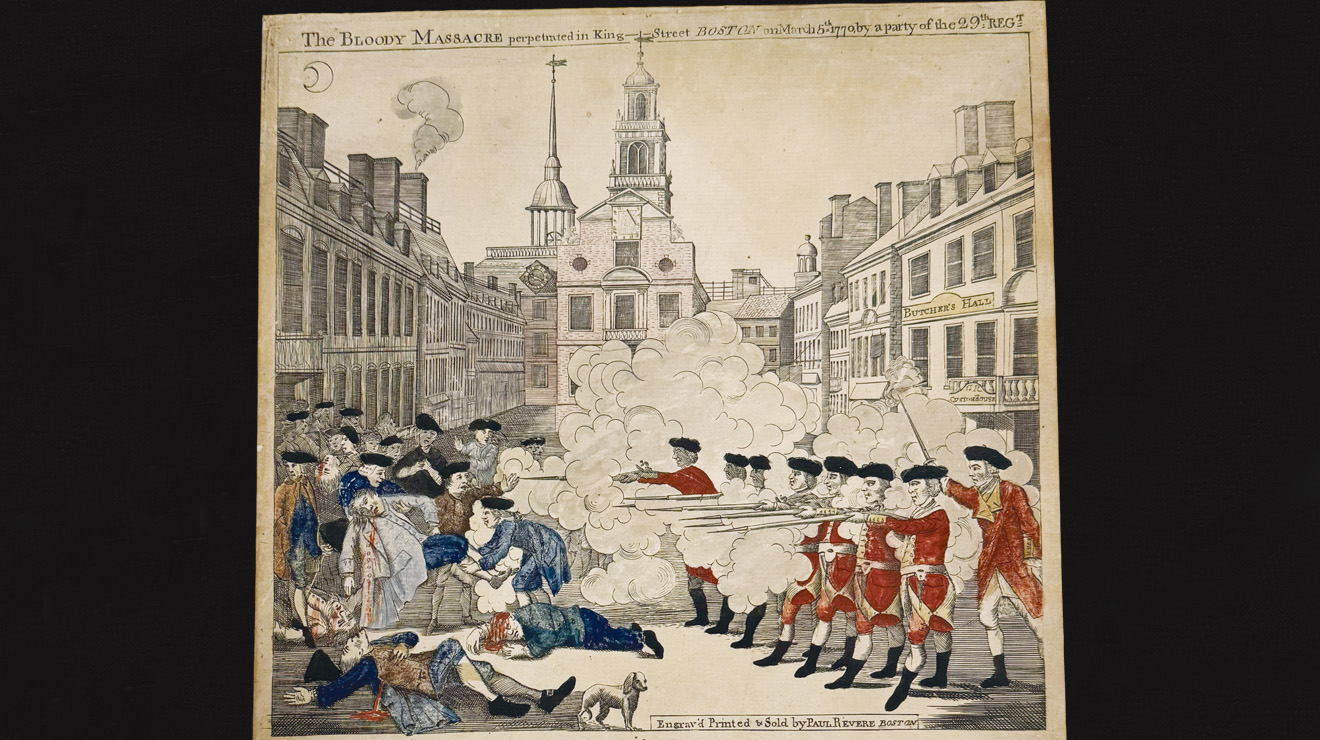
Paul Revere Boston Massacre Engraving
This 1770 engraving of the Boston Massacre by Paul Revere was part of the propaganda effort by patriots to portray the British as forceful instigators. Revere titled his work The Bloody Massacre, and it shows “orderly, disciplined redcoats aggressively and intentionally firing into an unarmed crowd” in front of the Boston Custom House, rather than “a confused kind of melee,” which Blaakman says is likely closer to the truth. A woman and a dog on the patriot side are meant to evoke innocence and loyalty to the cause; meanwhile, the British troops stand in front of a “butcher’s hall.”
The engraving will likely be a familiar sight to many, though astute observers may notice differences in color. That’s because copies were printed in black and white and known to be colored in by recipients using watercolors. “Sometimes you get actually pretty gory, hand-colored details here,” Blaakman says with a laugh. “This one, I think, is pretty par for the course.”
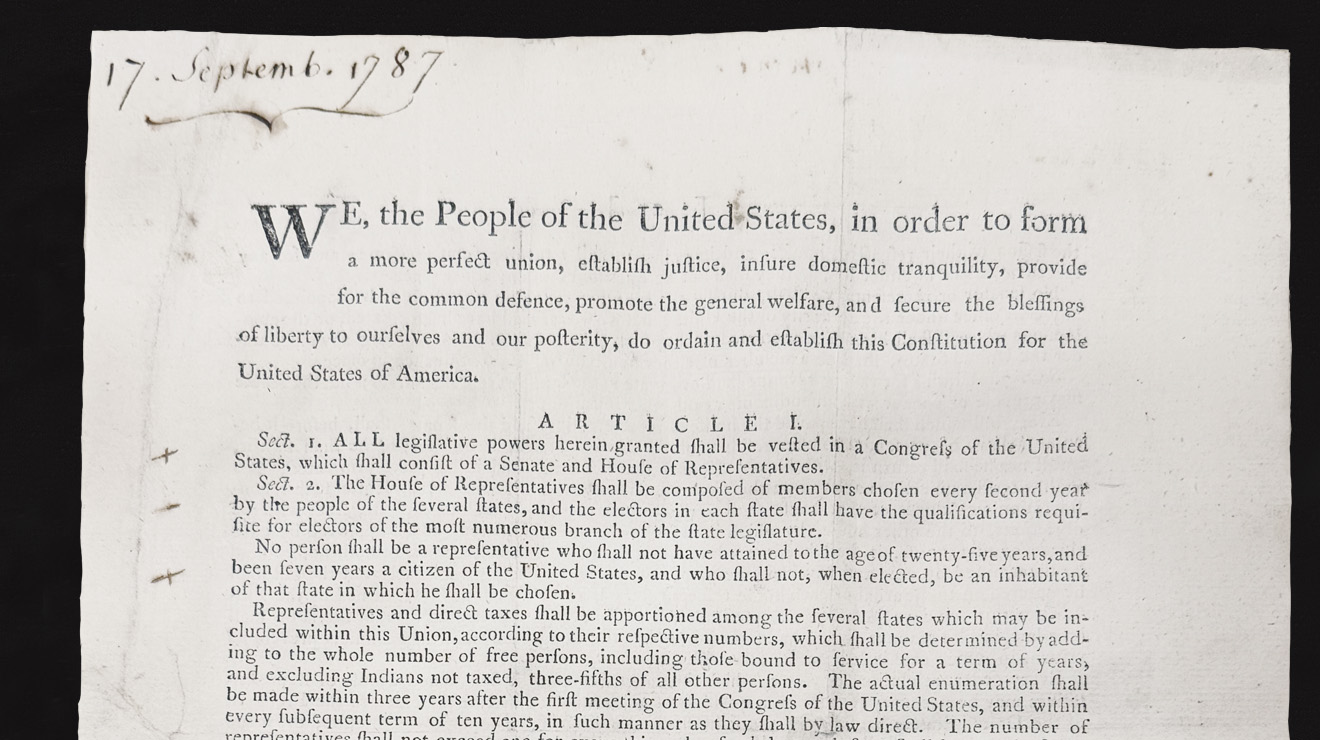
The Constitution
The exhibit will end with one of only 13 surviving original copies of the Constitution. Blaakman calls it “very much a draft,” as it was printed before the Bill of Rights was adopted. Historians believe more copies of this document were printed than the Dunlap Broadside Declaration of Independence, but the curators say the Constitution is rarer now because of the long and intense ratification deliberation that followed its printing. “People were trading these copies with each other. ‘Oh, you gotta get a load of this thing. Take a look, see what you think.’ … This thing was read and debated so thoroughly,” says Blaakman of the Constitution.
“You can see a little bit of that history if you look closely,” adds Swift of the Princeton copy.
“Somebody is marking up this text, and you can also see that they dated it.”
Two letters will accompany the Constitution in the exhibit — one from Jefferson, then the ambassador to France, giving his opinion of the document. Jefferson writes he’s concerned about “seeds of danger” because the writers of the Constitution assume that the country’s future leaders “would be as honest as they are,” says Blaakman. The Constitution is “a document that stands on the assumption that governing officials are going to be virtuous, are going to have integrity, and Jefferson saw that as one of its vulnerabilities.”
The second letter is from Washington, written to James Madison 1771, to update “a friend about the progress of ratification, cheering on a couple of states that had approved the document, and saying, ‘I think we’ll get it together and get this thing through,’” Blaakman says.
Both letters are in the authors’ original handwriting and include signatures, which is particularly notable given that both men employed secretaries who often wrote on their behalf.
More 250 Celebrations at Princeton
As part of the state’s semiquincentennial celebrations, the New Jersey General Assembly convened in Nassau Hall in February to recognize the New Jersey legislature’s inaugural convening, in 1776. During his remarks, Assembly Speaker Craig Coughlin said the walls of Nassau Hall “have borne witness to moments that shape not just New Jersey, but the nation.”
During the first weekend of October, there will be an “open house” at Nassau Hall’s Faculty Room, according to a letter to the editor published by The Daily Princetonian from the Office of Community and Regional Affairs in partnership with the Office of the Provost.
In February, Princeton University Concerts hosted the New Jersey premiere of Emily — No Prisoner Be, “an exciting semi-staged song cycle inspired by Emily Dickinson’s timeless poetry” dealing with themes including exploration of identity and freedom,” according to the University.
That same month, the Papers of Thomas Jefferson project, which was conceived at Princeton in 1943 to publish all of Jefferson’s papers and is housed in Firestone Library, opened an interactive digital exhibit online about the creation of the Declaration of Independence. Princeton students Marianne Cheely ’27 and Christie Davis ’27 contributed, according to the website.
Mudd Manuscript Library will further explore Princeton’s connection to the war in an exhibit that will run from May 2026 to April 2027. Real and Remembered: Princetonians Caught Between Study and Revolution will be curated by library collections specialists April Armstrong *14 and Rosalba Diana Varallo Recchia, and Ashley Augustyniak, reference services coordinator. The exhibit will highlight “both the real and remembered Revolution at Princeton, 250 years later,” according to a press release.
Also beginning in May, the Princeton University Art Museum will showcase an exhibit titled “What is an American?”: Artists Respond, curated by Jun Nakamura, assistant curator of prints and drawings. According to the museum, “a selection of prints, drawings, and photographs from the collections that engage in themes of protest, resistance, and civic engagement” will be featured. And don’t forget to head to the second floor to see Charles Willson Peale’s George Washington at the Battle of Princeton, which Princeton’s trustees commissioned in 1783. It was the first painting to be installed in the newly reopened museum.
Several campus units and departments have already hosted or will be hosting lectures and panels centered around the anniversary, such as the James Madison Program’s America at 250 lecture series and a School of Public and International Affairs’ panel on “past and present reconstructions,” according to an event description. On March 27 at the Lewis Center for the Arts, a panel of “artists, thinkers, and communities” will discuss Toni Morrison’s idea that reckoning with the Declaration of Independence “is to reckon with freedom declared in words long before it was lived in practice,” according to an event description.
Finally, the public lecture series Revolution Up Close is meant to complement the Firestone exhibit and will feature authors of books on the Revolutionary War published within the last few years. The lecture series, the research for the Firestone exhibit, and the guided tours are all supported by a grant from the Humanities Council’s Ruth and Sid Lapidus ’59 Research Fellowships Fund.
Related News
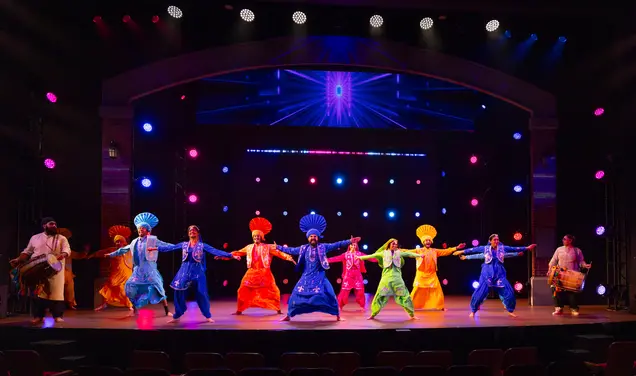
McCarter Theatre’s First South Asian Musical Took Me Back to Forbes Basement
A Beat of Our Own is about a college dance team not unlike Princeton South Asian Theatrics


3 Responses
William C. Libby II ’71
6 Months AgoHonoring Witherspoon’s Declaration Contributions
Curiously, the April 2026 PAW treats Princeton as an observer rather than an active participant in our Revolutionary War. In the “250 Years and Counting” article, the Declaration of Independence is highlighted, with no mention that the only college president who actually signed it was the president of what was at that time the College of New Jersey. Controversy swirls around him because of slave ownership allegations, but many of us believe we should be honoring the Rev. John Witherspoon, president of the College of New Jersey from 1768 to 1794, for the moral courage it took to be a patriotic hero and a remarkable leader during our Revolutionary War fight for independence. Sadly, not everyone agrees.
Martin Lotito ’81
5 Months AgoWitherspoon’s Revolutionary Role
Allow me to agree completely with this comment regarding Witherspoon. I speak as a certified historical tour guide in Philadelphia. (Shameless advert: My website is Tricornertours.com).
Lisa Camalier ’79
6 Months AgoThank You
Thank you for sending me this information.