

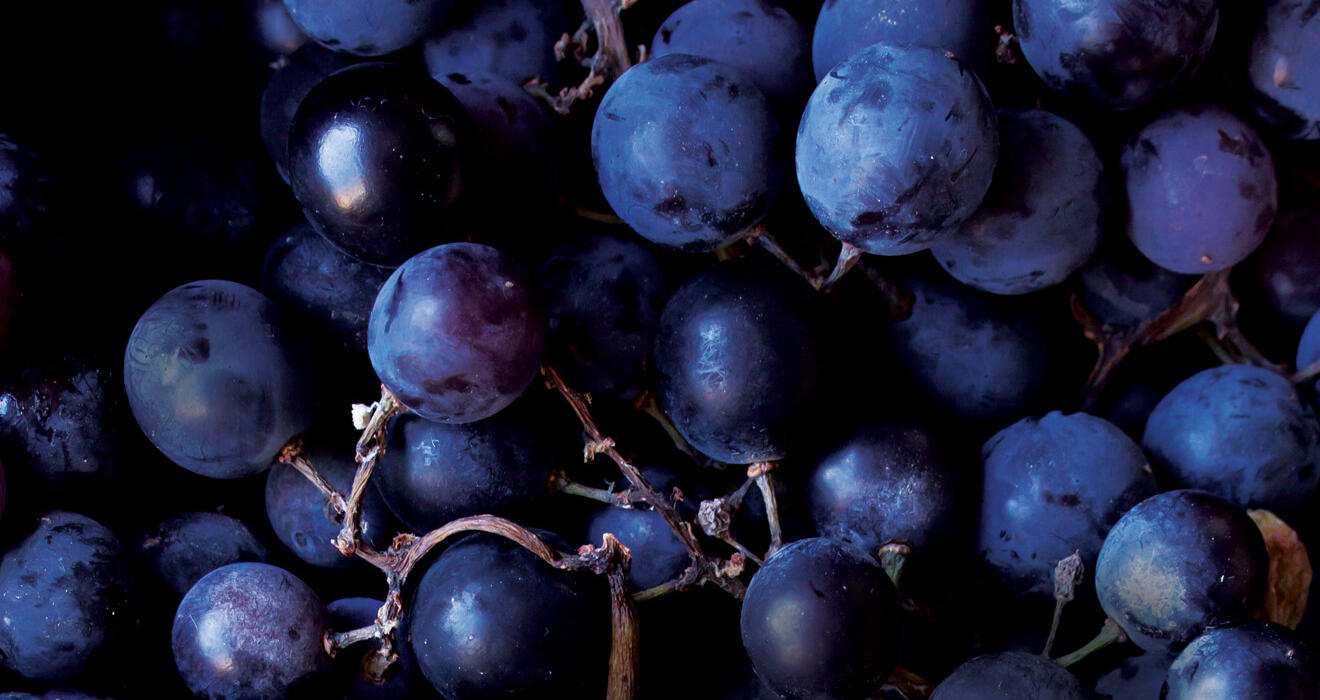

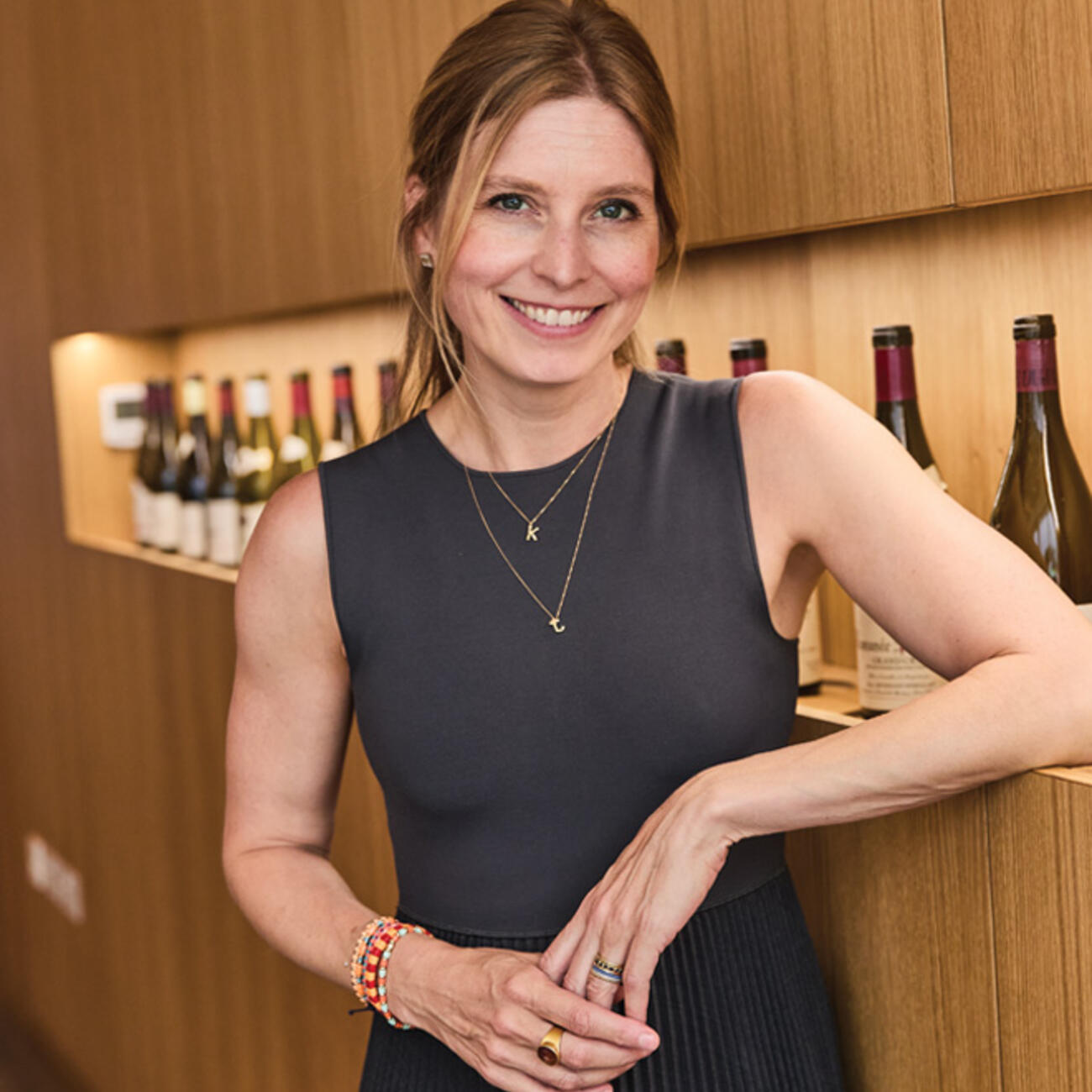
When Katy Andersen Keating ’08 wants a glass of wine, her preferred grape these days is a Nebbiolo. Perhaps a Barolo from G.D. Vajra, which she discovered when she lived in the Piedmont region of Italy shortly after she graduated. She’s still early in her exploration of more complex red Burgundies from France, she says, “but I’m loving it so far.” She has a lot of options. Keating is the managing director of Flint Wines, a London-based wine importer.
Wine drinkers’ palates age just like the wines they drink. At least Keating’s has. Her preferences, she admits, went “from the full, in-your-face [wines] where, when you taste it, you’re hit with this wave of whatever the grape is telling you” such as a denser Chardonnay or a bolder Bordeaux from the early to mid-2000s. Now she favors wines that are “much more toned down in some of those elements. There’s a lot more complexity and an acidity present.”
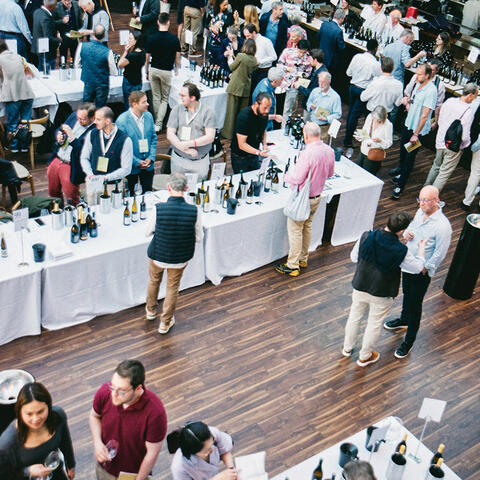
In May 2025, Flint Wines hosted its first-ever tasting portfolio at London’s Royal Opera House. Under the iron and glass atrium of Paul Hamlyn Hall, 129 vintners from around the world showed off nearly 500 wines. French and Italian vineyards predominated, but there were Cabernet Sauvignons from the United States, Malbecs from Argentina, Shirazes from Australia, Riojas from Spain, Rieslings from Austria, and Ports from Portugal, among scores of other selections. There were even sparkling wines from ... Great Britain. Thanks in part to climate change, good grapes can now be grown there. The legendary French Champagne maker Taittinger, in fact, began planting vines in Kent, along the English Channel, in 2017.
Not only does Keating have access to a wide variety of excellent wines through her work, she also happens to live in one of the best places to find them. According to a 2025 report by the high-end real estate consultancy Knight Frank, London now has more restaurants serving wines from the top 250 vineyards than any other city. As The Times (U.K.) crowed last year, “Move over Paris, London is now the wine capital of the world.”
Keating came to her interest in wine through her interest in food. She is a third-generation farmer. But first, there were the sheep.
She grew up on an organic farm outside Philadelphia where her mother, Elizabeth, and father, Bill Andersen ’81, raised sheep as well as cattle and chickens. Broadwater Farm soon expanded to vegetables, fruits, herbs, and an heirloom apple orchard. “From a young age,” Keating says, “we were thinking about what goes into your body.”
That interest carried over to Princeton, where she majored in French and Italian with a certificate in environmental studies. Keating founded the Princeton chapter of the Slow Food movement after the movement’s founder, Carlo Petrini, spoke on campus. As PAW described it in 2008, the Slow Food movement stresses “food that tastes delicious, is produced in environmentally and socially responsible ways, and which does not harm human health or animal welfare.” She also helped found the University farmer’s market, one of the first student-run campus farmer’s market in the country. Keating’s Nassau Herald page concludes, “Wine and laughter, what’s not to love?”
Like most undergraduates, Keating came to college with little appreciation for wine, but she began to acquire it during vacations to northern Italy with her parents. Wine there was a part of daily life. “I was starting to get a sense that there’s more complexity to wine than just something to get drunk,” she laughs. The first wine she recalls liking — for its aroma — was Moscato d’Asti, a sparkling white from the Piedmont region. “It’s a sweet wine,” Keating notes, “but it has an incredible perfume to the nose.”
Locally, she found a mentor in Laurent Chapuis, owner of the Princeton Corkscrew Wine Shop. Her parents first took her into the shop when they would visit, and Keating returned as soon as she turned 21, always asking questions.
“She understood the farming side of [wine making] and was very open-minded and eager to learn,” Chapuis recalls. The two have remained close. When Keating and her husband, Jared Keating ’05, were married in 2018, they bought the wine for their reception from Chapuis.
Keating’s work establishing the Princeton farmer’s market led her to apply to Harvard Business School. However, she deferred her acceptance when she won a Fulbright scholarship to study artisanal cheese-making at the University of Gastronomic Sciences in Pollenzo, Italy. Not coincidentally, the school was founded by Petrini, and its educational philosophy remains grounded in the Slow Food movement.
More than anything else, Keating says, wine is about connections, and as evidence she tells a Princeton story. While on her Fulbright, she remained in touch with Rajiv Ayyangar ’09, who had started a campus wine club. During a visit to the Princeton Corkscrew, Ayyangar met a young Piedmont winemaker, Giuseppe Vajra, and recommended that Keating visit him. Without a car, Keating persuaded her study-abroad roommate, Sophie de Gier, to drive her there. Sophie and Vajra, Keating notes proudly, have now been married for 18 years.
After a summer internship at Amazon Fresh, Amazon’s then-fledgling online food delivery business, Keating earned her MBA from Harvard in 2011. “By that time, I was totally hooked on wines,” she says, “but I didn’t see it as a career path.” Still she remained on the outskirts of that path, joining a New York startup called Lot18, where she worked in the food division of an online wine merchant. The following year, she moved to London to become director of service development for a hospitality company. However, she continued to study wine in her spare time, eventually earning a diploma from the Wine and Spirit Education Trust, a global group based in the U.K.
Related coverage
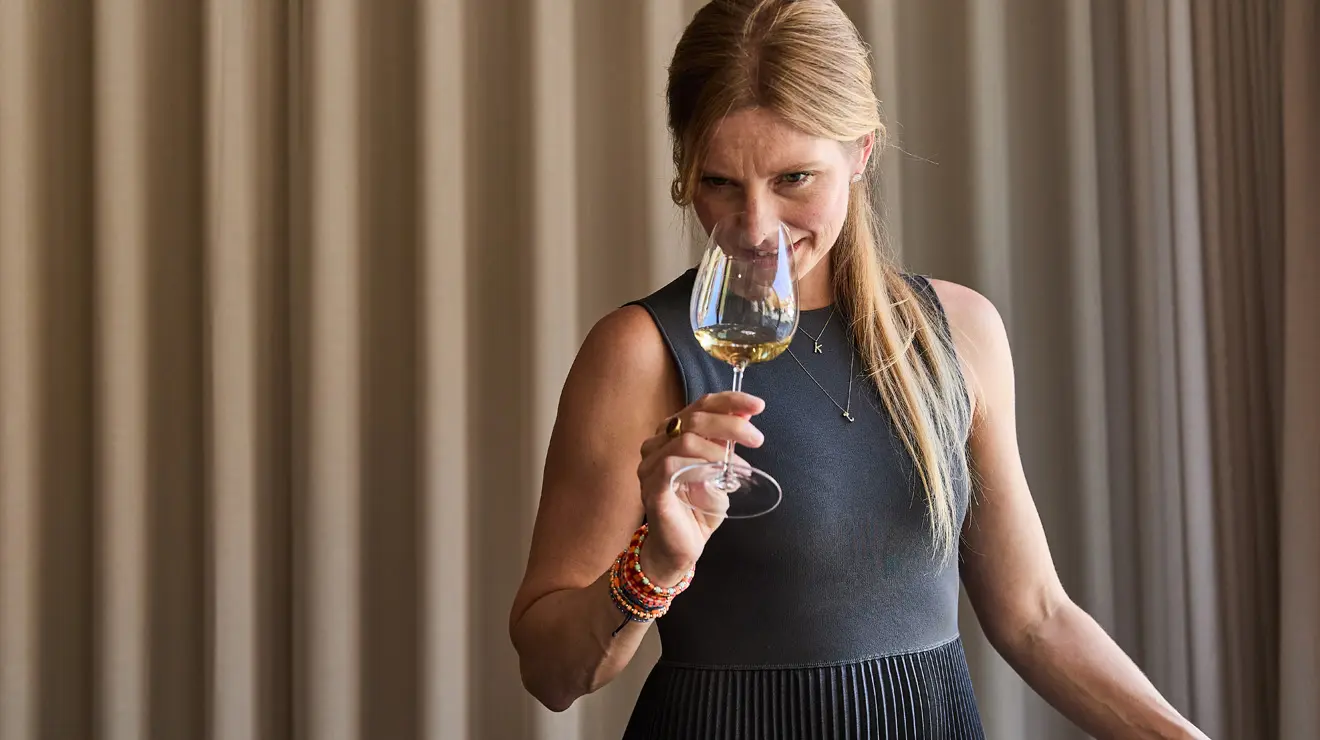
What Wine Should You Try Next?
Katy Andersen Keating ’08, managing director of Flint Wines, offers three inside tips
Just as she was finishing that degree, a friend notified her that Lay & Wheeler, one of the oldest wine merchants in the U.K., was hiring. Keating joined them as a customer director in January 2016 and soon became managing director, remaining with the company for nearly almost eight years and nearly tripling its revenues, from $13 million to $38 million. “I finally found my path into the wine world,” she laughs. “It just took me five years after graduate school to get there.”
Flint Wines, a competitor of Lay & Wheeler, was founded in 2006 as two related businesses, one selling wines to hotels, restaurants, bars, and wine shops and another selling exclusively to private clients. Keating joined Flint as managing director in November 2023 with the assignment of uniting those two divisions. The company had never had a true CEO before, and Keating said she filled the dual roles, as she puts it, of traditional corporate executive and “team mom,” hiring a chief financial officer, integrating Flint’s sales teams, renovating their offices, and rebuilding their website.
It is unique in the wine world for an importer to sell both to commercial and private clients, Keating says. Flint buys directly from more than 200 wineries around the world and then arranges distribution. Retail clients include department stores such as Selfridges and Harrods, specialty shops such as Fortnum & Mason, big hotels such as Claridge’s, as well as many of London’s popular restaurants. Keating compares Flint Wines to an art gallery. They represent the artists — the winemakers — but also connect them with customers to make sure their wines find the right home, whether on a store shelf or in a private cellar.
Wine culture is different in the United States, Keating explains. European vineyards export as much as half of their production, while Americans export only about 16% because the domestic market is so strong. Wine clubs, which make up a significant part of the American wine business, are all but unknown overseas, where vineyards tend to be smaller, don’t have marketing departments, and often don’t offer tours.
The American palate for wine is also different. Keating describes it as “younger,” which seems like a polite way of saying less sophisticated. “Americans tend to lean more on points and scores [in evaluating wine], because it’s very straightforward to process,” she observes. “Whereas, in England, I think you get a lot more tradition, where generations upon generations have refined their understanding of which wines they like.”
The wine industry faces several challenges. In the U.S., wine exports dropped by more than a third last year as tariffs imposed by the Trump administration sparked a reciprocal trade war with Canada, the largest market for U.S. vineyards. Another threat, climate change, may make it possible to grow champagne grapes in southern England, and wildfires in California also destroyed much of the 2020 crop.
Long-term, an even greater threat may be a simple lack of interest. According to a 2025 Gallup poll, the number of Americans who say they drink alcohol has reached a 90-year low, and alcohol consumption rates worldwide are even lower among Generation Z. Asked whether this concerns her, Keating cites the Romans. “Wine has been around for millennia,” she counters. “It has outlived all its ups and downs.”
Face it, unless one has grown up around wine, the seemingly infinite variety — red versus white versus rosé, dry versus sweet versus sparkling, fruity versus earthy versus robust — can be intimidating at first. Fortunately, Keating is a teacher as well as a lifelong learner, and some of her students can be found right in her own home. Her three young children aren’t old enough yet to drink wine, of course, but they can still learn.
“I’m trying to be patient,” she told the industry website WineLister.com in 2024. “They smell everything. Pinot versus Merlot. Chardonnay versus Riesling.” They’re even learning the differences between the finest stemware, which Flint also sells. “They tell me they’re ready for Champagne,” Keating added. “I’ve made a note.”
For novices who might be embarrassed to admit that they can’t distinguish between varietals, Keating’s advice is simple: Just dive in. Visit your local wine shop, pick a region, and go deep, sampling all the different types of wines that are grown there.
“Don’t get overwhelmed by the fact that there are hundreds of different wine grapes,” she cautions. Perhaps the easiest route to becoming at least an apprentice wine connoisseur, Keating suggests, is simply to ask the staff at your local store for their recommendations “and let them geek out for you.”
Wines can also be enjoyed from a range of price points. Although Flint tends to sell more high-end wines, Keating says she also appreciates the less expensive, everyday bottles, the kind those in the industry call “pizza wine.” Her preferences now, though, are driven less by price, less even by varietal, and more by connection.
“I will buy wines because I really like the people [who make it],” she explains. “Maybe I can see where they’re headed but it’s not quite there yet, and I’ll still get it because I want to support them. Maybe they’re into biodynamic agriculture or they’re taking over from their family farm and doing things differently. Or maybe they’re just really nice.”
For Keating, one of the connections that makes wine drinking exceptional is right in Palmer Square. She has kept up her friendship with Chapuis, stopping by the Princeton Corkscrew whenever she returns to campus. He might show her something interesting he has just gotten in. They might sample it as they catch up over a friendly glass.
“If she wants to retire and come back to Princeton and take over the shop,” Chapuis adds with a laugh, “I will give it to her.”
Mark F. Bernstein ’83 is PAW’s senior writer.




1 Response
David P. Beck ’66
6 Days AgoSeeking Community for Alumni in the Wine Industry
It was a great pleasure to read about a rising young star in the world’s wine industry, Katy Andersen Keating ’08 (“A Taste for Connection,” October issue). From her spot in London, Ms. Keating is well positioned to witness a great expansion in new wines and likely new wine grape cultivars, especially in England. As a pinot noir fan, I would never suggest that France is tiring out, but other areas of the world are showing new energy.
When I entered the wine industry in 2005 in Oregon, I was a part of the explosion of fine pinots coming from the Pacific Northwest region of the U.S., and that explosion now also includes remarkable sparkling wines. At that time, I asked the Princeton alumni office if it could point me to other Princetonians who were active in the wine industry and the response was that that metric was not tracked. I knew, of course about John W. Haeger ’66, a noted author on pinot noir, and Gary Mount ’66, who made fruit wines in Princeton(!), but there were only a few others on whom I stumbled over the years.
Ms. Keating will appear in such searches in the future as a result of her impressive success in wine marketing and her PAW coverage, but I would urge the alumni office to add a field in its records for members of the worldwide wine industry.
By the way, I appreciated the mention of Princeton Corkscrew wine shop in the article. I found Laurent Chapuis a deeply discerning connoisseur. When I was attending my 50th reunion, I had the opportunity to pour one afternoon wine made from grapes from my vineyard at the Corkscrew.