
Behind the Story: Reporting on Princeton After Oct. 7

Alumni like to say that Princeton taught them to value differing viewpoints. The events since Oct. 7, 2023, have put that ideal to the test.
October’s cover article centered on conversations in the Princeton community over the three years following the Hamas attack on Israel and the ensuing war. Writer Julie Bonette spent several months reporting this package. She interviewed more than 20 Jewish and Muslim sources — and reached out to many more — including alumni, students, faculty, and others.
Related coverage
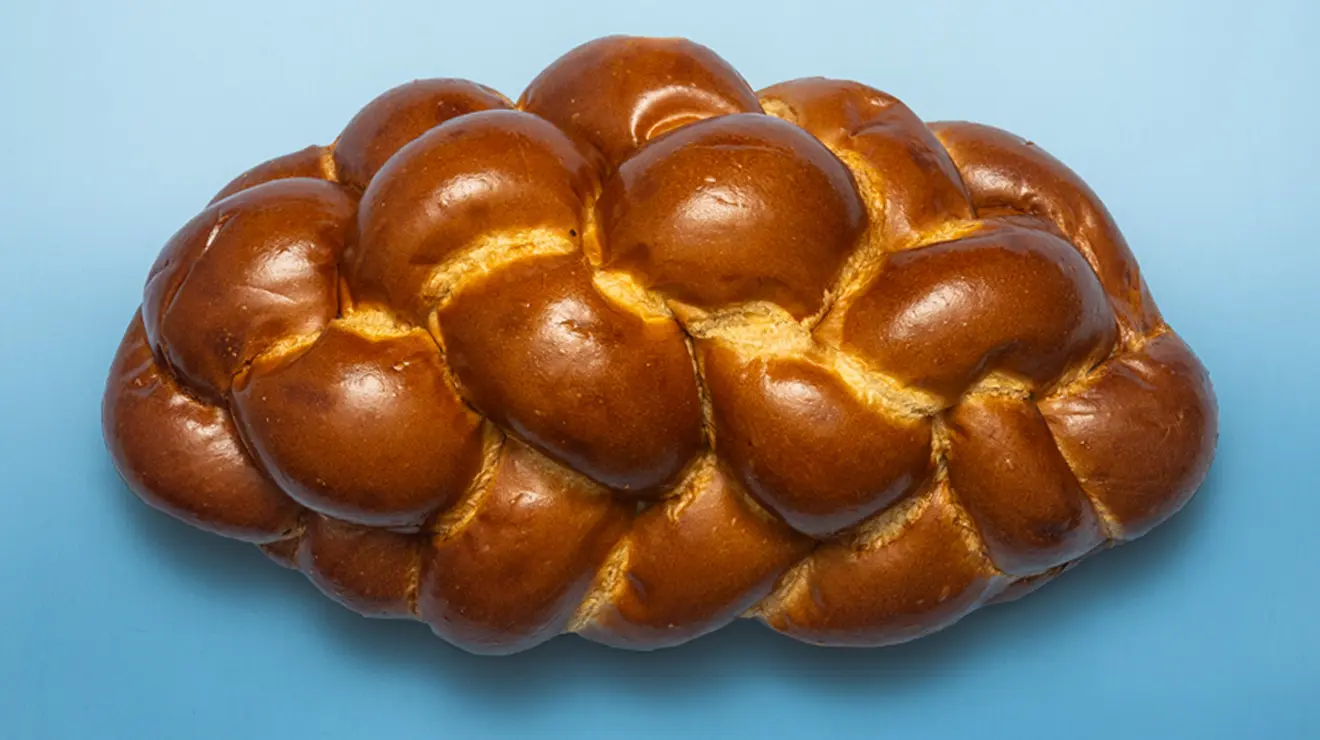
The Braids That Bind
Inside the difficult conversations Princeton’s Jewish community has had in the three years since Oct. 7
We knew from the start that this story would present numerous challenges. The war has drawn out deep tensions and powerful disagreements across the globe, so we expected strong reactions from some in the alumni community.
But if this is a difficult story, it’s an important one, too.
Let’s walk through our process.
To be clear, we did not want to rehash or litigate the arguments made since Oct. 7. Our intent was to understand how Jewish and Muslim Princetonians have been navigating conversations within their communities around religion, politics, and identity, and whether that dialogue has been less contentious than in other circles.
As Julie started her reporting, two primary concerns emerged: finding a balance of voices and making language choices.
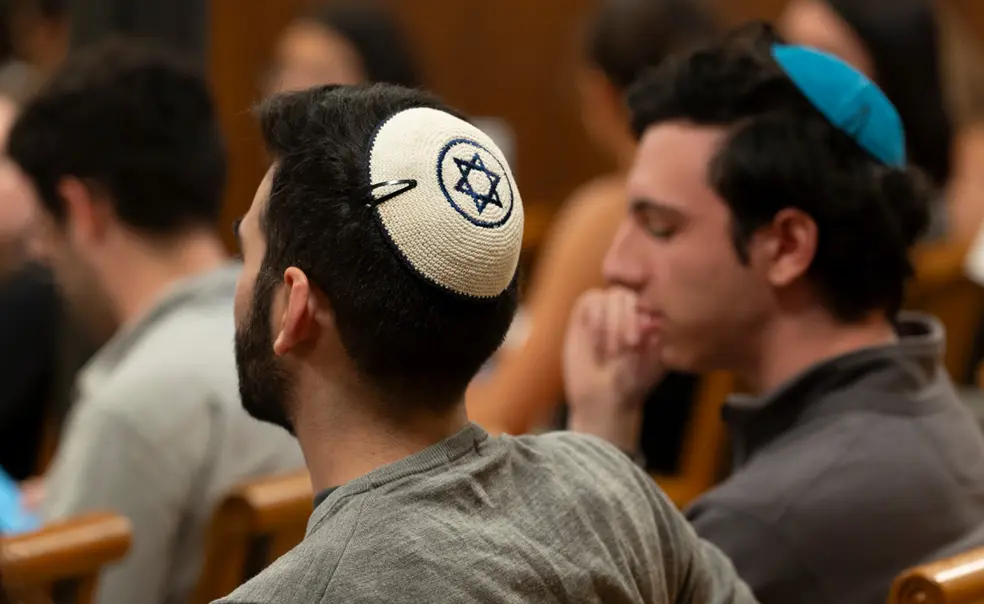
You may ask why the package, including the cover image, is predominantly from the Jewish perspective. Why aren’t more Muslim voices represented?
Princeton’s Jewish community has been built over a longer period, from the Center for Jewish Life and Chabad House to student organizations, which means the community had the infrastructure and history in place on Oct. 7, 2023. The Muslim community has been growing in recent years, but even in the Class of 2026, Jewish students outnumbered Muslim students 9.2% to 2.6%, according to The Daily Princetonian’s Senior Survey.
We also found it more difficult to identify Muslim students and alumni, as well as pro-Palestinian activists, who were willing to be interviewed. Some declined to comment, and many did not respond. Among those who did talk, they speculated that people were fearful of retribution from the Trump administration. Others were distrustful of our intentions or said they saw no benefit to participating.
Related coverage
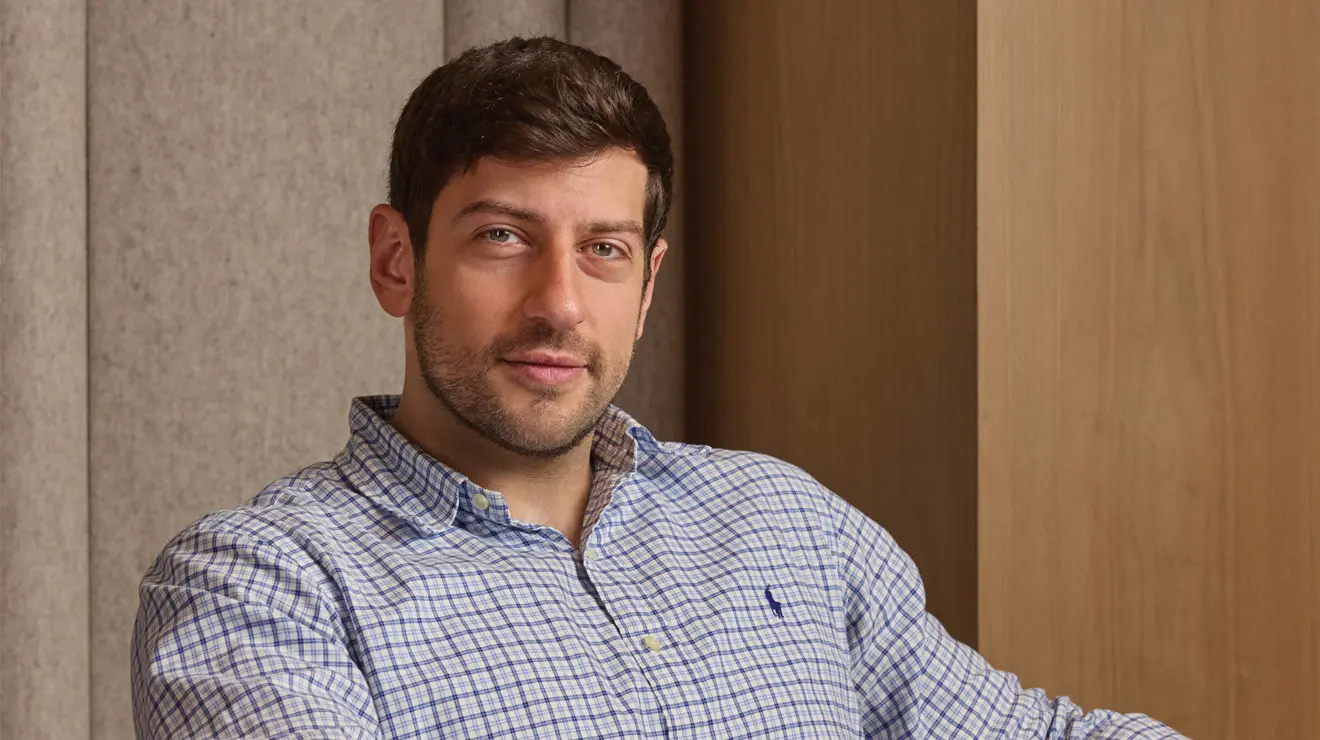
Alumni, Students Work to Foster Princeton’s Muslim Community
Mohamed El-Dirany ’18 *19 is among those focused on “consolidating Muslim alumni together and focusing on getting that community really strong”
Government scrutiny “has brought about a level of fear and repression among not just Muslims, but primarily over Arabs, over Palestinians, over anyone who espouses pro-Palestinian views,” said Mohamed El-Dirany ’18 *19.
El-Dirany said he spoke even though he felt the focus should be on activists and not the Muslim community. “I do it only sort of as a way to try and clarify that the framing around this is already incorrect,” he said.
Abdullah Rizvi ’27, a former board member of the Muslim Students Association, said: “There isn’t a whole lot of conversation around [Oct. 7] anymore. I feel like sometimes when the topic does come up, the conversation just dies kind of fast.
“I think there are students that are definitely hesitant to engage in things like interfaith conversation, and that’s mostly a fear of saying something wrong. Like, they don’t want to say something that is misinformed. Not everyone is as up to date on what exactly is happening still in Israel, Palestine.
“And then there’s a genuine fear still amongst some students of things like doxing, and … something they say being taken out of context.”
As for language choices, sources on all sides — in reporting this package and in previous reporting — have expressed concerns or tried to dictate how PAW uses words such as “genocide” or “ethnic cleansing” and how we describe the war.
In these examples, we do not state as a fact that Israel is committing genocide or ethnic cleansing, as those are claims that are still very much debated, and we adhere to Associated Press style and call it the “Israel-Hamas war.”
If you have comments about the package, you are, as always, invited to submit them for publication — and please be aware of PAW’s commenting policy — or you can contact me at pbarzilai@princeton.edu with questions or comments not for publication.
We appreciate you reading the package and welcome your ideas for future coverage of issues important to the alumni community.



2 Responses
Dave Lewit ’47
2 Weeks AgoGetting Along and Ending Tribalism
Thank you Ted Folkman ’96 for inviting discussion about reciprocal ethnic suffering — Palestinians, Israelis, Muslims, Jews, immigrants in Everytown, Princeton — everywhere. As I was an undergraduate just after World War II, prejudice was unspoken; Jewish students gravitated perforce to only one of two welcoming eating clubs. There was no chauvinistic Jewish organization, or Muslim. Rather, off campus there was the ongoing Nakba — mass population displacement with unpublicized Zionist massacres of thousands of peaceful Palestinian natives and razing of their towns and villages. Subsequently there were many “mowings of the grass” in Gaza. At Princeton, recent veterans were concerned with people of all kinds getting along; I became active in the Princeton Liberal Union.
Now there’s the heavily publicized Oct. 7 resurgence. Must this event be uniquely horrific — Jewish suffering? Where’s the history and psychology — established fields of study — to clear current campus smoke and bring light? Where’s true religion — “re/ligio”: tying back — of all peoples? What may finally end tribalism?
Ted Folkman ’96
2 Weeks AgoA Related Phenomenon Worth Examining
“The Braids That Bind” is a thoughtful, well-reported piece. I was struck, though, by the accompanying editor’s note. Even an article so careful to highlight dissenting voices within the Jewish community occasioned apologetic hand-wringing about the legitimacy of talking about the Jewish community without also talking about the Muslim community.
As Dara Horn has observed, Jews can’t speak about their own experience, and maybe journalists can’t write about Jews speaking about their own experience, without someone feeling it morally necessary to point out that others suffer, too. That’s a phenomenon worth examining.