

Education Through Athletics

I was honored to contribute the foreword, reprinted here, to “Princeton Basketball: A Tradition of Excellence,” the recently published book edited by Tom Chestnut ’70, which includes essays from many Princetonians including John McPhee ’53, Bill Bradley ’65, Alexander Wolff ’79, and Mitch Henderson ’98. I’m grateful to Tom for the opportunity to make the case for preserving the Ivy League model at a time of pernicious professionalization in collegiate athletics. Visit princetonbasketballbook.com to learn more about the book. — C.L.E.
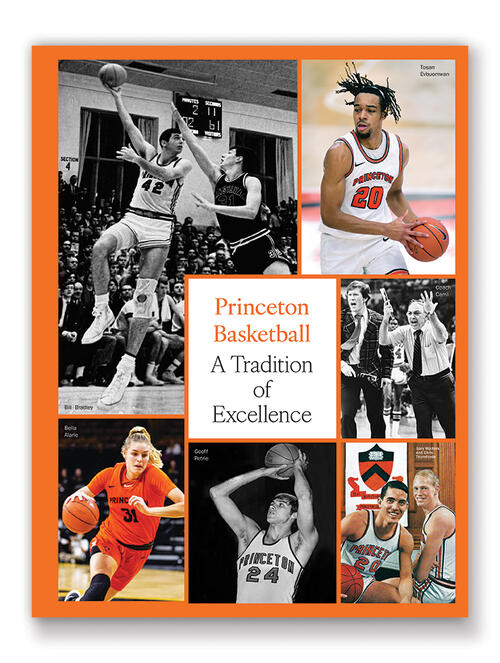
Princeton basketball has long been a point of pride and a source of joy for me. During my undergraduate years, I was a regular in the student section at Jadwin and made a road trip to root for the Tigers at the Palestra. I enthusiastically returned to the Jadwin stands when my family and I moved to Princeton in 1998. During my time as Princeton’s president, my wife Lori and I have attended both men’s and women’s games as often as we can.
I celebrate our teams’ competitive spirit and athletic achievements, but I am most proud of the way that our players and alumni exemplify the Ivy League’s educational ideals. As much as I enjoy seeing the Tigers succeed on the hardwood, I am even happier when Princeton’s basketball alumni tell me about their professional and personal accomplishments after leaving the University.
At a time when many other universities increasingly treat varsity basketball teams as professional entertainment franchises, Princeton and its Ivy peers continue to insist that student-athletes should be students first and foremost.
We value intercollegiate athletics because of its ability to contribute to the lives and educations of the students who participate in our varsity programs. We know that the skills and habits essential to athletic competition—such as teamwork, leadership, persistence, time management, and the ability to take constructive criticism and overcome setbacks—can be an important complement to other lessons learned at Princeton.
To quote from the guiding principles approved by the Ivy League Council of Presidents in 2022, intercollegiate athletic programs at our universities must operate “within a perspective that holds paramount the academic programs of the institution and the academic and personal growth of the student-athlete.”
Those same principles conclude by affirming that “we embrace the exceptional learning experience inherent in striving for excellence in athletics, and we regard winning an Ivy League championship as the principal priority and a high honor for our teams; we celebrate national success when it occurs, although not at the expense of ensuring the full integrity of student-athletes’ academic experiences.”
With these student-centric goals in mind, Princeton and its Ivy peers award no athletic scholarships. We grant scholarships only on the basis of financial need, and we meet that need fully for both athletes and non-athletes. Unlike in other leagues, students are free to leave teams without forfeiting the scholarships they require to support their studies. They participate in varsity programs for their own benefit, not the University’s.
Our need-based scholarship policy is perhaps the best-known way that the Ivy League reinforces its educational model of intercollegiate athletics, but it is far from the only one. We insist that student-athletes have academic credentials comparable to those of other admitted students, and the Ivy Council of Presidents reviews relevant data every year.
While other schools ask teams to crisscross the country in leagues that stretch from coast to coast, the Ivy League remains geographically compact, which reduces travel time and allows student-athletes to spend more time on campus and in class. At Princeton, teams practice during an activity period that runs from 4:30 p.m. to 7:30 p.m. No classes for any students are scheduled during that interval. This arrangement enables varsity athletes to take any course, and pursue any major, that interests them.
Perhaps most importantly, we hire top-notch coaches who care about team members as students and as people, and who both understand and value the demanding character of an Ivy League education.
The Ivy League’s educational model is manifest at the Princeton Varsity Club’s annual banquet honoring our graduating seniors. The array of trophies on display is always dazzling, but even more impressive are the student-athletes who speak at the event: their remarks invariably demonstrate the commitments to achievement, learning, and service that Princeton expects of all its students.
As I listen to their comments, I always find myself reflecting upon how important it is for the Ivy League to remain focused on student success and academic standards, even as—indeed, especially as—the highest-profile intercollegiate athletic conferences move in directions that put those standards at risk.
Princeton’s men’s and women’s basketball teams have helped show the world what Ivy League athletics is all about. It is therefore both an honor and a pleasure to participate in this tribute to those programs, to thank the players for the excitement and thrills they have provided to generations of students and alumni, and to wish future teams well as they extend Princeton basketball’s 125-year tradition of excellence into the future.
The Latest
See all


Related News
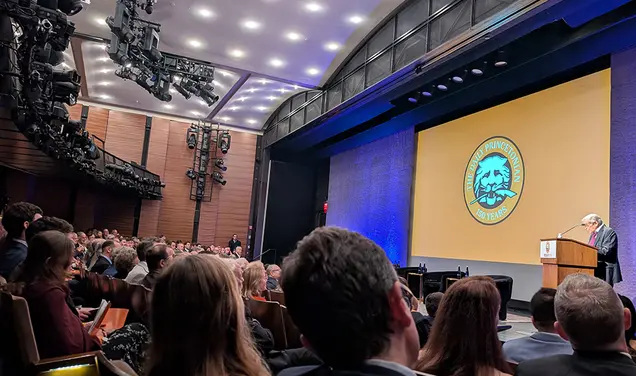
With Prominent Journalists and Hoagies, the ‘Prince’ Celebrates 150 Years
A gala at the New York Historical raised roughly $400,000 for the independent student newspaper



No responses yet