

How To Find a Cross-Country Ski Wonderland in Tahoe
The alpine lake in California and Nevada may be known for its downhill ski resorts, but its Nordic ski offerings truly sparkle, writes Harrison Blackman ’17

In the winter of 2021, I was in the final year of my MFA program at the University of Nevada, Reno. COVID-19 pandemic-era social distancing was still in effect, which meant I taught first-year writing seminars on Zoom while I trudged forward on my thesis, a bleak novel about climate catastrophe. Meanwhile, winter activities in the “Biggest Little City in the World” remained limited — going out to bars seemed risky, and to be perfectly honest, there just wasn’t that much to do in Reno besides sit in front of a casino’s sticky slot machine and watch your bank account drain into oblivion.
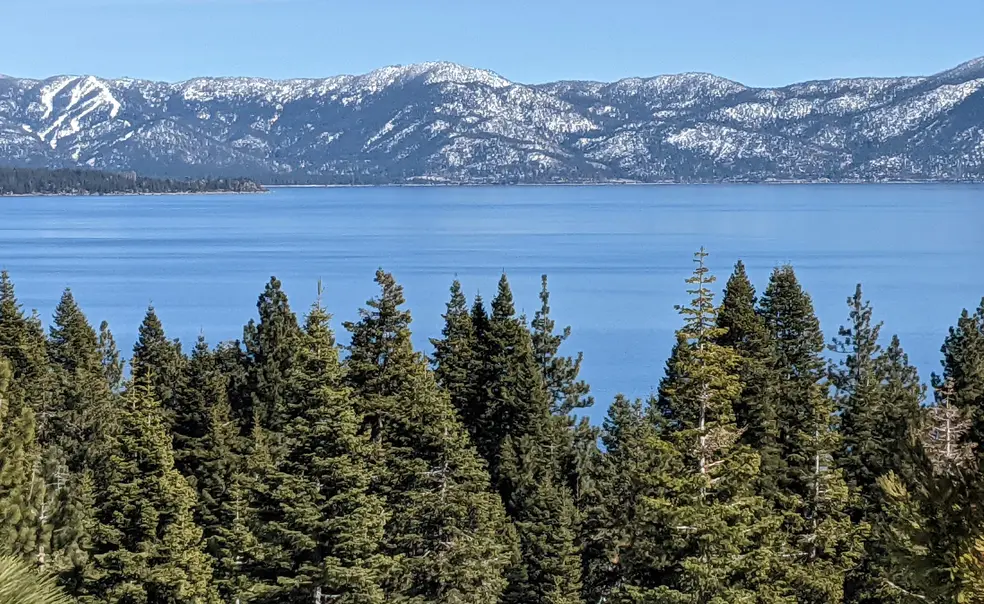
However, in just a 50-minute drive, one could arrive at Lake Tahoe, a skiing mecca — home to famous resorts like Mt. Rose, Northstar, Heavenly Mountain, Diamond Peak, and the Palisades Tahoe (formerly Squaw Valley, the site of the 1960 Winter Olympics). The mountains were calling, and to get out of my apartment, I decided to learn how to cross-country ski. I had never properly learned to ski, downhill or otherwise, and as a former cross-country runner, this variety seemed like a natural extension of my cardiovascular interests. Was it not as dangerous as downhill skiing? Check. Was it a deeply intense workout, its difficulty enhanced by the Tahoe area’s thin mountain air at 6,000 feet of elevation? Also check. Was it cheap enough for a grad student on an absurdly small stipend to afford trail passes and rentals, without the additional cost of lift tickets? Bingo.
Cross-county skiing, in fact, has its origins in prehistory. According to author Roland Huntford in Two Planks and a Passion, his doorstop history of skiing, the first known cross-country skis dated back to 6000 B.C., discovered in the 1960s within a Russian peat bog. Among the oldest wooden artifacts ever discovered, these ski remnants predated “the invention of the wheel,” Huntford wrote, “by three-and-a-half millennia.”
A couple different varieties encompass modern Nordic skiing, the style where the binding allows the heel to lift from the ski, necessary for cross-country techniques. Classic “strider” skis follow snowmobile-groomed tracks and feature treads to prevent you from backsliding on uphills. (Consider this method a glorified outdoor treadmill or StairMaster.)
If you desire an order of magnitude harder, skate-skiing is what you might see during the Winter Olympics’ biathlon event (minus the part with target shooting): Skate skiers lean forward and, in a motion similar to roller blading, advance in a gliding motion, their poles used to propel them along groomed trails. It was this style I wanted to learn — fast and fun — but I’d have to work my way up — and in the process, learn how to fall safely (and often).
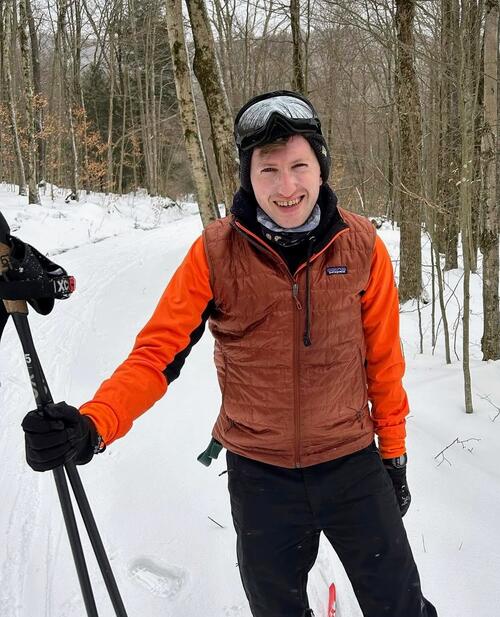
I took my lessons at Tahoe XC, a nonprofit ski center in Tahoe City, California, just up the hill from the fabulously blue alpine lake. Tahoe XC’s modest lodge gives way to 31 miles of trails to explore, some featuring lake views, with warming huts equipped with DIY-hot-chocolate. For experts, Tahoe XC plays host to the “Great Ski Race,” a 16-mile event held every March that traverses 1,500 feet in elevation. I never got to that level, though I often ran into prowling coyotes, which was exciting enough. Once I graduated from strider skiing, I started skate-skiing and seeking out other trail systems.
That’s how I found the Tahoe Donner Cross Country Ski Center (TDXC), in Truckee, California, a division of the larger Tahoe Donner resort. If you’re wondering about the name, yes, it’s in reference to nearby Donner Lake, the infamous location of the Donner Party’s drastic measures for survival in the brutal winter of 1846–47. If Tahoe XC was cozy and modest, TDXC’s facilities were comparatively glamorous, with a state-of-the-art ski center offering après-ski (after skiing) dining options (cannibalistic offerings blissfully not on the menu). With more than 62 miles of trails, including an epic flat loop around a meadow where you can really glide — and trails that range from green to double-black diamond difficulty — TDXC was my favorite skiing spot in the area. Many aficionados would agree, as the resort was voted the fifth-best cross-country resort in the United States by USA Today in 2025.
If TDXC still does not sate your appetite for cardiovascular thrills, one degree of difficulty higher might be Royal Gorge in the Sierra Nevada town of Soda Springs, California. In terms of surface area, Royal Gorge is the largest cross-country resort in North America. Stretching across 6,000 acres; at max capacity, it hosts 87 miles of groomed trails. The sister institution of the neighboring Sugar Bowl downhill resort, Royal Gorge is as big as it gets.
The start at Royal Gorge is atop a large hill that launches into a long downhill stretch, so you’d better be ready for high-speed braking and hairpin turns. But what goes down must come up. That means once you’ve had your fill of skiing (I usually tap out after a couple of hours), you must make the strenuous ascent to return to your car.
Since my time in the Reno-Tahoe region, I’ve tried to make my way to ski areas all over the country — from the spacious Devil’s Thumb Ranch in Colorado to the homey charm of White Grass Ski Touring Center in West Virginia. But for a full menu of cross-country ski options, Tahoe is hard to beat.
Where to Go
Trail pass: From $48/day ($35/day on Tuesdays)
Free day passes for children under 19 and seniors over 70.
Rentals: From $42/day adult, $35/day for youth
Tahoe Donner Cross Country Ski Center
Trail pass: From $47/day
Rentals: From $41/day
Daily trail pass: From $50/day, with discounts for children, young adult and seniors available
Rentals: From $40/day
It’s wise to call ahead or glance at resort websites before heading up to the mountains, to ensure that facilities are open and there is enough snow for winter wandering.
Harrison Blackman is a writer and journalist based in Los Angeles. He attended the University of Nevada, Reno MFA program from 2018 to 2021, where the writing workshops were more terrifying than any ski slope.
The Latest
See all


Related News

McCarter Theatre’s First South Asian Musical Took Me Back to Forbes Basement
A Beat of Our Own is about a college dance team not unlike Princeton South Asian Theatrics


1 Response
Molly Brigid Casper
6 Months AgoA Message from Tahoe
Harrison, what a great write-up celebrating cross-country skiing. We are so grateful you not only enjoyed your time at Tahoe XC, but also shared your experience. Next time you visit, please let us know you are here and we’ll chat over hot chocolate or a cookie.