

Q&A: New Book Probes Powerhouse Family of College Presidents
How College Presidents Succeed examines three men in the Reveley family — including two Princeton alumni
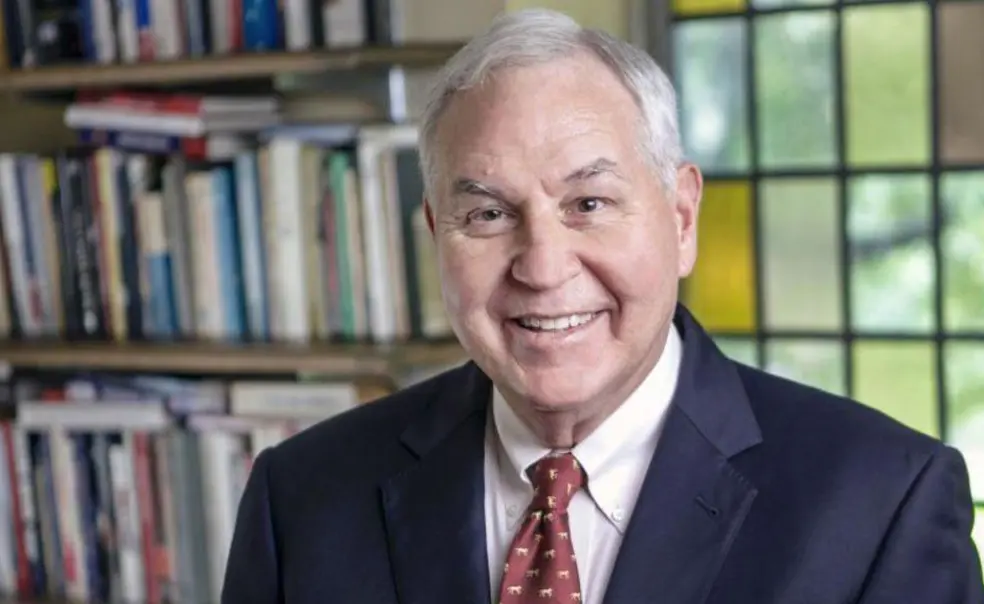

Collectively W. Taylor Reveley II, W. Taylor Reveley III ’65, and W. Taylor Reveley IV ’96 have led academic institutions for more than 30 years as presidents of Hampden-Sydney College, William & Mary, and Longwood University respectively. This powerhouse family is the subject of Michael Nelson’s new book How College Presidents Succeed, which dives into the complex world of higher education through the eyes of the Reveleys to reveal how they have navigated leadership and found success. PAW spoke with Nelson about the lessons readers can learn from this book, the keys to the Reveleys’ successes, and what challenges are ahead for current university presidents.
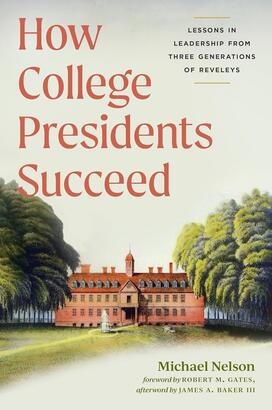
What inspired you to write this book?
I knew all three Taylors. The first was somebody who spent 17 years at Rhodes College, where I teach, and whose history I was aware of. TR III was president of William & Mary, of which I’m an alum, so I followed his work there. I didn’t know either of them personally. TR IV, or young Taylor, I worked with him at the Miller Center at the University of Virginia. So, when young Taylor approached me about what initially was going to be an oral history of his father’s career, I thought this would be a great opportunity to work with him again and to pick his brain and get the story of his father. At some point during this project I realized there’s a book here. You have three generations of Taylor Reveleys, each one has been a successful president of a major institution of higher education, and they’ve all led interesting lives in other ways. The more we got into this, the more I thought there was more value to this beyond that original purpose to be an oral history for the family, for William & Mary’s archive, and the Virginia Historical Society.
What was that value?
The book tells an interesting story of these three individuals and how they influenced each other, which doesn't happen very often in higher education, where this sort of cross-generational learning happens. I also thought there are lessons and success for the endangered species of college presidents. In our time, the average tenure of college presidents now has gone down to a little under six years, and here you have three presidents who served a decade or more. If success provides lessons for those who are trying to be successful themselves, then I think this book tells an interesting set of stories. Being a college president is in some ways a unique leadership challenge, but there are ways in which leadership of any organization that has multiple stakeholders is generalizable to other domains. So what we learn about leadership from their example, I think, would apply to just about any American leader.
How did you ultimately shape what started out as an oral history into a book?
Well, it was like Michelangelo finding the statue of David in the big block of marble. I mean I knew that the raw material — which involved roughly 100 hours of interviews, transcribed verbatim, and thousands of pages of personal papers — contained these nuggets on leadership and success but had to be found. Strategy wise, the first half of the book follows the individual paths that each one took to becoming president including the lives that shaped them and their formative years at Princeton. Part two focuses on some of the main areas of leadership challenges that presidents face and explores how all three presidents dealt with fostering campus morale, relating to the many constituencies that their university has, leading more generally, fundraising, and so on. So when it sort of locked into place, it seemed like a very solid way of telling their story.
What did you find most interesting while speaking to the Reveleys?
It was fascinating to hear them talk about fundraising and the extent to which getting major gifts is not a question of saying, “Hello, I’m Taylor Reveley, I would love for you to write a great big check,” but rather it’s a kind of courtship. It’s an ongoing relationship in which the president and the potential donor really have to not only find the meeting of the minds, but also come to know and trust each other, such that when the actual request is made, nobody is surprised. It’s sort of like, yes, we’ve been dating a long time, and I sort of expected it would culminate in marriage. They found when donors make a major gift, it is something that is a very meaningful part of their lives and a way to sort out their legacy.
Their observations on leadership [were also interesting], particularly TR III and TR IV who spent a good bit of time studying the American presidency, which is my field of specialization, and compare that leadership to what is needed in an academic setting. For example, no U.S. president would wait for everyone to agree to something to take action, but that seems to be a growing temptation among college presidents.
The last interesting theme that came through was not to assume a position of leadership unless you really want the job. It’s nice to be called Mr. President, but if you don’t really want to do all the hard and sometimes painfully difficult work involved, then don’t do it.
What do you think was the key to their success?
Their background and education broadly in history and the classics has prepared them to face challenges from all sorts of directions — from students, faculty, alumni, donors, trustees, the media, etc. They have a sense of how previous generations of leaders have dealt with similar challenges. The other key is that they have a deep moral sense. They are grounded in their faith, not in a dogmatic way, but just in the sense that if you don’t have some code of morality as your North Star, you’re not going to be able to withstand all the competing pressures that could be pushing you in any number of directions.
Related coverage
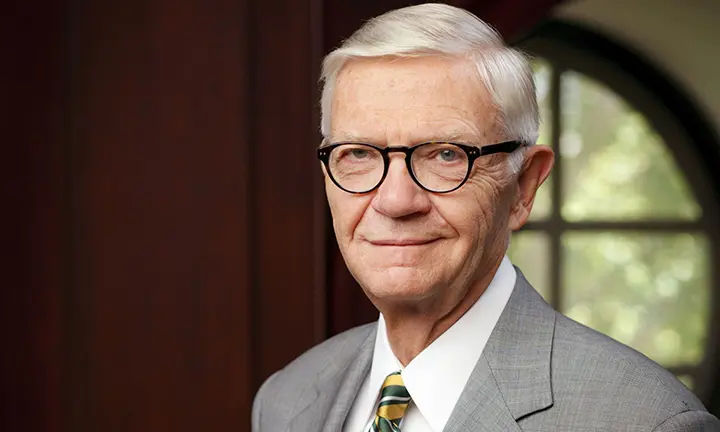
Q&A: Former William & Mary President on Challenges to Reopening Colleges
“There are some promising paths forward,” says W. Taylor Reveley III ’65
What unexpected challenges do college presidents face that are not always considered or talked about?
The prologue to the book is basically a series of extended vignettes of crises that each one of them faced: racial conflicts over the Brown v Board of Education decision, the drama surrounding assuming the role of the presidency when the predecessor was suddenly resigned due to controversy, and COVID. Taylor the fourth dealt with COVID and was very much concerned about the seriously negative consequences of keeping students and faculty away from campus for too long. I think we’ve seen how right he was. So each one of them faced a crisis that could have undone any president.
What major challenges do you think college presidents will have to face moving forward?
I think it’ll be interesting to see how contemporary college presidents deal with the issue of artificial intelligence. I know there’s a lot of turmoil now over how to respond to Trump administration policy, but I think, in hindsight, that will be a passing challenge, whereas I think navigating AI will be an ongoing issue for the unforeseeable future, never mind the foreseeable future. It’s a new technology that cannot be ignored, so how do you encourage students and faculty to use AI as a tool without it becoming a substitute for their own efforts? Another challenge is that the professionalization of college sports will have to get sorted out somehow. That whole business of money pouring into players in a massive and unprecedented way is going to be highly disruptive.
Interview conducted and condensed by C.S.
The Latest
See all


Related News
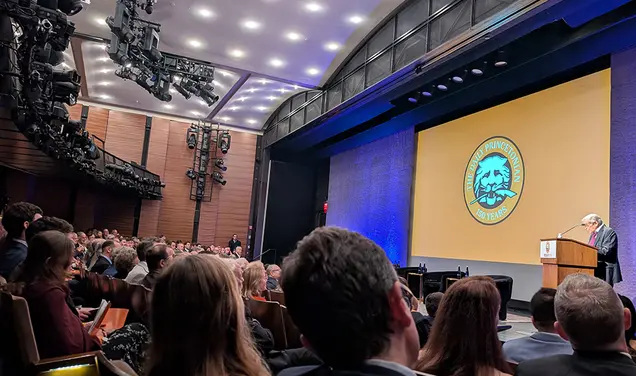
With Prominent Journalists and Hoagies, the ‘Prince’ Celebrates 150 Years
A gala at the New York Historical raised roughly $400,000 for the independent student newspaper

No responses yet