

Princeton Reverses Course on Fossil Fuel Divestment
Princo’s president also announced the University will aim for a net-zero endowment portfolio by 2046
Princeton has reversed its stance on fossil fuel investments, saying that its long-term goal of a net-zero endowment may include engaging with energy companies that “will necessarily play a significant role in the clean-energy transition we want for our nation and for the Earth.” Vincent Tuohey, president of the Princeton University Investment Co. (Princo), announced the change in a June 1 letter to the University community.
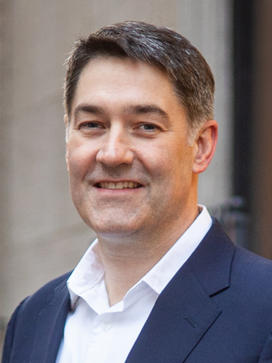
The letter also announced Princo’s goal to achieve a net-zero endowment portfolio by 2046, the year Princeton has targeted for reaching net zero in campus greenhouse gas emissions. A committee of experts will work to measure the endowment’s greenhouse gas impact, Tuohey wrote. The University did not say who would be part of the committee.
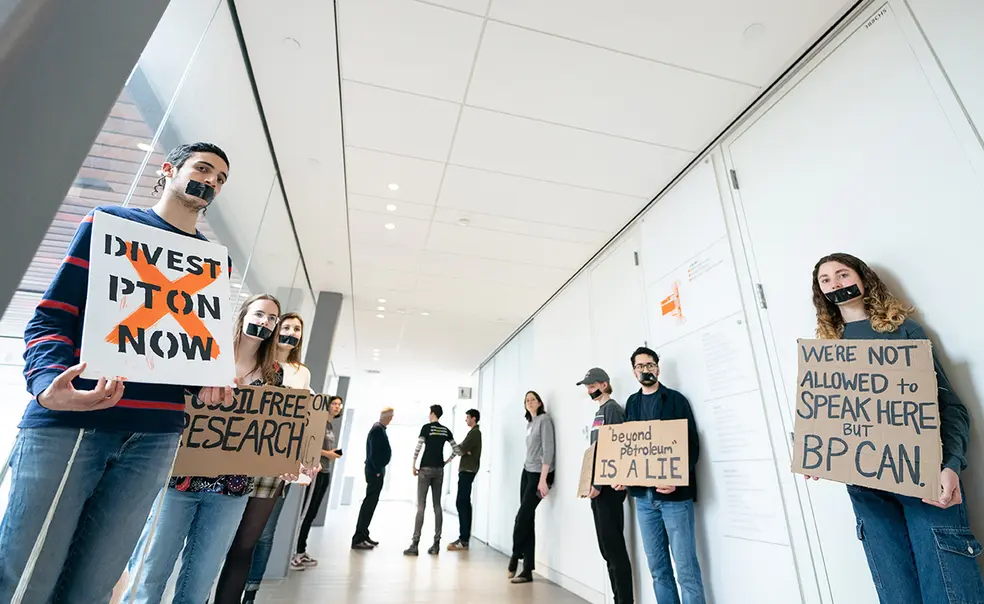
Divestment from fossil fuel stocks, a cause championed by students and alumni for nearly a decade, gained formal footing in May 2021 when the Board of Trustees began a process to dissociate from companies active in the thermal coal and tar sands segments of the fossil fuel industry. Dissociation, according to the University, includes divesting from direct and indirect holdings of a company as well as reevaluating purchases, partnerships, and employer recruitment activities.
In September 2022, Princeton’s trustees announced dissociation from 90 companies and asked Princo to take steps to make its portfolio net-zero over time. The same announcement said that Princo would “eliminate all holdings in publicly traded fossil fuel companies … [and] ensure that the endowment does not benefit from any future exposure to those companies.”
Andrew Golden, Princo’s president at the time, confirmed in a November 2023 interview with PAW that the divestment process was completed in the year following the dissociation announcement. “If the University community says that this is a moral obligation that we have, we should do it, even if it costs money,” Golden said. “In other words, our principles should not be for sale.”
Tuohey, who succeeded Golden in July 2024, said in his letter that the divestment from publicly traded fossil fuel companies was a voluntary choice by Princo.
“It’s not obvious that Princo’s initial approach has moved the endowment meaningfully closer to net-zero, nor is it obvious that major energy companies will be out of bounds for a net-zero endowment,” he wrote.
Tuohey said that the new approach to fossil fuel investments will provide “greater flexibility in managing an endowment whose resources are critical for financial aid and scientific research — including climate research — at a time when our sector is under financial strain.” President Christopher Eisgruber ’83, in his February 2026 State of the University letter, cited declining long-term rates of return in university endowments as a key factor in budget cuts and operational changes at Princeton.
“I believe our revised approach toward a net-zero endowment will enhance both the resources available to faculty and students and our potential to positively contribute to a more sustainable climate and environment,” Tuohey wrote.
Princo’s announcement was met with dismay and skepticism from alumni who were part of Divest Princeton and its campaign to end fossil fuel investments. “We still have not seen fossil fuel companies actually be the leaders on clean energy,” said Hannah Reynolds Martinez ’22. “And the people who are leaders on clean energy are researchers and students and professors who are doing the work on the ground at Princeton, but their interests are often overridden by corporate interests ... .”
Lynne Archibald ’87 added that “fossil fuel companies have knowingly deceived Americans and the world for decades in order to turn a profit for their shareholders.” The Princeton trustees initially included companies that have “engaged in climate disinformation campaigns” in their May 2021 dissociation call but ultimately did not identify any companies in that category.
Recent graduate Alex Norbrook ’26, a co-founder of the climate advocacy group Sunrise Princeton, said that Princeton’s announcement “may be a signal for other universities” that have committed to fossil fuel divestment. “In the same way that Princeton acts as a leader when it does do divestment and encourages other universities to follow suit, its walk back and reversal of that might potentially signal a similar trend in the reverse direction,” Norbrook said. “Hopefully other universities take this as a sign to double down on commitments to sustainability and climate action rather than walk those commitments back.”
J. David Hohmann ’88, a member of the Greening Reunions Alumni Working Group, added that the timeline for Princo’s net-zero target was disappointing. “I think that effort to make the endowment carbon neutral is great, but I don’t want us to kick the can down the road with another 20-year lag time before we approach that goal,” he said.
John Tyler ’76, formerly a managing director of foundations and endowments at Fiduciary Trust International, viewed the announcement in a more positive light. “Balancing worthy ideals with economic reality can be difficult, but circumstances are different today than when the divestment policy was enacted,” Tyler said in an email to PAW. “Personally, I believe the University is being responsible to prioritize returns … when one considers the many principled ways in which Princeton leads in our global society, including its continued aversion to coal and tar sand investing.”
Brad Swanson ’76, a sustainable fund manager and author of the book Profit vs. Progress: Why Socially Responsible Investment Doesn’t Work and How to Fix It, critiqued what he sees as a mismatch of investment strategy and institutional values. “If Princeton wants to be in the service of humanity, it needs to back away from fossil fuel companies whose emissions are the largest contributor to global warming,” Swanson wrote in an email to PAW. “An endowment as large as Princeton’s can achieve market-level, or better, results even without oil company stocks by astute diversification and nimble allocation. Selling out climate protection to try to achieve a few extra basis points of return is not what Princeton should be about.”
The Princo announcement is not the first change of direction Princeton has made since announcing its September 2022 dissociation vote. Dissociation originally included a ban on accepting any research funding from a list of companies that has grown from 90 to more than 1,700, as of January 2026. But in October 2024, the University opened the possibility of accepting support for “research projects aimed toward the amelioration of the environmental harms of carbon emissions,” among other guidelines.
Historically, Princeton has set a high bar for dissociating or divesting endowment funds. The Resources Committee of the Council of the Princeton University Community sends recommendations to the trustees after reviewing proposals using three primary criteria: considerable, thoughtful, and sustained interest on campus involving the actions of a company or companies; direct and serious contradiction with a University value; and consensus on how the University should respond. Successful divestment campaigns of the past were related to apartheid in South Africa and genocide in Darfur.
When the University announced Princo’s divestment from publicly traded fossil fuel companies in 2022, climate advocates widely lauded the move. But some alumni questioned the wisdom of abandoning investments in the industry while continuing to at least partially rely on fossil fuels to support campus utilities and other everyday activities such as travel.
This story has been updated to include reactions from alumni.
The Latest
See all


Related News

With Prominent Journalists and Hoagies, the ‘Prince’ Celebrates 150 Years
A gala at the New York Historical raised roughly $400,000 for the independent student newspaper


29 Responses
Cory Alperstein ’78
4 Days AgoWhen Does Princeton Hold Itself Accountable?
2046? We all know, by then, planetary destruction is a done deal.
With this decision, Princeton has a newly revised interpretation of “dissociation”: separate its investments in fossil fuels from the values espoused by the University and the actual harm they will do to people and planet. The claim that its intellectual mission to innovate to mitigate climate change can somehow proceed while in the real world its investment in fossil fuel companies continues is absurd.
As an alumna I worked with others through Divest Princeton step by baby step to move a reluctant administration toward fossil fuel divestment. We all sighed with some relief when Princeton announced it would align its investments with climate science and “dissociate” from fossil fuel companies. Now, instead, we hear Princo president Vincent Tuohey spewing word salad to justify their abandonment of their modest commitments in order to continue to invest in the destruction of our planet.
Isn’t Princeton doing a great disservice to its students, expecting them to reconcile a disingenuous rationale of short-term financial expediency with what they will face as citizens of a seriously endangered world?
And now a new example of dissociative thinking has surfaced. In 2024, Princeton quietly sold 143 acres of its Princeton Nurseries site for nearly $22 million to WRV Nurseries South Brunswick Owner, LLC, a company that is now building a huge data center there. Some serious rumblings from the local community recently led the New Jersey Department of Environmental Protection to host a public forum on an air pollution permit that, if approved, would allow among other consequences, pollution from 20 large diesel-fired emergency generators at the site. And what about the water and electricity needs of this new facility?
And Princeton University has nothing to say.
Does this new definition of dissociation from consequences mean Princeton bears no responsibility for the new use of this property given that they sold it to the developer? If Princeton can sidestep the controversy of data center development right in its own backyard, and, dare I suggest, the issue of the dangers of AI as well, simply by selling the property to a private entity, under what circumstance can they be held accountable?
Will Durbin *09
3 Weeks AgoA Sad Moment as Temperatures Reach New Highs
What a shameful and appalling move. Ironically, Princo’s June 1 letter came on the first day of the hottest June ever recorded (according to the World Meteorological Association) and the start of what NOAA called the hottest meteorological summer (June-August) in the 132-year record for the contiguous U.S. (NOAA). A sad moment for Princeton and more importantly, the world.
Daniel Polk *14
3 Weeks AgoInvest in Our Future, not Fossil Fuels
I’m disappointed in Princeton’s continuing to invest in fossil fuels. We as alumni, students, and other Princeton community members need to organize and pressure the University to do what is right. Let’s invest in our future, not in our collective doom. (Yes, I do think climate change is that bad — have you read about global tipping points, many of which are likely to be crossed between 1.5 and 2 degrees C? Yikes.)
Mark A. Glassner ’77
1 Month AgoInvest in Renewable Energy, Not Fossil Fuels
Why is Princeton rolling back its commitment to divest from fossil fuel investments? Has it turned its back on not just future Princeton generations but future generations for the whole planet? Have Princeton and Princo not realized the future of world energy is solar power (and I include both wind and wave power which are sun generated as well)?
This past year renewable energy passed coal as a leading form of energy used globally and 17% of U.S. energy is now solar generated. I challenge Princeton to reverse this ill-advised idea and get back on track to be a world leader in the fight against the fossil fuel industry and for a better future. And I also challenge all Princetonians to not just look at their own investments but also look at their home/auto insurance, credit card companies and banks, most of which use your money to invest heavily in the oil industry and instead find companies and banks that do not. A good place to start is looking at Third Act (thirdact.org). Incidentally, AAA nationally has home/auto insurance and credit cards that are free of fossil fuel investments.
Charlotte Williams ’17
1 Month AgoPortfolio Should Match Principles
This reversal is completely contradictory to the University’s purported goals. Justifying this as a way to earn research funding for climate change and environmental science research is such a flimsy and insulting argument — these companies are not incentivized to actually provide the sustained infusion of resources that if successful would be misaligned with their aims. Moreover, companies that once had “corporate responsibility” portfolios no longer find these in vogue, and have cut these under current political pressures. These too are dwindling avenues.
I’m disappointed and also frustrated by the fact that so much effort has been spent to ensure that Princeton could be an example of this movement toward aligning its principles with its portfolio. Now it’s an example of buckling when it actually might mean something to be a leader of change.
Larry Rosenblatt ’75
1 Month AgoLiving Responsibly While Maximizing Returns
Princeton’s endowment management has one purpose, to maximize return to the University, representing all alumni that created the endowment sums, commensurate with appropriate risk management. You would expect no different from someone managing your portfolio.
Divestment is nothing more than a political statement and makes no difference to the industries because Princeton’s investment is minute in the scheme of things.
Hydrocarbons are intertwined in almost all of economic activity (estimated at 96% in a CNBC on-air report). Required for all mining (including materials for EVs, solar panels, cellphones, computers, and so much more), most shipping and trucking (of all goods), most power, heating, industrial, etc. World demand for hydrocarbons is still growing, so don’t close your eyes to our world. You literally can’t live, clothe, eat, or travel without hydrocarbons. So do it better and as responsibly as possible.
And focus environment concern and dollars to the far more important near-term issues of water quality and quantity.
Jamie O’Leary ’19
1 Month AgoDecision Not Aligned With Students and Alumni
This is an incredibly disappointing decision that is not at all aligned with what students and alumni want. Please reconsider!
Adam Cellon ’17
1 Month AgoDivestment Activism Undone by Princo
Often, it seems, those who fight to maintain the status quo at the University recognize and exploit the challenges of maintaining momentum towards progress. Student activists will eventually graduate and move on; how much do alumni really pay attention or care, anyway? It is a shame that this hard-fought and well-earned step towards a University actually in the service of humanity has been so easily undone by Princo.
I echo the calls of my fellow alumni for bravery, principle, and leadership. Princeton has the material and cultural status to make real, sustainable change here. As my classmate Graham Turk ’17 has argued, our responsibility as alumni is to withhold donations until redivestment is a reality.
Claire Wayner ’22
1 Month AgoPrinco and Princeton Can Do Better
Cut the free food/swag and study breaks to save money if Princeton needs budget cuts, but choosing to reinvest in fossil fuels is not a sustainable long-term decision for your students or their descendants. Do better, Princo, by researching other more sustainable high-yield investments. And no student needs 10 free hoodies and 20 study breaks a year. Find free ways to have fun and build community.
Lindsey Lawson ’18
1 Month AgoDisappointed by Fossil Fuels Reversal
This is beyond disappointing. From leading the way to getting back at the end of the line with regards to fossil fuel divestment and dissociation.
Mauro Orsini Windholz *25
1 Month AgoShift Support to Renewable Energy Transition
It is honestly even hard to understand and to know how to react to this walk back on fossil fuel divestment by Princeton. The northern summer in 2026 has shattered temperature records, claimed dozens of thousands of lives and caused severe damage to the economy, to crops and to water and energy supplies, already making life harder for everyone. I am currently based in Germany, and even here I have experienced shocking levels of heat that I have never experienced before — and I originally come from Brazil. How can Princeton, a world-class leader in science and education, go back to partnering with the companies who have caused this state of affairs, right when people the world over can feel quite literally the effects of this in their abilities to survive? If Princeton wants to lead on climate progress and not be a source of shame to its community, it must do what science has known for several decades now to be what really works: support immediate transition away from fossil fuels towards renewable energy. This cannot be done by investing in fossil fuel companies nor taking their research money. We know what to do to fix this, and Princeton is doing the opposite. Shameful.
Ella Bwonya ’26
1 Month AgoTaking Action on Climate Now
As a recent Princeton graduate who cares deeply about the environment, I hope we remain ambitious about reducing our investment in fossil fuels. I understand the argument for engaging with energy companies as part of the clean-energy transition, but engagement does not necessarily require investment. Princeton has already shown that divestment is possible, and I hope we continue to use our resources and influence to push for meaningful climate action now, rather than allowing a 2046 target to lessen the urgency of what we can do today.
Gilles Carter ’80
1 Month AgoAppalling, Unnecessary Decision
This is an appalling and short-sighted decision and simultaneously is both craven and unnecessary.
John Merrill ’77
1 Month AgoShort-Sighted Move Shows Lack of Leadership
This reversal blatantly betrays Princeton’s highest values — to nurture humanity and nation — and is the antithesis of the Princeton community’s seemingly genuine commitment to mitigate climate change. Princo’s reasoning: to maybe, possibly, conceivably, potentially add a few annual basis points to endowment earnings? This short-sighted blunder on the international stage damages the University’s stature and sets a low bar for institutional leadership on climate.
Andrew Diaz ’28
1 Month AgoDisappointed by a Distant Promise
In the heart of campus in Frist Campus Center, on the primary staircase leading into the lower-level dining area/food gallery, the “steps” of the Sustainability Action Plan are outlined, and at the top, the step reads, “2046 net zero campus carbon emissions achieved.” It’s disheartening to hear that Princeton has reversed course on fossil fuel divestment and turned it into a goal of a net-zero endowment portfolio by 2046. The highly-visible campus commitment is celebrated, yet behind the scenes investment policy is replaced with distant and somewhat ambiguous promise regarding a committee of experts set to measure the endowment’s greenhouse gas impact.
Ryan Warsing *21
1 Month AgoPrinceton Could Engage Without Investing
Fossil fuel investments gave us little advantage over peers who did divest, so where’s the logic in reversing course and publicly embarrassing ourselves?
We impose an artificial standard by saying engagement with these companies needs to come with investment. We can recognize the need to work with bad actors while not financially implicating ourselves in their here-and-now destruction of our environment.
And Princo’s last divestment shows how quickly it can be done. There is no need to wait until 2046 — another contrivance, significant only as Princeton’s 300th birthday. Why not act now, with the knowledge we have?
Jessica Lambert ’22
1 Month AgoDisservice to Humanity
This news is incredibly disappointing to hear. As an academic institution, a large part of Princeton’s role is to imagine and actively create a brighter future for all people. Divestment is an essential part of doing so. All of us are already seeing and experiencing firsthand the impacts of climate change, from increasingly violent winter storms to the sweltering heat waves many of us have felt this summer. Without radical action to curb the effects of climate change, we have no meaningful future to dream about and build toward.
Instead of being a leader, Princeton is rolling back on its divestment promises and is reinvesting in the destruction of people and the planet. This goes directly against the interests of Princeton’s motto “in the service of humanity.” These moments make me embarrassed to be an alumna of an institution that would sell out for the greed of growing its already absurdly large endowment. Princeton needs to do better.
Graham Turk ’17
1 Month AgoDecarbonization Is a Core University Value
This spits in the face of a nearly decade-long process that led to dissociation and divestment. Tuohey is recycling the same lazy arguments Andrew Golden made for years. Princo uses external fund managers who rarely exert any pressure over boards. So I don’t buy the argument that it’s better for Princeton to be a shareholder than a less ethical investor. At this point, it’s clear that decarbonization is a core University value (e.g., net zero campus emissions by 2046, the Andlinger Center for Energy and the Environment, etc.). Remaining invested in companies who have stopped even pretending to act on climate feels like a clear contradiction of that core value. So unless it would be impossible to earn comparable returns without having fossil fuels in the portfolio (unlikely given the sector’s anemic performance in the last 20 years), I fail to understand the logic in what Princo is doing. This is likely just another case of their managers wanting to flex their power over students and alumni simply because they can. Unfortunately, I think the only leverage we have is withholding donations until they make clear plans to divest. Ultimately, Princo answers to the trustees.
Thomas Cary Kinder ’77
2 Months AgoClimate — and Princeton’s Reputation — Will Suffer
Princeton is doing a disservice to the nation and to humanity by reversing direction on fossil fuel divestments. Setting a goal of 2046 for net zero feels not only shameful but dishonest. Claiming Princeton cannot afford to give up fossil fuel investments is equally dishonest — but let’s say that we did have a reduction in funds available for programs. The lesson our nation and humanity must learn, and the great service of leadership Princeton could do for the nation and humanity, is to live within our means, to live within the amount we can extract without damaging the systems on which humanity and all life on Earth depend to survive. It is absurd as well as suicidal to say that in order to thrive Princeton needs to support the destruction of all that climate change and the disruption of the biosphere will destroy. There is no justifiable reason for abandoning divestment. If you do not care about the climate or the losses and suffering its disruption is already causing, maybe you care about Princeton’s reputation and position as a leader, which is reason enough to return to the course we seemed to be following. Divestment is the best policy by any measure, as other letters here demonstrate. I hope we can return immediately to that wise path.
David Bonowitz ’85
2 Months AgoFind the Courage to Divest (Again)
I’m dismayed to read that Princo and the University have reversed their position on fossil fuel divestment (July/August issue). Ironically, the article was sandwiched between a piece about two distinguished alumni (Craig Robinson ’83 and Wendy Kopp ’89) advising new grads to follow — and even to sacrifice for — what they know is right, and President Eisgruber’s call for courage even if it makes one unpopular. Which makes me wonder: Does the Princo board read PAW?
There was a time when investing in energy companies could reasonably consider “financial strain,” “rates of return,” “balancing worthy ideals with economic reality,” and other can-kicking. Not anymore. As the article notes, the 2021 decision to divest was a moral one. To reverse that with a bottom-line financial calculation entirely misses the point.
In 2026, climate change caused by burning fossil fuels poses primarily moral and ethical issues. To miss those for the sake of ROI is akin to capitalizing on the slave trade, or Nazi industry, or the current dismantling of American democracy.
Princo, follow President Eisgruber’s advice: Show the courage to change your mind (again) and get back on the right path.
A postscript: Of course I read the PAW article in light of ProPublica’s report that, a generation ago, persuasive climate change research at Princeton might have been influenced by fossil fuel donors. I look forward to the professors’ reply, which the Prince says they’re preparing. I do not doubt their personal integrity, but we know how “influence” works and so did BP. The idea that Princo is about to fall for that again is baffling.
Kerry Brown ’74
2 Months AgoFocus on Solvable Environmental Problems
Perhaps Princo looked at the gains of fossil fuel companies over the past five years (extremely good) and also decided to look at its charter. One of the key goals of Princo must mandate the achievement of high returns in order to fund the University’s great needs and generous scholarships.
Germany and much of Europe have suffered greatly from fossil fuel and nuclear power divestment. Let us not repeat their experience.
The divestment movement should spend its time and resources on solvable problems such as landfills, plastics, clean water, electrical grid investment, recycling of windmill blades, and cracked solar panels.
Gregory Faris ’80
3 Months AgoStop Seeking Gains From Climate Change
I was appalled to read that Princeton is rolling back its commitment to divest from fossil fuel companies. It is well established that the rampant burning of fossil fuels is radically changing our planet and will cause tremendous human suffering if it is not stopped. Sadly, gaining from human misery is not new to our alma mater. Princeton also received considerable financial benefit from slavery. Let’s choose a better path.
Tom Leyden ’77
3 Months AgoBacktracking on Fossil Fuel Divestment
Regarding “Princeton Reverses Course on Fossil Fuel Divestment” in the July/August issue: Seriously, Princeton and Princo? Is Princeton committed to being “in the service of humanity” or not? According to the International Energy Agency (IEA), clean energy investments now outpace fossil fuel investments, drawing roughly $2 trillion annually compared to $1 trillion for fossil fuels. Over time, renewable power portfolios are generating higher total financial returns and lower price swings than fossil fuel portfolios in many global markets. In their World Energy Outlook, the IEA named solar power the cheapest electricity in human history. So why is Princeton backtracking on its leadership on divesting in fossil fuel? There is no excuse or reasonable rationale for it. Step up and be the leader you claim to be.
Thomas Cary Kinder ’77
2 Months AgoConfronting Fossil Fuel Dependence
Thank you so much, Tom, for pointing out that divestment is truly the most responsible investment path from a financial standpoint as well as an ethical one. I would add that our investment strategy should take into account the kind of economic and essential supply collapse that intelligence agencies and the scientific community foresee within the next decade as a result of climate change. Fossil fuel corporations not only are speeding that collapse, but also may be among its greatest casualties when governments are finally forced to confront the need to end fossil fuel dependence. This is not a forecast off in 2046, but in the 2030s. We need to divest now.
Paul Wapner *91
3 Months AgoUndoing a Wise and Courageous Decision
Do what we say, not what we do.
How ironic that the PAW article “Princeton Reverses Course on Fossil Fuel Divestment” appears directly across the page from “Speakers Urge Students to Pursue Purpose Over Prestige” (July/August issue). It seems that Princeton is comfortable talking about purpose more than acting on it.
Princo President Vince Tuohey’s June 1 letter announcing the reversal suggests that “Princeton in the nation’s service and the service of humanity” is true as long it doesn’t slow endowment growth — or be perceived as affecting the endowment since, as Brad Swanson ’76 points out, “An endowment as large as Princeton’s can achieve market-level, or better, results even without oil company stocks … .”
At Baccalaureate, Craig Robinson ’83 warned graduates that pursuing prestige and profit as a career can distract from one’s deepest commitments. Talking about careers misaligned with one’s values, Robinson said, “The paycheck may look good. The title may impress people at Reunions. But if you wake up every day disconnected from your purpose, eventually success starts to feel surprisingly empty.”
In the early 2020s, Princeton thought carefully about climate change and wisely and courageously decided to use its intellectual and financial leadership to steer the world toward a sustainable future. It did so in the service of the nation and humanity. Climate change has not gone away; it upon us with terrifying intensity. With Tuohey’s announcement, suddenly Princeton’s deepest commitments feel surprisingly empty.
Editor’s note: The writer is a professor emeritus of global environmental politics at American University.
Kevin Dutt ’93
3 Months AgoWe Can Afford to Be Better
The oil and gas industries have been selling an image, and the University just bought it, or has been profiting off of it for decades: https://www.propublica.org/article/wedges-climate-research-bp-fossil-fu…
This is the equivalent to investing in tobacco companies, and declaring they will be part of the solution to eliminating smoking. In 2023 Golden said, “In other words, our principles should not be for sale.” It turns out our principles are for sale. Come on Princeton, we can afford to do better and be better.
Frank Strasburger ’67
4 Months AgoPrinco Head Should Not Speak for Princeton
Alas, has Project 2025 now taken over Princeton, too? That was all I could imagine as I read Vincent Tuohey’s betrayal not just of Princeton’s past promises but also of the service to humanity for which the University claims to stand. Since when has the president of Princo been empowered to speak for the University, let alone you and me? His blatant disregard for the peril our planet faces along with his patently false representation that profitability requires us to invest in Big Oil should disqualify him for the position he holds. Do we dare to hope that his views do not reflect those of President Eisgruber and the trustees?
Marty Krasney ’67
4 Months AgoWrong Way To Address Financial Challenges
I share the dismay of my classmate John Huyler and others at this retreat from leadership in climate activism demonstrated by Princo’s new leader. While it’s cute to target 2046 to celebrate the University’s tercentenary the planet will little note nor long remember when Princeton was founded, and meanwhile the trustees and their financial advisers continue to fiddle while the planet burns. While I acknowledge the challenges of resourcing the University, especially in the phase of hostility from the current administration, there are better and wiser ways to do this. Shame on those who chose this route.
John Huyler ’67
4 Months AgoPrinceton Forfeits Its Leadership on Climate
Betrayal is what comes to mind in reading about Princeton’s decision to abandon its painstakingly developed commitment to dissociation/divestment from the fossil fuel industry. Princo’s former president Andrew Golden hit the nail on the head with “… our principles should not be for sale.” By contrast his successor Vincent Tuohey now argues for “greater flexibility.” It is distressing to see Princeton choose flexibility over principle. Does anyone reading this think that global climate conditions are improving? Does this feel like service to the nation and humanity? With this decision Princeton has forfeited the leadership it had begun to demonstrate and betrayed the entire Princeton community.