

Jeremy Chen ’11 Is Cleaning up a Community While Offering Hope to Kids
Chen started Klean Kensington in his corner of Philadelphia by paying teenagers to pick up trash

Before Jeremy Chen ’11 started an organization for teenagers to beautify the neighborhood of Kensington in Philadelphia, he learned early what it felt like to be an outsider. He was raised in a predominantly white suburb as part of a small Chinese American community, and was deeply involved with his church, which, like his parents, emphasized service. The church often took mission trips to places such as rural China and the Northern Cheyenne Indian reservation in Montana, which Chen says helped instill in him “intercultural sensitivity.”
Like his father, Steve ’80, Chen attended Princeton and studied engineering and architecture. Chen found community in a predominantly Asian American Christian fellowship, but instead of settling into the center of that group, he gravitated toward the “edges.”
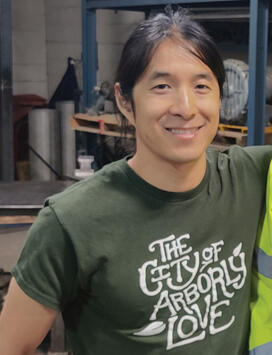
“Growing up in Lancaster, Pennsylvania, you’re already a minority,” he says. “It wasn’t ideal, but I think it made me able to identify with people who didn’t quite fit. Even within the Asian identity, there are people who don’t feel like they connect.”
By the time Chen was graduating, he observed a gap between Princeton’s stated value of service and the careers his peers chose to pursue, mostly in finance. So, he went in a different direction. After connecting with Matthew Lin ’02, he moved to Kensington in 2013. He’s lived there since and has witnessed deep systemic poverty and a lack of opportunities, especially for young people.
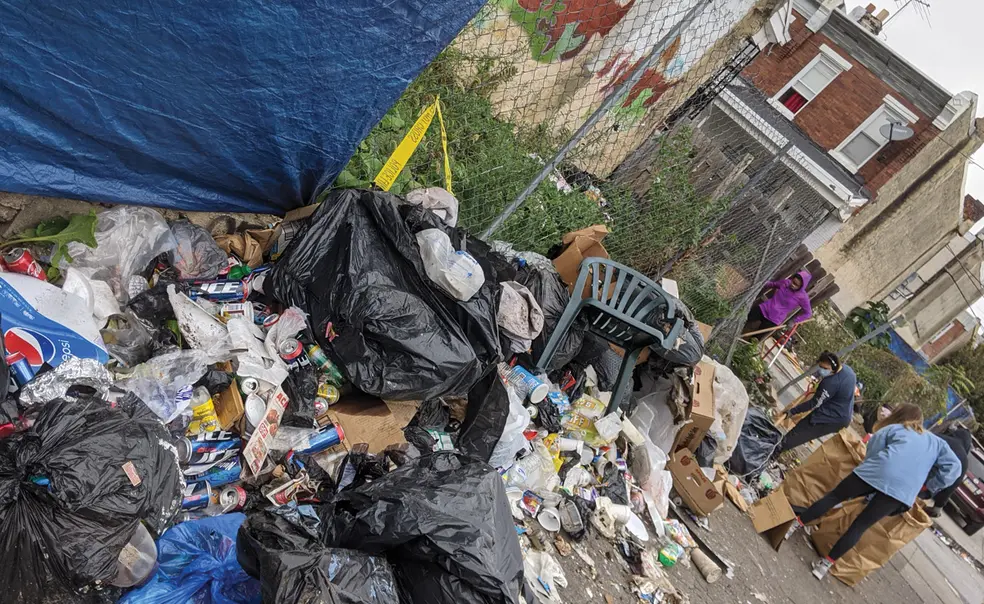
In the summer of 2020, following the murder of George Floyd, the city diverted sanitation services to the areas downtown in response to protests. Garbage piled up for weeks. Chen decided to gather a few neighbors and started picking up trash every Sunday.
The simple act created unexpected connections and allies for Chen.
“Part of it is that I never really bothered to try to interact deeply with the drug dealers on the corner,” he says, adding he spent years looking past them. As he got to know these community members, they encouraged him. “You gotta keep this going … so the kids don’t have to do what I’m doing,” one said to him.
That’s how the idea for Klean Kensington came to him. Chen secured an initial $10,000 grant from the Kensington Community Resilience Fund and began paying teenagers to clean up, creating a real-world alternative to gang life.
The organization’s starting pay is $18 per hour (Pennsylvania’s minimum wage is $7.25). Chen believes the work of cleaning hazardous waste and transforming abandoned lots is hard and deserves fair pay. “This neighborhood has had so much suffering. … Why should they not be paid well? You should make money so you can live.”
Klean Kensington has built a new social network where teens and their families become part of a “movement” that takes care of their neighborhood.
The biggest misconception, Chen says, is that young people in Kensington will inevitably become drug dealers. Instead, he sees that “these young people want to work. They want to hustle.” When given a real opportunity, they thrive.
Klean Kensington is also creating jobs for young adults who have graduated from the program. These former participants now serve as managers, teaching younger teens urban agriculture, carpentry, and project management.
Chen has no plans to go national or even citywide. His sole focus is to raise up leaders from within the community who understand the struggle firsthand.
“A 20-year-old who was once involved in gang activity started by being paid $20 to move wood. He is now a leader, about to graduate from the leadership program, and has brought his younger brother into the organization,” Chen says. “He’s an example we hope to replicate.”
Nominate Other Inspiring Alumni. This story is part of a series highlighting the stories of alumni doing inspiring work. To nominate others, please email your ideas to paw@princeton.edu.
The Latest
See all


Related News

McCarter Theatre’s First South Asian Musical Took Me Back to Forbes Basement
A Beat of Our Own is about a college dance team not unlike Princeton South Asian Theatrics


2 Responses
Faith T. Konigbagbe ’15
3 Months AgoKudos for Your Work
Love and regard to you, Jeremy. And do not work yourself too hard.
Lisa Firestone ’89
2 Months AgoKudos for the Work You Do
Excellent work, Jeremy!
I hope you are able to build a national model for the incredible work you do!