

Princeton Student Runs 118 Miles to Support Suicide Prevention
Sam Smart ’27 became the first woman to complete the Quad Quad Dipsea run
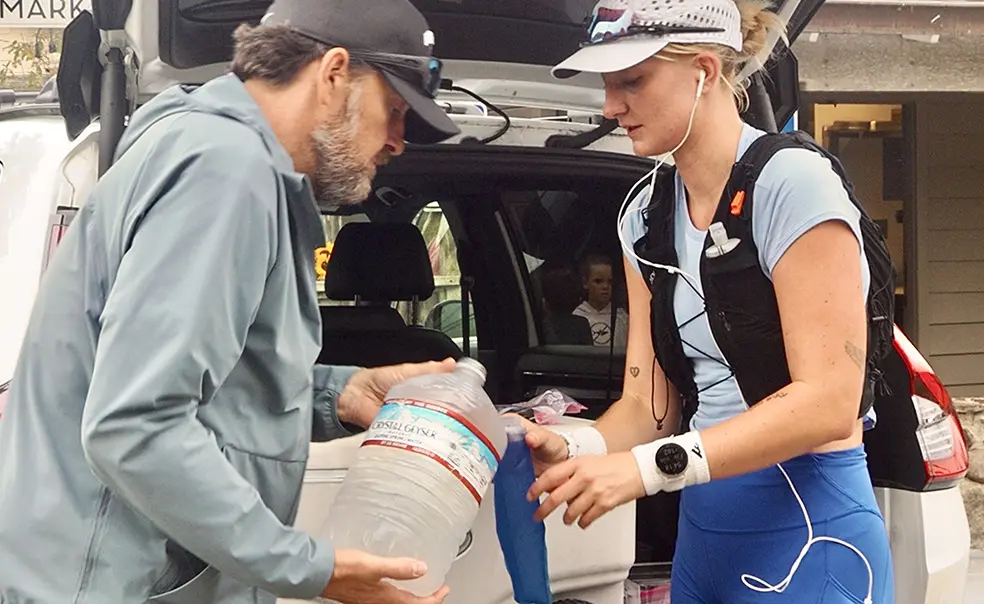

Sam Smart ’27 spent three years rowing on Princeton’s varsity open crew, but after a series of rib and back injuries and a lat muscle tear last spring, she said her college rowing career is likely over. That hasn’t stopped her from taking on an extraordinary athletic challenge.
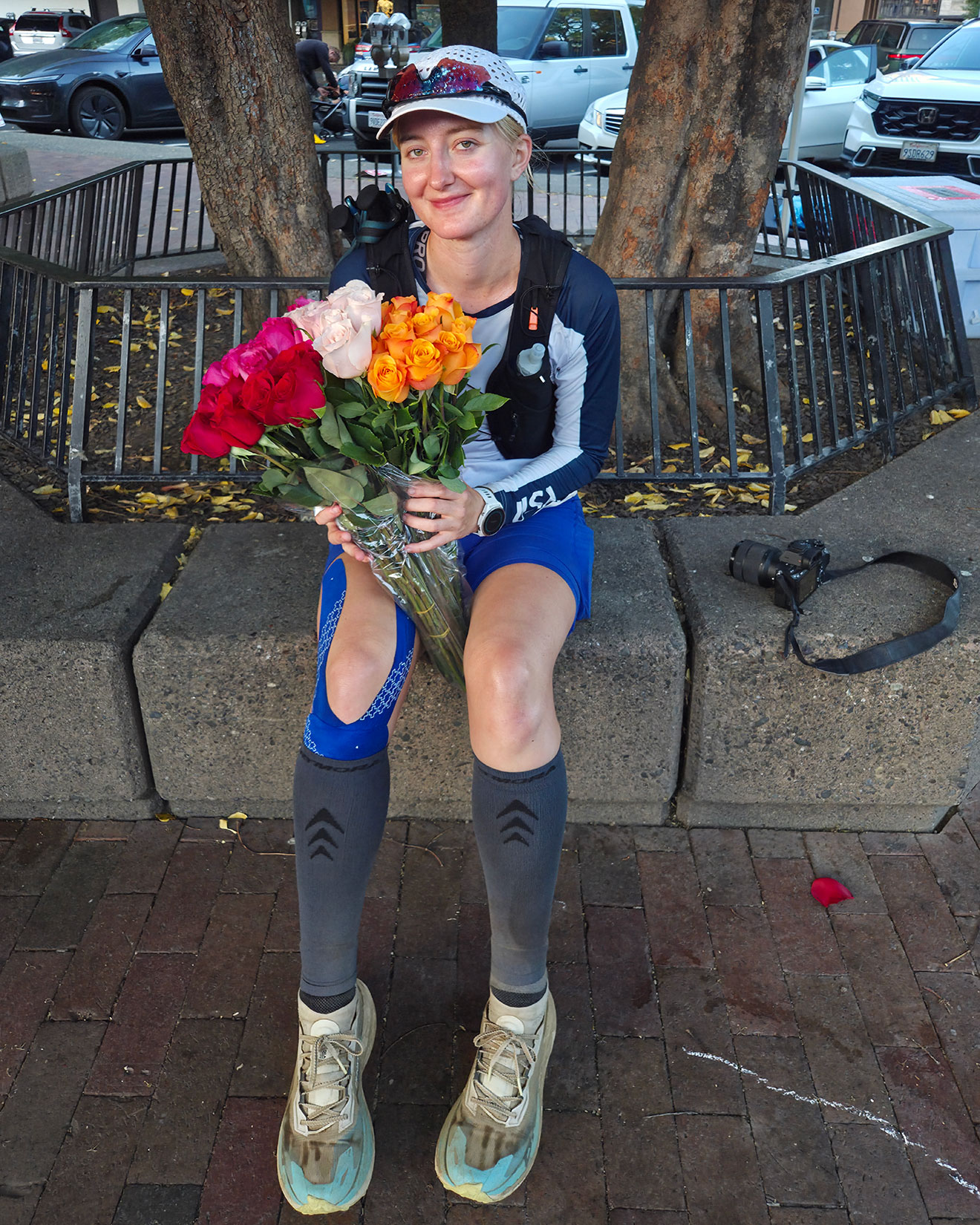
In early August, Smart became the first woman to complete the grueling Quad Quad Dipsea run, logging more than 100 miles over the course of three days while raising money for the American Foundation for Suicide Prevention. To date, she’s collected more than $7,400.
Smart, a sociology major, said the cause and the activity are linked: She credits the 30-mile runs she began in high school with restoring her mental health at a difficult time. “I’ve always appreciated ultrarunners, and I think it’s a beautiful sport,” she said. “And I knew if my lat healed enough, I knew that I wanted to do an ultra this summer.”
She made the call in July, targeting the first weekend of August for her run, and settled on the Dipsea Trail in her hometown of Mill Valley, California, north of San Francisco.
Each June, more than 1,000 runners compete in the iconic 7.4-mile Dipsea Race, America’s oldest trail race, and in November, a hearty few hundred run the Quad Dipsea, traversing the mountainous seaside trail four times for 28 knee-crunching miles (the course lengths for Dipsea races vary slightly because of different start and finish points).
The Quad Quad is four times as long, covering the trail 16 times (eight out-and-backs). It’s a personal pursuit, not a sanctioned race, and requires significant planning for nutrition, hydration, and injury support. Only two previous finishers have been documented by the news media: Don Lundell was the first to run the Quad Quad in 2003, according to Runner’s World; Bradley Fenner duplicated the feat in 2020, when the annual Quad Dipsea was canceled due to the pandemic.
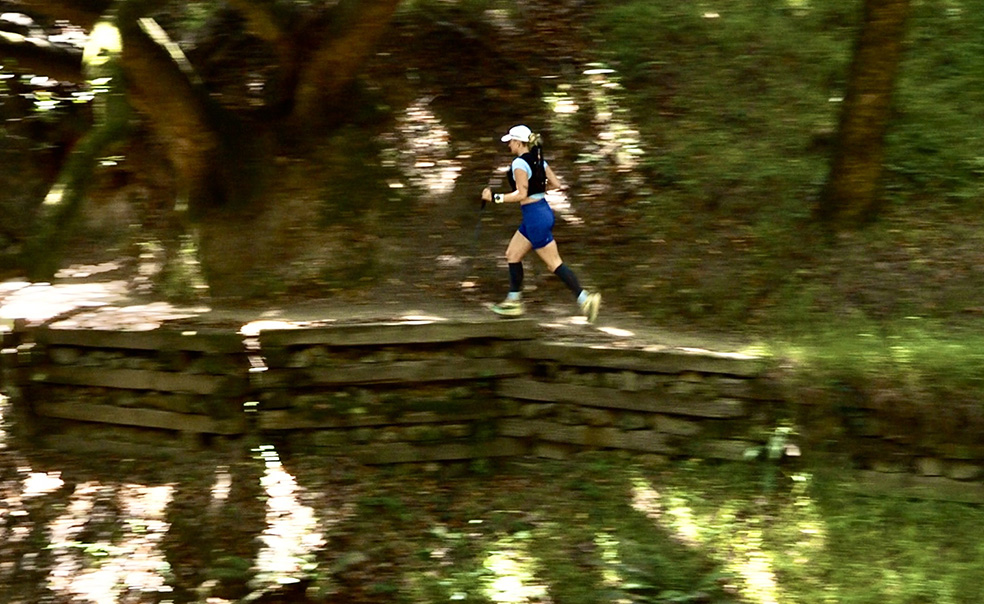
The total elevation gain for a Quad Quad attempt is estimated to be 38,000 feet (more than the height of Mount Everest), and much of that comes in steep staircases or sharply pitched hillsides. Downhills can be even more treacherous as miles add up and joints get sore.
“It is relentless — it’s pretty much all up and down,” said Emily Kamen ’17, a local high school teacher and ultrarunner who volunteered to be one of Smart’s pacers. When Kamen met up with Smart near the halfway mark, she was impressed by how well she was holding up and how bright-eyed she seemed, even though it was the middle of the night.
The upbeat expression may have been masking some doubts: Smart said around the eighth mile, she started having pain in the arch of her left foot. She balled up gauze and stuffed it into her shoe for support, which helped for the next 30 or 40 miles, until the pain spread to her left knee and hip joints. Running gave way to power-hiking, and around mile 80, “everything was just unraveling,” Smart said. “I did not think I would finish.” But after a tearful break with her mom, who was managing her rest station, she said, “I just realized, ‘No, that’s not gonna be my reality. Like, I’m gonna finish it. I’ll be fine. I kind of have nothing to lose.’”
Smart said she drew strength from thinking about her friend and rowing teammate Kerry Grundlingh ’27, who died in July 2025 after a cycling accident in which she was struck by a car in her hometown of Johannesburg, South Africa. She also thought of the cause she was raising money for — suicide prevention — and its particular importance among young people dealing with a range of stressors, from personal doubts to academic pressure.
Her later miles were neither fast nor pretty, Smart said, but she kept going: “There was one moment where I, like, butt-slid down 100 stairs because I couldn’t move my hips.” She ran a total of 118 miles, according to her GPS watch, in 61 hours, with 39 hours spent in motion and the remainder in rest and recovery stops — well beyond her original target, but still the fastest known time (FKT) for a woman.
“I would love for more women to try the Quad Quad,” she said. “I mean, the time that I set is pretty slow, so I’m giving people an easy FKT break.”
The Latest
See all


Related News

McCarter Theatre’s First South Asian Musical Took Me Back to Forbes Basement
A Beat of Our Own is about a college dance team not unlike Princeton South Asian Theatrics


No responses yet