

Summer Slavic Program Explores Language and Geopolitics
Princeton students are learning Russian in Estonia, a country with tensions between two ethnic communities

Princeton’s Russian summer program in Tallinn, Estonia, immerses students in more than language. They learn to navigate complex regional politics.
Russia’s full-scale invasion of Ukraine in 2022 forced the Slavic department to quickly find a new host city for Princeton in St. Petersburg, its flagship summer language program since 2005. The Tallinn program launched in 2023 with four participants.
“Looking at the evolution of the program and its whereabouts, it reflects all the turmoil — historical turmoil, geopolitical drama — of Russia and us, the scholars of Russia,” said Yuri Leving, a professor of Slavic languages and literatures.
About a fifth of Estonia’s population — and a third of Tallinn’s — is ethnically Russian. Since 2022, tensions that have historically run high between ethnic Estonian and Russian communities have continued to escalate.
Estonia first declared its independence in 1918. In 1940, the Soviet Union annexed Estonia. Nazi Germany occupied Estonia in 1941, and in 1944, the Soviet Army reseized the country. During the ensuing Soviet occupation, which lasted until 1991, Estonian schools were Russified, and the Soviets conducted mass deportations, primarily to Siberia. Simultaneously, ethnic Russians and other Russian speakers from across the Soviet Union were relocated to Estonia for work.
Today, Estonia’s only national language is Estonian, and the country is actively expanding Estonian-language requirements for both schools and the workplace. This has led to increased politicization of which languages are used where, and by whom, key points in two Daily Princetonian op-eds in 2025 arguing for and against the Russian-language program’s presence in Estonia.
For Princeton students in Tallinn, these tensions manifest in their day-to-day usage of Russian. Students have learned strategies for when to approach someone with Russian and when to start with English.
“Sometimes the language and the place seem a bit at odds with each other, but sometimes they don’t,” said Olivia Nuzzo ’29. The majority of students, like Nuzzo, live with Russian-speaking host families and have most of their language practice at home.
Leving, hired to the Slavic department in 2022, had suggested Tallinn based on previous experience. A few years before Russia’s annexation of Crimea in 2014, he had an instinct that something might go wrong. Then a professor at Dalhousie University in Canada, he began to scout the Baltic states as possible hosts for a Russian-language summer program. Tallinn University, about 230 miles from St. Petersburg, had a strong Russian course, to which Leving began sending Dalhousie students.
Princeton built on Leving’s relationship with Tallinn University to help design a new, eight-week summer course, taught by Tallinn professors with the Princeton syllabus. The course is open to both undergraduate and graduate students.
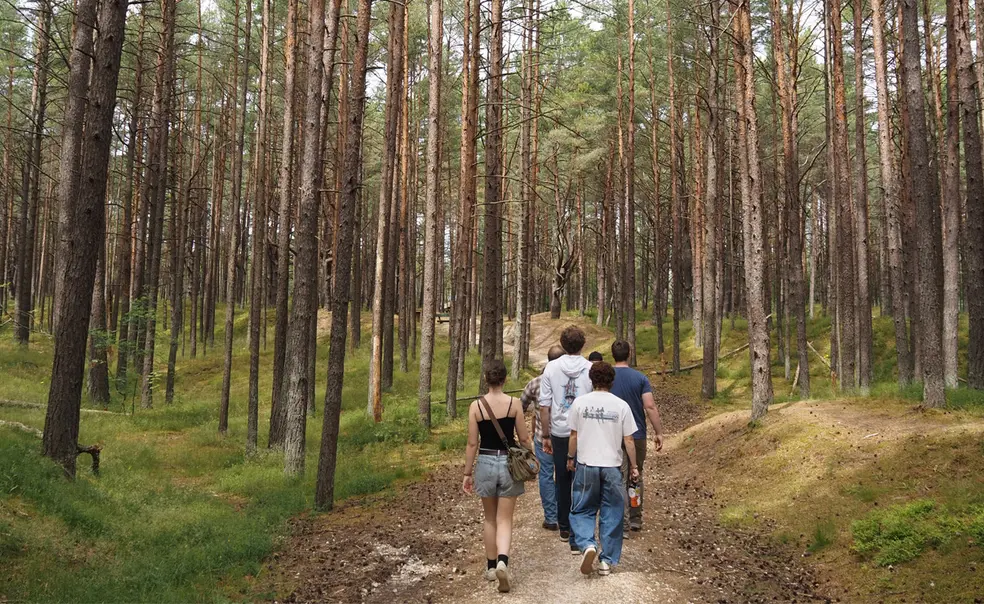
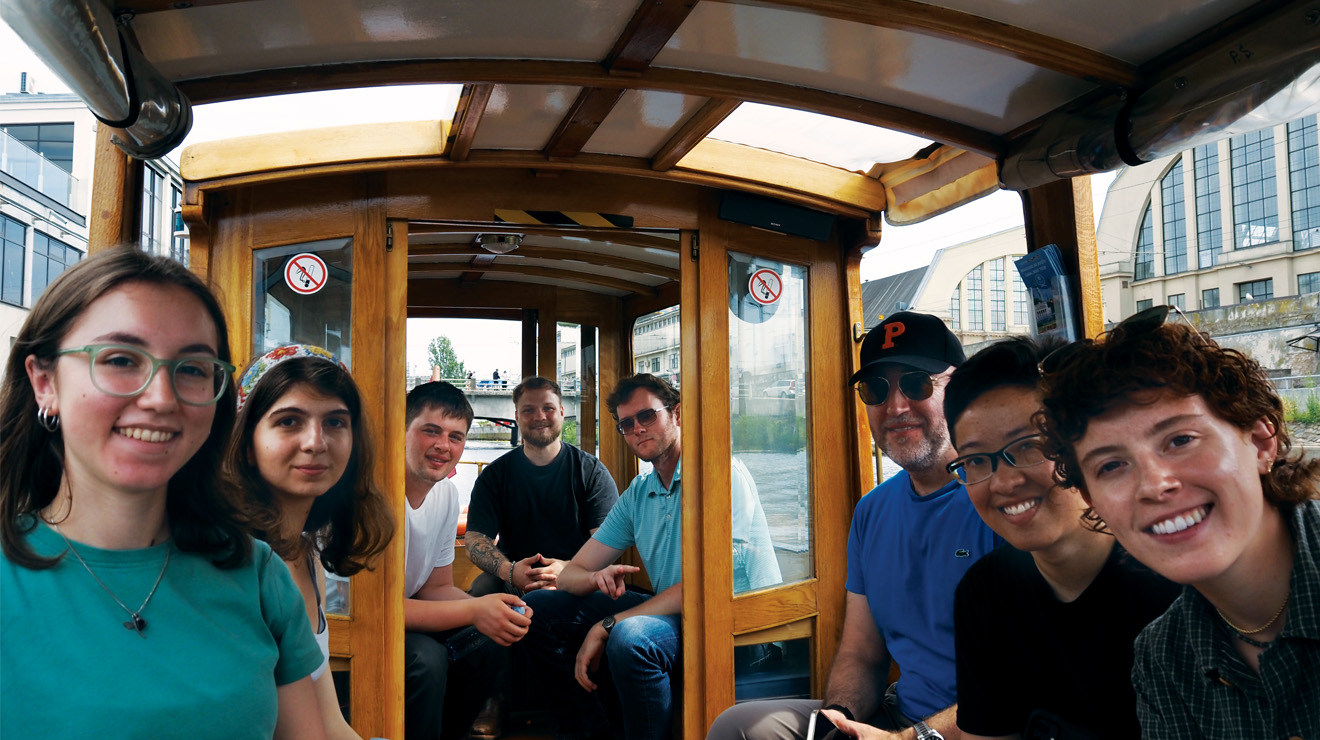
Since moving its summer program to Tallinn, the Slavic department has aimed to connect students with the Baltic region’s art, history, and cultures. PAW joined the program’s June trip to Latvia, where students hiked through a Baltic coastal pine forest, toured Riga’s Old Town, and learned about local maritime and military history. The Slavic department organizes similar engagements in Tallinn and in Vilnius, Lithuania.
Students this summer also took advantage of the opportunity to travel across Estonia on their own, venturing west to its islands and east to its border with Russia.
Studying in the Baltics has given Caroline Barton ’29, a School of Public and International Affairs student who is researching the Russia-Ukraine war, a new perspective on her work. “Doing the research feels important. It feels like something worth doing because I see how Russian occupation affects people,” Barton said.
The Russian Summer Program at Tallinn University was one of only three Princeton-led or supported summer language courses abroad open to beginners in 2026. This summer, seven of the eight students were new to the language.
The goal, Leving said, is “not even to study Russian language or culture, it’s to come closer to this ‘other,’ that someone who is not sharing the same language with you, and who lives in a different environment, and to come closer to understanding how they live.”
The Latest
See all


Related News


McCarter Theatre’s First South Asian Musical Took Me Back to Forbes Basement
A Beat of Our Own is about a college dance team not unlike Princeton South Asian Theatrics


No responses yet