

Tikia Hamilton *15 Recommends Books on the Equal Education Movement
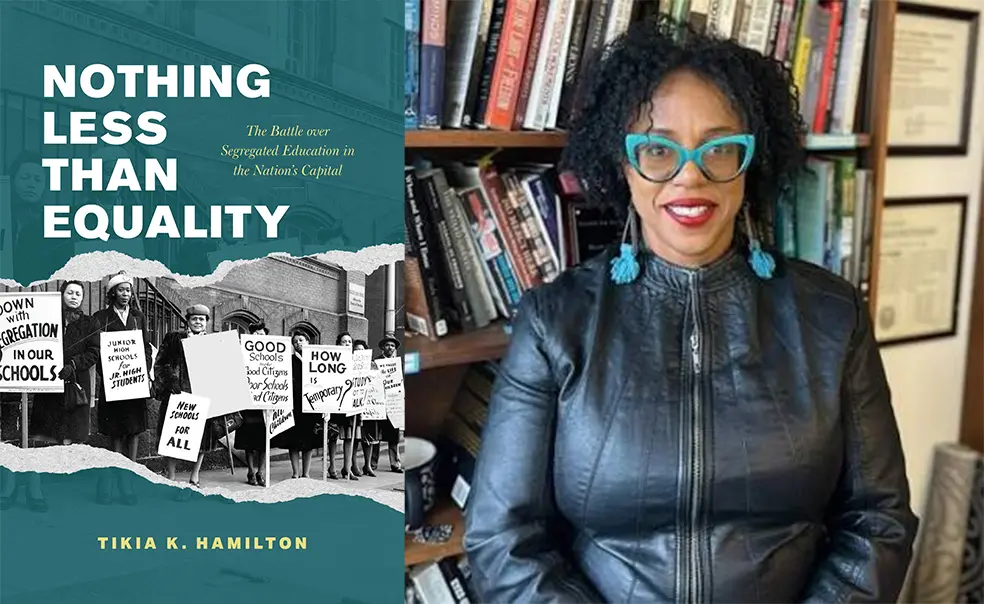

Tikia K. Hamilton *15 is a professor of history at Loyola University Chicago, where her courses focus on race and African American experiences. While growing up in Chicago, she looked to education as a way to expand her opportunities, particularly after grappling with some of the racial inequities that many of the nation’s public schools still face.
She writes that, in many ways, her new book, Nothing Less Than Equality: The Battle Over Segregated Education in the Nation’s Capital, is a direct reflection of her life’s experiences as both a student and an educator. It considers the development of Black education in Washington, D.C., against the backdrop of slavery and focuses on African Americans’ demands for equitable resources under the federal city’s segregated school system. She reveals how not all African Americans were of one accord when it came to questions about whether integration was the securest path to achieving educational equity.
She insists that these debates remain salient in a political climate that remains hostile toward efforts to prioritize educational opportunities for historically disadvantaged groups, resulting in increasing patterns of resegregation. PAW asked Hamilton to recommend three more books about the history of education equality, and she suggested these.
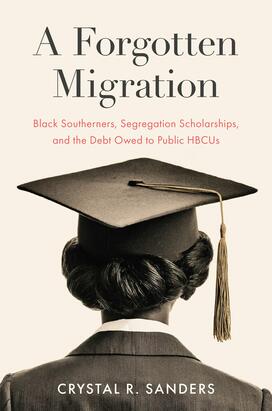
By Crystal R. Sanders
In her work, Sanders considers the experiences of African Americans who were denied admission to graduate programs in the South prior to the height of the modern civil rights movement. Instead of investing in historically Black schools or integrating, southern states set aside funding for African American students to attend schools elsewhere, which Sanders refers to as “segregation scholarships.” Utilizing these scholarships, African Americans were able to secure graduate training and increase their representation in a number of professions. However, the decision to do so was fraught with emotional and physical turmoil, since Black scholarship students were forced to leave home and face dangerous uncertainty in their travels to schools that weren’t always welcoming to Black people, despite their location outside of the South. Additionally, the aspiring graduate students were forced to grapple with whether they were accommodating racism.
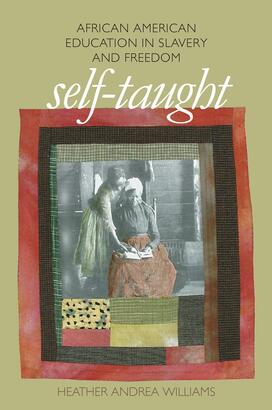
Self-Taught: African American Education in Slavery and Freedom
By Heather Andrea Williams
During the 18th and 19th centuries, pseudo-scientific racism remained pervasive, with claims that African Americans were somehow less educable than other groups. Such thinking dominated public discourse surrounding the establishment of schools throughout the United States, largely resulting in the exclusion of African Americans from all levels of schooling. Consequently, one of the many books that has had a profound and lasting impact on the way I understand African Americans’ commitment to education is Williams’s book, Self-Taught. Williams demonstrates how, while circumventing anti-literacy laws for slaves in many southern states, African Americans pursued education as a route to freedom. They engaged in numerous subversive activities to acquire learning, often helped along by free African Americans who established schools with the barest resources. In the wake of emancipation and the emergence of Jim Crow, they continued to associate first-class citizenship with the right to obtain a quality education.
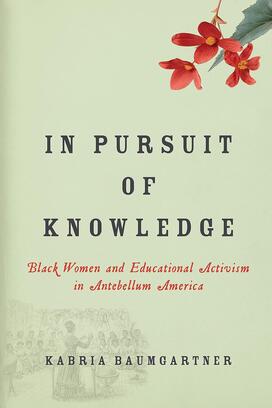
In Pursuit of Knowledge: Black Women and Educational Activism in Antebellum America
By Kabria Baumgartner
African American women have always been at the forefront of social justice movements that center education. Authored by Baumgartner, In Pursuit of Knowledge, chronicles the efforts of African American women and girls to advance learning and stake a rightful claim to citizenship (albeit nominal) during a time when educational opportunities for Black women and other diverse groups of women proved limited. Baumgartner focuses primarily on the New England area, considered the seat of abolitionism prior to the Civil War. One important distinction the author makes is how, compared to white women who viewed education as a route to individual progress, Black women regarded education as a vehicle to improve family conditions and advance African American communities more broadly.
The Latest
See all


Related News

McCarter Theatre’s First South Asian Musical Took Me Back to Forbes Basement
A Beat of Our Own is about a college dance team not unlike Princeton South Asian Theatrics


No responses yet