
Inspired by Revolutionary Archives, Seminar Students Bring Home a Treasure
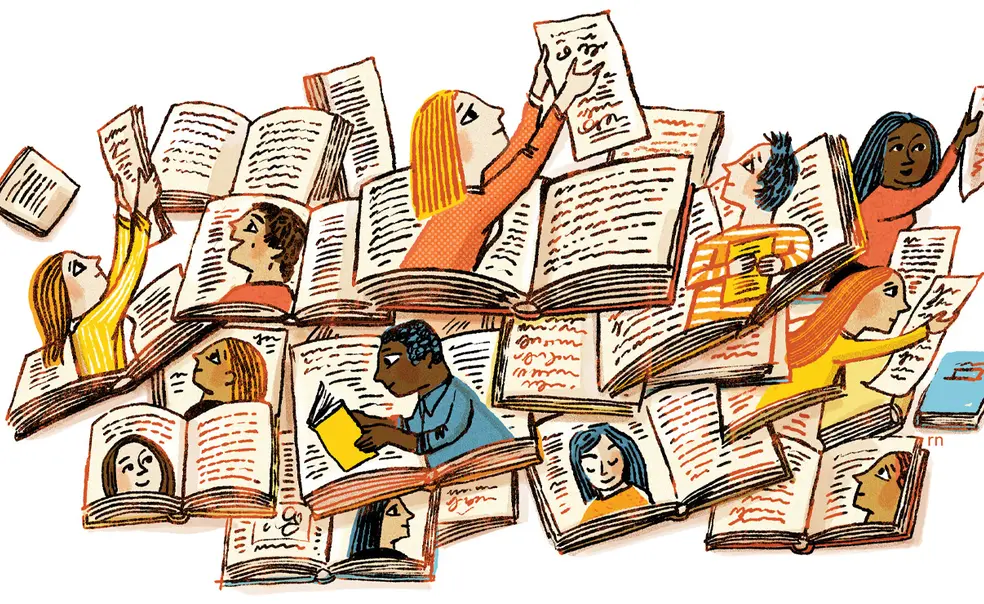

New York’s Park Avenue Armory is a vast space in an infamously cramped city, and jammed into the armory every spring is the New York Antiquarian Book Fair. Exhibitors from all over the world present a trove of materials including rare books, maps, illuminated manuscripts, fine bindings, illustrations, historical documents, photographs, prints, memorabilia, and ephemera.
I joined my classmates from Revolution in the Archives, a spring seminar that highlighted Princeton’s Americana collections during the nation’s semiquincentennial year, on a train ride into the city for an early May afternoon at the fair, charged with one final assignment: Find a treasure to bring home.
History professor Michael Blaakman and Gabriel Swift, the University’s librarian for early American collections, had held our hands through a semester of 18th-century handwriting, watermarks, contradictory historical accounts, and research hurdles. Adding one piece to the more than 300,000 items in Princeton’s Special Collections would prove to be a wonderful challenge.
The armory was chaotic as exhibitors, dealers, curators, publishers, private collectors, and librarians buzzed in their hive, creating a hum of conversations between old friends and negotiations between sellers and buyers.
Available items sat regally in lighted cases and could be brought out at the request of any passerby. While wares were reasonably protected, the aisles between booths were teeming with blazered bibliophiles, bumping into each other constantly with a greeting, inquiry, or simple apology on the rare occasion the two were not acquainted. The Republic of Books is small but wonderful, and I was happy to bump into Scott Clemons ’90, former president of the Grolier Club, chairman of the Morgan Library, and member of the New York Public Library’s Board of Trustees.
Clemons started going to the fair when he was an undergraduate. At Princeton, reading classics, he became fascinated with the transmission of texts. Now, he collects the works of Aldus Manutius, a famous scholar-printer of the Italian Renaissance.
“I started collecting when I was in college, and I had no money, which was to my benefit. However, I could invest time,” Clemons said. He learned trade standards and built relationships with dealers. During our conversation at the fair, he stood before me with a bag full of books.
Clemons advised undergraduates to invest time looking at items and building relationships with dealers. “Ask ‘What brings you here?’ and ‘What do you collect?’ You’re guaranteed a good conversation.”
Armed with this advice, we stopped at McBride Rare Books, co-founded by James McBride ’08, where we had several items on hold as a courtesy for likely buyers. Though he studied classics at Princeton, McBride now deals in Americana, and he brought some items in his fair catalog out onto the lighted case for us to investigate.
We then ambled over to the opposite wall of the armory — which occupies a full city block in midtown — pointing and shrieking at discoveries along the way. We unfashionably gawked at F. Scott Fitzgerald 1917’s topcoat and James Wilson’s annotated copy of the first printed draft of the Constitution.
Finally, on our last stop at William Reese Co., we found something to purchase.
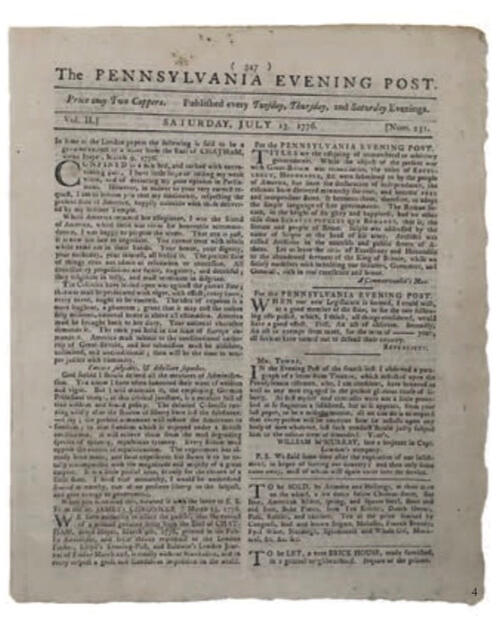
Backlit, the newspaper was glowing. The Pennsylvania Evening Post from July 13, 1776, announced the news of the Declaration of Independence being read in New York and a statue of King George III being razed. The issue included much other Revolutionary news, including an excerpt from a “letter from Princetown” about the reading of the declaration, dated July 10: “Last night Nassawhall was grandly illuminated and Independancy proclaimed under a triple volly of musketry and universal acclamation for the prosperity of the United States. The ceremony was conducted with the greatest decorum.”
In perfect closing to our course, we brought the item home to Firestone Library, where it will sit among items gifted by centuries of alumni. Our hope is that future Princetonians will view the newspaper for thesis research or in a Special Collections class or just because they want a glimpse of 18th-century Princeton.
The Latest
See all


Related News


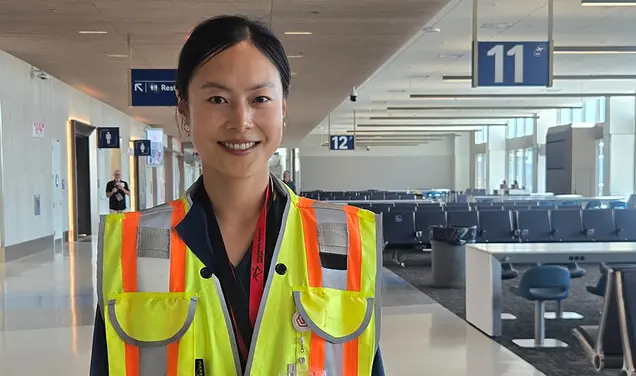
Janice Lee ’09 Worked to Renovate One of Hollywood’s Best-Kept Secrets
An engineer by training, Lee has been deputy project manager on the renovation of Hollywood Burbank Airport

No responses yet