

As Mental Health Needs Rise, Religious Leaders Quietly Support Students
Students say Princeton’s Office of Religious Life is a key but often-overlooked source of support
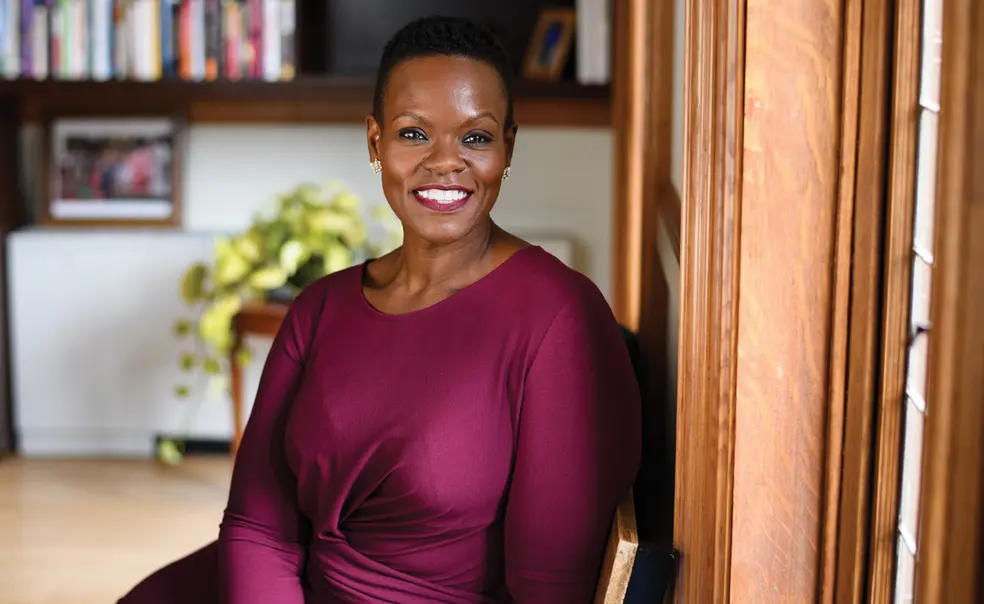

Michelle Thurber ’26’s first real connection with the Office of Religious Life (ORL) came after her friend Lauren Blackburn ’26 died by suicide in the spring of 2025. Thurber and her friends attended Blackburn’s memorial service, where she spoke about him. Afterward, Matt Weiner, an associate dean of religious life who practices Buddhism, approached her, hugged her, and encouraged her to reach out.
She emailed him, and two days later, they met up. Thurber said they spoke for an hour and a half, and she continued meeting with him every day for the next week. She had been interested in Buddhism and meditation during her time at Princeton, but the conversations with Weiner, she said, were not explicitly religious; instead, they gave her a space to speak through her emotions, unfiltered. Weiner related some of her experiences to Buddhist teachings. Over time, he became a mentor and a friend.
“I think especially at times at Princeton, when things were difficult, that was one of the things that I turned to,” she said. During the summer, she converted to Christianity but expressed her continued appreciation of Buddhism and the intermingling of religious traditions — as well as a desire to give back to the ORL. She now serves as the office’s student correspondent, covering events across faith traditions and connecting with chaplains throughout the office.
As student mental health needs increase at Princeton, the ORL has emerged as a key, and often overlooked, source of support. Through pastoral care, ORL chaplains provide students with a place to share their feelings, process grief, and reflect on their experiences, regardless of their religious identity. Chaplains aim to complement traditional mental health services, not replace them, and often serve as a first point of contact.
PAW spoke with five ORL chaplains who provide holistic emotional and spiritual support, though each approaches it differently. They emphasized that a large percentage of the students they work with do not identify as religious, and they encourage students across identities and the spiritual spectrum to visit them.
For Vineet Chander, assistant dean for Hindu life, accompanying students spiritually in times of crisis or distress, but also in times of celebration, is central to his role and “a defining feature of a pastoral approach to mental health.”
The Rev. Theresa S. Thames, dean of religious life, emphasized the importance of paying attention to the whole body, not just the physical body, but also our environments and our communities. “I really am thankful that students trust us with their whole lives,” she said. Students come to her with concerns ranging from perfectionism to issues with family to the state of the world.
Chaplains work closely with Counseling and Psychological Services (CPS), and the two groups often meet with the same students. The Rev. Brittany Longsdorf, associate dean of religious life and of the chapel, explained that the ORL tries to complement CPS in lots of grief spaces. “It’s really a part of almost all of our religious training and credentialing, to understand grief and how to walk with people in grief and not be afraid of it,” she said. Thames added that chaplains often invite students to slow down through meditation, prayer, or breathing practices.
Longsdorf said that as mental health needs have increased across higher education, universities have tried to “staff up” only to realize no amount of staff can meet all of the community’s needs.
While there is often a long wait time for a CPS appointment, CPS is designed as a short-term resource that typically connects students with outside providers. Students generally receive an initial consultation within three days or fewer, after which they may be referred to an outside provider or someone internally within CPS. For nonurgent concerns, students can also attend drop-in sessions with certain counselors during designated 30-minute time slots.
“We by no means are looking to sort of substitute for or replace or rival or be in competition with those kinds of therapeutic interventions,” Chander said. He added that chaplains often walk students over to CPS and wait with them. Imam Khalil Abdullah, the assistant dean for Muslim life, emphasized the recent addition of multiple Muslim counselors within CPS.
Longsdorf said that when she thinks about spiritual wellness, she thinks of building and empowering communities. For her, pastoral care looks like offering a cup of tea, lighting a candle, and emphasizing confidentiality in her space. Chaplains are confidential resources and are not mandated reporters.
Abdullah said he prioritizes meeting students not just in his office but wherever around campus is most comfortable for them. He emphasized that his work is not always solution-oriented, but about learning how to embrace the challenges that come with being a Princeton student.
“Pastoral care is about relationships. It’s about consistency, it’s about vulnerability, and that can only happen with trust,” he said, often built over shared food and conversation.
Beyond pastoral care, the ORL offers a variety of programming, including study circles, meditations, prayers, service opportunities, concerts, dinners, religious celebrations, lectures, and Hour of Power, a midweek worship service that welcomes the entire Princeton community.
Thurber described the support the ORL provides as distinct from other institutional resources.
“That felt a lot more like a friend or a family member who was genuinely just trying to keep you together,” she said. “They all really care about getting to know you as a person beyond academics.”
The Latest
See all


Related News

With Prominent Journalists and Hoagies, the ‘Prince’ Celebrates 150 Years
A gala at the New York Historical raised roughly $400,000 for the independent student newspaper

2 Responses
Joanne Martindale
4 Months AgoArticle Kudos
Fantastic article.
James W. Anderson ’70
7 Months AgoSeeking Help From All Available Sources
There is a misleading statement in a PAW article (“Religious Life Office Supports Student Mental Health,” March issue). The article refers to a chaplain saying that she emphasizes confidentiality. The next sentence reads: “Chaplains are confidential resources and are not mandated reporters.” The implication could be that students are better off seeking help from chaplains rather than psychotherapists or counselors.
In my state, Illinois, psychotherapists and counselors, and indeed all teachers, are “mandated reporters.” “Reporting,” however, refers to reporting child abuse. Confidentiality, with that exception (an exception that would be irrelevant to students in virtually all situations), remains a central and sacred requirement for psychotherapists and counselors. It turns out, though, that the law is different in New Jersey than in Illinois. In New Jersey, there is no special requirement for psychotherapists and counselors to be mandated reporters. Everyone, and that includes clergy, is considered a mandated reporter and is required to report child abuse to the State Central Registry.
My main point is that no student, nor anyone else, should avoid seeing a psychotherapist or counselor because of concerns about confidentiality. Let me add that I have no doubt that Princeton’s clergy play an invaluable role in supporting student mental health.
Editor’s note: Under the University’s confidential resource guidelines, counselors and chaplains are not required to report incidents of sexual misconduct that are shared with them. “This allows individuals to explore their options in a non-pressured environment while they make informed decisions,” according to Princeton’s sexual misconduct and Title IX website. Cases involving child abuse are among the exceptions to this policy.