

Music Professor Donnacha Dennehy Experiments With Contrasting Sounds
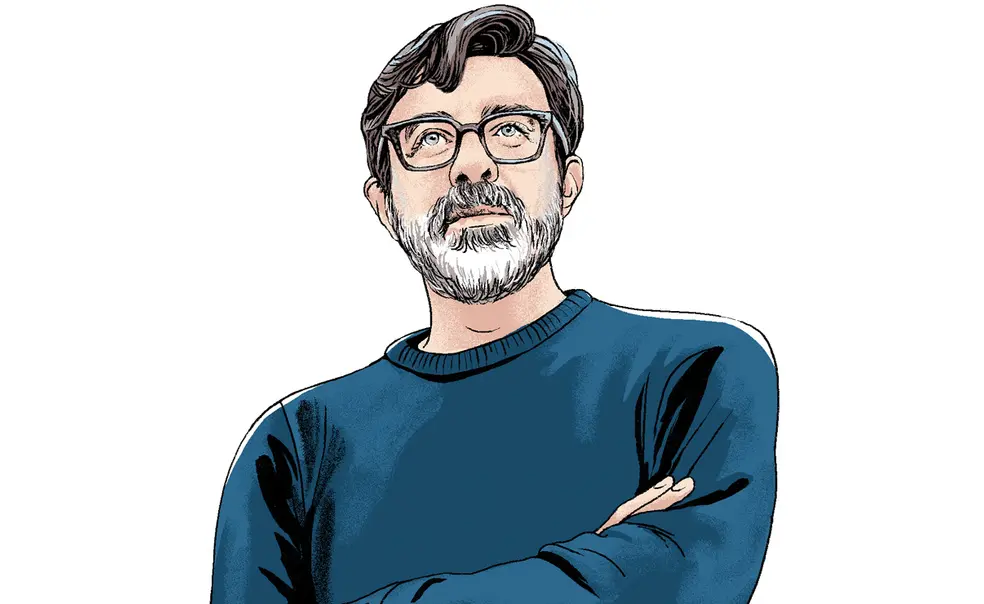

When approaching his compositions, Grammy-winning composer and Princeton music professor Donnacha Dennehy takes elements that seem like they shouldn’t go together and creates something new, making patterns out of sounds that inspire him.
“I’m obsessed with structure in music even if it feels free,” says Dennehy. “I kind of try to make a puzzle out of it.”
Dennehy has applied this approach to several musical endeavors over the years, including founding the Crash Ensemble that, as the name implies, strives to combine various musical elements to find a tangible sound. His recent work, the orchestral piece Land of Winter, numbers among its inspirations the quality of light and the passage of the seasons in his native Ireland. In February, Land of Winter won the Grammy for Best Chamber Music/Small Ensemble Performance.
Quick Facts
Title
Professor of music
Time at Princeton
13 years
Recent Class
Process and Intuition in Music
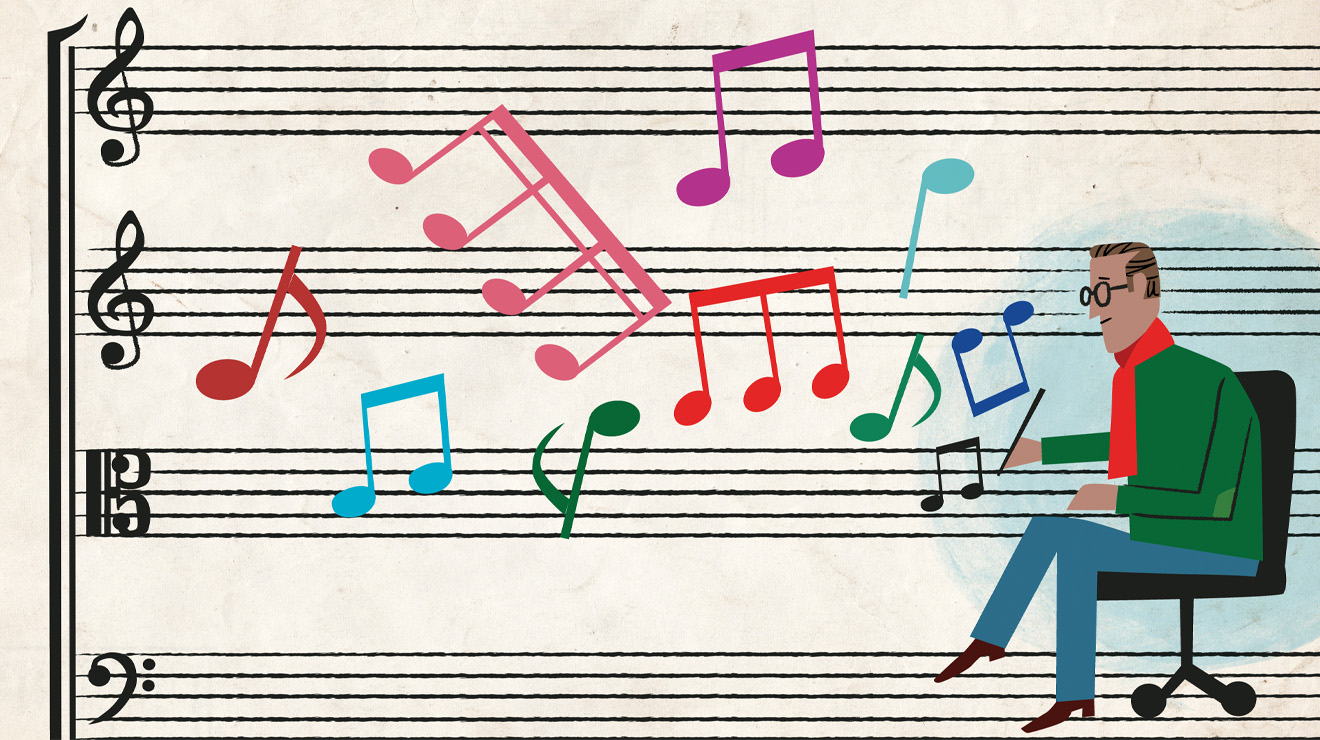
Dennehy’s Research: A Sampling
Land of Winter
Land of Winter is named for the English translation of “Hibernia,” the name the Romans gave to Ireland. The piece emphasizes how the quality of the light demarcates each season. It is structured around the months of the year, with each track feeling like the month it represents. For example, “June” has a warm sound, while “March” explodes to life like the beginning of spring. While distinct, each track leads into the next and the final song leads back into the first song, like the calendar itself. Dennehy created Land of Winter with Alarm Will Sound, a touring ensemble and frequent collaborators of his.Dennehy’s wife, a founding member of Alarm Will Sound, serves as first violin for the piece. The group rehearsed at Princeton and previewed the piece in Richardson Auditorium in September 2022 before its grand premiere in Germany that November. “The piece is about both the comfort of recurring time and how we use these temporal recurrences to anchor ourselves and then the kind of terror of linear time, our move towards death,” Dennehy says.
Vocal Work
Dennehy also composes vocal work and considers it the other half of his musical pursuits alongside his instrumental work. He says that while text and music might seem like very different disciplines, the combination can create something entirely distinct and rich. “A text can mean one thing when you read it, but music has a whole emotional structure under it, a way of parsing the text that can be a surprise even to the composer,” he says, comparing it to the heightened emotions one might feel when an acclaimed actor performs a written piece aloud. Dennehy’s vocal collaborations have included a piece with Iarla Ó Lionáird in the traditional Sean-nós style of singing, an opera with playwright Enda Walsh, and an upcoming oratorio with author Colm Tóibín.
Princeton Sound Kitchen
Dennehy also encourages his composition students to seek varied inspirations and find excitement in the act of making music. He directs the Princeton Sound Kitchen, a program offering students the opportunity to write music for various professional ensembles, which then perform the students’ work in a series of shows at Princeton. The shows are eclectic affairs, with the content determined by the students themselves. Dennehy notes that writing for different ensembles allows students to experience what it’s like to be a professional composer. He also encourages them to take advantage of the opportunity they have as students to try approaches and techniques they wouldn’t normally pursue with their music, since “that’s where the really interesting stuff comes in.”
The Latest
See all


Related News
With Prominent Journalists and Hoagies, the ‘Prince’ Celebrates 150 Years
A gala at the New York Historical raised roughly $400,000 for the independent student newspaper


No responses yet