

Princeton Alum and Two Professors Win 2026 MacArthur Genius Grants
The grants will support their research into Indigenous history, economic inequality, and environmentally sustainable agriculture
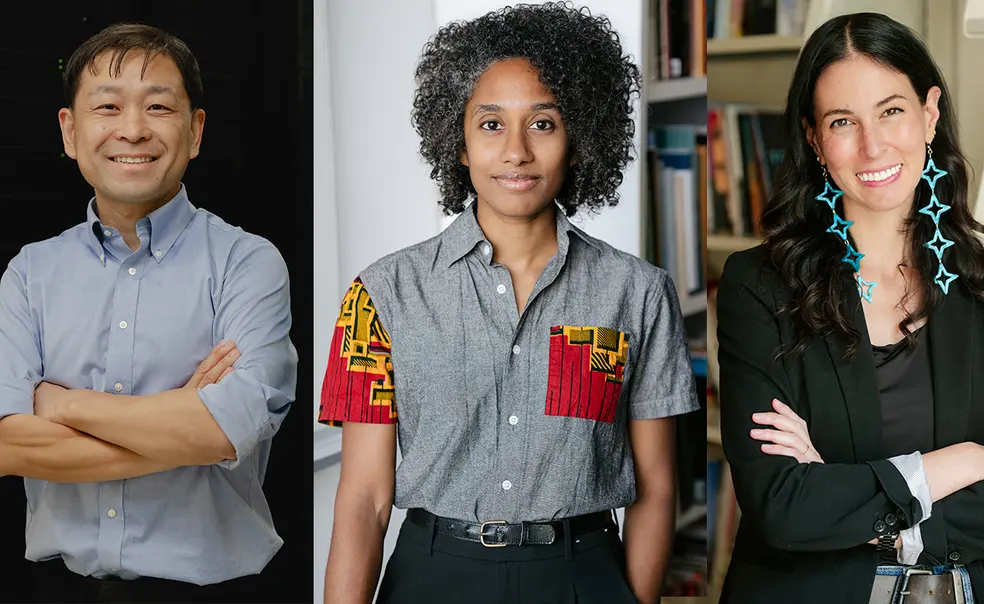

Environmental scientist Kaiyu Guan*13 and Princeton professors Ellora Derenoncourt and Elizabeth Ellis are among the recipients of the 2026 MacArthur Fellowship, known informally as “Genius Grants.”
They join 20 other scientists, artists, and scholars across the U.S. chosen for their exceptional creativity, promise for the future, and potential to create subsequent creative work with the funding, according to the MacArthur Foundation website. Each fellow will receive a “no strings attached” award of $800,000 distributed over the next five years.
“The 2026 Fellows continue that creative tradition — they explore the depths of our humanity; they reveal untold origins to modern challenges; they expand the edges of scientific inquiry and life-saving research,” said Kristen Mack, a vice president of communications at the MacArthur Foundation.
Ellis, an associate professor of history, is a scholar of North American and Native American history with a focus on diplomacy, borderlands, cross cultural exchange, and Indigenous politics. The foundation said that her work focusing on “alternative conceptions of nationhood among small Indigenous tribes offers a corrective to colonial histories that emphasize war and subjugation of Native Americans.”
In her book The Great Power of Small Nations, she examined the formation of Native American nations in the Lower Mississippi Valley. She’s also collaborating on several history projects including the Reclaiming Stories project, CRoyAN (Collections Royales d’Amérique du Nord), the Indigenous Borderlands of North America research project, and the Delaware History Project.
Ellis told The New York Times that this grant is particularly meaningful in light of ongoing cuts to federal research funds. “It’s just really nice to have these opportunities to recognize and support work that can be very difficult in this moment,” she said.
Derenoncourt, an associate professor of economics, was recognized “for her research on labor market standards, wage inequality, and economic policies,” according to the foundation. “Derenoncourt builds innovative datasets and leverages real-world historical events as starting points of inquiry. She is identifying the key policies and drivers of ongoing gaps in earnings and accumulated wealth between Black and White Americans.”
Derenoncourt is the founding director of Princeton’s Program for Research on Inequality and has received several other awards including the 2024 Sloan Research Fellowship and the 2023 National Science Foundation CAREER award.
“There are many types of economic disparities that appear deeply entrenched,” Derenoncourt said in a University press release. “I see much of my work as hunting through the historical record to see when there was a change in inequality and what drove the change.”
Guan *13 is a professor at the University of Illinois Urbana-Champaign. MacArthur recognized him for his work “providing the technical and scientific foundations for a more environmentally sustainable and productive future for agriculture.”
Guan, who earned his Ph.D. in civil and environmental engineering from Princeton, is the founding director of the Agroecosystem Sustainability Center at Illinois and chief scientist of the NASA Acres Consortium. His research focuses on advanced process models, satellite sensing technology, fieldwork, and AI to address climate change.
In the Princeton press release, Guan thanked his adviser, Eric Wood — an emeritus professor of civil and environmental engineering — whom he said “trained me to think: he demanded rigor, pushed me to ask my own questions, and gave me the freedom to develop my own scientific path and the belief that the best science should be both fundamental and consequential.”
The Latest
See all


Related News
McCarter Theatre’s First South Asian Musical Took Me Back to Forbes Basement
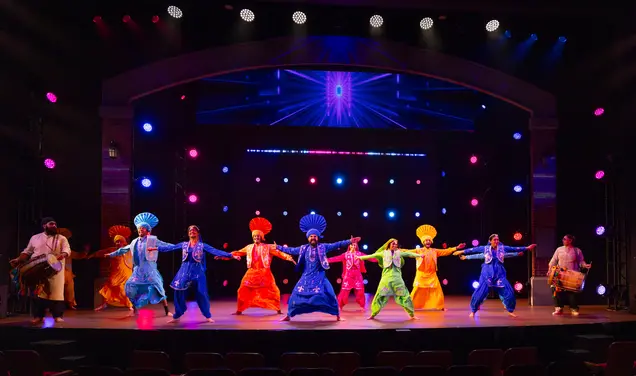
A Beat of Our Own is about a college dance team not unlike Princeton South Asian Theatrics


No responses yet