

Professor Barbara Graziosi Brings Ancient Texts to Life
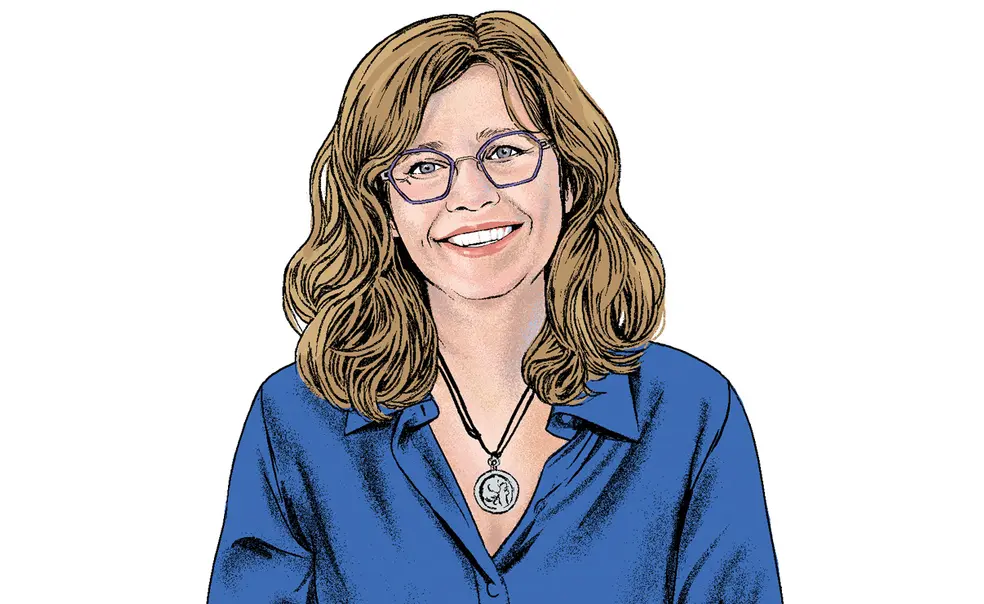

While ancient texts may be viewed as old and unchanging, professor Barbara Graziosi’s research looks at the ways that people throughout history have interpreted and adapted them, and she ensures that these works continue to evolve and survive. She uses innovative methods and collaborates with a diverse range of individuals, including computer scientists and professional dancers, to gain deeper understanding of these writings.
She credits her desire “to find new meaning in old things” to her upbringing in Italy, where reconfiguring the past into something new and beautiful is an intrinsic part of Italian culture and creativity. While studying abroad, she was also struck by the way different cultures brought their own distinct approaches and interpretations to ancient texts. In the same way that these works went from oral tradition to written, she feels that her work represents the next step in their ongoing evolution.
Quick Facts
Title
Professor of Greek Language and Literature and Classics
Time at Princeton
8 years
Recent Class
Interdisciplinary Approaches to Western Culture
Graziosi’s Research: A Sampling
Logion Project
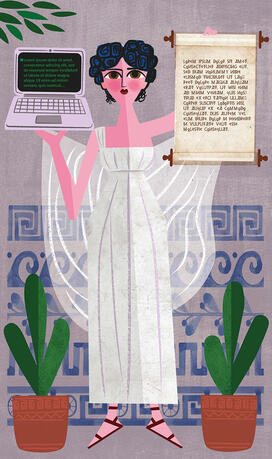
Graziosi leads the Logion Project, a collaboration between the classics and computer science departments at Princeton. The project, named for the Greek oracles, is developing a neuro-linguistic programming tool to aid in the restoration and understanding of ancient texts. The endeavor was inspired by a conversation Graziosi had with math major Charlie Cowen-Breen ’22, a co-founder of the project. The machine learning model has already provided insights into how translators might “fill in the blanks” on several texts where passages have been lost or corrupted, Graziosi says. While the AI model is helpful, Graziosi notes that it’s only a tool and, like its namesake oracles, still requires human interpretation. Efforts are also underway to digitize the texts.
Living Poets
Through the Living Poets Project, Graziosi explores her belief that ancient texts can reveal as much about the people interpreting them as the world in which they were created. For example, many cultures have a version of the poet Homer that aligns with their world and values. She notes that recent movie adaptations of The Odyssey by Christopher Nolan and Uberto Pasolini continue the tradition, placing the story within modern narratives about rebuilding a civilization and soldiers returning home, respectively. “In times of uncertainty, we need to reach back in time in order to project ourselves into the future,” Graziosi says. She is currently working on a book about Sappho that focuses on the poet in a historical context, while also establishing a dialogue with the various ways she has been interpreted over the years.
Dances of Antiquity
Graziosi is collaborating with Sara Mearns, the principal dancer at New York City Ballet, on a project to recreate the dances of antiquity and examine how methods beyond words can be used to learn about the ancient world. Since we only have texts and objects depicting movement in antiquity, dancers will be recreating those representations in a physical space, Graziosi explains. The dancers will be drawing inspiration from artifacts in Princeton’s collections that depict these dances, including several items from the ancient city of Antioch, known as “the ancient capital of dance” and a cultural crossroad of antiquity. The ongoing project commenced in late September with an event at NYU featuring a lecture by Graziosi and a performance by Mearns.



No responses yet