

Supreme Court Overturns P.G. Sittenfeld ’07’s Bribery Conviction
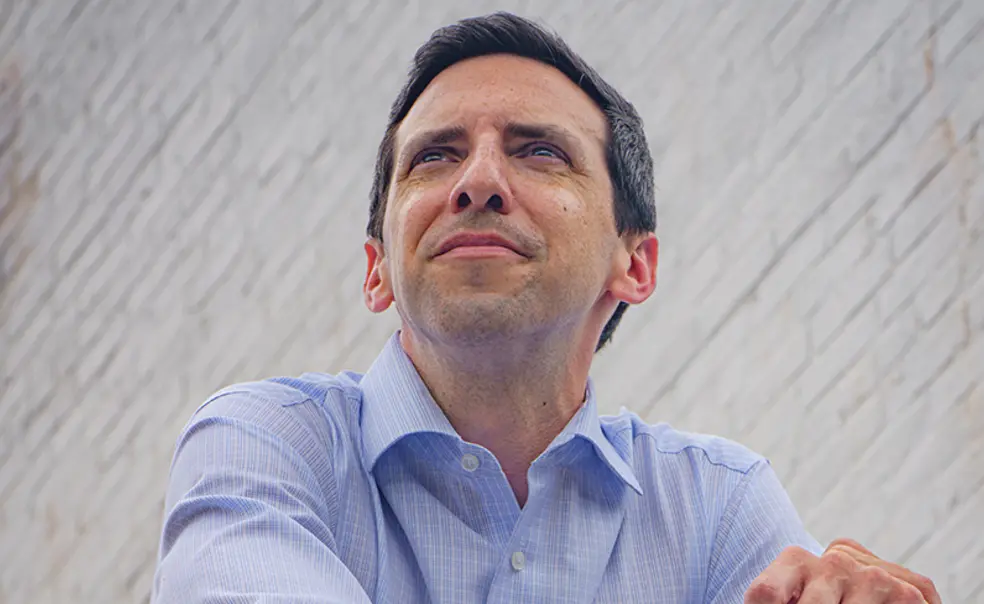

The nearly six-year federal political corruption case against P.G. Sittenfeld ’07 ended Monday morning, April 6, almost exactly as Sittenfeld wished.
The U.S. Supreme Court — acting unanimously, according to Sittenfeld’s lawyers — granted Sittenfeld’s petition to review his 2022 bribery case involving $20,000 he accepted in campaign contributions from undercover FBI agents posing as Cincinnati developers. At the time, Sittenfeld, now 41, was a Cincinnati councilmember and rising Democratic Party star who was favored to become the city’s next mayor.
Sittenfeld had said previously that he wanted to win the case on its merits through a full hearing before the Supreme Court, which would have prevented similar prosecutions against others in the future. Instead, in a two-sentence order limited to his case, the justices vacated Sittenfeld’s conviction and sent the case back down to the lower courts, where prosecutors want it dropped.
“It functions as a victory for Sittenfeld, because his conviction is being vacated, so it’s as if he never was convicted, which is the relief that he wanted,” said Kenneth Katkin ’87, a professor of constitutional law at Northern Kentucky University, who has been closely following the case. “But he doesn’t get the benefit of actually being able to argue his case and have the court write an opinion on it. … He is vindicated, but he’s vindicated by the fact that the government doesn’t want to argue against him anymore, and not by the government actually arguing against him and him winning the argument.”
Still, in an interview with PAW, Sittenfeld called the outcome “a phenomenal and very rare victory.” He added, “I feel a pure elation and gratitude today. [But] I also believe that a new precedent and cleaning up of the law is necessary.”
Katkin estimated that it may take several weeks for the case to make it down through the appellate court to the trial court for a formal and final disposal.
The case was surprising from beginning to end, with legally unprecedented twists and turns along the way. It began with a 2018 phone call from a retired Cincinnati Bengals player-turned-developer — whom Sittenfeld considered a friend — who was secretly recording the conversation for the FBI. Sittenfeld was eventually charged with six counts related to accepting money for his political action committee in exchange for promising official acts on behalf of the phony developers. The jury acquitted him on four counts.
He was sentenced to 16 months in a minimum-security federal prison camp. After hearing his case, the three-judge appellate panel ordered him released after serving fewer than five months, pending the outcome of his appeal. The panel ultimately upheld his conviction by a vote of 2-1, but all three judges in their separate opinions urged the Supreme Court to take the case and clear up the ambiguous legal precedents that had worked against Sittenfeld, possibly unfairly. Sittenfeld’s lawyers had argued that the prosecution amounted to criminalizing routine interactions of politicians explaining their priorities to supporters who may respond by making contributions.
Sittenfeld thus became perhaps the only person in U.S. history whose public corruption conviction was upheld at the appeals level when the money involved political contributions that complied with campaign law, rather than bribes pocketed for personal use, according to Katkin.
The next plot twist came after Sittenfeld sought Supreme Court review. Even though the prosecution had been launched by President Donald Trump’s Justice Department during his first term, and pursued by President Joe Biden’s Justice Department, Trump decided last May to pardon Sittenfeld.
Sittenfeld accepted Trump’s pardon but pursued his appeal to the Supreme Court anyway, reasoning that a pardon was not a full exoneration. If the high court had granted Sittenfeld’s petition for review and heard the case of a pardoned man, rather than immediately dispatching it, the matter likely would have made legal history again, Katkin says. The law professor had predicted that, before Trump’s pardon, the justices may have been inclined to hear the case because of its unusual contours.
Related coverage

P.G. Sittenfeld ’07 Has Reached a Verdict
The former rising political star is forging a new path but awaits an appeal ruling that could send him back to prison
Since getting out of prison, Sittenfeld has set aside his political ambitions, explored his deepening Catholic faith, relished time spent with his young family, and launched a writing career. His essays frequently draw on his journey from political whiz to federal prison inmate to informal counselor to others reeling from downfall, and have appeared in The New York Times, The Washington Post, Esquire, Slate, The Free Press, Outside Magazine, and America Magazine, as well as in PAW.
On Easter Sunday, The New York Times published his essay drawn from a sermon he first gave in the prison chapel. “To say that being the subject of a very public federal prosecution and imprisonment is humbling would be a significant understatement,” he wrote. “The process was harrowing and utterly ego shattering. And yet, as a result, I had the chance to ask myself: Do I want to put these pieces back together as they were before? ... Resurrection is real, and it is all around us. Imprisonment, defeat and death might get their say, but they do not get the last word.”
The Latest
See all


Related News

McCarter Theatre’s First South Asian Musical Took Me Back to Forbes Basement
A Beat of Our Own is about a college dance team not unlike Princeton South Asian Theatrics


1 Response
Stephanie Anderson ’74
6 Months AgoNews We Need
This is the good news we need right now. I met P.G. some years ago and was very impressed by this young man. I look forward to hearing more about him.