

This Is the Difference Between Princeton in 1776 and Princeton in 2026
What did students on campus actually do in the 1770s? Dan Caprera ’16 dug deep to find out.

America. Love it or hate it, there’s one thing we can all agree upon about this gorgeous dame of a nation: It’s 250 years old.
So, in honor of America turning 250 this year, PAW has commissioned me to write an article discussing some of the many differences between modern-day Princeton University and the Princeton University of 1776.
Suffice to say, the Princeton of yesteryear (or the College of New Jersey, as it was known back then) was certainly humbler than it is now. Currently, Princeton employs a little over 1,300 faculty members and has a graduating class of nearly 1,500 students. Back in 1776, both of those numbers were … dramatically smaller.
According to the University’s General Catalogue 1746-1906 (which is, I cannot stress this enough, a very dry read), in 1776, Princeton had only two full-time professors: President John Witherspoon and William Churchill Houston 1768, who taught theology and mathematics/natural philosophy, respectively. Fortunately, these teachers were not terribly overburdened, given that only 27 students graduated from Princeton that year. (Fun fact: There were only five graduating students in 1778, since most young men at the time were busy fighting in the Revolutionary War).
But what did students on campus actually do in the 1770s (I asked, seamlessly transitioning to the next part of this article)? That’s a great question!
In the 1770s, the normal school day was strictly regimented, with students waking up at exactly 5 a.m., so as to attend the University’s mandatory morning prayers. Students were then assigned compulsory study time until 8 a.m. Then, class from 9 a.m. to 1 p.m. Then came compulsory study time again from 3 p.m. to 5 p.m., followed by evening prayers. Finally, students had a strict 9 p.m. curfew, after which they were required to be back in their rooms, where they could either study or pray for a little bit longer. There were also two additional mandatory sermons every week on the Sabbath.
In contrast, nowadays Princeton students are forced to attend a staggeringly low number of exactly zero compulsory church services each week. (Unless you count the mandatory freshman writing sem as a religious sermon, which I do. But that’s only because I really like writing).
Of course, just like today, the Princeton of yesteryear had its fair share of extracurriculars. Currently, the University has over 500 student organizations, including 11 eating clubs, 38 sports clubs, and nearly 15 a cappella groups. But, back in 1776, Princeton pretty much had two major extracurricular groups: the American Whig Society and the Cliosophic Society — rival literary organizations who absolutely hated one another.
For example, in the early 1770s, the two societies engaged in a series of so-called “paper wars,” where they launched vicious satirical diatribes at one another on a near-daily basis. In a poem written by then-student James Madison 1771, the entire Cliosophic society was described as “sons of screech owls, monkeys, and baboons … [a] tribe of dunces … where each one’s stench will kill his brother.”
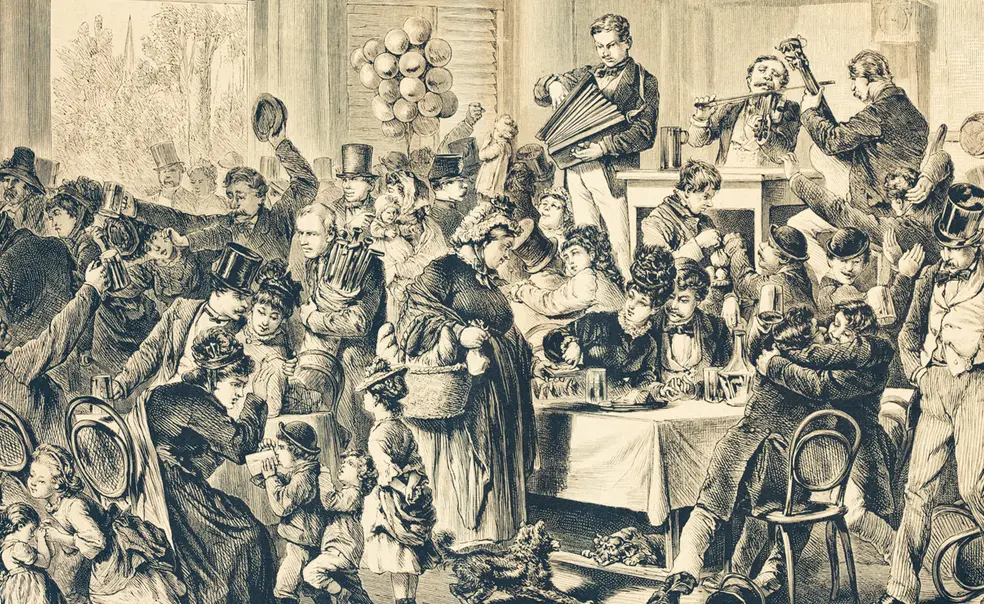
Students also drank a lot in the 1770s. Much more than they do currently.
According to Sharon V. Salinger’s Taverns and Drinking in Early America, in the 18th century, “colonists of every rank, size, and age, including children, drank often and in quantity,” with the annual consumption of hard liquor alone approaching four gallons per person. In addition, since unboiled water was unsafe to drink in the 1770s, low-alcohol beer (or “small beer,” as it was known back then) was served in lieu of water at all Princeton meals.
As such, it was very common for 1770s students to spend evenings drinking, conversing, and carousing at places like the Hudibras Tavern, which was located where Firestone Library now stands, or the Nassau Inn. And while drunkenness was bitterly condemned by the religious Princeton administration, the general tavern culture of the 1700s and early 1800s led to some very extreme events, including one 1790 incident in which drunken students placed a calf inside the pulpit of Nassau Hall. In 1804, one debaucherous Princetonian blew up a portion of the College after placing gunpowder within the walls of the building.
Nowadays, students have access to clean, potable drinking water. And they no longer have to drink alcohol exclusively to avoid contracting cholera … which has done wonders for the campus’s overall sobriety level.
But, for all of the ways in which 1776 Princeton was different (and, I would argue, much worse) than it is today, while doing research for this article I was struck by a quote I found from historian W. Jay Mills while writing about 18th-century Princeton:
“Among the pleasantest features of college life are the friendships formed there. The fraternal feeling engendered and fostered by mingling in a large company of young men of like age and purpose is generally proof against the world’s strongest vicissitudes.”
In short, while the environment on campus has radically changed, the friendships that 1776 students formed during their short time at Princeton strengthened them, gave them a deep and resounding sense of belonging, and lasted throughout their entire lives.
And that’s something that hasn’t changed at all in the last two and a half centuries.
The Latest
See all


Related News
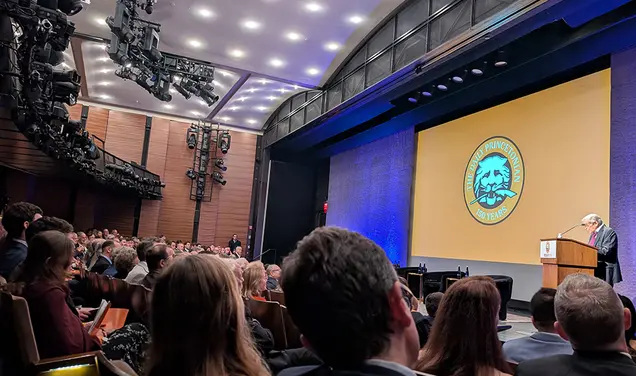
With Prominent Journalists and Hoagies, the ‘Prince’ Celebrates 150 Years
A gala at the New York Historical raised roughly $400,000 for the independent student newspaper


1 Response
Colette Dickinson ’75
5 Months AgoLearning About Princeton in 1776
Great article! Thanks, Dan! Amazing facts that I had never learned before.
Hard to imagine there were only 27 graduates in 1776. With only two professors, that was 13-15 in a precept — similar to today’s precepts.
Interesting research about need for some alcohol required to make water safe for drinking. Thank you for bringing out these important facts about daily life here in New Jersey that historians have glossed over in my history courses.