

These Five Princeton Friends Found Community in Creative Writing
By the end of 2025, all five writers became published novelists
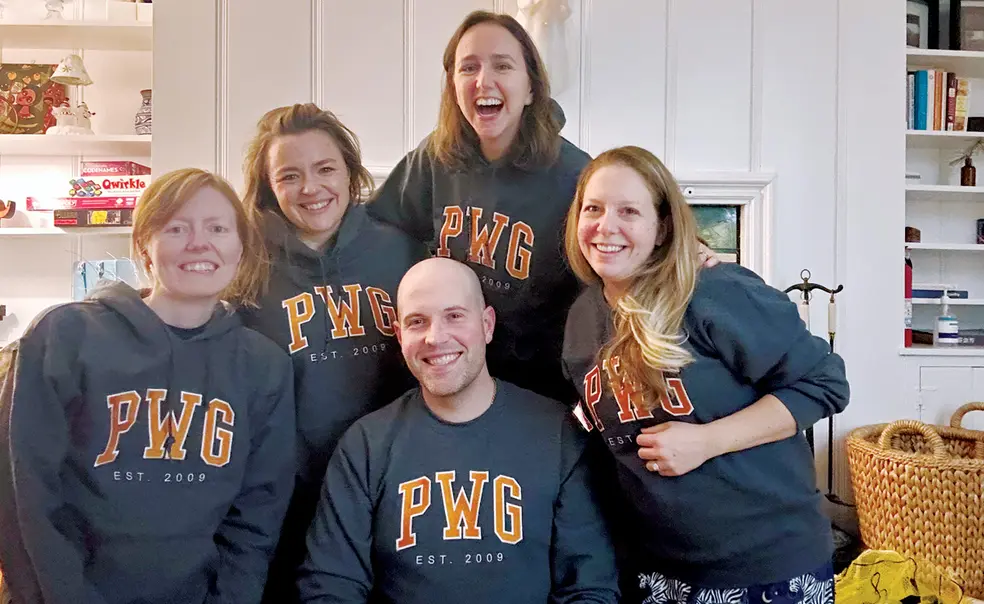

In December 2024, five Princeton alumni returned to campus — not for a reunion, but to work on their fiction in a cozy farmhouse setting. “It was a nice time to hang out with friends who are in the same boat as you,” Laura Hankin ’10 says of the retreat. “To almost feel like you had some co-workers in a profession where you don’t really get co-workers in the same way.”
Some writing retreats can be aspirational, involving unproven writers attempting to complete their first manuscripts. But in this case, the “Princeton Writers Group” (“PWG”), as they call themselves, was celebrating a mutual accomplishment. By the end of 2025, Sash Bischoff ’09 says, “all five of us [became] published novelists.”
Creative writing workshops at Princeton are exciting, competitive affairs, in which students generate fiction for peer critique under the supervision of esteemed professors at the pinnacle of the writing world — figures such as A.M. Homes and Aleksandar Hemon. But out in the real world, writing fiction can be a lonely exercise, filled with quiet focus and cold emails to literary agents that often go unanswered.
During her Princeton career, Bischoff found a community in her creative writing courses, meeting Daria Lavelle ’09 and Lovell Holder ’09 in a workshop taught by Joyce Carol Oates, and Blair Hurley ’09 in another led by Jeffrey Eugenides. Bischoff found a similar artistic fellowship in the Triangle Club, where she collaborated with Hankin.
When she graduated, Bischoff wanted to continue that literary exchange. Before her Princeton student email expired, she wrote to all the creative writing students from her class year, asking whether any wanted to join a writers’ group modeled after their collegiate workshops. Lavelle and Hurley took up the call, and in the first few years of the group, they met at a vegan café in New York City’s West Village. (As various members left the city and pursued lives and careers across the U.S. and Canada, they moved to Zoom.)
While Lavelle and Hurley explored their own writing journeys at master of fine arts (MFA) programs at Sarah Lawrence and New York University, respectively, Bischoff was simultaneously finding her way as a director in the fast-moving world of New York theater. “It was such a gift to have that group, because it did keep me writing and thinking about writing,” Bischoff says.
Some members have come and gone, including Zeb Blackwell ’09, Sadye Teiser ’09, Juliana Yhee ’09, Catherine Mevs ’09, and Courtney Toombs ’09. Hankin joined the group in 2020 and Holder in 2021. They’ve had longevity and shared success in a format where many other groups fizzle. “I think with a strong five, there’s incredible accountability,” Holder says. “It also just puts the pressure on you to submit more frequently,” which Holder explains helped them generate more material for their personal projects.
For writers who want to advance their craft, MFA programs in creative writing can be costly — up to $80,000 for a two-year degree with typically little in the way of grants and scholarships — with a toxic atmosphere of competition. “It was always intense in my MFA program,” Hurley says of her experience at NYU. “I got the chance to work with some amazing teachers, and it was a great experience, but I definitely felt always this pressure to perform.” For Hurley, the contrast between the MFA environment and that of the Princeton alumni workshop was sharp. “It was just really wonderful to have this group that was all about support and encouragement instead of competition.”
Because they are working in different genres, Bischoff says, their literary goals are different, adding that they “really want the best and the greatest success for each member of the group.”
According to Hurley, the group departs from traditional workshops by reading and giving feedback on entire manuscripts, rather than just 20-page chunks. Plus, the members often advise each other on the business side of writing, an aspect not often addressed in academic settings. “This group was so invaluable because as we were kind of pitching and [our] agents were going out with our manuscripts,” Lavelle says, “we had a sounding board for anxieties and questions.”
Each member of the group tends to have their own specialties as constructive critics. Whereas Lavelle is a “plot doctor” (given her background in screenwriting), Holder is a dialogue specialist (thanks to his theater and filmmaking experience), Hurley focuses on the sentence level, and Bischoff often gives detailed notes on characters. “She’ll send your feedback afterwards and with all of her notes in it,” Hankin says of Bischoff. “And if you get through a page of your book without Sash having put a note on it, you’re like, ‘Wow, I can’t believe it — this page must be amazing.’”
By 2024, the group realized that the following year — all members having books at various stages in the publishing pipeline — would be a hectic one. And after 15 years of collaboration, they wanted to commemorate it with a Princeton retreat (and matching sweatshirts, orchestrated by Lavelle). During the retreat, Holder described walking by 185 Nassau, where he, Hankin, and Bischoff once worked on their theater theses, and reflected on how far they had all come. “Certain dreams that we all had [have] come true,” Holder says, and even “dreams that we didn’t even know we had” have materialized.
Some of those dreams have taken surprising turns. In July 2025, Hankin visited Lavelle at her home in Ridgewood, New Jersey. Coincidentally, that was the filming location for Hankin’s screenplay Don’t Say Good Luck, which she revised and developed in the writing group, in production as a forthcoming Netflix film. “Lovell actually was one of the first people who read that screenplay years ago and kept me from giving up on it,” Hankin says. “The film and TV world is so discouraging — I got my hopes up and I got my hopes dashed for many years on that one and Lovell was always a very steady force.”
Bischoff says the group has taken on a life of its own, even as respective life events — moves, marriages, and children — have added to and enriched each of their lives. “I have had the pleasure of knowing each of these writers for literally 20 years. We know one another’s writing almost better than anybody else.”
Princeton Writers Group Books
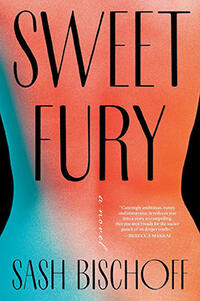
Sweet Fury
By Sash Bischoff ’09
In this thought-provoking novel that plays with F. Scott Fitzgerald 1917’s body of work, readers meet beloved actress Lila Crayne. She’s newly engaged to renowned filmmaker Kurt Royall and playing the lead role in a feminist adaptation of Fitzgerald’s Tender is the Night. But soemthing is off. She begins sessions with a therapist, Jonah Gabriel, to unpack her past, but their sessions bring a dark secret to life.
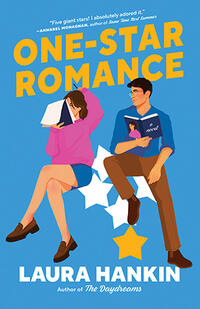
One-Star Romance
By Laura Hankin ’10
Natalie and Rob hate each other. Natalie is a struggling writer and Rob is an academic. The problem is Rob gave Natalie’s book a one-star review, and she discovers this minutes before the pair have to walk down the aisle together for their best friends’ wedding. Throughout this charming and humorous novel, readers get to see Natalie and Rob grow and evolve into their 30s, and eventually grow closer.
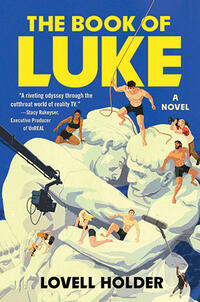
The Book of Luke
By Lovell Holder ’09
In his 20s, Luke Griffin was a contestant on the reality show Endeavor. The experience ends in tragedy and changes his life and those of his fellow contestants forever. A decade later, Luke is a stay-at-home dad married to the only openly gay senator in America. When his husband’s cheating scandal comes to light, Luke rejoins Endeavor in hopes of winning the million-dollar prize, but has to confront the truth of what happened the first time he was on the show.
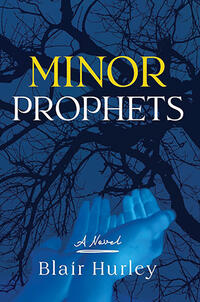
Minor Prophets
By Blair Hurley ’09
Raised in the remote wilderness of Michigan’s Upper Peninsula as the daughter of a cult leader, Nora begins to question everything. The novel takes readers on a journey through devotion, emotion, and abuse. Through flashbacks and prose, the book conveys the agonizing conflict Nora experiences as she attempts to break away from her father’s influence.
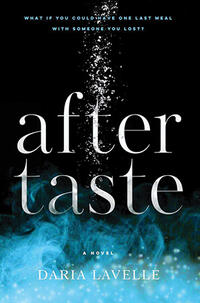
Aftertaste
By Daria Lavelle ’09
At age 10, Konstantin Duhovny lost his father and discovered he had an odd gift: Konstantin could taste the favorite foods of the ghosts around him. For decades he kept this a secret, until he decides to use his talents for good. Konstantin reunites people with their deceased loved ones and offers them closure by preparing a dish for them to share.
The Latest
See all


Related News
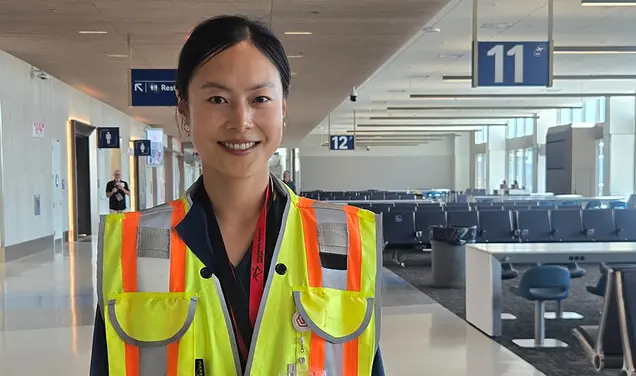
Janice Lee ’09 Worked to Renovate One of Hollywood’s Best-Kept Secrets
An engineer by training, Lee has been deputy project manager on the renovation of Hollywood Burbank Airport

No responses yet