
‘We Must Ask Questions, Stay Informed, and Show Up’
Heading into the midterms, Princeton students and faculty are trying to drum up interest in voting
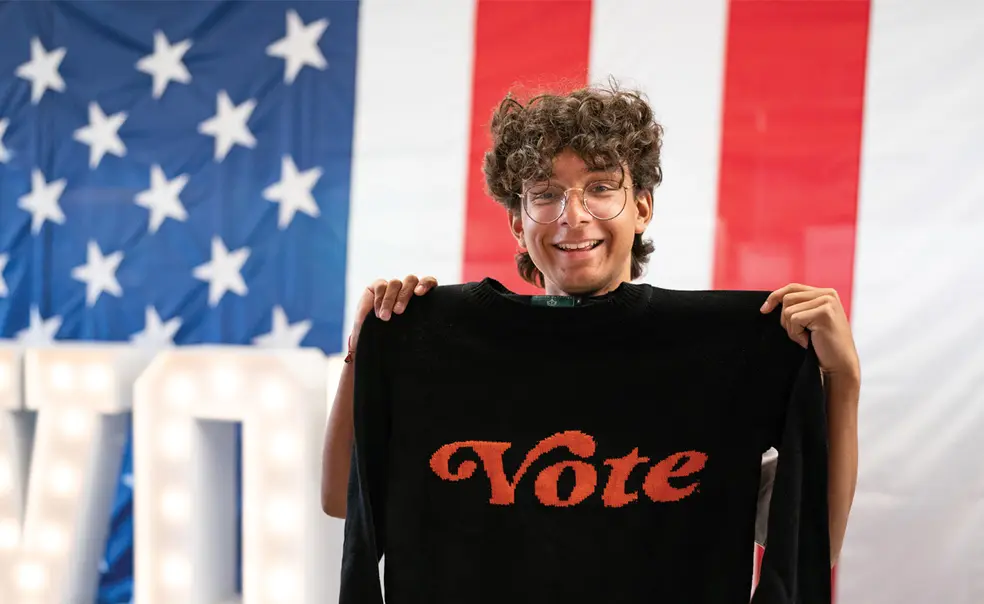

Princeton students and faculty rolled up their sleeves again this year to get out the vote in advance of the midterm elections, both on the ground and in the lab.
Vote100, a nonpartisan student campaign supported by the Office of the Dean of Undergraduate Students that urges all students who are eligible to vote, is now in its 11th year. According to University spokesperson Ahmad Rizvi, Vote100 work “began in earnest during summer 2026” as six undergraduate fellows developed a plan for the fall.
Vote100 fellows reached out to every member of the Class of 2030 and encouraged them to visit TurboVote, a voting information website where they can register to vote and request an absentee ballot.
As of publication time, Vote100 had plans to organize or participate in half a dozen events on and off campus this fall, including National Voter Registration Day on Sept. 15 and an Election Day watch party in Whig Hall on Nov. 3.
“As both students and community members, we must ask questions, stay informed, and show up,” Sarah Kwon ’28, one of three Vote100 head fellows, told Insider NJ.
In 2024, All In to Vote, a nonpartisan organization that guides college students and campuses through the voting process, named Princeton one of the most engaged campuses for student voting.
Meanwhile, Sam Wang, a neuroscience professor and former congressional candidate, is continuing to combine science, data, and voting information via his independent nonpartisan nonprofit, the Electoral Innovation Lab.
“For citizens to have the most influence, they need a way to navigate this arcane system of district, state, congressional, and local elections,” said Wang.
To that end, the lab developed tools such as Vote Maximizer, which calculates where someone’s actions, such as campaign donations, have the most impact in races across the nation. The database includes more than 5,000 U.S. elections.
The lab also published redistricting report cards for congressional maps examining the effects of gerrymandering. About one in seven Americans has moved into a new district over the past year, according to Wang.
The lab’s executive director, Kyle Barnes ’21, said one sign of “the discontent of the voting populace, particularly younger voters” is an increase in progressive candidates challenging incumbents.
Separate from his work with the lab, Barnes canvassed for New York City Mayor Zohran Mamdani and witnessed the candidate’s effect on young adults.
“His campaign really galvanized a lot of younger voters,” said Barnes, “and what’s been interesting to see now is the way that that’s reverberating in other contests across the country.”





No responses yet