

Club Sports Provide Another Way To Be an Athlete at Princeton
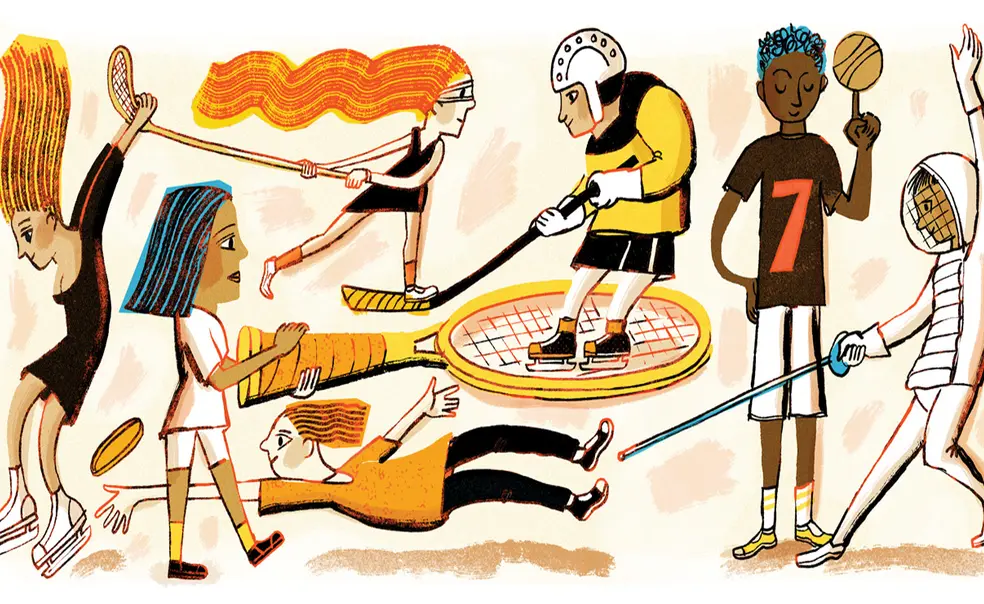

For Princeton’s co-ed club tennis team, community building starts before their first official practice. During “pickups,” members go through dorms, banging on doors while blasting music, to collect their new teammates. Everyone celebrates together and then heads straight to the courts. “It’s a hype time,” said Ray Cabrera ’29, the team’s social chair.
New friendships deepen when members of the competitive team — usually four men and four women — travel around the Northeast for tournaments, bonding on car rides and staying in Airbnbs. “We play music, we joke around about the music that each person listens to, so it’s never dead silent,” Cabrera said. “We get close really fast.”
With 38 varsity teams and more than 1,000 athletes, Princeton boasts one of the most robust athletic programs in NCAA Division I. Less known are the nearly 40 sport clubs on campus that similarly train, travel, and compete throughout the academic year. Unlike varsity athletes, who benefit from an established support system of coaches and athletic staff, club athletes thrive in shaping their commitment with autonomy — and building communities of their own.
Brandon Edwards ’29, a returning player on the men’s club rugby team, agrees with Cabrera that “traveling together is where a lot of these friendships solidify.” The team recently stayed at the Chula Vista Elite Athlete Training Center in San Diego for a tournament and met the U.S. Men’s National Rugby Sevens team. “The tour cost $500 per person, but that was heavily subsidized by our extensive alumni network and endowment,” Edwards said. “That’s an amazing thing about the club — there’s this whole community of alumni that still care enough about the game to support the next generation of players.”
Prepping for competition can also be a bonding experience. Members of the synchronized skating team squeeze into their captains’ tiny hotel room and work quickly to set their hair and makeup and steam the wrinkles out of their dresses. “I might be painting eyeshadow on someone while another girl puts my ‘hairagami’ up,” said Mandy Kao ’28, a co-captain this year. Helping other teammates get ready is a stabilizing part of their routine, she said, because they’re “all there existing together mentally and physically, and that’s really special.”
Practice schedules vary for each club. Women’s club lacrosse, for instance, runs drills and scrimmages when weather permits (and when it doesn’t, gets together for yoga indoors). The women’s ultimate Frisbee team adjusted its mandatory practices from six hours a week to three to encourage members not to worry about picking between priorities. Club tennis players are also allowed to adjust their participation around other commitments. “You just show up when you can,” Cabrera said, “and when I do, I put my best out there, knowing that the people I’m playing with or against are always doing the same.”
An emphasis on flexibility does not mean that club sports are simply recreational activities. “Just because the sport doesn’t take up every hour of your day doesn’t mean you shouldn’t explore your passion for it,” said Sage Wang ’29, a co-captain of women’s ultimate.
The student-led club teams sometimes face difficulties that varsity sports don’t encounter. The skating team, for example, competes for limited ice time with Princeton’s two varsity hockey teams as well as local youth teams. With one practice ending near midnight and the next one at 5:30 a.m. the next day, the captains worry about their skaters’ sleep schedules. For ultimate, although there is no cost to join and few barriers to entry, the captains have found difficulty recruiting new players, according to Wang. “It must be nice knowing that your team will never die when you’re on varsity,” she said.
The Latest
See all


Related News


These Young Alumni Balance Tech Careers and Musical Ambitions
‘...I realized that I probably wanted to live a life where I had the opportunity to pursue what I felt like was my purpose,’ says Naaji Hylton ’22

AI and the End of the World
As warnings about artificial intelligence grow louder, four Princeton experts debate how worried we should be

No responses yet