

Haitian Creole Courses Offer Chance to Explore Heritage
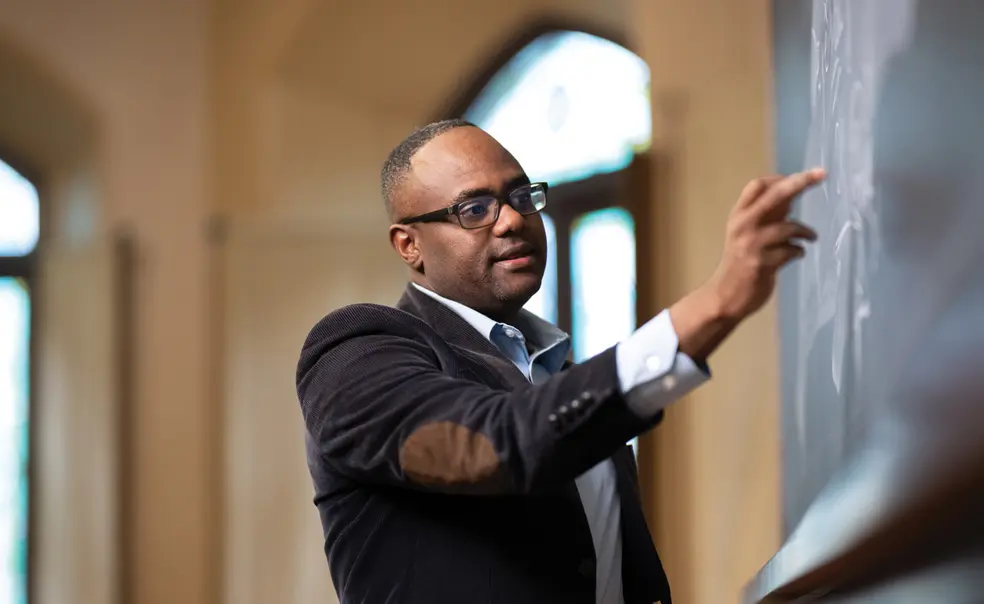

When Johnny Laforêt first arrived at Princeton as a lecturer, he had ambitions for the French and Italian department to address a gap, not just at Princeton, but at colleges across the United States. French was the language Laforêt taught, but it wasn’t the language he loved in, or cried in, or thought of his family in. That space was devoted to Haitian Creole, one of Haiti’s two official languages.
“I am a product of Haiti,” Laforêt said. “When I came here in 2016, I saw a need. … [Students of Haitian heritage] wanted to have the opportunity to learn the language of their parents, the language of their grandparents.”
Haitian Creole language programs have been established at just a few institutions across the country. At Tulane University in New Orleans, students can study Haitian Creole to fulfill their foreign language requirement, and the University of Chicago offers a minor in Kreyòl and Haitian Studies.
It’s a remarkable trend for a language with a complicated history. In the wake of Haitian independence in 1804, French became the official language used in formal settings. It was associated with the ruling class, while Haitian Creole was dismissed as a lower-class vernacular, despite the majority of Haiti’s citizens speaking only Creole.
Haiti’s 1987 constitution recognized Creole as an official language, and in 2014, the nation added a constitutionally recognized regulatory body, the Akademi Kreyòl Ayisyen. Today, over 13 million people worldwide speak the language, including nearly 900,000 in the U.S., according to the Census Bureau.
As early as 2016 at Princeton, Laforêt organized weekly language tables for Haitian students, whether fluent in Creole or not. The gatherings started small, but Laforêt persisted, even when interest waned. In 2019, Princeton Caribbean Connection, a student group on campus, asked if he’d like to join forces, and participation surged: More than 40 students came to their first event to eat Haitian food, listen to Haitian music, and speak in Haitian Creole.
Mariah Morgan ’27 has been involved with Princeton Caribbean Connection’s Haitian Creole group since her freshman year. “It was just an incredible thing, and I’m just very honored to be part [of it],” she said. “[Creole] was never considered a language that was valuable for intellectual purposes. … I think what this shows and says about Haitian people, Haitian language, is that it’s valuable and also a valid form of intellectual inquiry.”
With sustained interest and support from students, Laforêt decided to formally propose adding Haitian Creole to Princeton’s course catalog within the French and Italian department. Between 2019 and 2024, he worked with Dean Rebekah Peeples *09 to put together materials for a course.
“We were very lucky that Dr. Laforêt was already at Princeton,” Peeples said. “We had a really singular opportunity in a faculty member who was already familiar with Princeton language studies and the way they operate in the kind of expectations that they have for students … [and] who speaks Haitian Creole and was ideally positioned to teach the course.”
In fall of 2025, Laforêt taught the University’s first introductory Haitian Creole course, followed by an intermediate/advanced course in the spring. “I think the French and Italian group were the right home for the Haitian Creole program here on campus,” said Göran Blix, the department chair. “It takes a lot of work to get a program like this off the ground and start it, and for us, it was kind of a no-brainer.”
In designing the classes, Laforêt wanted students to experience Haitian culture firsthand. He has brought traditional Haitian clothing into class, dedicated Fridays to teaching Haitian history, and even took the students to a Haitian restaurant in Ewing Township.
“It was more than just a language class, it was also about history and culture and learning about Haiti itself,” said Mitchell Czarnecki ’28, who took Introduction to Haitian Creole in the fall of 2025. He called Laforêt a good ambassador for Haitian people who helped “reinforce why it’s valuable to learn” Creole.
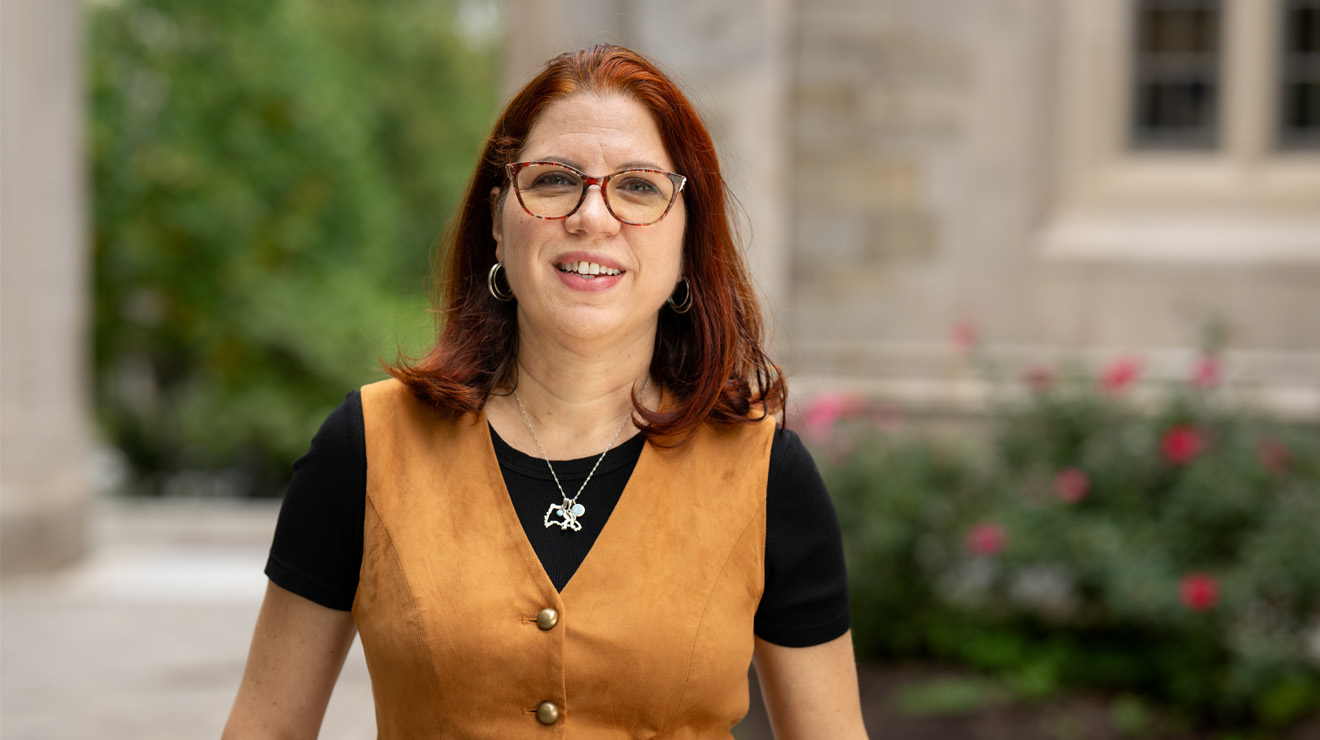
This fall’s introductory course is smaller, with two graduate students and three undergraduates. One of those students is Quisqueya Lora Hugi, a graduate student studying Caribbean history. According to Lora Hugi, the course has not only taught her the language but also helped her build bridges between her home country, the Dominican Republic, and Haiti. “I’m finding these connections to things that we do and say in the Dominican Republic that are so similar from Haiti,” she said. “Every time I hear and see things of Haitian Creole, I cannot avoid … the similarities.”
Laforêt envisions a full-fledged Haitian Creole track and a Haitian studies minor in the long term, but for now, spreading Haitian culture and history to individuals who otherwise would not have encountered it is the real job of these courses. “Everything is falling into place,” he said. “I’m one of the people helping the country … even if I’m far away from the country.”
The Latest
See all


Related News


These Young Alumni Balance Tech Careers and Musical Ambitions
‘...I realized that I probably wanted to live a life where I had the opportunity to pursue what I felt like was my purpose,’ says Naaji Hylton ’22

AI and the End of the World
As warnings about artificial intelligence grow louder, four Princeton experts debate how worried we should be

No responses yet