

Musician Albert ‘Buck’ Johnston Jr. *49 and His Personal ‘D-Day’
Revealing his family’s truth put a young graduate student under significant strain
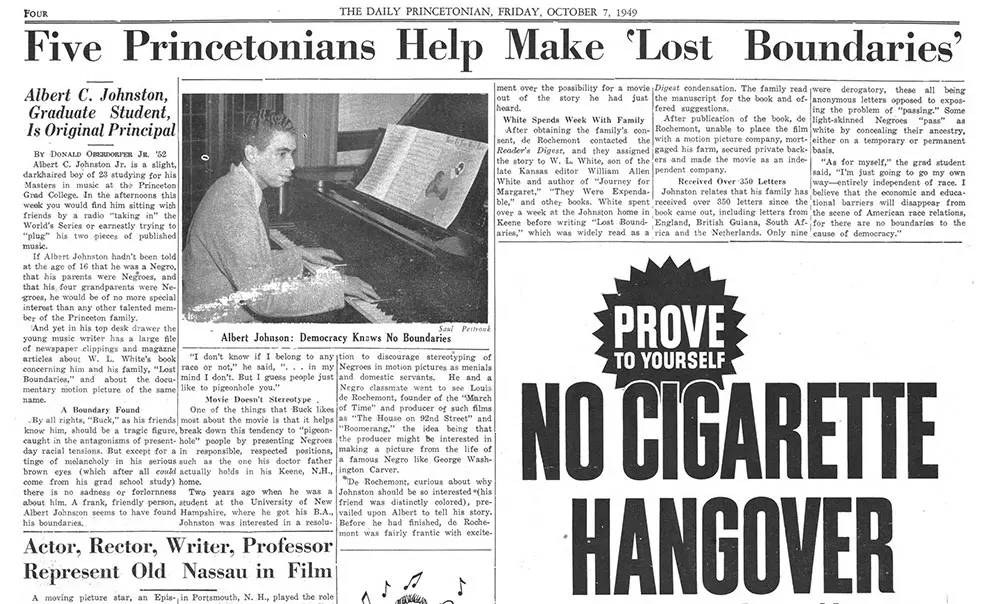

Albert “Buck” Johnston Jr. *49 became famous for something his father told him to conceal forever, even from his younger siblings: “Well, you’re colored,” Dr. Albert Johnston Sr. said. “I’m colored and your mother’s colored.”
Johnston Jr.’s parents, both Black, raised their family in Keene, New Hampshire, passing for white so the elder Johnston could practice medicine. The Johnstons later called Nov. 25, 1947, the day the details of their situation reached Keene, their “D-Day.” Journalist William Lindsey White wrote a Reader’s Digest article, “Lost Boundaries,” about the Johnstons, and a full-length book and movie followed. All focused on the younger Johnston’s struggle with the truth his father disclosed to him when he was 16.
At first, Johnston kept his new knowledge quiet under severe strain. His grades slipped. He left Dartmouth and then the Navy. Pressure to maintain the facade drove him to the brink of suicide. Eventually, he confessed to a childhood friend, and together they visited Johnston’s Black relatives in Chicago and Los Angeles. Johnston’s mental state improved, but he never felt he belonged anywhere. Neither African American nor white communities felt comfortable. His sole solace was the piano.
Back in New England as an undergraduate at the University of New Hampshire, Johnston decided to live openly. He later explained his rationale: “Why carry a lie around all your life? … And aren’t you cheating your own people if you deny them?” He willingly talked to White and supported the film adaptation of White’s book, even writing music for it.
When Lost Boundaries premiered, Johnston had just started graduate school at Princeton, where racial tensions were palpable. A handful of Black students had begun earning Princeton degrees amid controversy, including the first known Black graduate alum in generations, Simeon Moss *49, and the first known Black undergraduate alumni, naval officers whose admission came through military programs rather than the usual application process. Stories about Johnston appeared in both The Daily Princetonian and the Princeton Alumni Weekly that October. Johnston told the Prince, “I’m just going to go my own way — entirely independent of race. I believe that the economic and educational barriers will disappear from the scene of American race relations, for there are no boundaries to the cause of democracy.”
That was perhaps too optimistic. Johnston seems to have found it impossible to study music at Princeton under the renewed psychological stress of heightened fame and local curiosity. A week and a half after appearing in the Prince, Johnston wrote, “I am not stable enough to continue” in a letter to music professor Edward Cone ’39. He withdrew from the Graduate School, never to return.
The Latest
See all


Related News
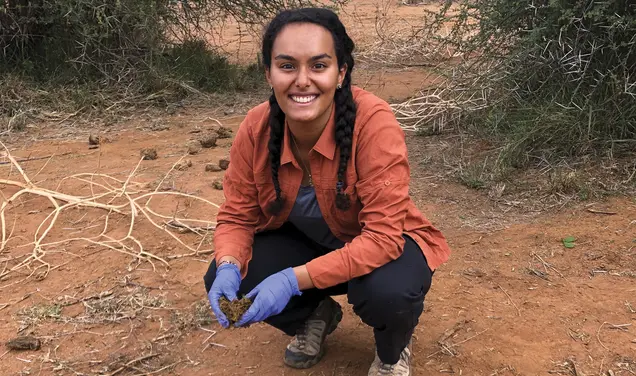
Dung Beetles Do ‘the Job That Is Necessary’
Princeton researcher Finote Gijsman *25 studies crucial links between the insects and elephants in a new paper

No responses yet