

Student Veterans Are Restoring a Historic American Legion Post
The post was among the nation’s first racially integrated gathering places for Black veterans
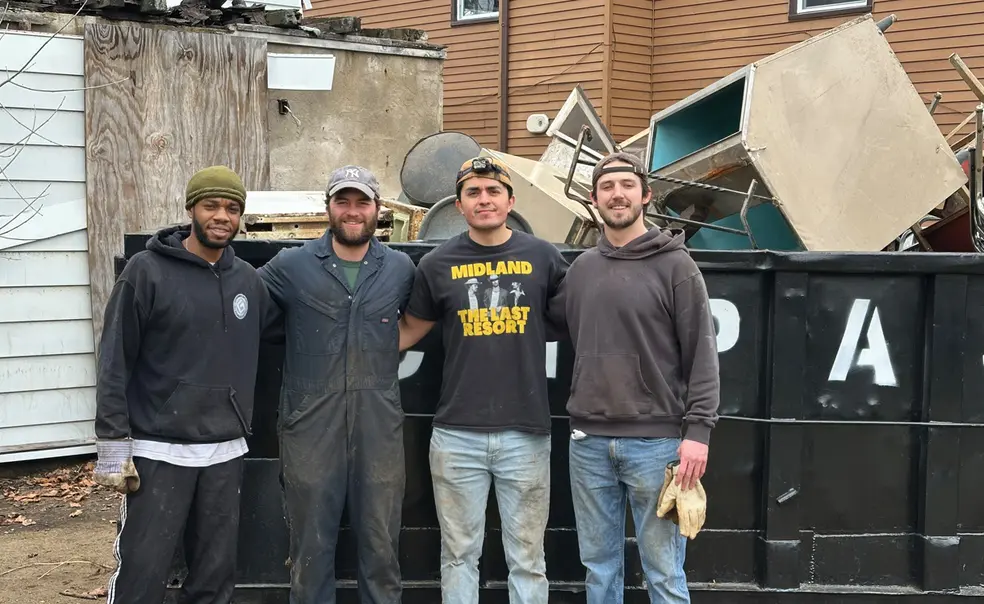

As a kid, Jack Cipas ’27 spent time grinding rust off dumpsters for his family’s trash removal business.
“Eventually, I got a commercial driver’s license [to] drive the garbage trucks,” he said. It’s something he still does in his spare time.
After serving five years in the U.S. Army, including three years in Special Forces, Cipas enrolled at Princeton in 2023. Between studying and going to classes, work has looked a lot different to him, and he sometimes misses working with his hands.
Then last year at a Princeton Student Veterans meeting, he heard from visiting American Legion members about an old Legion post near campus in dire need of repair.
It was the kind of project Cipas needed. He and the student veterans group president, Elliot Watt ’28, got to work.
The Charles W. Robinson American Legion Post 218 at 26 Lytle St., a 12-minute walk from campus, was chartered in 1922 and named after the first Black Princeton resident to die in combat in World War I. It was among the nation’s first racially integrated gathering places for Black veterans during segregation, serving as a social club, wedding reception hall, and venue for other community events, according to the Legion.
But the property, owned by the Legion, has since fallen into disrepair. For more than 15 years, its doors have remained closed as membership continued to shrink following a national decline in the veteran population and shifting generational interests.
“We saw it as, like, if we don’t do it, then it’s probably not going to get done,” said Watt, who served in the U.S. Navy for two years before matriculating at Princeton in 2024.
In early February, he and Cipas began removing old furniture, appliances, garbage, and rotting drywall from the building. They devoted whatever time they could between classes to the renovation, usually on Wednesdays and Fridays when their schedules were lighter.
Then spring break rolled around and they were at the post every day for five to eight hours at a time. Six volunteers from Princeton Student Veterans and one from ROTC came to help, and Cipas’ family also joined in. “All my brothers have been there, my dad, my uncle, my whole family’s kind of been there,” he said.
With the company garbage truck, Cipas said, he drove four full 30-yard dumpsters from the site.
Cipas and Watt finished the initial cleanup in the spring and are now working to raise funds to insure the building before new construction can take place. Cipas and Watt said in an email that they expect the project to cost $185,000, with additional insurance costs of $1,000 to $3,000 annually.
With an ambitious target of completing the work before Watt’s graduation in 2028, the two worry that the state and federal grants they’re currently applying for might not materialize in time. They’re also actively looking for private funding sources.
When asked how much money they’ve personally invested in the project, Watt said they haven’t been counting the dollars. “It was just something that we both wanted to do.”
“I just want to efficiently fix this place and have it functioning as fast as possible,” Cipas said.
Cipas and Watt envision the renovated Legion post as a safe space away from campus where the growing veteran and military-affiliated community on campus — now around 100 members — can discuss difficult topics such as culture shock and mental health and help newcomers identify and enroll in benefits. While the Department of Veterans Affairs has taken on some of these responsibilities in the past, Cipas said their customer service can sometimes feel impersonal.
Spencer Reynolds ’92, a board member of the Princeton Veteran Alumni Association and a University staff member, tried for years to recruit students to the Legion restoration project without success, until Cipas and Watt got involved. He’s impressed with the work the duo has accomplished and has consulted with them about external funding options.
“It’s really quite a challenge,” Reynolds said, “and if nothing else, they’re not shy about taking on a challenge.”
The Latest
See all


Related News

Dung Beetles Do ‘the Job That Is Necessary’
Princeton researcher Finote Gijsman *25 studies crucial links between the insects and elephants in a new paper

No responses yet