

Amid Crises, Charles House 1909 Held Together a Farm School in Greece
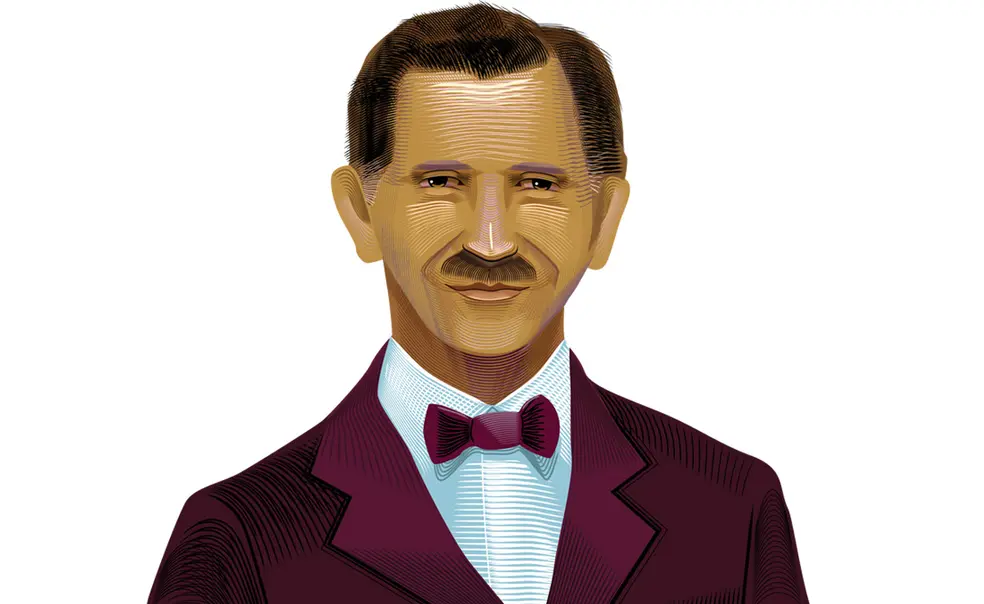

Outside the main urban center of Thessaloniki, Greece’s second largest city, lies the picturesque campus of the American Farm School, laid out amid gnarled olive trees and plowed fields, the source of agricultural products and yogurt that find their way into Greek supermarkets. For more than a century, the centerpiece of that campus has been its flagship building, Princeton Hall, whose origin begins with the singular efforts of Charles House 1909.
The son of two American missionaries, John Henry House and his wife, Susan Adeline Beers, House was born in 1887 in present-day Bulgaria, then part of the Ottoman Empire. At the time, Turkish authority was beginning to wane as independence movements sought to carve out their own countries from the territory, using guerilla tactics and bombings to disrupt Ottoman control. Throughout this unrest, the House family engaged in international diplomacy, with John mediating the 1901 kidnapping of American missionary Ellen Stone, a major tabloid case sometimes considered America’s first hostage crisis.
By 1902, that instability convinced House’s parents to send their 15-year-old son to New Jersey to be educated, where he first received a scholarship to Blair Academy before starting at Princeton in 1905. At Old Nassau, House occasionally wore a fez on campus, inspiring his classmates to call him “Turk.”
While “Turk” was stateside, his father embarked on a vast project to establish an agricultural school outside Thessaloniki, purchasing 53 acres of land and enrolling 10 Slavic orphans who would live out of a modest farmhouse.
However, the school expanded rapidly, and by 1907 the Ottoman government granted it tax-exempt status, a protection the Greek government continued in 1912 after it seized the region. The school also became a laboratory for agricultural innovation in the country, collaborating with the U.S. Department of Agriculture on experiments involving California grapes, ultimately producing a strain resistant to native aphids.
But the school continued to be plagued by a series of catastrophes, local and international, that convulsed the area: The school burned down in 1916; the entire city of Thessaloniki was razed by a massive conflagration in 1917; and in 1922, Greece’s defeat in its war against Turkey led to an exchange of populations, as Turks in Greece were expelled to Turkey and conversely Greeks from Turkey found themselves forced to start over in Greece.
To lead the school into this tumultuous future, John tapped his son Charles as his successor. In 1922, Charles recruited the Class of 1909 to sponsor the construction of a new campus building. Princeton Hall housed up to 250 students and faculty and featured a kitchen, refectory, and assembly room.
Meanwhile, the growing Farm School under House also helped raise some famous Princetonians as well — Edmund Keeley ’48, the son of an American diplomat stationed in Thessaloniki, grew up on the campus, an experience that informed his career as an esteemed literary translator of modern Greek and a Princeton professor.
House went on to style himself as a modest figure — described in a 1955 article of The Rotarian as dressing down in dungarees to perform repairs on farming equipment — but would hold his own against dire outside threats. When the Germans invaded Greece and occupied the school in 1941, House negotiated to allow his students to remain on campus. According to historian Brenda Marder, when an American official asked a Greek delegation in Washington if House was collaborating with the Germans, Peter Stathatos, an aide to the Greek king, replied, “Certainly not. The Germans are collaborating with House.”
The Nazis later arrested House and his wife and deported them to prisoner-of-war camps, but the pair returned in 1944 to restore the school to normal operations.
During the ensuing Greek Civil War between a government aligned with the U.S. and a Communist insurgency, House faced one last challenge with a courageous stand that echoed his father’s response to the Stone kidnapping. In the middle of a night in January 1949, a group of Communist rebels stormed Princeton Hall and abducted 37 students and four teaching assistants. The leader of the partisans proceeded to confront House at gunpoint, and House demanded to be taken in the boys’ place.
The partisan refused the offer, but the impact of House’s stoicism had eroded his group’s morale. By the next day, 25 of the 41 abductees had escaped, and three months later, the final prisoner returned. As Marder wrote, “many of the [boys] reported that the strong religious underpinning built by the school had been the cornerstone of their strength.”
The Latest
See all


Related News


Kate Kaneko ’16 Turns Unused Restaurant Spaces Into Daytime Cafés
Asano is currently in two New York City restaurants, Sandro’s and The Noortwyck

2 Responses
Anastasia Marty
5 Days AgoAmerican Farm School Fan
I am a fan of the American Farm School. The middle school is dedicated in honor of my parents, Vasilios and Aphrodite Haseotes.
Athena (Toskos) Metzger
2 Weeks AgoFamily Ties to the American Farm School
My father attended the American Farm School as a young man. In the 1950s he moved to America.
My brother-in-law reached out to the Farm School for my father’s diploma, and after sitting in a drawer for decades, remarkably the diploma was still there! Talk about a mind-blowing miracle, given all the turmoil and destruction of buildings and the surrounding area. My dad was so overwhelmed when it was handed to him.
His name was Sotirios D. Toskos. He was a very intelligent man, and the school provided him education and skills he may not have otherwise have been exposed to. Thank you so much on behalf of my father.
Incidentally, I visited Greece in 2018, and my cousins gave me some of your products. I think my cousin Anna Zikos may have taught there.
Anyway, this is a fantastic piece. Thank you.