
The Daily Princetonian Celebrates 150 Years of Student Journalism
Fundraising, a gala, and a book are planned to mark the anniversary
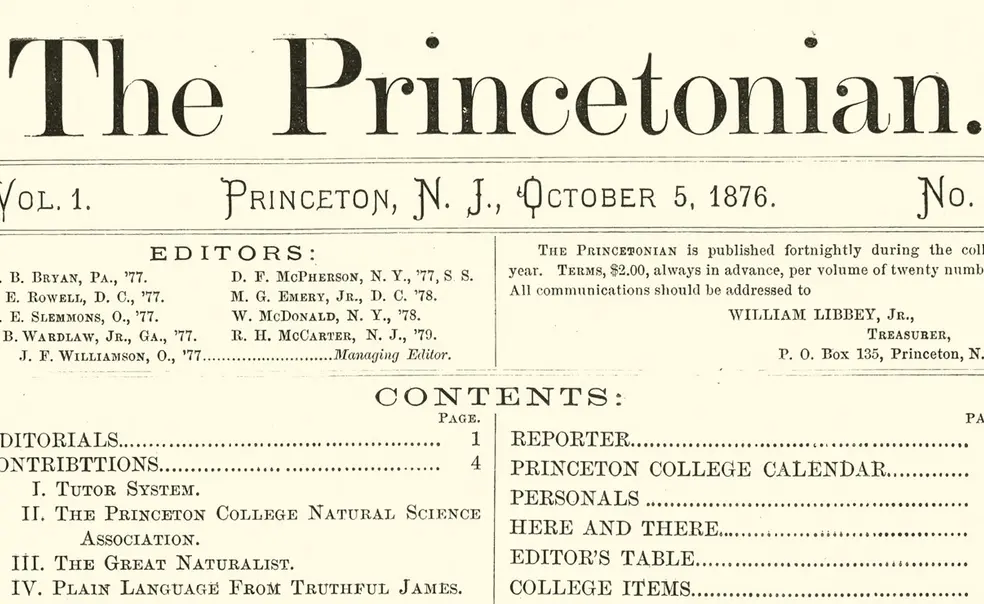

The Daily Princetonian has come a long way since its days using a telegraph to report on a Yale-Princeton baseball game at New Haven in 1895 — and being among the first college newspapers to do so, according to Alexander Leitch’s 1978 A Princeton Companion. Now in its 150th year, the publication continues to innovate and carry the torch of student journalism as the fourth-oldest student-run newspaper in the Ivy League.
Once a daily print publication, the Prince has been following a “digital daily, print weekly” publishing schedule since 2021, a move that has increased its digital presence. According to staffers, its website amasses 250,000 views per month.
Other changes include the addition of a mobile app, a daily newsletter with 5,500 subscribers, a daily mini crossword, and a podcast section. Beyond campus news, the publication covers the local municipality, alumni affairs, sports, and culture. The Prince now sees nearly 200 student contributors each semester, much more than when it was a daily print newspaper, though its core staff and editors still number in the dozens, according to editor-in-chief Jerry Zhu ’27.
With a new student board elected every academic year, the editorial focus of the paper is also ever-changing.
“Some boards have prioritized investigative journalism. Other boards have prioritized opinion pages and getting as many different voices [as possible] from different segments of the campus,” explained Tom Weber ’89, president of the Prince’s board of trustees.
“The era when I was the editor, was, in retrospect, a pretty quiet time on campus [compared to] the big national things that you see shaping campus life these days,” former editor-in-chief and current board trustee Gabriel Debenedetti ’12 recalled.
Debenedetti, who is also a member of PAW’s board, said the paper prioritized longer-term projects back then, such as covering the lives of Princeton athletes, the ongoing gun control debate, and the grade deflation policy, which continues to be a topic of discussion today.
Marie-Rose Sheinerman ’23, a former Prince editor-in-chief and current assistant editor at The Atlantic, aimed to continue the paper’s legacy as the voice of “truth and accountability on campus” during her tenure at the paper, with notable coverage of student critiques of the Title IX process.
For Zhu, local news is salient grounds for Prince coverage. He said campus news is also a priority and brought up the University’s recent ban on recording faculty meetings to stress the importance of safeguarding press freedom.
“The Princeton administration has a real respect for press rights, but it’s something that we have to continually fight for and advocate for, because if we don’t, 10 years later, who knows what’s gonna happen,” he said.
The Prince does not receive direct funding from the University but instead relies on revenue from advertisers and donors to sustain its operations. According to Debenedetti, this financial independence has allowed the paper to “cover the University without fear of repercussions,” and preservation of this autonomy is among the organization’s top priorities.
Buoyed by alumni donations, the publication launched a financial assistance program in 2021, providing stipends to students on financial aid who work for the Prince, to ease the burden of maintaining another income stream.
Fundraising efforts will continue as part of this year’s anniversary, which includes an Oct. 16 gala at the New York Historical featuring keynote speakers Robert Caro ’57 and President Christopher Eisgruber ’83 and an alumni panel. The Prince is also publishing an anniversary book, Campus in Our Words: 150 Years of The Daily Princetonian, a student-led project that began four student boards ago. Designed by Andrew Sondern ’15, deputy design director of The New York Times, the book was expected to be released at the end of September.





No responses yet